
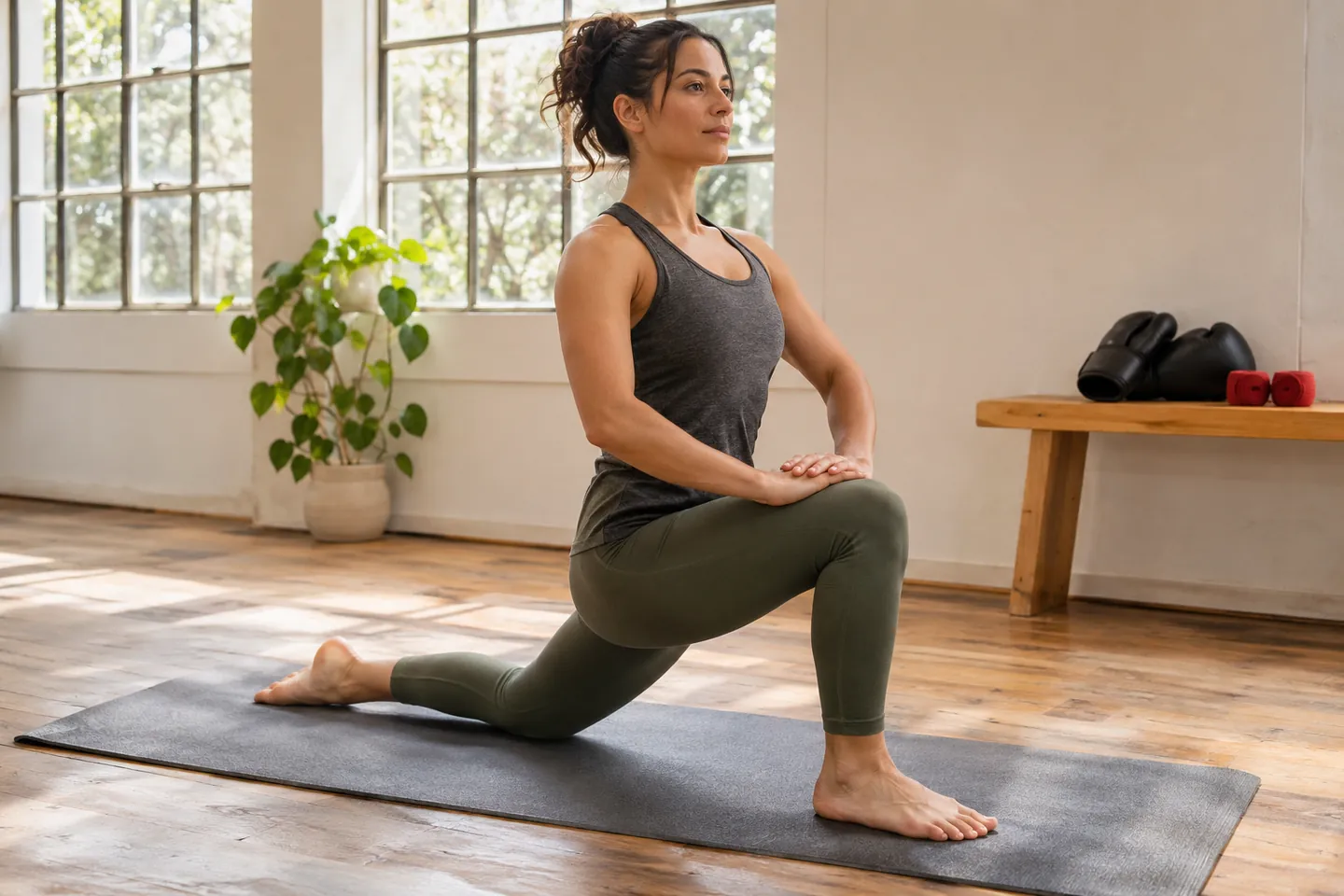
How martial artists in Mississauga can add yoga to a busy training week, with ideas for scheduling, mobility, breathing, recovery days, and realistic goals.
Martial artists spend a lot of time doing things that are hard on the body in very specific ways. Thousands of punches load the shoulders. Kicks ask a lot of the hips. Grappling puts the neck, spine, and fingers in positions that most people never experience. Over time, those patterns can leave you feeling tight, stiff, and a little worn around the edges.
Yoga is one of the more common things fighters, grapplers, and recreational martial artists add to their week to balance that out. Done thoughtfully, it can support mobility, breathing, body awareness, and recovery without competing with the training you already love. Done carelessly, it can become another hard session on an already full calendar.
This article looks at how to add yoga to a martial arts routine in Mississauga in a way that fits your schedule, your goals, and the realities of a body that already trains hard. It is aimed at people who box, kick, roll, or train MMA and are curious about whether yoga belongs in their week.
Start by asking what you want from it
Before adding anything, it is worth being clear about the purpose. Some martial artists want more hip mobility for kicks. Some want relief from the stiffness that follows a week of grappling. Others are interested in breathing and focus, or simply want a lower-intensity session that still feels like training.
Each of those goals points to a slightly different approach. If mobility is the priority, you might choose classes that emphasise longer holds and joint range. If recovery is the focus, gentler classes with slower pacing may suit you better. If breathing and focus interest you most, look for sessions that spend time on breath awareness and quieter practice.
Naming your goal also helps you measure whether yoga is working. “I want to feel less stiff after jiu-jitsu” or “I want my roundhouse to feel smoother” are realistic, observable aims. “I want to become flexible” is vaguer and can lead to frustration when progress takes time.
What martial artists often notice first
Many people who come to yoga from combat sports find that certain positions are surprisingly difficult. Tight hips, hamstrings, and upper backs are common. Shoulders that have thrown a lot of punches may feel restricted in overhead positions. Grapplers sometimes discover that their necks prefer to stay tucked.
Those discoveries are useful information rather than a verdict on your fitness. Strength and conditioning from martial arts do not automatically translate to ease in yoga postures. In fact, people who are very strong sometimes find it harder to relax into a position because they are used to bracing.
It is also common to find areas that feel easy. Martial artists often have good balance, body awareness, and core control, which can make standing poses and transitions feel manageable. Notice both sides. The goal is not to be good at yoga but to learn something about how your body moves.
Choosing where in the week to place it
Scheduling is where many people go wrong. Adding a demanding yoga class right before a hard sparring session or heavy strength day might leave you feeling less stable or more tired than you would like. Placing it thoughtfully makes a difference.
Many martial artists find that yoga fits well on lighter days, after a technical class, or on what would otherwise be a rest day. A gentle session the morning after a hard evening of training can feel restorative. Others prefer to use yoga as a standalone session on a day when they are not doing anything else physical.
If you train in Mississauga and commute across the city, practical factors matter too. A class near your work or home that fits around rush hour on the 401 or 403 is more likely to happen than one that requires a long drive at a difficult time. Consistency usually beats perfection when it comes to scheduling.
Leave competitiveness at the door
Martial arts training can be competitive, even in a friendly gym. Rounds are timed, drills have goals, and partners test each other. Bringing that mindset into yoga can backfire. Pushing deeper into a stretch to match the person next to you, or forcing a pose because you feel you should be able to do it, can lead to strain.
Yoga generally rewards patience. Holding a pose at a moderate depth with steady breathing is usually more useful than reaching maximum range with a clenched jaw. Teachers often offer variations and props for exactly this reason. Using a block or a strap is not a sign of weakness. It is a way to practise the position appropriately for your body today.
That shift in mindset can be one of the most valuable things yoga teaches a martial artist. Learning to stay calm, breathe, and work within your limits translates surprisingly well to stressful moments in sparring or rolling.
Breathing as a shared skill
Breath plays a big role in both yoga and martial arts, though it is used differently. In striking, you may exhale sharply with each technique. In grappling, you learn to breathe steadily while under pressure. In yoga, breath is often slower and more deliberate, coordinated with movement or held positions.
Practising slow, controlled breathing in a calm setting can make it easier to notice your breathing during harder training. Some martial artists find that after a few weeks of yoga, they catch themselves holding their breath less often during drills or rolls, and recover faster between rounds.
You do not need to approach breathing exercises with grand expectations. Simply paying attention to your breath for an hour, without the pressure of a partner or a clock, is valuable practice. If any breathing technique makes you feel light-headed or uncomfortable, return to normal breathing and let the teacher know.
Protecting the joints you already load
Martial arts place repeated demands on certain joints. Yoga can complement that, but it can also add load in the same places if you are not careful. For example, if your wrists are already sore from pad work or gripping, long holds in weight-bearing positions on the hands may aggravate them.
Tell your yoga teacher about any joint issues before class. They can suggest alternatives, such as coming onto forearms, using a wedge or folded mat under the wrists, or modifying a posture. The same applies to knees that have taken a beating in grappling or shoulders that are tender from striking.
If something is painful rather than simply challenging, ease off. Persistent joint pain is worth discussing with a physiotherapist or other qualified health professional, who can assess what is going on and suggest an appropriate plan. Yoga is a helpful practice, but it is not a treatment for injuries.
A few useful areas of focus
Without getting into specific sequences, certain areas tend to be relevant for martial artists. The hips are a common focus, especially for people who kick or play guard in jiu-jitsu. Work that gently explores hip rotation and flexion can feel very different after a few weeks of regular practice.
The upper back and chest are another area. Many fighters and grapplers spend a lot of time rounded forward, protecting their chin or holding positions. Postures and movements that encourage gentle opening and extension can feel welcome.
The hamstrings, calves, and ankles also matter. Footwork, kicks, and wrestling stances all depend on these areas. A yoga class that includes standing work, balance, and gentle lengthening can support them. Your teacher will guide the specifics; the point is to notice how this work relates to what you do on the mat or bag.
Recovery days that still feel productive
Many martial artists struggle with rest days. They feel restless or guilty when not training. Yoga can provide a middle ground: a session that involves movement, focus, and effort, but at a level that supports recovery rather than adding significant fatigue.
That said, not every yoga class is gentle. Some styles are physically demanding and can leave you sweaty and tired. If your intention is recovery, choose accordingly and let the teacher know you are coming in after a hard week. A good teacher can help you scale the session.
Also remember that true rest still has value. Not every day needs to include training of some kind. Sleep, good food, and time away from the gym all support long-term progress. Yoga can be part of a recovery strategy, but it should not replace genuine rest entirely.
How long before you notice anything?
Changes from yoga tend to be gradual. Some people notice that they feel looser or calmer after their very first class. Others take several weeks of consistent practice to notice a difference in how their kicks feel or how stiff they are after rolling.
Tracking a few simple markers can help. You might note how a certain kick feels, how easily you can sit in a particular position, or how sore you are the day after grappling. Over a couple of months, comparing notes can reveal progress that is hard to see day to day.
Be patient. Mobility and body awareness develop at their own pace, and expecting dramatic results quickly is a common reason people give up. A steady routine of one or two sessions a week is often enough to see meaningful changes over time.
Talking to your coaches
Let your martial arts coach know that you are adding yoga. They may have suggestions about which areas to focus on, or notice changes in your movement that you do not. Similarly, telling your yoga teacher about your martial arts training helps them understand the demands on your body.
Coaches and teachers working together, even informally, can help you avoid conflicts. For instance, if you have a big sparring week coming up, your coach might suggest keeping yoga gentle. If your yoga teacher notices a persistent imbalance, they might recommend raising it with a physiotherapist.
Bringing yoga into your week at Konga Fitness
Yoga and martial arts can sit comfortably side by side. One builds skill, power, and resilience under pressure; the other offers mobility, breathing practice, and a calmer kind of focus. Together they can make a training week feel more balanced and sustainable.
If you train in Mississauga and want to try this combination, explore our yoga classes alongside programs like Muay Thai or Brazilian jiu-jitsu, and check the adult schedule to find a time that fits your recovery days.
Filed under
Keep exploring
More training insights await.