
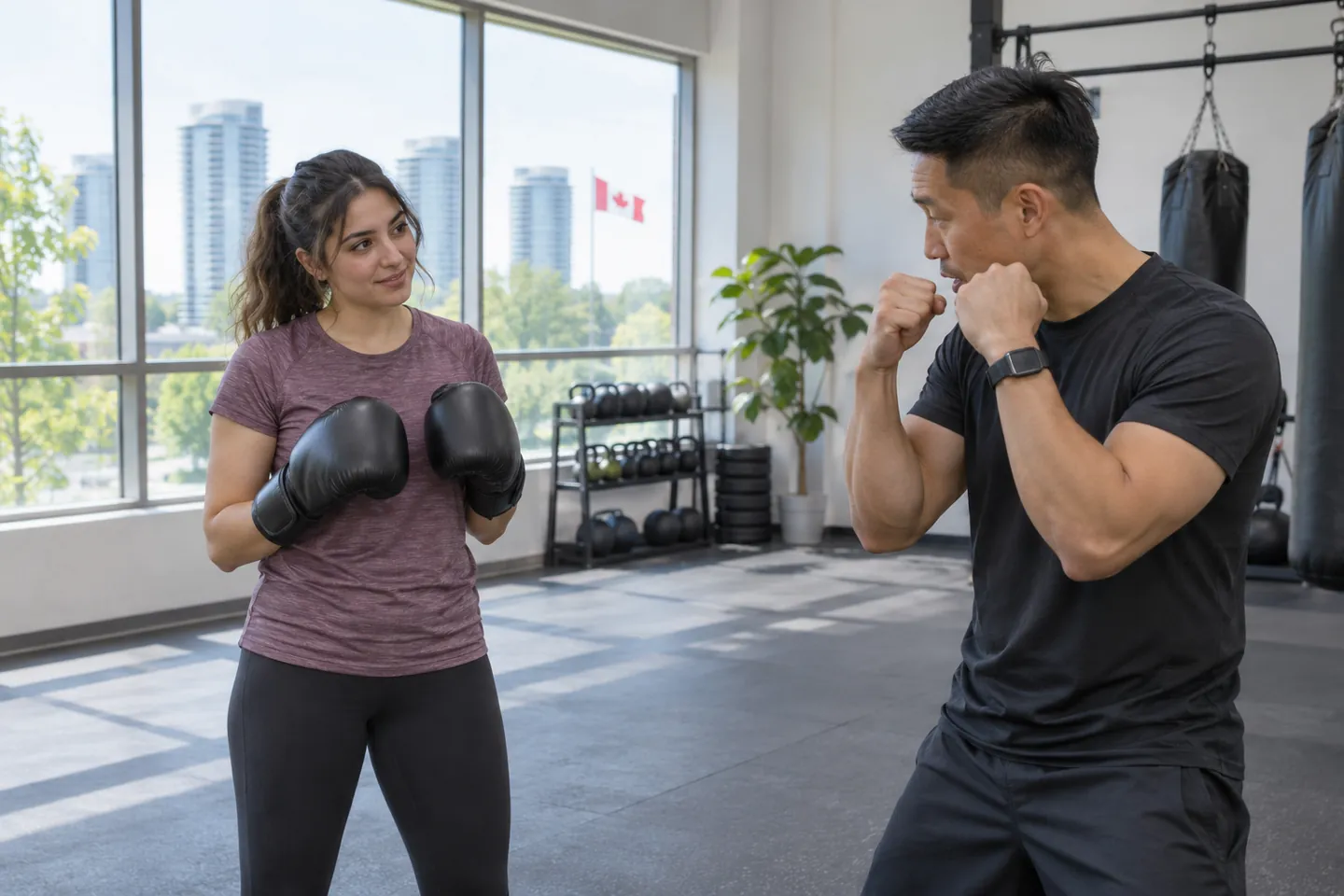
Explore adult boxing in Mississauga with a practical beginner guide to class expectations, basic skills, coaching conversations, and a manageable training routine.
Walking into a boxing gym for the first time can feel like arriving halfway through a conversation. Someone is wrapping their hands, another person is moving around a bag, and a coach is calling out numbers that appear to mean something to everyone except you. That unfamiliarity is ordinary. You are looking at people who have already learned the room’s routines, not people who were born knowing how to box.
Adult boxing for beginners in Mississauga starts with a much smaller task than becoming a fighter. It starts with finding appropriate instruction, learning a few movements, and returning often enough that those movements become familiar. You can approach that task with questions, a modest pace, and no competitive ambition at all. The useful first decision is what you want your training to include.
Decide what boxing means for your goals
People use the word boxing to describe several experiences. A fitness class may use punches and bags as part of a workout. A technical class may devote more time to stance, movement, defence, and feedback. Competitive training involves additional demands and decisions. Those categories can overlap, but they are not interchangeable. Ask how a particular session is taught before judging whether it matches what you want.
A beginner might want an engaging activity after work, an opportunity to learn a new skill, or structured training that feels different from exercising alone. Write that intention in one sentence. For example, you might say, “I want to learn basic boxing technique in a class where I can train without partner contact.” That gives a coach something clear to respond to. It also makes comparing options easier than simply asking which class is hardest.
You do not need to decide whether you will ever compete. A present preference is enough. If you want noncontact practice, say so explicitly and ask which drills involve other participants. Holding pads, rehearsing movement with a partner, and sparring are different activities. Understanding those differences before joining a drill is part of participating responsibly, not an indication that you lack commitment.
Learn the shape of a session
Class structures vary, so treat any description as an example rather than a promise. A session might include a warm-up, instruction on one or two skills, practice on equipment or with a partner, and a conditioning segment. In another class, technical rounds might occupy most of the time. Your first visit is an opportunity to observe how the coach explains transitions and adjusts tasks for new participants.
Listen for the purpose of each activity. If everyone is moving around the room, ask whether the focus is warming up, practising footwork, or responding to a cue. A movement that looks simple can have a specific learning goal. Knowing that goal prevents you from turning every exercise into a race or assuming that moving faster always means doing better.
It is also reasonable to ask how breaks work. Some classes use timed rounds, but a timer does not erase individual needs. If you need to pause, communicate and step somewhere appropriate. Learning where to put equipment, how to move between stations, and when the coach wants attention may occupy considerable mental space at first. That is part of learning the activity.
Build a foundation before adding speed
The basic stance gives you a repeatable starting position. Your coach will help you choose a lead side and arrange your feet, knees, torso, and hands in a workable relationship. Resist the temptation to find one photograph online and force your body to match it exactly. Small details can change with the drill, your proportions, and the coaching approach.
Once you have a starting position, returning to it matters as much as leaving it. A straight punch is not finished merely because your hand travels forward. You also need to bring it back and remain organised enough to move again. Early practice often involves repeating that complete action slowly. It may feel less dramatic than hitting a bag hard, but it gives your coach something useful to assess.
Footwork belongs in this foundation too. Begin with short steps that let you keep a workable stance. If your feet become tangled or your upper body tips far ahead of your base, reduce the distance and speed. You are trying to create movement you can stop and repeat deliberately. The ability to reset is a better early target than covering a large amount of floor.
Let repetition have a clear purpose
Repetition is most useful when you know what you are repeating. “Practise the jab” is broad. “Return my lead hand to its starting position after each jab” is specific enough to notice. Ask your coach for one priority, then spend a short period attending to that priority rather than trying to correct every detail at once.
This approach also changes how you experience mistakes. If you are working on your hand returning, you can notice a delayed return without declaring the whole session a failure. You have identified information about the very skill you chose to practise. Reset, slow the next attempt, and see whether the movement becomes easier to organise.
Avoid measuring every round by sweat or exhaustion. A round with fewer punches can contain more learning if you are listening, experimenting, and receiving feedback. Conditioning has a place, but it does not replace skill practice. On days when a new movement feels confusing, an appropriate amount of patience may be more useful than an additional burst of effort.
Choose equipment after asking practical questions
Before buying gloves, ask what your chosen class requires and whether introductory participants can borrow equipment. Confirm whether wraps are needed, which glove sizes or types the coach recommends for the activities involved, and whether indoor shoes are expected. Buying first can leave you with equipment that looks suitable but does not match the session.
Comfort and fit deserve attention. Try gloves with the wraps you will actually wear, and ask for help checking the closure and hand position. A product label cannot tell you everything about how the equipment sits on your hand. If something pinches, shifts excessively, or feels awkward, raise the issue before continuing with striking practice.
A simple gym bag is often more useful than a large shopping list. Bring the agreed equipment, water, and any personal items you need for the journey home. Keep your belongings out of training lanes. After class, take damp items out of the bag and follow the manufacturer’s cleaning instructions. Small habits make the next visit easier to begin.
Make the commute part of the decision
For someone training in Mississauga, the practical route can determine whether a class becomes a routine. Look at the actual door-to-door trip, including changing time, transit connections or parking, and the return journey. A class that appears to fit your calendar may be difficult to maintain if you have allowed no margin between leaving work and arriving.
Choose an initial schedule that survives an ordinary week. You do not need to design your routine around your most motivated day. One reliable appointment can provide a clearer starting point than several ambitious plans that compete with family, work, or school. Once you understand how training fits, you can discuss whether adding sessions makes sense.
Seasonal routines matter as well. Keep appropriate outdoor clothing separate from your training gear, and give yourself time to change footwear when conditions require it. These details are not boxing technique, but they reduce the friction around attending. The easier it is to arrive prepared, the more attention you can give to instruction.
Evaluate the coaching relationship
A productive beginner environment gives you room to ask what you are doing and why. Look for explanations that you can act on. “Try a shorter step and reset your feet” gives you a practical experiment. General encouragement can be welcome, but you also need feedback that helps you understand the movement.
Notice how your stated goals are handled. If you request noncontact training, the response should clarify suitable activities and boundaries. If a drill is unfamiliar, you should be able to ask about it before participating. The right fit is not simply the loudest room or the class with the most tired participants at the end.
Your own communication matters too. Tell the coach that you are new, mention relevant limitations, and speak up when instructions are unclear. You do not need a polished explanation. “I understand the first movement but lose track after the second” is useful information. It allows the coach to simplify the task instead of guessing what is happening.
Give the first month a fair evaluation
After each early session, record one thing you understood, one thing you want clarified, and whether the schedule was practical. This takes little time and produces a more balanced picture than asking whether you were immediately good at boxing. Beginners often notice their awkward moments more readily than the small things that became familiar.
At the end of several visits, look for changes in understanding. Can you recognise the coach’s basic terms? Can you find your starting stance without lengthy thought? Do you know how to ask for a slower demonstration? These are meaningful signs that you are becoming comfortable with the learning process, even while the movements remain challenging.
You can read about the local boxing program and use the free trial enquiry to ask what a first visit currently involves. Bring your practical questions and your actual goals. Beginning boxing does not require a convincing performance on day one. It requires a setting where you can learn, a manageable next appointment, and permission to be new while you build the basics.
Filed under
Keep exploring
More training insights await.