
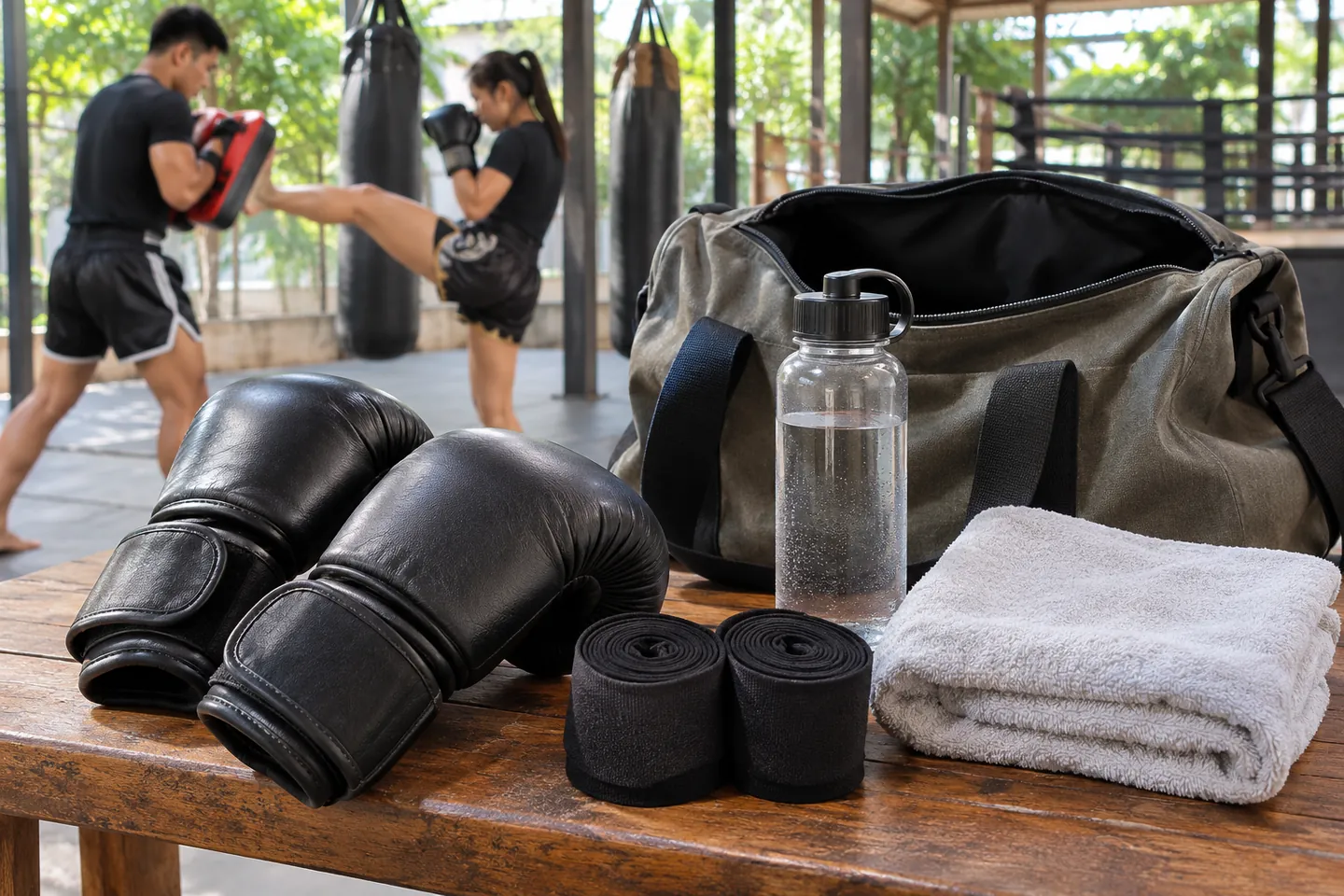
Plan your first Muay Thai equipment purchases in Mississauga with questions about class requirements, fit, care, transport, and what can wait until later.
The equipment search can start before the first class is booked. A beginner opens a few shopping pages and quickly encounters different glove sizes, wrap lengths, pad shapes, and protective items. Each product seems essential in its own description. Soon, the simple idea of trying Muay Thai has become a confusing purchase decision.
Buying beginner Muay Thai equipment in Mississauga works better when the class comes first. Find out what your intended session requires, what can be provided for an introduction, and what the coach recommends after seeing you train. This article offers a decision process rather than a shopping list of brands or current prices. Requirements and products change, so confirm the details before spending money.
Start with the next class, not every possible activity
Ask the gym what you need for the specific session you will attend. A beginner technique class and a later activity with different contact requirements may not use the same equipment. Buying for every imagined future stage can leave you with items that do not fit the program or remain unused in a cupboard.
Explain that you are new and would like to avoid unnecessary purchases. Ask whether introductory equipment is available, whether any personal items are required immediately, and when the coach usually discusses the next purchase. Do not assume borrowing is available simply because another gym offers it. Confirm the arrangement directly.
Write down the requirements in the language the team uses. If you do not understand an item, ask what it is for and how it will be used in class. A clear purpose makes shopping easier. You can evaluate whether a product meets a known need rather than responding to broad claims about performance.
Let fit be a practical conversation
An equipment size printed online is only part of the decision. Ask the coach how the item should fit for your intended use and what signs suggest it is unsuitable. If possible, examine an appropriate example before buying. You should understand what you are looking for, not merely copy a number from someone else’s order.
For gloves, explain whether you will wear wraps and ask how that affects the fit check. Avoid choosing solely by colour, sale price, or the size used by a friend. Your hand and class requirements may differ. The coach can help identify the relevant considerations without turning the first purchase into a technical research project.
If an item feels painful, unstable, or difficult to secure, do not assume it needs to be endured until you become experienced. Stop and ask for guidance. Some fit issues are apparent immediately, while others become clearer during use. Preserve the retailer’s return information and follow its conditions if you may need an exchange.
Ask for a demonstration before relying on an accessory
Hand wraps and protective equipment need to be used as intended. Ask the coach to demonstrate any setup that is new to you. Watching once may not be enough, so allow time to repeat the process and have it checked. A product in your bag is not useful if you cannot apply it correctly before class.
Avoid treating a random online tutorial as a universal answer. Different equipment and uses can require different handling. Manufacturer instructions and the coach’s guidance for the class should inform your setup. If they appear inconsistent, ask for clarification instead of choosing whichever version looks faster.
Arrive with enough time to prepare. Rushing through straps or wrapping because the lesson has already started can lead to mistakes and distraction. As you become familiar with the process, it may take less time. Until then, preparation is a skill worth giving a few calm minutes of attention.
Separate personal items from shared training equipment
You may see pads, shields, and other tools around the gym and assume that students are expected to own them. Ask before purchasing. Some equipment belongs to the training space and is selected by the coach for particular drills. Owning a pad does not automatically mean you have learned to hold it or use it appropriately.
Personal equipment also comes with responsibilities. Follow the gym’s rules about sharing, cleaning, and storage. Do not lend an item simply because another student forgot theirs if the gym has a different policy. Ask staff how to handle the situation. Practical routines help the whole class operate consistently.
If you want equipment for home practice, discuss the intended use first. A bag or pad purchase can create the impression that you are ready for unsupervised drills that have not yet been taught. The coach can explain what is suitable for your experience and whether a purchase is useful at all.
Make care part of the buying decision
Before buying, read the manufacturer’s care instructions. Ask yourself whether you have a realistic place to store and dry the equipment as directed. An item that requires attention after every session should fit your routine, not only your budget. Care is easier when the arrangement is planned before the first damp gym bag comes home.
Do not leave used clothing and equipment packed indefinitely. Follow the recommended cleaning and drying process for each material. Avoid inventing a treatment based on a household cleaning product that seems powerful. Some products may be unsuitable for the item, and the manufacturer is the appropriate source for material-specific guidance.
Inspect equipment regularly for changes that affect its use. If a strap no longer secures properly, padding appears damaged, or the item behaves differently, ask the coach whether it should be used. Do not rely on appearance alone or assume that every worn item can be repaired at home.
Think about the trip across the city
Your equipment has to travel with you through an ordinary Mississauga day. If you come directly from work, consider where the bag will be stored and how you will carry it. If you use transit, an oversized bag may become inconvenient. A practical kit is one you can bring consistently without turning the journey into a logistical problem.
Use separate storage for clean and used clothing where practical. Keep small items together so they do not disappear at the bottom of the bag. Check that bottles are closed before packing them beside equipment. These habits are not glamorous, but they prevent the small frustrations that can make a class feel harder to attend.
Pack the night before when the next day will be busy. A simple check of the actual class requirements is enough. You do not need to carry every item you own to every session. Ask the coach if you are unsure what will be needed, especially when attending a different class format.
Resist upgrades without a clear reason
After a few enjoyable classes, buying more equipment can feel like proof of commitment. Before upgrading, identify the problem you are trying to solve. Is the current item unsuitable, worn, or no longer appropriate for the activity? Or are you responding to a new design and the excitement of starting a sport?
There is nothing wrong with enjoying equipment, but a purchase should not replace the work of attending and learning. A more expensive item does not automatically clarify a combination or improve partner communication. Ask the coach whether an upgrade addresses a real requirement. Sometimes the useful next step is simply continuing with a suitable kit.
Avoid comparing your bag with an experienced student’s collection. Their equipment may reflect years of changing activities and preferences. You only need what supports your present training. Keeping the kit manageable can make care, transport, and replacement easier as you learn what you actually use.
Plan replacements without guessing a universal timeline
Equipment does not wear identically for everyone. Frequency of use, care, materials, and the activity all matter. Rather than accepting a fixed replacement schedule from a casual comment, learn what changes should prompt a check. The manufacturer and coach can provide guidance relevant to the item and its role in class.
Set aside time to inspect your kit when you pack it. This does not need to become an elaborate checklist. Notice whether closures work, whether anything is damaged, and whether the item is ready for the next session. Discovering a problem at home is easier to manage than discovering it when a partner is waiting.
If you replace an item, ask before passing the old one to another beginner. Something unsuitable for your use may also be unsuitable for theirs. Generosity does not remove the need for a condition and fit check. The recipient should understand the item’s history and have guidance on whether it meets their class requirements.
Leave the first conversation with a short list
A useful equipment discussion should end with a few clear answers: what is needed now, what can wait, how the item should fit, and how it should be cared for. If you are still uncertain, ask the coach to identify the single next purchase. Reducing the decision can be more helpful than gathering another dozen product options.
You can explore Muay Thai at Konga and ask about current beginner requirements through the free trial page. Confirm arrangements before buying. A thoughtful kit supports attendance and practice; it does not need to announce expertise. Start with the equipment the class actually requires and learn how to use and maintain it well.
Filed under
Keep exploring
More training insights await.