
A calm guide to beginner yoga classes in Mississauga: what happens in a first session, props, breathing, etiquette, modifying poses and building a routine.
Most people walk into their first yoga class carrying at least one quiet assumption: that everyone else will be more flexible, more relaxed and more sure of what they’re doing. Sometimes that’s true. More often, the room includes plenty of people who also aren’t sure which way to face, can’t touch their toes and are glancing sideways to see what the person next to them is doing.
Beginner yoga classes in Mississauga exist precisely for this stage. They are designed for people who are new to the practice, coming back after a long break, or using yoga to complement other training like martial arts or strength work. The pace is slower, the instructions more detailed, and modifications are expected rather than exceptional.
This guide covers what to expect, how to prepare, and how to approach your first few weeks in a way that makes yoga feel welcoming rather than intimidating.
You don’t need to be flexible
The most common reason people give for avoiding yoga is “I’m not flexible enough.” It’s a bit like saying you’re not fit enough to go to the gym. Flexibility often improves with practice; it’s not a prerequisite.
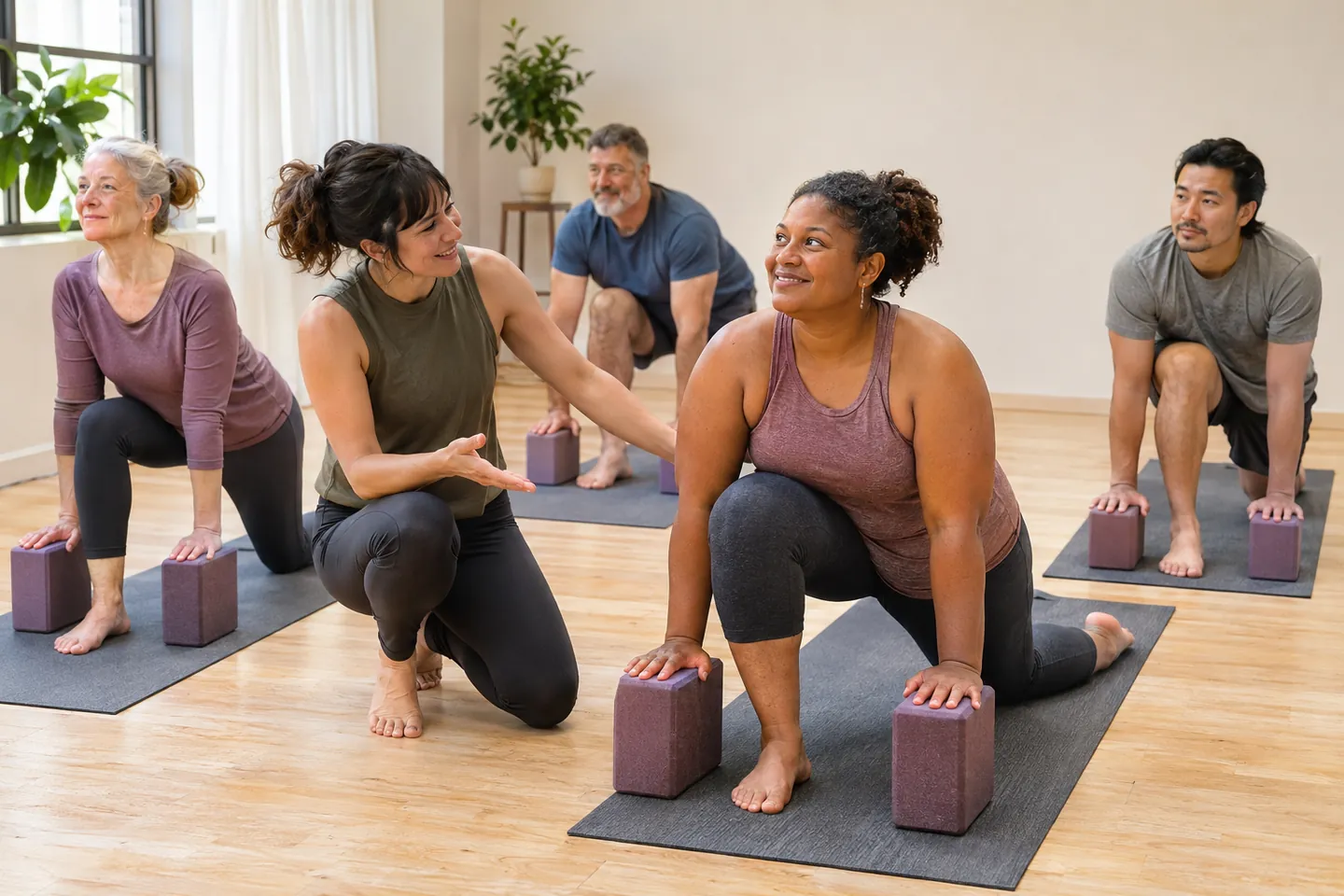
In a beginner class, the instructor will usually offer several versions of each pose. If your hands don’t reach the floor in a forward fold, you might rest them on your shins or on blocks. If a pose strains your knees, there may be a variation that takes pressure off them. These aren’t lesser versions. They’re the right versions for your body today.
Yoga is also about more than stretching. Balance, strength, breathing and attention are all part of the practice. You may find that you’re stronger or steadier than you expected even if your hamstrings are tight.
What a beginner class usually involves
A typical beginner session might start with a few minutes of settling in: sitting or lying down, noticing your breath, and letting the day’s distractions fade a bit. Then the class moves into gentle warm-up movements, followed by a series of foundational poses such as mountain pose, downward-facing dog, lunges, simple twists and a few standing balances.
Instructors in beginner classes tend to explain each pose in detail: where to place your feet, how to position your hands, what to notice. Transitions between poses are usually slower than in more advanced classes, giving you time to find each position.
Classes often end with a period of rest, lying on your back in a pose sometimes called savasana. This can feel strange at first, lying still in a room full of people, but many find it becomes one of their favourite parts.
The role of breathing
You’ll hear a lot about breath in yoga. Instructors may ask you to breathe in as you lift your arms and breathe out as you fold forward. They might suggest slowing your breathing or noticing where you feel it in your body.
Don’t worry if coordinating breath and movement feels awkward at first. It’s a skill that develops with practice. In the meantime, the most important thing is to keep breathing. Holding your breath when a pose is challenging is very common and tends to increase tension.
Many people, including martial artists and athletes, find that the breathing focus in yoga carries over into other parts of life. Paying attention to your breath during a difficult moment can be a useful habit whether you’re sparring, stuck in traffic on Hurontario or preparing for a stressful meeting.
Props are your friends
Yoga studios often provide props like blocks, straps, bolsters and blankets. Beginners sometimes feel that using props is a sign of weakness. In reality, props help you find a comfortable, stable position and get more out of each pose.
A block can bring the floor closer when your hands don’t reach it. A strap can extend your reach in seated stretches. A blanket under your knees can make kneeling poses more comfortable. Experienced practitioners use props regularly too.
If you’re unsure how to use a prop, ask. Instructors are usually happy to show you, and it’s much better than struggling through a pose that doesn’t feel right.
What to wear and bring
Comfortable clothing that allows you to move freely is all you need. Fitted clothing is often easier than very loose clothing, which can slide around in inverted poses like downward dog. Yoga is usually practised barefoot.
Bring a water bottle and, if you have one, your own mat. Many studios have mats available, but some people prefer their own for hygiene and familiarity. A small towel can be useful if you tend to sweat.
Arrive a few minutes early for your first class. This gives you time to settle in, introduce yourself to the instructor and mention any injuries or health concerns.
Telling the instructor about injuries
If you have any injuries, chronic pain, recent surgery or health conditions, let the instructor know before class. They can suggest modifications or alternatives for poses that might aggravate your condition.
If you’re pregnant, have high blood pressure, or have conditions affecting your heart, joints or balance, it’s wise to talk with your doctor before starting a new exercise practice. Some poses may need to be adjusted or avoided.
Yoga can be gentle, but it’s still physical activity. Listen to your body. If a pose causes sharp pain, come out of it. Discomfort from stretching is normal; pain is a signal to stop.
Etiquette in the studio
Yoga studios tend to have a calm, quiet atmosphere. A few simple habits help keep it that way. Silence or turn off your phone. Arrive on time, or if you’re late, enter quietly. Place your mat so there’s space between you and others.
During the final rest, try to stay until the end of class. If you need to leave early, let the instructor know beforehand and leave before the final rest begins so you don’t disturb others.
Don’t worry about getting etiquette perfect. Most people are understanding with beginners. These guidelines simply help everyone enjoy the class.
Comparing yourself to others
It’s natural to glance around and compare yourself to others in the room. Try to resist dwelling on it. Everyone’s body is different, and people have different histories, injuries and levels of experience. The person next to you may have practised for years, or they may simply have naturally flexible hips.
Focus on your own experience. How does the pose feel in your body? Are you breathing comfortably? Can you stay present with the movement? These questions are more useful than whether your forward fold looks like the instructor’s.
Over time, you’ll notice your own progress. Poses that felt impossible may become accessible. That progress is meaningful because it’s yours.
Yoga alongside other training
Many people practise yoga alongside martial arts, strength training or group fitness. Yoga can complement more intense training by providing a space for mobility work, breathing practice and recovery.
For example, someone training Muay Thai might appreciate yoga’s focus on hip mobility and balance. Someone lifting weights might enjoy the emphasis on controlled movement and breathing. Someone recovering from a demanding week might simply value the quieter pace.
Yoga isn’t a replacement for medical care or rehabilitation, but some people find it a helpful part of an overall approach to staying active. If you’re dealing with a specific issue, consider talking with a physiotherapist about how yoga might fit into your plan.
Learning the names as you go
Instructors often use pose names, sometimes in English and sometimes in Sanskrit, and in the first few classes those names can wash over you like a foreign language. You don’t need to study them in advance. Watching the instructor and the people around you will get you into roughly the right shape, and the names tend to stick on their own after hearing them a few times.
If a cue doesn’t make sense, it’s perfectly reasonable to look up and watch for a moment before moving. Many beginners find that a handful of poses come up in almost every class: downward-facing dog, child’s pose, mountain pose, a low lunge and a seated forward fold. Once those feel familiar, the rest of the class becomes much easier to follow.
Some people like to jot down one or two poses they want to remember after class, along with a quick note about how they felt. It’s a small habit, but it can make the next session feel less like starting from scratch and more like picking up where you left off.
Building a routine
Consistency matters more than intensity. One or two classes a week can be a good starting point. Some people add short home practices of ten or fifteen minutes on other days, repeating poses they’ve learned in class.
Find times that fit your life. Morning classes can set a calm tone for the day, while evening classes can help you unwind after work. Weekend sessions might suit those with busy weekday schedules.
Track how you feel over a few weeks. Notice changes in your mobility, balance, stress levels or sleep. These observations can help you stay motivated, especially on days when practice feels harder.
When a pose just isn’t working
Some poses will feel uncomfortable or confusing no matter how many times you try them. That’s normal. Different bodies have different structures, and some poses may never feel right for you. Talk to your instructor about alternatives that give similar benefits.
It’s also fine to rest during class. If you need a break, you can sit, kneel or lie down at any point. Many instructors suggest a resting pose like child’s pose that you can return to whenever you need it.
Remember that the goal isn’t to achieve a particular shape. It’s to practise with attention and care.
Your first step onto the mat
The hardest part of starting yoga is often walking through the door the first time. After that, the room becomes more familiar, the poses gain names you recognize and the practice starts to feel like your own.
If you’d like to try a beginner-friendly session, take a look at our yoga classes and the adult schedule, or book a free trial at our Mississauga studio. Bring comfortable clothes, an open mind and a willingness to go at your own pace.
Filed under
Keep exploring
More training insights await.