
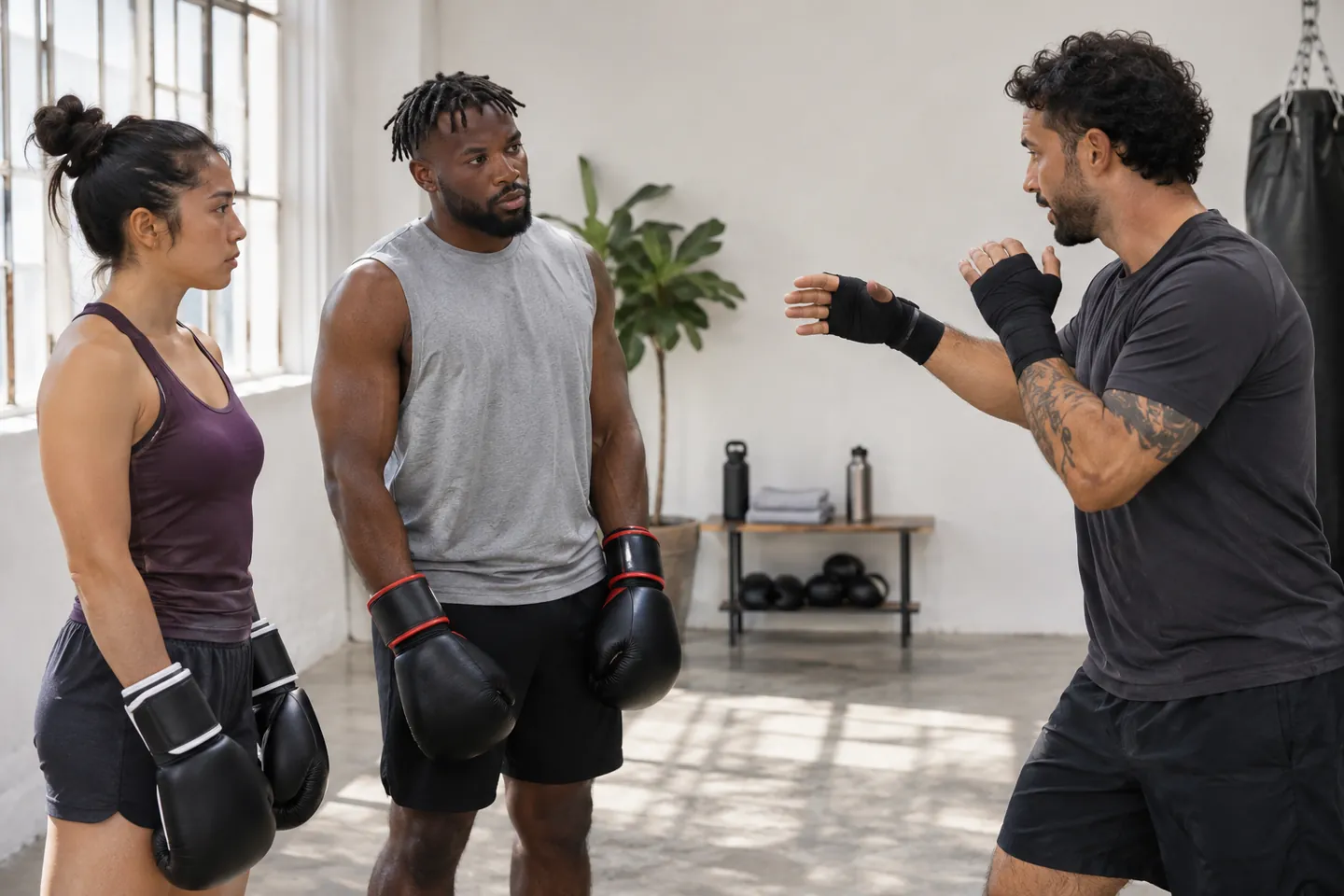
Feel comfortable in a boxing gym in Mississauga with practical guidance on arrival, shared space, partner communication, equipment, questions, and class routines.
A new boxing gym can seem full of unwritten rules. People know where to put their bags, when to choose a partner, and how to move between stations. If you are new, those routines can feel more intimidating than the punches. The good news is that thoughtful gym etiquette is mostly about making the shared session easier for everyone to understand.
Boxing gym etiquette in Mississauga begins with the actual policies of the gym you attend. Ask about those policies rather than assuming every room works the same way. Beyond the local details, a few habits travel well: arrive prepared, listen when instructions change, respect other people’s participation choices, and communicate before a shared drill becomes unclear.
Arrive with enough time to become ready
Ask how early new participants should arrive and plan accordingly. You may need to register, change footwear, fit wraps, or discuss the session with a coach. Arriving at the class start time is not always the same as being ready to join the first activity.
If you are delayed, contact the gym when practical and follow its instructions. Some sessions may have specific expectations about joining after the beginning. Do not slip into a drill you have not heard explained simply because you recognise part of the movement.
A late arrival does not require a dramatic apology to the whole room. Speak to the appropriate person, learn what you missed, and join where directed. The useful goal is a clear transition that does not interrupt other participants or leave you guessing about the task.
Learn where personal belongings belong
Put bags, coats, bottles, and outdoor shoes in the designated places. The area beside a bag or pad station may look temporarily empty while still being part of someone’s movement space. Ask before leaving belongings on the training floor.
Keep pathways and exits clear. You should not need to step over your own gear to move between exercises, and other participants should not have to work around it. This is a simple way to reduce unnecessary interruptions in a busy class.
In wet or snowy weather, follow the gym’s footwear routine carefully. Give yourself time to change and contain damp items. Your commute ends at the training area, but the moisture on outdoor footwear can travel farther unless you make a deliberate transition.
Give demonstrations your attention
When the coach calls the group together, stop the previous activity as instructed and find a position where you can see. Keep enough space around others and avoid continuing to hit a bag while the explanation is underway. The demonstration may include a change that affects the whole class.
Listen for the purpose, sequence, contact level, and stopping instructions. If one of those is unclear, ask. A concise question can help other participants who were unsure too. You do not need to pretend you understood simply because the explanation seemed brief.
If you missed something because you were adjusting equipment, tell the coach. It is better to request a repeat than to start a partner drill with only half the information. Attention is a shared responsibility, and practical honesty makes the class easier to manage.
Ask questions at useful moments
Questions are part of learning, but timing can help the coach answer well. During a demonstration, a short clarification about the current instruction may be appropriate. A longer question about your overall goals may fit better before or after class, depending on the gym’s routine.
Be specific when possible. “Which foot starts this step?” is easier to answer in the moment than “Can you explain all the footwork again?” If you are completely lost, say so, and let the coach decide how to simplify the task.
Avoid apologising repeatedly for being a beginner. You are attending to learn. A direct question gives the instructor useful information and keeps the conversation focused on the movement rather than on whether you deserve help.
Agree on the partner drill before starting
When paired with another participant, confirm the sequence and roles. Both people should know who begins, how the targets are presented, what contact is expected, and when to reset. Do not assume that your partner heard or interpreted every instruction exactly as you did.
Use the intensity the coach assigned. A partner’s enthusiasm does not authorise you to increase force or introduce a new activity. If either person wants an adjustment, pause and ask the instructor to help establish a clear version of the drill.
Respect a request to stop promptly. Do not finish the combination after someone signals that they need a pause. The shared understanding of the task matters more than completing the last punch. Restart only when both people are ready and the conditions are clear.
Respect noncontact preferences
Participants may have different goals and boundaries. Someone can be interested in boxing technique without wanting sparring or strikes directed at them. Do not pressure them to explain or defend that preference, and do not treat it as a lack of seriousness.
If the class format raises a question about which activities fit, involve the coach. The instructor can clarify suitable options and the limits of the session. Partners should not have to negotiate a major change in contact expectations on their own.
Keep your own preferences clear too. Saying “I am participating without contact today” is more useful than hoping others will infer it. Respectful communication includes stating your boundary and listening when someone else states theirs.
Let the coach provide technical instruction
You can tell a partner that a target feels too close or that you are unsure of the sequence. Those are practical observations about the shared drill. Avoid turning them into an unsolicited technical lesson, especially when you are also a beginner.
If you think something needs correction, ask the coach to watch. Describe what you notice without pretending to diagnose the cause. “We lose our distance after the second punch” gives the instructor a clear problem to assess.
Receive coaching without arguing from a video you watched unless you are asking a sincere question about the difference. The current drill has a particular purpose. If another source seems inconsistent, ask for clarification at an appropriate moment rather than changing the exercise mid-round.
Share equipment and space deliberately
Follow the rotation system for bags, pads, and other equipment. When your turn ends, move clear so the next person can begin. Do not occupy a station during someone else’s assigned time because you want to finish an extra sequence.
Stay aware of neighbouring drills. A step that feels small to you may enter another participant’s working area. Look before moving through the room and use the routes the coach recommends. Avoid walking between a striker and a target or through an active partner exercise.
Ask before borrowing personal equipment. A pair of gloves left beside a bench is not automatically shared property. If you need something, speak to staff about available options instead of assuming another participant will not mind.
Follow the cleaning and return routine
Use the cleaning method the gym provides for shared equipment and return items to their designated place. Do not improvise with an unfamiliar product, especially if the material’s care requirements are unclear. Staff can explain the appropriate process.
Tell the coach if equipment seems damaged or unsuitable. A clear description and the item’s location are useful. Quietly putting it back leaves the next person to discover the same issue, while attempting a repair may create another problem.
Keep personal equipment ready for class too. Unpack damp items after training and follow their manufacturer’s care instructions. Arriving with gear you have checked reduces avoidable interruptions and makes shared drills easier to begin.
Treat recording as a permission question
A training video can be useful, but other people may not want to appear in it. Follow the gym’s recording policy and obtain appropriate permission before including others. Do not assume that being in a public-facing class means every participant has agreed to filming.
Keep cameras and phones out of movement paths. If recording is permitted, choose a setup that does not interfere with the drill or require someone else to alter their participation. The class remains the primary activity.
Avoid posting identifiable classmates without their agreement. If the purpose is technical feedback, a short private clip of your own movement may be sufficient. Ask the coach what would actually help answer your question before recording a large part of the session.
Finish the session considerately
Return equipment, collect your belongings, and leave the area ready for the next group. If you need a longer conversation with the coach, ask whether they have time rather than assuming the period after class is uncommitted.
A brief thank-you to a partner is welcome, but you do not need a performance review of their ability. Keep the interaction straightforward and respectful. The most useful partnership is one in which both people understood the task and could communicate comfortably.
When beginning boxing classes, ask about the room’s routines as readily as you ask about a punch. Etiquette is not a hidden test of belonging. It is a set of practical habits that help everyone arrive, learn, practise, and leave with fewer avoidable difficulties.
Filed under
Keep exploring
More training insights await.