
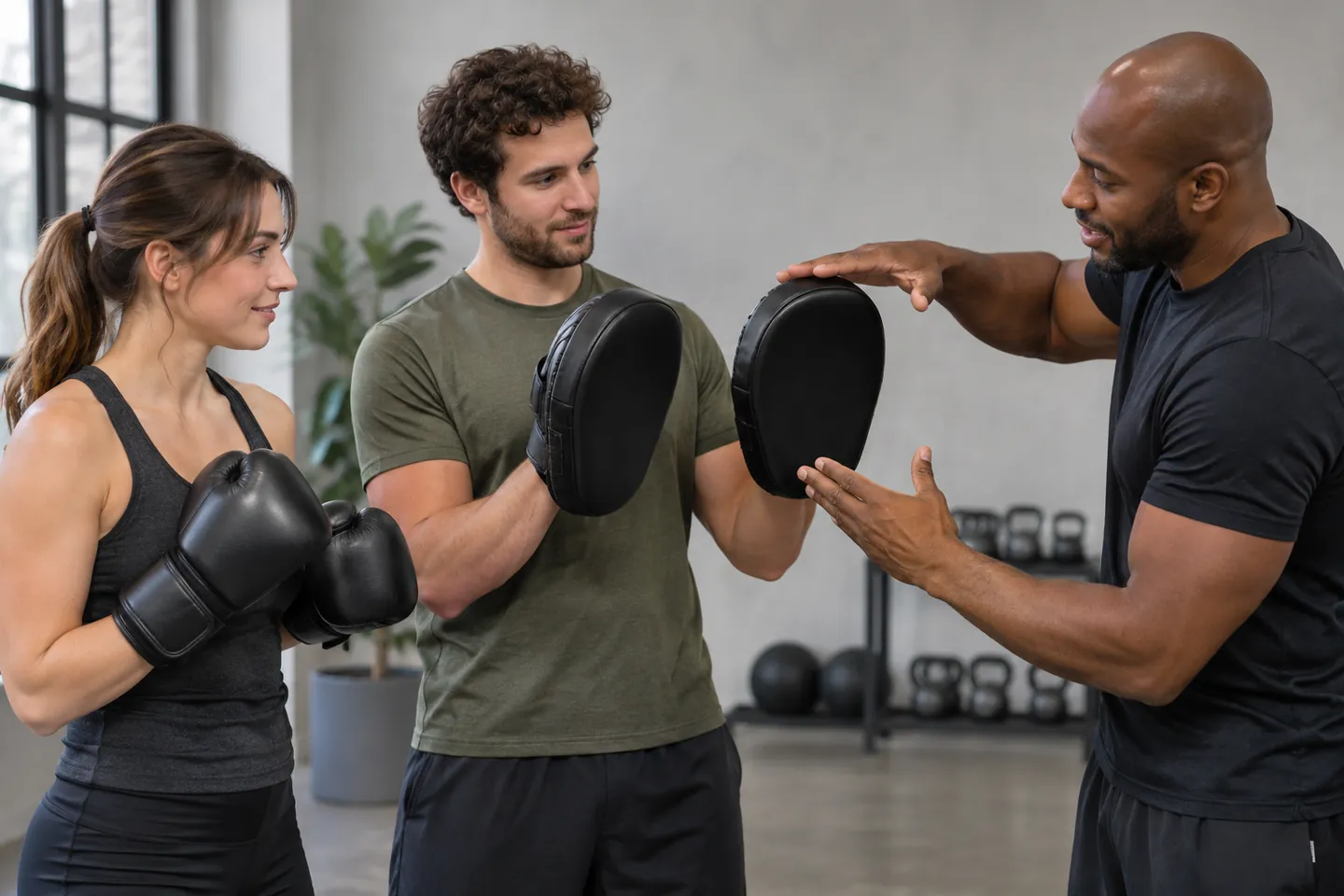
Get more from beginner boxing padwork in Mississauga by understanding the striker and holder roles, agreeing on the drill, and using clear coaching feedback.
Padwork can look like a conversation conducted entirely through movement. A target appears, a punch meets it, another target follows, and the sequence seems to flow without discussion. For beginners, however, the conversation needs words first. Both people must understand what is about to happen, where the targets belong, and how to stop when something becomes unclear.
Boxing padwork for beginners in Mississauga is therefore about learning two roles, even if you are most interested in throwing punches. The striker has a task, and the holder has a task. A coach should teach both. When those roles are understood, a simple drill can become a useful place to practise distance, timing, and communication without turning the session into an improvised test.
Begin by naming the drill
Before either participant starts, confirm the sequence. Use the terminology your coach has taught and make sure both people interpret it the same way. If the class uses numbers for punches, verify what they mean. A misunderstanding about a number is easy to prevent and difficult to correct once someone is already moving.
Ask how the repetition begins and ends. Will the holder present one target at a time? Will the striker complete a fixed sequence after a verbal cue? Should both people reset after each attempt? These details make the drill predictable enough for beginners to follow.
Predictability is useful at this stage. It gives you room to learn the assigned movement without guessing what your partner might do next. More responsive drills can be introduced deliberately by the coach when appropriate. They do not need to appear because one participant becomes bored and begins improvising.
Learn pad holding as an actual skill
Holding pads is not simply waiting while someone else practises. The holder’s position, target placement, and response to contact affect the drill. Ask the coach to demonstrate the role and observe your first attempts. Do not assume that wearing the equipment tells you how to use it.
Follow the exact placement and movement instructions for the pads. Avoid adding dramatic swings or pushing into the punch because you have seen experienced holders do something similar. A visible motion may have a purpose that is not clear from watching it briefly. Beginners need a version they can understand and repeat.
If holding feels awkward or uncomfortable, stop and ask for help. The equipment fit, position, or task may need adjustment. Do not continue because you think only the striker is allowed to need instruction. Both roles deserve coaching and both participants can raise a concern.
Agree on the contact level
The coach should establish the appropriate intensity for the exercise. Make sure both partners understand it before beginning. The striker should not increase force to impress the holder, and the holder should not encourage a harder effort beyond the assigned task.
If the contact feels different from what was agreed, stop and clarify. You do not need to wait until the round ends to address a mismatch. A brief reset preserves the learning purpose and gives the coach an opportunity to adjust the pairing or drill.
Avoid interpreting enthusiasm as consent to change the task. Someone smiling, encouraging you, or completing a sequence does not mean they want more force or a different combination. Clear instructions remain the reference. Communication should stay explicit when the conditions change.
Establish distance together
The striker needs an appropriate starting distance, and the holder needs a position that supports the assigned targets. Let the coach help both people find that relationship. One partner should not be forced to compensate continually for the other’s drifting position.
Begin with a stationary setup if that is what the instructor requests. Notice whether you can perform the movement without reaching or feeling crowded. If the distance is unclear, reset before adding repetitions. A small adjustment at the beginning may resolve several problems that otherwise appear technical.
When the drill includes movement, ask how the partners should travel and who initiates it. Do not assume that the holder should walk backward indefinitely while the striker follows. Movement changes the task, and both people need to know its direction, distance, and ending.
Make the first attempts deliberately simple
A single target or short sequence gives the coach a chance to see what each participant is doing. The striker can focus on the punch and return, while the holder practises presenting a consistent target. There is no requirement to begin with a long combination.
After a few attempts, pause for feedback. The coach may correct the striker, the holder, or the relationship between them. Listen even when the correction is directed at your partner, because it may change what you should expect on the next repetition.
Keep the sequence short until both roles are clear. A longer pattern can hide uncertainty by keeping everyone busy. A simple drill exposes the exact point that needs attention, which makes it easier to improve the next attempt.
Use a clear stop signal
Ask the coach how to pause a partner drill and agree on a simple verbal cue if appropriate. Either person should be able to stop when instructions are unclear, equipment needs adjustment, or the task no longer matches what was agreed. Stop promptly when your partner signals.
Do not keep punching to finish the combination after the holder has asked to pause. The sequence is less important than the shared understanding of the drill. Once both people are ready and the coach has addressed any issue, you can restart from the beginning.
This habit is especially useful when gloves make small adjustments awkward or when background noise makes conversation difficult. Face your partner, speak clearly, and confirm the next action before resuming. Communication is part of the skill, not an interruption to it.
Keep feedback within your role
A partner can tell you that the target feels too close, the sequence is unclear, or the contact level needs adjustment. Technical instruction belongs with the coach, particularly when both participants are beginners. Avoid inventing corrections based on what you think boxing should look like.
If you notice something you are unsure about, ask the instructor to watch. You can describe the observation without diagnosing it: “We keep losing the distance after the second punch.” That gives the coach a concrete problem to assess for both roles.
Likewise, receive a partner’s practical request without treating it as criticism of your ability. They are helping establish the conditions of the shared drill. The aim is a workable practice relationship, not winning an argument about whose movement caused the problem.
Change roles with attention
When the coach asks you to switch, take time to fit the equipment properly and review the task from the new position. Understanding the sequence as a striker does not automatically tell you where to hold each target. Ask for a reminder if necessary.
Switching roles can reveal why clear cues matter. You may notice that an unpredictable rhythm makes holding more difficult or that a consistent reset helps both people. Use that experience to become a more considerate partner when you return to striking.
Do not compare the roles as though one is the real work and the other is a break. Each requires attention and has its own learning demands. Follow the session’s pacing and ask for adjustments when needed, regardless of which equipment you are wearing.
Resist performing for the room
Padwork can be visually impressive, and that can create pressure to look fast or powerful. Beginners may rush the sequence when someone watches or increase effort when a neighbouring pair becomes louder. Return to the purpose your coach assigned.
The sound of contact is not a complete measure of a useful repetition. You also need a clear target, appropriate distance, an understood sequence, and a controlled ending. A quieter drill that meets those conditions can be more valuable for your current lesson than a dramatic exchange that neither partner fully understands.
If recording is allowed, use it for a specific coaching question and respect others’ privacy. Do not change the intensity or sequence to make the clip more entertaining. The camera should document the practice you were assigned, not become a reason to abandon it.
Review the partnership as well as the punches
At the end of a round, consider what worked between you. Were the cues clear? Did both people know when to reset? Did the distance remain understandable? These observations help you improve the shared drill, even if the punches still need technical attention.
Ask the coach for one correction to carry into the next round. It might concern target placement, timing, the striker’s return, or how the partners move. Choose a manageable priority rather than trying to change everything at once.
After class, note any question that remains. If you regularly feel uncertain as a holder, ask for more instruction rather than avoiding the role silently. Being able to explain what you do not understand gives the coach a better starting point.
Let simple padwork become dependable
A useful beginner padwork session ends with greater clarity about both roles. You know what the target means, how to begin, what contact level is expected, and how to stop. That shared structure allows the technical lesson to become the centre of attention.
When exploring boxing classes, ask how new participants learn partner drills and pad holding. Clear instruction makes a modest sequence worth practising. The apparent conversation of experienced padwork grows from many ordinary exchanges in which both people knew the task and had room to ask questions.
Filed under
Keep exploring
More training insights await.