
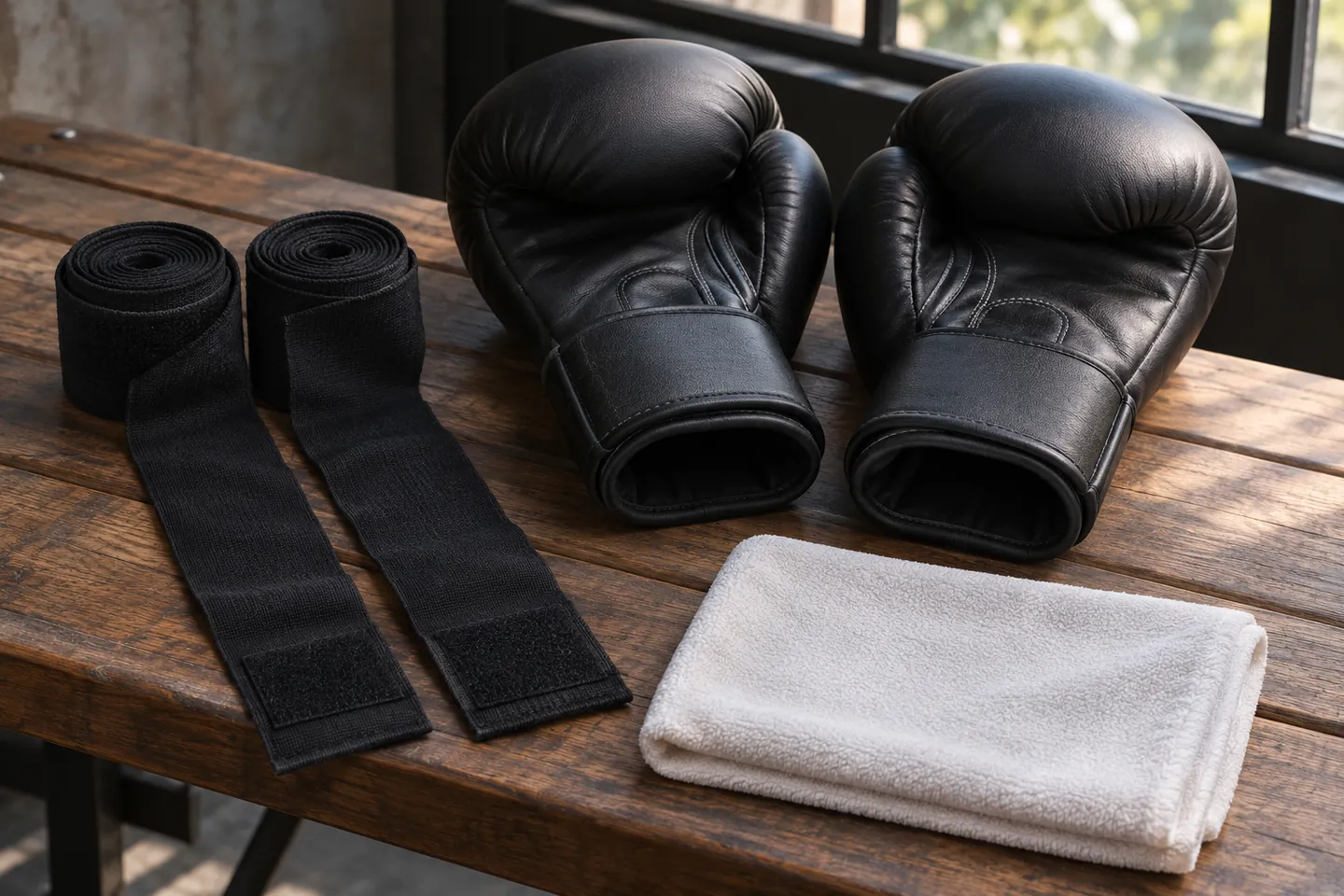
Build a practical boxing equipment routine in Mississauga, from learning to fit wraps and checking gloves to unpacking, drying, storing, and preparing your gym bag.
The next boxing class becomes easier when the previous one ends with a few ordinary habits. You take damp items out of the bag, check the equipment, and put clean wraps somewhere you will find them. None of this looks as exciting as padwork, but it changes how you arrive. Instead of untangling a forgotten pair of wraps while the demonstration begins, you have time to listen.
Boxing wraps and equipment care in Mississauga should follow two sources of guidance: your coach for the equipment setup used in class, and the manufacturer for cleaning and storage. A general article can help organise the routine, but it should not replace product-specific directions or an individual check of how a wrap and glove fit your hand.
Learn the wrap setup in person
If wraps are required for your session, ask the coach which type to bring and how they want you to use it. Different products and methods exist, and a short video may not show enough detail for you to judge your own result. An in-person demonstration gives you an opportunity to ask questions as the wrap is applied.
Watch the complete process once before trying to memorise it. Then practise slowly while the coach observes. Ask what you should check before putting on the glove and how to recognise that the setup needs adjustment. You are learning a practical routine, not simply reproducing a visual pattern.
Avoid assuming that tighter is automatically better. If the wrap feels uncomfortable, restricts normal movement, or creates an unusual sensation, stop and ask for help. A written guide cannot assess your hand or determine why a fit feels wrong. The useful response is to adjust with qualified guidance before continuing.
Give wrapping a place in your arrival plan
New participants often underestimate how much time a wrap routine can take. Ask how early to arrive and whether assistance is available before class. Planning for those minutes is easier than rushing through an unfamiliar setup after the session has started.
Prepare the wraps so that they are easy to handle. Follow the coach’s preferred rolling or folding method and keep each pair together. The point is not to make your bag look perfect. It is to avoid beginning every class with a small organisational problem that takes attention away from instruction.
If you are still learning, tell the coach rather than hiding the uncertainty. A quick check may prevent you from practising for an entire round with a setup that needs correction. Repeated questions are reasonable while a new routine becomes familiar.
Check the glove after the wrap
A glove should be assessed with the setup you will actually wear. Once the wrap is in place, put the glove on and ask for help checking the hand position and closure if needed. A fit that seemed comfortable without a wrap may feel different with it.
Notice pressure points, excessive movement, or difficulty following the coach’s instructions for the hand. Describe the issue plainly. Do not assume that discomfort must be tolerated because the equipment is new or because another person uses the same model without difficulty.
If the fit changes during class, pause and address it. A wrap that shifts or a closure that no longer feels secure is a practical problem to solve, not a distraction you should ignore. Ask the instructor where to step aside and how to rejoin the drill once the adjustment is complete.
Separate cleaning instructions by item
Gloves, textile wraps, shoes, bottles, and clothing are not one category of washable equipment. Read the label or manufacturer instructions for each item. Do not apply the washing routine for a shirt to a glove simply because both were used in the same class.
If instructions are missing, contact the manufacturer or seller with the exact product details. Guessing from appearance can be unreliable because materials and construction differ. Keep the response with your purchase information so that you do not need to solve the same question repeatedly.
For wraps, follow the specific laundering and drying directions provided with the product. For gloves, use the care method intended for that model. The organising principle is simple: identify the item, find its instructions, and build the routine around those instructions.
Unpack promptly after training
A closed gym bag is convenient for transport, but it should not become the permanent storage location for damp equipment. When you arrive home, separate used clothing, wraps, gloves, and other items so that each can receive the care it needs.
Everlast’s glove-care guidance recommends cleaning after use and allowing gloves to dry fully in a well-ventilated space. Its directions provide a useful reminder that airing out is part of the routine, while the exact cleaning method should match your own product. See Everlast’s glove-care guide.
Make unpacking easy enough that you will do it after an ordinary busy evening. A designated shelf or clear area can help, provided it suits the manufacturer’s storage instructions. You do not need an elaborate equipment station; you need a reliable place where damp items will not be forgotten.
Follow the product’s drying guidance
Do not improvise heat-based shortcuts when equipment is still damp before the next session. Check what the manufacturer permits. A radiator, hot car, hair dryer, or direct sunlight may not be an acceptable way to speed the process for your gloves.
Rival’s equipment-care guidance recommends a cool, shaded, ventilated drying area and warns against direct sunlight, machine washing, machine drying, and leaving equipment in hot cars or closed bags. Those instructions are specific manufacturer guidance, not permission to assume that every item in your kit has identical requirements. See Rival’s care instructions.
If your schedule repeatedly leaves equipment unready for the next class, review the routine. You may need more drying time, a different storage location, or a conversation with the coach about suitable options. Do not solve a recurring planning problem by using an unapproved treatment.
Be selective about cleaning products
A product described as antibacterial or deodorising is not automatically suitable for every glove material. Read the equipment manufacturer’s guidance and the cleaner’s directions. Ask before applying an unfamiliar substance to leather, synthetic surfaces, lining, or padding.
Avoid mixing cleaning products or following an internet recipe simply because it is popular. The goal is to care for the equipment according to its instructions, not to create the strongest-smelling cleaning routine. If you are uncertain, contact the manufacturer with the exact product names.
Keep cleaning supplies separate from items that could leak onto your training gear during transport. A sealed bag or another suitable storage method may help, but follow the product’s own handling directions. Practical organisation reduces the chance that an attempted care routine becomes an equipment problem.
Inspect while you put things away
Care time is also a chance to notice changes. Look at closures, seams, lining, and other visible areas without dismantling the equipment. If something appears damaged or feels different in use, ask the coach or manufacturer whether it remains suitable.
Do not rely on appearance alone to decide that a glove is ready for every activity. Its intended use, history, and condition all matter. If your training changes to include a different kind of drill, revisit the equipment question even if the glove still looks presentable.
Avoid repairing important equipment features with an improvised solution and assuming the original function has been restored. A loose closure or damaged area deserves appropriate guidance. The next class can be adjusted while you clarify the issue rather than turning the session into a test of the repair.
Respect shared equipment routines
When using loan gloves, pads, or other shared items, follow the gym’s cleaning and return process. Ask where used equipment belongs and which products are provided. Do not take shared items home or apply your own cleaner without permission.
If you notice damage or an issue with borrowed equipment, tell staff promptly. Describe what you observed and where the item is located. That is more useful than putting it back silently or trying to fix it yourself between rounds.
Shared equipment also requires clear transitions. Finish the drill, follow the cleaning instructions, and return the item to its designated place. Leaving it on the floor near an active station makes the next person’s job harder and can interfere with movement through the room.
Build a small departure check
Before leaving for class, confirm that the required items are present, clean as directed, and ready to use. Check wraps as well as gloves; having one without the other may disrupt the session. Include appropriate indoor footwear if the gym requires it.
Keep outdoor shoes or damp weather items separate from clean training gear. In Mississauga, the journey to class can introduce wet clothing or footwear even when the gym itself is dry. A practical packing arrangement prevents the commute from undoing the preparation you completed at home.
Do not add unnecessary equipment merely to make the bag feel complete. Bring what the session requires and what helps you manage the visit. A smaller, organised kit can be easier to check than a bag full of items you rarely use.
Let care support the learning routine
The purpose of equipment care is to make training preparation dependable. You know how to fit the wraps, where to ask about a glove problem, and what happens to each item after class. Those routines create more room for the lesson itself.
Before your next boxing session, ask the coach to review any part of the setup you still find uncertain. Then follow the product instructions at home and keep the routine simple enough to repeat. Well-organised preparation does not replace boxing practice, but it helps you arrive ready to give that practice your attention.
Filed under
Keep exploring
More training insights await.