
Build a short, realistic mobility routine in Mississauga that fits around desk work, commutes and training, with simple steps for hips, spine and shoulders.
Ten minutes. That’s the number this article is built around, and it’s deliberate.
Most people already know mobility work is a good idea. They have saved stretching videos, bookmarked hour-long flows and promised themselves they’ll “do more mobility” after the next busy stretch at work. What usually goes missing isn’t knowledge but a routine short enough to survive an ordinary week. A morning with a late school bus, a day of back-to-back video calls, a slow drive home on the 403: real life has a way of crowding out long sessions.
Building a short mobility routine in Mississauga, or anywhere else, comes down to making a few clear choices: which areas you care about, which handful of movements address them, and when in your day the routine can live without a fight. This guide walks through those decisions and offers a sample framework you can adapt.
What we mean by mobility
Mobility and flexibility are often used interchangeably, but there’s a useful distinction. Flexibility usually describes how far a muscle can lengthen, often passively, like when you lean into a stretch. Mobility is more about how well you can move a joint through its range under your own control.
In practice, a good mobility routine includes both. You might ease into a position, then gently move in and out of it, or hold it while engaging the surrounding muscles. The goal isn’t to become a contortionist. It’s to feel comfortable moving through the ranges your daily life and training actually require.
That framing helps keep the routine focused. If your work involves sitting, your hips and upper back may feel stiff. If you train in Muay Thai or kickboxing, your hips and ankles may need attention for kicks and footwork. If you lift weights, shoulders and hips for overhead pressing and squatting might be priorities.
Start by picking three areas
A short routine can’t cover everything, and trying to will lead you right back to the hour-long version you never do. Instead, choose three areas that matter most for you right now. Common choices are the hips, the thoracic spine (your mid and upper back) and the shoulders. Ankles and wrists are also common, especially for martial artists and people who do a lot of push-ups.
To pick, think about what feels tight, what limits your training or what bothers you after long periods of sitting. You might notice your hips feel stiff when you get out of the car after a long commute, or that your shoulders feel rounded after a day at the desk.
If you have pain, rather than just stiffness, consider seeing a qualified professional. A physiotherapist or chiropractor can assess what’s going on and suggest appropriate movements. Mobility routines are for general comfort and movement quality, not for diagnosing or treating injuries.
Choose one or two movements per area
Once you’ve chosen your areas, pick one or two movements for each. Keep them simple enough that you can do them without checking a video every time.
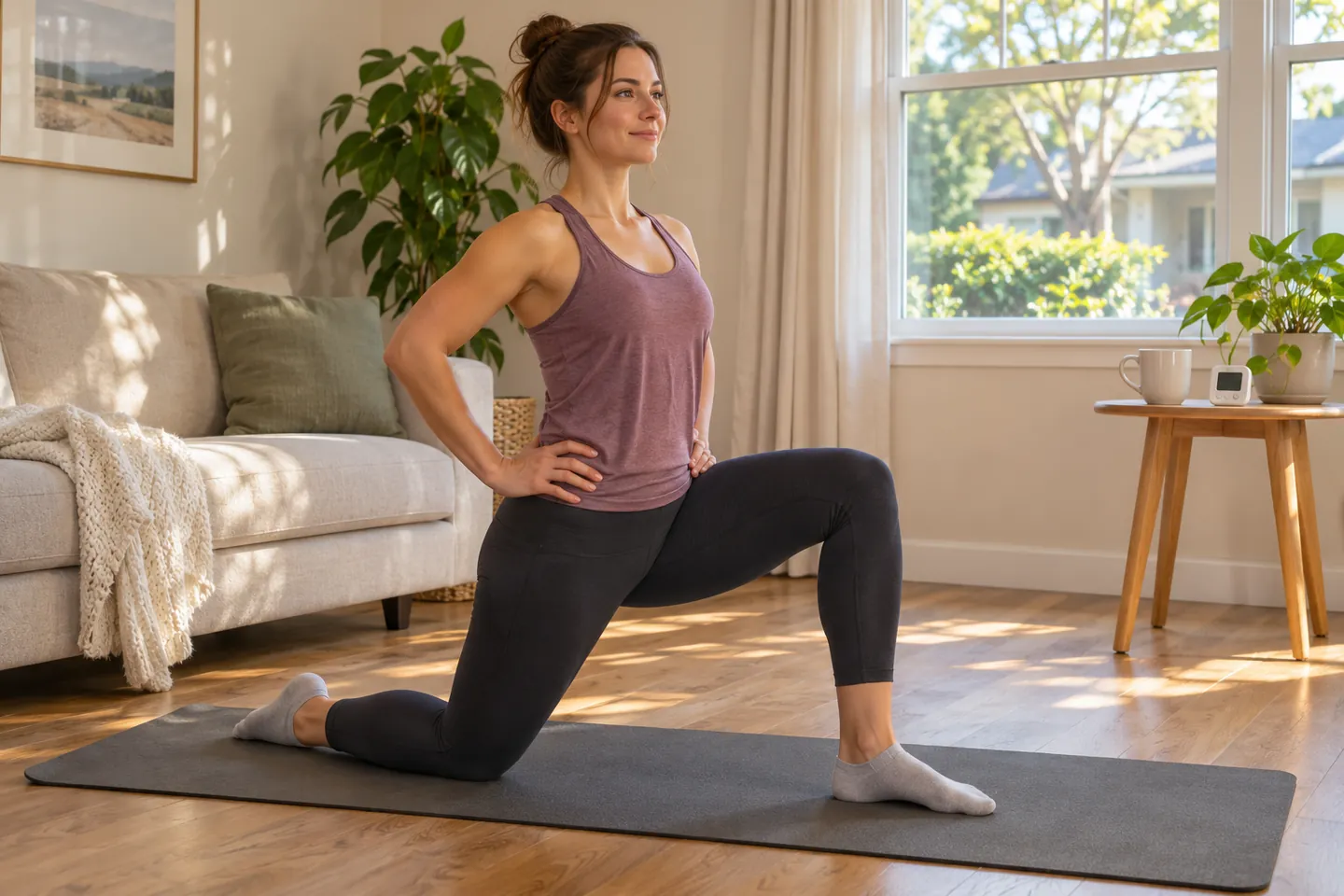
For the hips, popular choices include a half-kneeling hip flexor stretch, where you kneel on one knee and gently shift forward, or a 90/90 position, where you sit with both knees bent at right angles and rotate between sides. For the upper back, open books (lying on your side and rotating your top arm open) and cat-cow movements on hands and knees are both easy to learn. For shoulders, wall slides and band pull-aparts are accessible options.
These are examples, not prescriptions. If a movement causes discomfort, swap it for something else. If you’re unsure how to perform one, ask a coach or trainer to demonstrate. A movement done carefully with good intent is more useful than a fancy one done badly.
A sample ten-minute framework
Here’s one way to structure a ten-minute routine. Treat the timings as a guide rather than a rule.
- Minute 0–1: Gentle general movement such as marching on the spot, arm swings or easy torso turns, just to get warm.
- Minutes 1–4: Hips. Spend about ninety seconds per side on your chosen hip movement, moving slowly in and out of the position.
- Minutes 4–7: Upper back. Alternate sides on open books or flow through cat-cow at a comfortable pace.
- Minutes 7–9: Shoulders. Slow wall slides or a band drill, focusing on smooth control.
- Minute 9–10: A final full-body movement you enjoy, such as a deep squat hold with support, or a few slow breaths lying on your back.
That’s it. No equipment except possibly a band and a mat. You can do it in a living room, a hotel room or the corner of the gym before class.
Finding a time that sticks
The best routine is the one you’ll actually do, and timing has a huge effect on consistency. Some people do best first thing in the morning before the household wakes. Others prefer it in the evening as a way to wind down. Some anchor it to an existing habit, like right after brushing their teeth or as soon as they get home from work.
If you train regularly, you could also use your routine as part of a warm-up before class or a cool-down after. Arriving ten minutes early to a session and doing your routine in a quiet corner is an efficient way to fit it in, especially if your evenings are already full.
On days when ten minutes feels impossible, do one movement for a minute or two. Keeping the habit alive matters more than completing the full routine every single time.
Breathing and pace
Mobility work tends to feel better when you slow down. Rushing through positions often means you skim past the ranges you’re trying to explore. Moving slowly, breathing steadily and paying attention to how each position feels gives the routine more value.
A simple approach is to breathe in through your nose as you set up a position and breathe out slowly as you ease into it. You don’t need complicated breathing techniques. Just avoid holding your breath, which can make you tense up.
Notice how each side feels. It’s common for one hip or shoulder to feel tighter than the other. That’s useful information, not a problem to fix in a single session. Over weeks, you may notice differences shrink, or you may simply learn more about how your body moves.
Adjusting for the season
Mississauga winters can make you feel stiffer, especially if you’ve been shovelling snow, sitting in a cold car or spending more time indoors. On cold mornings, you might extend the general warm-up portion of your routine or do it after a warm shower.
In summer, when you may be walking, cycling or playing outdoor sports more, you might shift focus to areas that feel worked from those activities. Hamstrings and calves after a long walk on the Waterfront Trail, for example, or shoulders after a weekend of yard work.
Changing your routine every few months also keeps it interesting. You don’t need to overhaul it completely; swapping one movement or changing the order can make it feel fresh.
How mobility supports your other training
A short mobility routine can complement whatever else you do. For martial artists, hip and ankle mobility can help with stances and kicks, while shoulder and upper-back mobility can support guard positions and grappling. For lifters, mobility can help you find comfortable positions for squats, deadlifts and presses.
That said, mobility work isn’t a cure-all. It won’t replace strength training, skill practice or rest. Think of it as one ingredient in a well-rounded week. If you want more structured mobility and breathing practice, a yoga class can be a great complement to a short daily routine.
It can also be a pleasant way to bookend harder sessions. Some people find that ten minutes of slow movement after an intense class helps them shift into a calmer state before driving home.
Tracking whether it’s helping
Because mobility changes can be subtle, it helps to have a simple way to check progress. You might pick one or two reference movements, like how deep you can comfortably squat while holding a doorframe or how easily you can reach overhead against a wall, and check them every few weeks.
You can also pay attention to everyday signs. Are you getting out of the car more easily? Do your shoulders feel less tight at the end of a work day? Are warm-ups in class feeling smoother? These real-world markers are often more meaningful than measurements.
If nothing seems to change after a couple of months, consider adjusting your movements or asking a coach for input. Sometimes a small tweak in position or focus makes a noticeable difference.
Common pitfalls to avoid
One frequent mistake is forcing positions. Mobility work should feel like gentle tension, not sharp pain. If something hurts, back off, adjust or skip it.
Another is copying routines designed for someone else. A routine built for a gymnast or a powerlifter may not suit your needs. Start with your own priorities and keep things simple.
A third is doing it inconsistently and expecting fast results. Mobility tends to improve gradually. Ten minutes most days of the week will usually do more than one long session on the weekend.
Making it your own
The framework here is a starting point. Over time, you’ll find movements you enjoy, timings that suit your schedule and areas that deserve more attention. That personalisation is what turns a routine into a habit.
If you’d like help building a mobility plan around your training, a coach can give you individual feedback through personal training, or you can explore classes on our adult schedule. Ten minutes may not sound like much, but done regularly, it can make a real difference to how you feel moving through your day.
Filed under
Keep exploring
More training insights await.