
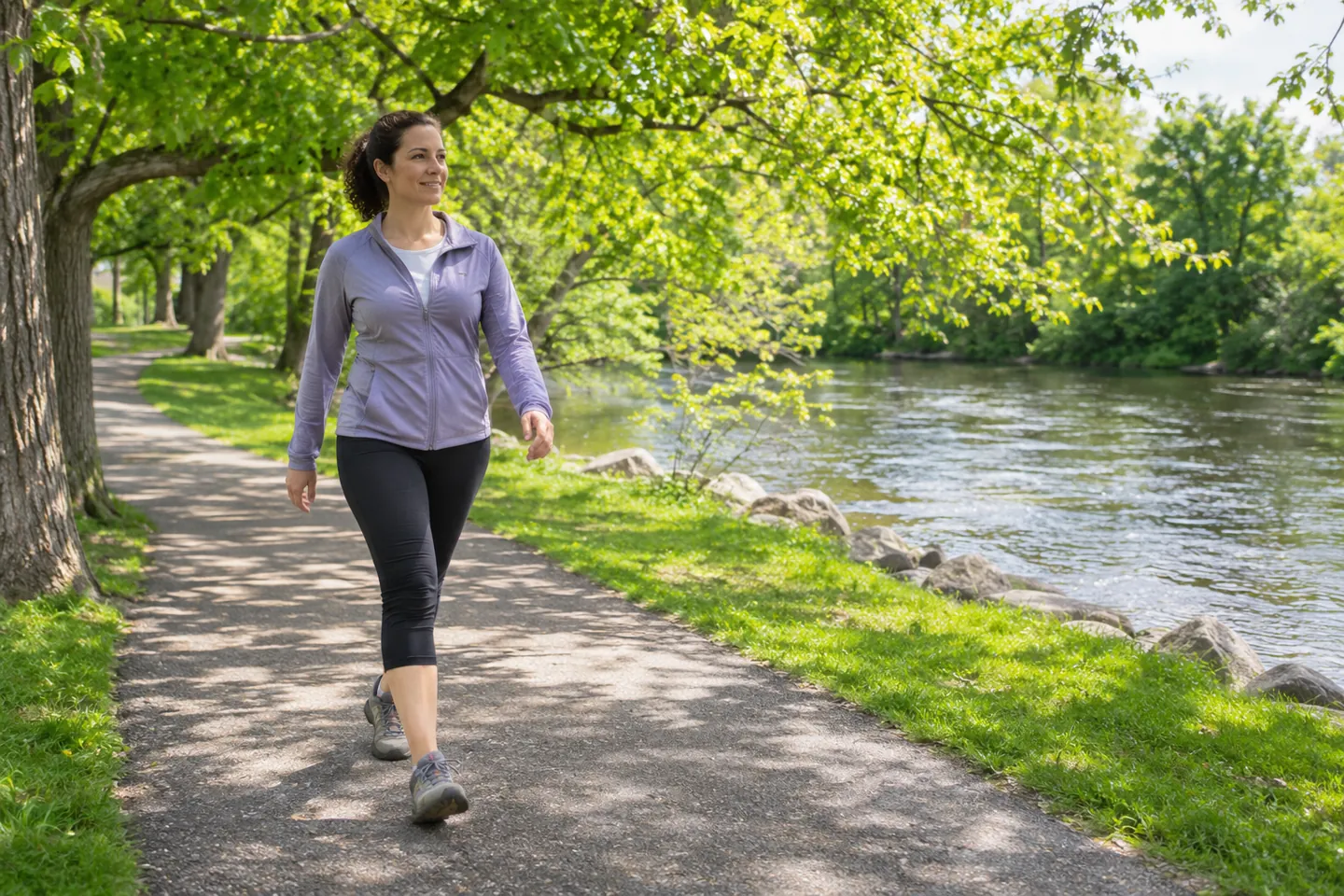
How to build an outdoor walking habit in Mississauga that supports your gym training, with tips on routes, timing, recovery days, weather, and staying consistent.
Walking rarely gets much attention in a gym culture built around rounds, sets, and personal bests. It does not feel like training. Nobody posts a video of a twenty-minute stroll after dinner. Yet for a lot of people who lift, box, roll, or take group classes, a regular walk turns out to be one of the most useful habits they add to their week.
Part of the appeal is how little it asks. There is no equipment beyond a decent pair of shoes, no booking, and no warm-up required. It fits between other commitments, gets you outside, and gives your mind some space after work or a hard session. In Mississauga, with its parks, trails, and residential streets, there are plenty of places to do it.
This article looks at how to build an outdoor walking habit that sits comfortably alongside gym training: how to start, how to schedule it, how it relates to recovery, and how to keep going through the changing seasons.
Why walking pairs well with harder training
Most gym training involves intense efforts separated by rest. A boxing class might push you hard for a series of rounds. A strength session involves heavy sets. Jiu-jitsu can feel like a full-body workout from start to finish. Walking sits at the other end of the spectrum: steady, low intensity, and easy to sustain.
That contrast is part of what makes it useful. Many people find that gentle movement on rest days helps them feel less stiff than sitting still. A walk can also be a pleasant way to wind down after a stressful day without adding much fatigue. It is generally considered a low-impact activity, though individual circumstances vary, and anyone with joint problems or health conditions should check with a qualified professional.
Walking also adds general activity to your week without requiring much recovery. For people whose jobs involve long hours sitting at a desk or in a car, a daily walk can be a welcome counterbalance.
Start smaller than you think
The most common mistake is starting too ambitiously. Someone decides to walk for an hour every day, manages it for a week, and then misses a few days and abandons the habit entirely. A smaller target is easier to keep.
Ten or fifteen minutes is a perfectly reasonable starting point. A walk around the block after dinner, a loop through a nearby park, or a stroll during lunch counts. Once that becomes routine, you can extend it gradually if you want to. The habit matters more than the duration.
Tying the walk to an existing routine helps. You might walk right after dinner, after dropping kids at school, or as soon as you get home from work. Linking it to something you already do reduces the number of decisions you need to make each day.
Choosing routes you will actually use
The best route is often the most convenient one. A beautiful trail twenty minutes away by car is wonderful for weekends, but the streets near your home may be where most of your walks actually happen. Mississauga has many neighbourhoods with sidewalks, parks, and paths that work well for short daily walks.
For longer walks, you might explore trails along the Credit River, waterfront paths near Port Credit, or larger parks in areas like Erin Mills or Meadowvale. Variety can keep things interesting. Having a short route, a medium route, and a longer weekend option gives you flexibility depending on time and energy.
Safety and comfort matter. Choose well-lit routes if walking in the evening. Let someone know where you are going if you walk alone on quieter trails. Wear visible clothing near roads, especially at dusk. These are simple precautions that make walking more enjoyable.
Fitting walks around your gym schedule
Walking can fit into almost any training plan, but placement makes a difference. Many people like to walk on rest days, using it as gentle movement between harder sessions. Others take a short walk on training days, perhaps in the morning before an evening class, or after dinner following a lunchtime session.
If you have a particularly demanding training day, such as hard sparring or a heavy strength session, you might choose a shorter or slower walk that day. If you feel especially tired or sore, it is fine to skip it. The point is to support your training, not compete with it.
Some people walk to or from the gym when distance allows. Others park a little further away or get off public transit a stop early. Small changes like these add walking to your day without requiring extra time.
Walking as active recovery
Coaches sometimes talk about “active recovery”, meaning low-intensity movement on days between harder sessions. Walking is one of the simplest forms. Some people find that it helps them feel less stiff after a hard training day, though everyone’s experience is different.
Pay attention to how you feel the day after a walk. If gentle walking leaves you feeling fresher for your next session, it is likely a good fit. If you notice it adds to fatigue, consider shortening it or moving it to a different day.
Recovery also depends on sleep, nutrition, and overall stress. Walking can be a helpful piece, but it is not a substitute for adequate rest. If you experience ongoing soreness, pain, or fatigue, consider speaking with a physiotherapist, chiropractor, or doctor.
Comfortable shoes and simple gear
You do not need special equipment to walk, but comfortable shoes make a big difference. Supportive walking or running shoes that fit well are a good choice. If you walk on trails, shoes with more grip may be helpful.
Clothing should suit the weather. Layers work well because temperatures can change during a walk. A light jacket for wind or rain, a hat in summer, and gloves and a warm hat in winter can make walking comfortable year-round.
Some people like to bring headphones for music or podcasts. Others prefer the quiet. If you use headphones, keep the volume low enough to stay aware of traffic, cyclists, and other pedestrians.
Walking through Mississauga’s seasons
Every season brings different conditions. Spring and early summer are often pleasant, with mild temperatures and longer days. Summer can be hot and humid; walking in the early morning or evening, staying in shaded areas, and bringing water can make it more comfortable.
Autumn is a favourite season for many walkers, with cooler air and changing leaves. Winter is the real test. Snow, ice, and early darkness make outdoor walking harder. Good footwear with traction, reflective clothing, and choosing cleared routes help. On days with dangerous conditions, it is sensible to skip outdoor walking or move indoors.
Accepting that the habit will change with the seasons makes it easier to sustain. You might walk longer in June and shorter in January. That flexibility is part of building a habit that lasts all year.
Making it social
Walking with others can make the habit more enjoyable and easier to maintain. A partner, friend, family member, or neighbour can provide company and accountability. Families sometimes walk together after dinner as a way to spend time without screens.
Some people combine walking with phone calls to friends or relatives. Others invite training partners from the gym to walk on rest days. Social walks can be a pleasant way to connect without the intensity of a workout.
If you prefer walking alone, that is perfectly fine too. Solo walks can be a time to think, reflect on training, or simply enjoy the quiet.
Using walks to think about training
A walk can be a good time to reflect. After a class, you might think about a technique you learned or a correction your coach gave you. Before a session, you might plan what you want to focus on. This kind of reflection can help you get more out of your training.
Some people use walks to mentally rehearse combinations or think through grappling positions. Others find that a walk helps them process frustration after a difficult session. Letting your mind wander is also valuable; sometimes solutions to problems appear when you are not trying hard to find them.
Tracking without obsessing
Some people enjoy tracking their walks with step counters, apps, or a simple calendar. Tracking can provide motivation and show progress over time. However, it can also become a source of pressure if you focus too much on hitting specific numbers.
A balanced approach is to track loosely. Note whether you walked, roughly how long, and how you felt. Over weeks, patterns emerge. If you notice that walking makes you feel better or sleep better, that is useful information. If you find tracking stressful, it is fine to stop.
Health considerations
Walking is generally accessible, but some people need to take extra care. If you have heart conditions, joint problems, balance issues, or other health concerns, talk with your doctor about an appropriate walking routine. If you experience chest pain, unusual shortness of breath, dizziness, or pain that worries you while walking, stop and seek medical advice.
People recovering from injuries may benefit from guidance from a physiotherapist about how much walking is appropriate and how to progress. Listening to professional advice helps you build activity safely.
Combining walking and gym training at Konga Fitness
An outdoor walking habit can sit comfortably beside boxing, jiu-jitsu, strength training, or group classes. It adds gentle movement, gets you outside, and offers a calm counterweight to more intense sessions. Starting small and staying flexible makes it more likely to last.
If you want structured training to go with your walks in Mississauga, explore our group classes or strength and conditioning programs, and if you are working through an injury, our physiotherapy team can help you plan a sensible return to activity.
Filed under
Keep exploring
More training insights await.