
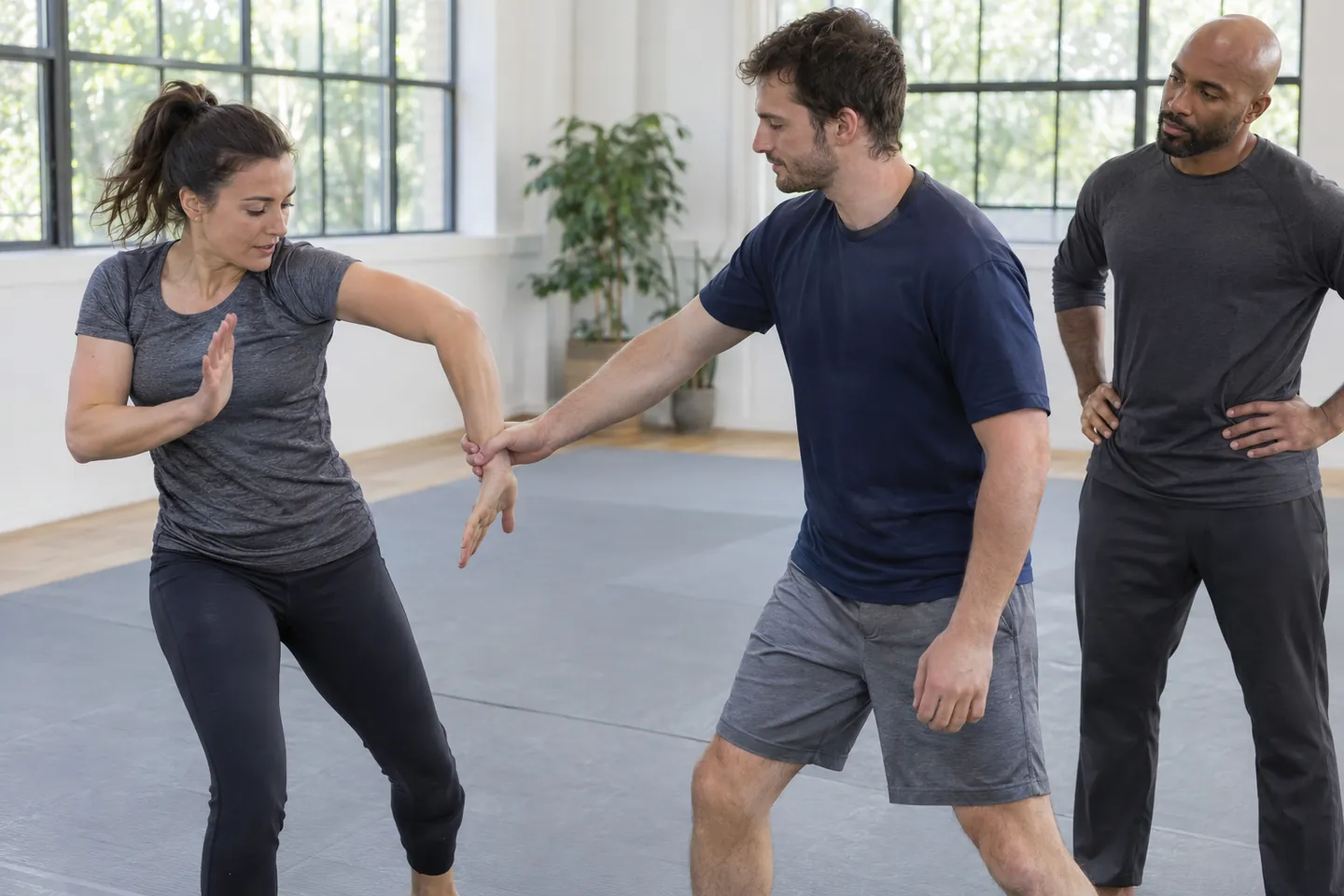
Comparing adult self-defence classes in Mississauga? Learn what to ask about coaching, realistic training, safety, class format, and which martial art may suit you.
People look for self-defence classes for many different reasons. Some have had an unsettling experience and want to feel more prepared. Some are starting a new job with late shifts and a long walk to the car. Some simply want to know that they could handle themselves if they ever needed to. And some are curious about martial arts but find “self-defence” a more approachable way into the subject.
Whatever brought you here, choosing a class is worth some thought. Adult self-defence training varies a great deal in quality, format, and approach. A good class can build real skills and confidence. A poor one can leave you with a false sense of security or, at worst, habits that would not hold up under pressure.
This guide is for adults in Mississauga who are comparing options. It does not tell you which school is best. Instead, it suggests questions to ask, things to watch for during a trial, and ways to match a style of training to your goals.
Clarify what you want first
Before you compare classes, take a few minutes to write down what you hope to get from training. Do you want practical skills for specific situations? General fitness with a self-defence focus? A long-term martial art you can grow into over years? A short course to build basic awareness?
Your answer shapes everything else. A short workshop might suit someone who wants an introduction to awareness and basic escapes. An ongoing martial arts program might suit someone who wants skills that develop and hold up over time. Neither is inherently better; they serve different purposes.
Be honest about your schedule as well. A program that requires three classes per week may not be realistic if you work rotating shifts or commute across the GTA. Consistency over months tends to matter more than intensity in the first few weeks.
Look for live, controlled practice
One of the most important questions to ask is whether students practise against resisting partners. Techniques that only work against a cooperative partner may not work when someone is actively pushing, pulling, or moving unpredictably. Training that gradually introduces resistance helps skills hold up under pressure.
This does not mean every class should be intense. In a well-structured program, beginners start with cooperative drilling, learn the movement, and then progress to light resistance and eventually more realistic scenarios. The progression should be gradual, supervised, and adapted to each student’s experience.
During a trial class, notice whether partners are practising techniques against each other or just performing movements in the air. Ask the instructor how students progress to more realistic practice. A clear, thoughtful answer is a good sign.
Ask about the instructor’s approach
Credentials can be useful information, but they are not the whole picture. Pay attention to how the instructor teaches. Do they explain why a technique works, not just how? Do they watch students and offer individual corrections? Do they adjust instructions for different body types and experience levels?
Good instructors are usually comfortable answering questions, including challenging ones. If you ask how a technique would work against a larger opponent, a thoughtful instructor will discuss the limitations honestly rather than promising that it always works. Be wary of anyone who guarantees results or claims a technique will work in every situation.
Also observe how the instructor treats students. Respect, patience, and attention to safety are essential. You should feel comfortable asking questions and voicing concerns about intensity or injuries.
Safety in the training room
Self-defence training involves physical contact, so safety practices matter. Notice whether the class includes a proper warm-up, whether partners are matched sensibly for size and experience, and whether the instructor reminds students to control their technique.
Ask about protective equipment. Depending on the training, you might use gloves, mouthguards, or pads. The gym should be able to explain what is needed and when. Equipment should be in reasonable condition, and mats should be clean.
If you have any existing injuries or health concerns, mention them before your first class. A good program will help you modify techniques and avoid aggravating problems. If you are unsure whether training is appropriate for you, consult a doctor or physiotherapist first.
Comparing styles of martial arts
Many martial arts include self-defence value, and each emphasises different skills. Understanding the differences can help you choose a class that suits your goals and preferences.
Striking arts
Boxing, kickboxing, and Muay Thai focus on punches, kicks, elbows, knees, and footwork. They teach how to manage distance, protect yourself from strikes, and respond under pressure. Training often includes pad work, bag work, and controlled partner drills. Kickboxing and Muay Thai are popular choices for adults who want practical striking skills alongside strong conditioning.
Grappling arts
Brazilian jiu-jitsu focuses on controlling an opponent, escaping holds, and working from the ground. Many people value grappling for self-defence because it teaches how to deal with someone who has grabbed you or taken you down. Brazilian jiu-jitsu is also known for allowing smaller people to manage larger partners through technique and leverage.
Mixed approaches
Mixed martial arts combines striking and grappling, offering a broad set of skills. MMA classes can give a well-rounded foundation, although the variety means it may take longer to feel confident in each area. Some people start with one discipline and add others later.
Awareness and de-escalation
Physical techniques are only one part of self-defence. Much of personal safety comes down to awareness, avoidance, and de-escalation. A thoughtful program will discuss how to recognise potential problems early, how to use your voice and body language, and how to create distance or leave a situation before it becomes physical.
Ask whether the class covers these topics, even briefly. An instructor who discusses avoidance and de-escalation is usually signalling a realistic understanding of self-defence. Physical skills are valuable, but the best outcome of most risky situations is getting away safely.
Laws regarding self-defence in Canada are specific, and the use of force must generally be reasonable in the circumstances. A class is not a legal resource, so if you have legal questions, consult a qualified lawyer. Good instructors will encourage restraint and avoidance as the first priorities.
Fitness and conditioning
Self-defence skills rely partly on physical capacity. Being able to move quickly, maintain balance, and keep working while tired all help. Many martial arts classes include conditioning, which supports both general health and practical skill.
If you are starting from a lower fitness level, do not let that stop you. Good classes accommodate beginners and help you build capacity gradually. Let the instructor know where you are starting, and pace yourself. Fitness tends to improve steadily with regular attendance.
If you want extra support, strength and conditioning sessions or personal training can complement martial arts classes by building strength, endurance, and mobility in a structured way.
The class environment
How a class feels matters, especially if you are anxious about starting. Notice the atmosphere during a trial. Are beginners welcomed? Do experienced students help newer ones? Is there a sense of mutual respect?
Some people prefer training in a women-only environment, at least at first. Our women’s classes offer that option for those who want it. Others are comfortable in mixed classes. Both can be valuable; the right choice is the one that helps you keep showing up.
Location and schedule also play a role. A gym that is easy to reach from home or work, and offers class times that fit your week, makes consistency far more likely. Check the adult schedule and think about how training fits with your commute and other commitments.
Making the most of a trial class
A trial class is your chance to experience the teaching, the people, and the environment firsthand. Arrive a little early, introduce yourself, and mention any concerns or injuries. Ask what the class will cover and how beginners are typically supported.
During class, focus on learning rather than performing. You are not expected to be skilled on day one. Pay attention to how you feel: challenged but safe, welcomed, and curious to learn more are all good signs.
Afterward, reflect on the experience. Did the instruction make sense? Did you feel the class could build practical skills over time? Would you be happy to return next week? Your answers will usually point clearly toward the right choice.
Give it more than one class
A single session rarely tells you everything. The first class is often the most awkward, because the warm-up is unfamiliar, the terminology is new, and you are busy trying to remember which foot goes forward. Many people feel clumsy and self-conscious on day one and then find the second or third class far more comfortable.
If your schedule allows, try to attend a few sessions before making a final decision. Notice whether the material builds from one class to the next, or whether each session feels disconnected. A program with a clear progression usually revisits core skills regularly, adding detail as students improve. That pattern is a good sign that you will keep learning rather than simply collecting random techniques.
Pay attention to how your body responds too. Some soreness is normal when starting something new, especially in the shoulders, hips, and calves. If you are so sore that you cannot function at work for days, mention it to the coach. They can usually help you adjust your effort while your body adapts.
Red flags to keep in mind
Some warning signs suggest a class may not be a good fit. Be cautious of programs that guarantee you will be able to defend against any attack, that never include resisting partners, or that discourage questions. Excessive aggression, poor supervision, or pressure to sign long contracts before trying a class are also worth noting.
Trust your instincts. If something feels uncomfortable or unsafe, it is reasonable to look elsewhere. There are many training options in Mississauga, and finding the right fit is worth the effort.
Taking the first step
If you are ready to explore self-defence training, start by looking at our programs to compare boxing, kickboxing, Muay Thai, Brazilian jiu-jitsu, and MMA. You can book a free trial to experience a class firsthand, or contact us with questions about which option best suits your goals. Choosing carefully at the start makes it much more likely that your training will serve you well for years.
Filed under
Keep exploring
More training insights await.