
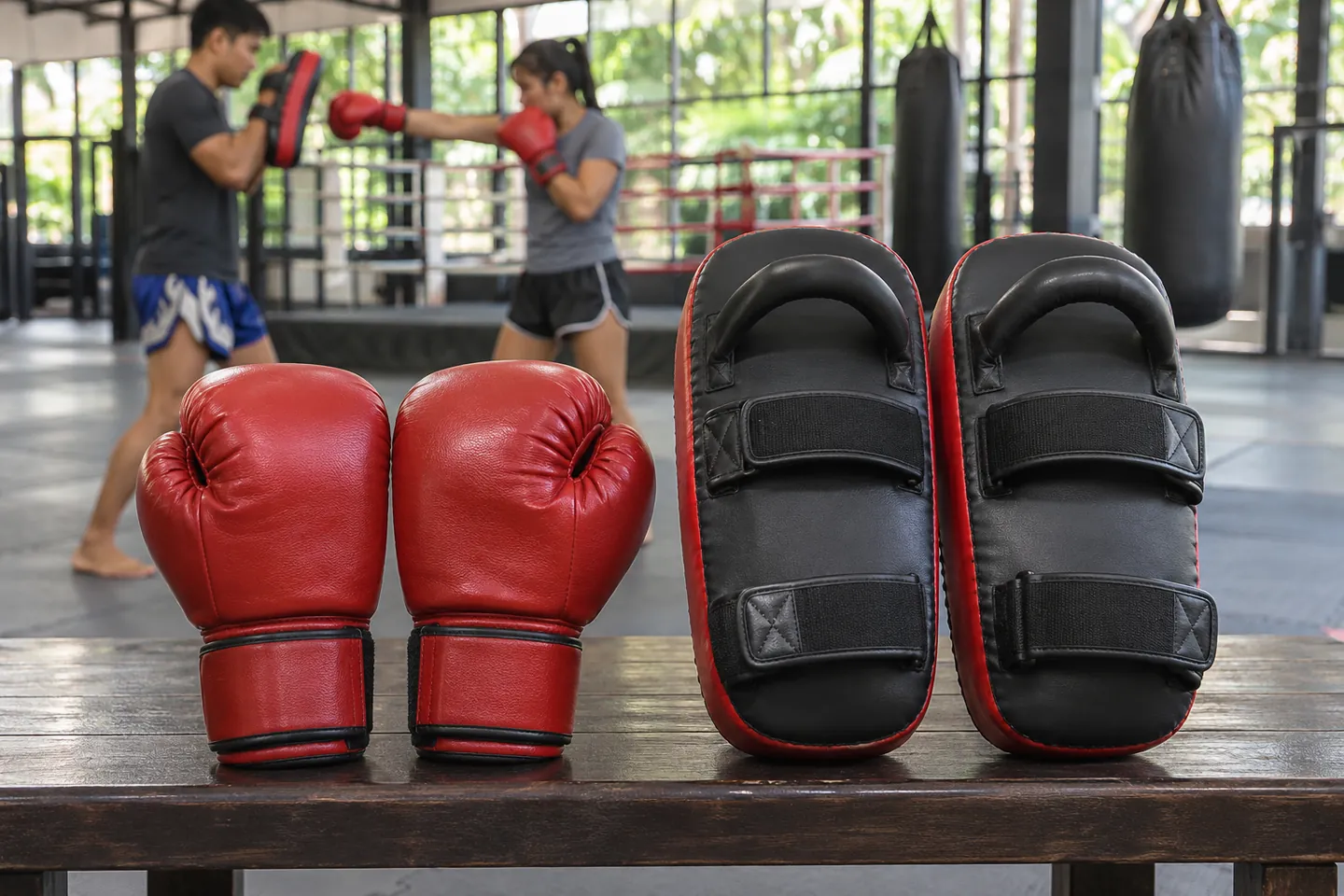
Compare boxing and Muay Thai in Mississauga through your interests, learning preferences, class expectations, and trial experience rather than broad promises.
Choosing a martial arts class can become confusing when every comparison tries to declare a winner. One article says a discipline is better for fitness; another calls it more practical or more complete. Those broad claims rarely tell a beginner what an actual Tuesday evening class will feel like. They also overlook the question that matters most: which program are you interested in learning and able to attend?
If you are choosing between boxing and Muay Thai in Mississauga, start with the training experience available to you. Konga’s program information describes boxing and Muay Thai as separate options. Boxing centres on its punching skill set, while the Muay Thai page describes a broader set of striking tools. Beyond that basic distinction, ask about the actual beginner class rather than assuming every gym teaches the same format.
Compare your curiosity before comparing outcomes
Think about what first made you consider the sport. Do you enjoy watching the hand combinations and movement associated with boxing? Are you more curious about learning the range of actions introduced in Muay Thai? Interest is useful information. A subject that makes you want to understand the next lesson can help sustain attendance.
You do not need a sophisticated reason. “I have always wanted to try boxing” is a valid starting point. So is “I would like to learn kicks as part of a coached class.” Avoid replacing your own curiosity with whatever a comparison chart says you should value. The chart will not make the trip to class on a busy evening.
If both appeal to you, say so when contacting the gym. Ask whether suitable introductory sessions are available and how the team recommends comparing them. You may not need to commit to a permanent identity before experiencing either option. A first visit can provide information that online descriptions cannot.
Understand what the beginner session actually includes
A program page gives an overview, but a particular class has its own structure. Ask how beginners are introduced, what the session focuses on, and whether prior experience is expected. Find out how technique, partner work, and other activities are organized. These details shape your experience more directly than the discipline’s reputation.
Ask about contact expectations explicitly. Do not assume that every boxing or Muay Thai class requires the same activities from the first day. Clarify how any contact work is introduced, which prerequisites apply, and what choices are available to beginners. Understanding the progression helps you decide whether the program fits your intentions.
Confirm the current timetable and equipment requirements directly. A class that sounds ideal but cannot fit your schedule may be difficult to sustain. Likewise, equipment arrangements can affect the practicality of a first visit. The goal is to compare real options, not two imagined classes that exist only in promotional language.
Consider how you like to learn
Some people enjoy returning to a relatively focused set of actions and noticing increasingly detailed differences. Others are drawn to a broader movement vocabulary. These preferences may influence what initially interests you, but they do not establish a rigid personality match. Both disciplines involve repeated fundamentals and patient correction.
Ask yourself how you respond when a movement is unfamiliar. Would you enjoy the challenge of coordinating new lower-body actions, or would you prefer to begin by concentrating on the boxing lesson available? There is no superior answer. The useful answer is the one that helps you arrive curious rather than resentful of the task.
Avoid deciding that one option must be easy because it uses fewer categories of strikes. A focused skill set can contain considerable depth. Equally, do not assume that a broader set of actions makes every beginner class overwhelming. The coach’s progression determines how much is introduced at once and how students are supported.
Bring practical limitations into the conversation
If a movement or activity currently presents a problem for you, explain it to the coach. Describe the limitation without trying to make a diagnosis. Ask how the beginner sessions can be adapted and whether the program is appropriate for your situation. Medical concerns may require advice from a qualified healthcare professional before participation.
Do not choose a discipline solely because an online comparison claims it is universally suitable for a particular age or body type. Your circumstances are more specific than that. A coach who understands the class can discuss its demands and available adjustments, while a relevant healthcare professional can address individual medical questions.
Be honest about what you are willing to learn. If the thought of a certain activity makes you uncertain, ask how it is introduced rather than silently assuming it will be forced on you immediately. Clear information may resolve the concern or reveal that another option fits better. Either result is useful.
Evaluate the coaching experience
During a trial, notice whether the instructions are clear enough to attempt the exercise. Can you ask a question? Does the coach explain the role of the pad holder as well as the striker? Are beginners given a manageable task? These observations apply regardless of which discipline you are trying.
Pay attention to how corrections are delivered and how you respond to them. You should leave with some understanding of what you practiced and what to work on next. A class can be challenging while still making the learning process understandable. Confusion does not become useful merely because the room has energy.
Notice the partner culture too. Are people able to request a reset or a slower pace? Do they follow the assigned drill? A cooperative training environment affects the quality of the experience. Comparing two disciplines without considering the actual people and teaching structure leaves out a large part of the decision.
Compare logistics with the same seriousness as technique
Look at travel time from the place you will actually leave before class. A route from home may differ substantially from a route from work. Consider the arrival buffer, equipment preparation, and journey afterward. A realistic plan helps you see whether the class fits a normal week rather than an ideal one.
Ask which suitable sessions are currently available, then identify an attendance pattern you could repeat. If only one program fits your schedule, that practical advantage deserves attention. Consistent participation in a suitable class can be more valuable than repeatedly missing a theoretically perfect option.
Discuss equipment and ongoing arrangements directly with the team. Do not rely on old posts or assumptions from another gym. You should understand what is required before making a commitment. A clear decision includes the ordinary details that determine whether you can keep showing up after the novelty fades.
Avoid choosing through promised transformations
Broad claims about guaranteed weight change, confidence, or real-world protection should not be the basis of the choice. Training experiences and outcomes vary, and a class cannot promise how every person will respond. Focus on the activity being taught, the coaching available, and the habits you can realistically build around it.
If fitness is one of your interests, ask how the class is structured and how effort is adjusted for beginners. You do not need to decide which discipline wins an abstract calorie contest. A session you enjoy and can participate in appropriately may be a better practical fit than one chosen from a dramatic headline.
If confidence or personal development matters to you, define what that would look like in the class. Perhaps it means asking a question, working comfortably with a partner, or learning an unfamiliar sequence. Those are observable experiences you can discuss. They are more useful than expecting a particular personality change on a fixed schedule.
Give the trial a simple review
After the visit, write down what you enjoyed, what confused you, and what you want to ask next. Keep the observations tied to the actual session. You may have liked the coaching but discovered that the travel time was difficult. You may have enjoyed the movements while needing more information about the next stage.
Do not reject a class solely because being new felt awkward. Unfamiliarity is part of trying a skill. Instead, ask whether the awkwardness came with useful instruction and a manageable next step. A first lesson does not need to feel effortless to be a good starting point.
If you try both programs, compare them using the same questions. Interest, clarity of instruction, partner experience, logistics, and realistic attendance are fair categories. Avoid comparing your best moment in one class with your most confused moment in the other. Look at the overall experience and the routine each option would require.
Choose a starting point rather than a permanent label
You can begin with one program and revisit your interests later. The first choice does not need to settle every future training decision. Ask the coach how to build a suitable routine and when it might make sense to discuss another option. Keep the immediate plan clear enough to follow.
Explore Konga’s boxing program and Muay Thai program, then use the free trial page to ask about an appropriate introduction. Choose the class that gives you a credible next step: a time you can attend, a subject you want to learn, and instruction you can understand. That is a stronger basis for beginning than declaring one discipline the winner for everyone.
Filed under
Keep exploring
More training insights await.