
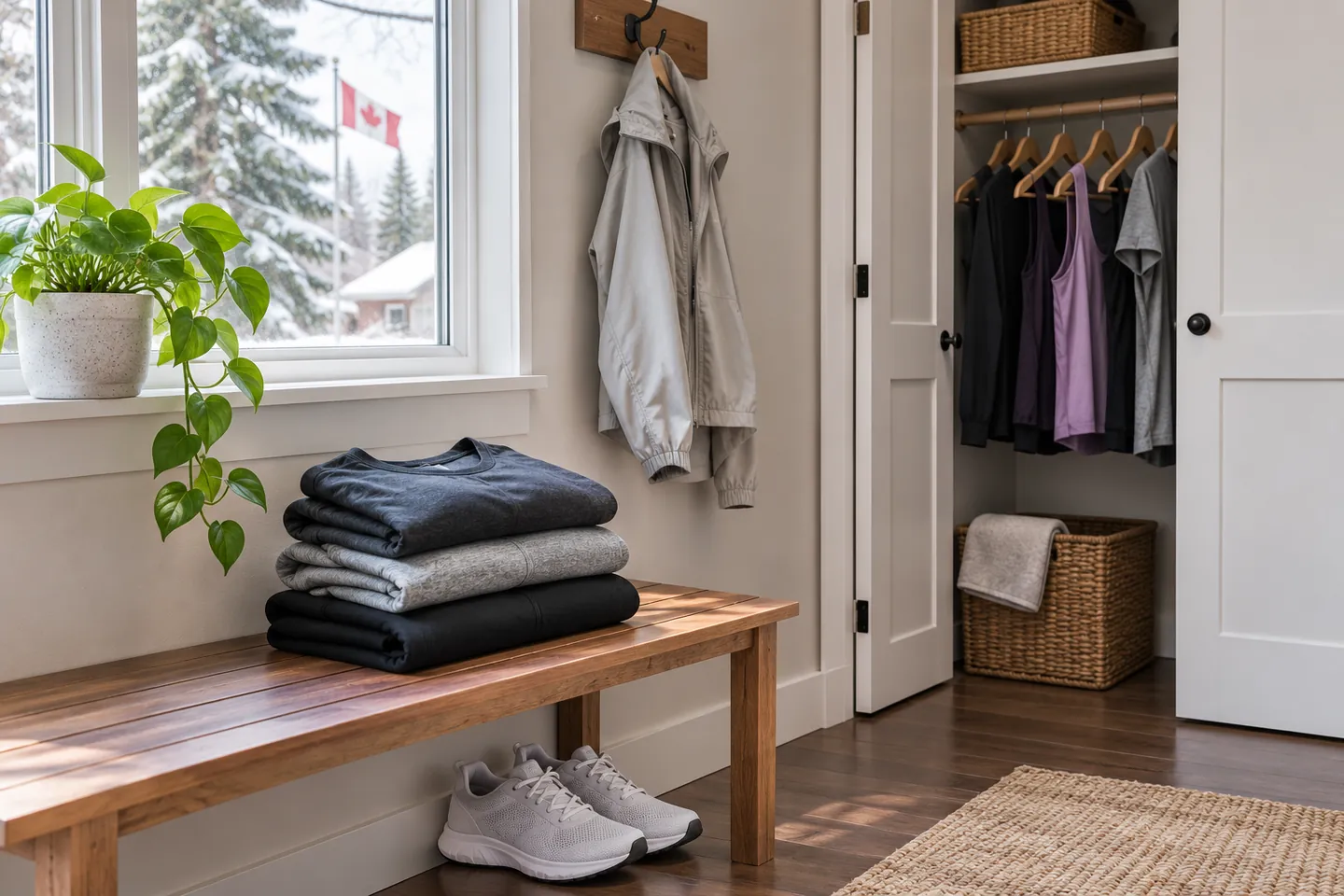
Choose workout clothing in Mississauga by considering movement, class requirements, changing facilities, commuting layers, and the clothes you already own.
Choosing workout clothing in Mississauga does not need to become a shopping project before you can begin exercising. The useful starting point is the activity you plan to attend and the clothes you already know are comfortable. A reliable outfit lets you concentrate on instruction instead of repeatedly adjusting a sleeve, waistband, or unfamiliar layer.
There are practical differences between preparing for a gym appointment, a group class, and the journey to either one. Facility requirements also matter. This guide helps you think through those details without assuming that one style, fabric, or price range suits everyone. The objective is to arrive ready for your actual session, with clothing that supports participation and a simple system for the next visit.
Ask about the activity before deciding what to wear
Begin with the facility’s current instructions. A particular class may have footwear or clothing requirements that differ from a general gym session. Confirm those details directly, especially when attending an activity for the first time.
Ask what kinds of movements the session usually involves. You do not need a complete program in advance, but a broad description can help you choose clothing that allows the relevant positions comfortably. If the activity involves specific equipment or contact with another participant, the coach’s guidance becomes especially important.
Avoid assuming that a photograph on a website establishes the dress requirements. Images show one moment and may not explain the whole activity. A short practical question can prevent buying an item you do not need or arriving in something unsuitable for that particular format.
Start with familiar clothes you can move in
Look through what you already own before adding new items. Choose clothing that stays comfortable when you sit, bend, reach, and move through ordinary positions. Familiarity matters because you already know whether an item tends to shift or require adjustment.
Try the outfit at home before the appointment. The aim is not to perform a workout test, but to notice obvious practical issues. A top may feel fine standing still yet become distracting when your arms are raised. A waistband may fit comfortably at a desk but feel awkward in a different position.
If something repeatedly needs attention, choose another option where possible. You should not have to spend a coached session thinking about clothing instead of the instruction. A simple outfit that you trust can be more useful than a new one selected mainly because it looks like gym clothing.
Think about fit as a personal practical question
People prefer different amounts of coverage, looseness, and structure. Those preferences deserve consideration alongside the activity requirements. You do not need to copy another person’s outfit to participate comfortably.
Check that clothing does not interfere with the equipment or movement you are being taught. If you are uncertain about a loose layer, accessory, or fastener, ask the coach. They can explain the relevant expectations for the session and the facility.
It is also reasonable to discuss privacy or changing preferences before arriving. Knowing whether you plan to change at home, at work, or at the gym can shape the outfit and bag arrangement. These are ordinary logistical details, and clarifying them can make a first appointment feel much less uncertain.
Separate travel layers from training clothes
The clothing needed for a Mississauga journey may differ from what you want to wear during the session. Consider the time spent outdoors, the mode of transport, and where outer layers will be stored when you arrive.
A winter commute may involve boots and a coat, while the training space has different footwear expectations. A warmer day may still require an additional layer for the journey home or another destination. Plan those pieces around the actual route rather than treating the exercise outfit as the entire day’s wardrobe.
Keep the transition manageable. If removing or storing several layers creates a rush, allow more arrival time or simplify the arrangement. The goal is to reach the training area ready to pay attention, not to complete a complicated clothing change at the last possible minute.
Give footwear its own conversation
Follow the facility’s guidance about shoes and any activity-specific requirements. If you are unsure whether a pair is appropriate, ask before purchasing something new. The answer may depend on the session rather than a general label on the shoe box.
Bring the intended pair when a change is required, and keep it separate from dirty or wet travel footwear. This is a packing decision as much as a clothing decision. A familiar pair left at home cannot help you once you arrive.
If you have specific foot-related concerns or professional advice, mention that context to the relevant person rather than asking a general clothing guide to resolve it. The practical aim here is to understand what the session requires and prepare the footwear you have been advised to use.
Plan for what happens after the session
Your clothing needs may change depending on the next destination. Someone travelling straight home has a different arrangement from someone returning to work or meeting another person. Include that part of the day when packing.
Keep clean items separate from used clothing. A removable bag or compartment can help during transport, provided it is emptied afterward. The system should make the journey straightforward without allowing laundry to remain forgotten in the gym bag.
If you change at the facility, confirm what is available and what you need to bring. Avoid making assumptions about towels, storage, or other amenities. Knowing the current arrangements lets you pack accurately and reduces the number of objects you carry merely because you are unsure.
Build a small rotation around attendance
You do not need a large collection of outfits to maintain a routine. Think about how often you train and how laundry fits your household. A modest rotation can work if the clothes are available when you need them.
Identify the item that most often creates a problem. Perhaps shirts are easy to find but the preferred shorts are never clean on the right day. Solve that specific issue before buying several complete outfits. The answer may be a different laundry timing or a simpler storage arrangement.
Keep training clothes in a predictable place. If items are spread across drawers, bags, and drying areas, preparation becomes a search. A clear storage habit can make the clothes you already own more useful without adding another purchase.
Avoid making appearance a readiness requirement
A gym is a place to learn and practise, and clothing does not need to prove that you are experienced. If you feel self-conscious about arriving in a simple outfit, return to the practical criteria: does it meet the activity requirements, allow comfortable movement, and help you participate?
Notice whether you are delaying a first visit because the wardrobe feels incomplete. You may be able to begin with existing items and decide later whether anything genuinely needs replacing. Experience with the actual session can make future choices more informed.
At the same time, your comfort with appearance matters. Choose an option that helps you feel at ease within the facility’s requirements. There is no need to dismiss personal preference; simply keep it from becoming an endless condition you must satisfy before taking part.
Use the first visit to gather information
After the session, note what worked and what distracted you. Did a layer feel unnecessary? Was a pocket awkward during a movement? Did changing take longer than expected? These observations can guide the next outfit more accurately than general advice.
Make one or two adjustments rather than replacing everything. A different top, a simpler outer layer, or a better packing arrangement may solve the issue. If the problem relates to the activity’s requirements, ask the coach for clarification before deciding what to change.
Keep useful items familiar. Once you have an outfit that works, there is no need to redesign it for every appointment. Reducing clothing decisions can leave more attention for the exercise and the practical challenge of getting to the gym on time.
Prepare for the next session while the details are fresh
Before replacing an item, identify exactly what needs to improve. You may want a different sleeve length, a waistband that requires less adjustment, or something easier to pack after an office day. A specific requirement makes a future purchase easier to evaluate and reduces the temptation to buy a complete outfit for one small problem. Keep the decision connected to your experience in the activity rather than the assumption that a larger wardrobe will make attendance easier by itself.
Remove used clothing from the bag after returning home, identify anything that needs attention, and set aside what will be ready for the next appointment. This closes the loop between choosing an outfit and being able to use it again.
If you are new to Konga, explore the personal training and group classes information, then contact the team to confirm current preparation requirements for your chosen session. Ask about the activity you will actually attend rather than relying on broad assumptions about gym wear.
The most useful workout clothing is clothing that fits the task and your practical preferences. When it is comfortable, familiar, and ready when you need it, it becomes one less thing to solve before training. That is a good outcome whether the outfit is newly purchased or already sitting in your drawer.
Filed under
Keep exploring
More training insights await.