
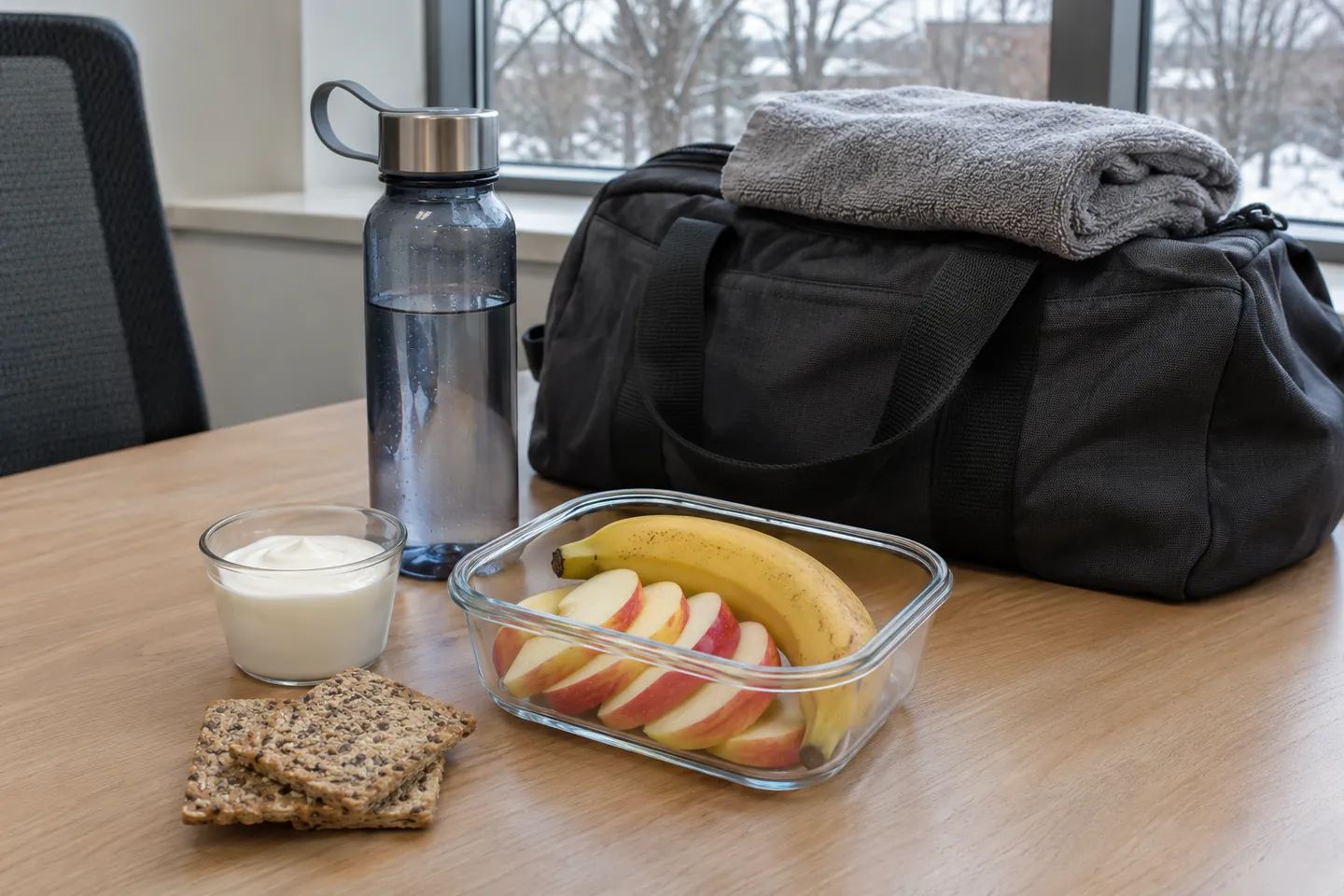
How to plan meals and snacks around evening training in Mississauga, from late-afternoon fuel and hydration to a calm dinner after class and better sleep.
Picture a typical weekday. Breakfast at seven, a rushed lunch at your desk around noon, a long afternoon of meetings, then a drive across Mississauga to make a six-thirty class. By the time you tie your belt or wrap your hands, it has been more than six hours since you last ate anything substantial. Halfway through the warm-up, you feel flat. By the final round, you are thinking about nothing except food.
Evening training is the reality for many adults in Mississauga who work during the day. It fits around office hours, school pickups and shift schedules, and many people enjoy finishing their day with a class. The trade-off is that eating becomes a puzzle. Eat too little and you lack energy. Eat too much too close to class and you feel heavy or uncomfortable. Eat dinner too late and sleep may suffer.
This article offers general, practical ideas for organizing meals and snacks around evening classes. It is not personalized nutrition advice. If you have specific dietary needs, a medical condition, or goals that require detailed planning, a registered dietitian or your doctor is the right person to consult.
Start with the shape of your day
Before thinking about specific foods, look at the timing of your meals. Write down when you usually eat breakfast and lunch, when you leave work, when class starts and when you typically get home. Many people discover that the biggest problem is not what they eat but the long gap between lunch and training.
Once you see the shape of your day, you can decide where a snack or small meal makes sense. For someone training at six, a mid-afternoon snack around three or four o’clock often fills the gap. For someone training at eight, an early dinner around five might work better, followed by a lighter snack or meal after class.
The goal is to arrive at class feeling comfortable: not hungry, not stuffed. Everyone’s comfortable zone is a little different, and it may take a few weeks of experimentation to find yours.
Lunch as the foundation
Lunch has a big influence on how you feel in the evening. A very small lunch may leave you depleted by late afternoon, while an extremely heavy lunch might make you sluggish for hours. A balanced meal with some carbohydrate, protein, vegetables or fruit, and a little fat tends to provide steady energy.
Examples might include a sandwich or wrap with lean protein and vegetables, a rice or grain bowl with beans or chicken, leftovers from the previous night’s dinner, or a hearty soup with bread. These meals are easy to pack and do not require special preparation.
If your workday is unpredictable and you sometimes miss lunch, keep a backup option at work, such as a container of nuts, a granola bar or some fruit. Missing a meal entirely makes evening training much harder and often leads to overeating later at night.
The pre-class snack
A snack one to three hours before class can bridge the gap between lunch and training. The best choices are usually easy to digest, contain some carbohydrate for energy, and are not too high in fat or fibre, which can sit heavily in the stomach during exercise.
Common examples include a banana or apple with a small amount of peanut butter, yogurt with granola, crackers and cheese, a slice of toast with honey, or a small smoothie. People who train in high-movement classes like Brazilian jiu-jitsu or Muay Thai, where they are bending, rolling and moving quickly, often prefer lighter options closer to class.
Pay attention to how different snacks feel. Some people can eat a sandwich an hour before class with no problems. Others need two hours after any meal before they feel comfortable training. Your experience during class is useful feedback for adjusting the plan.
When you are short on time
Some days, the schedule simply does not allow for a proper snack. A meeting runs long, traffic on the 403 backs up, and you arrive at the gym with ten minutes to spare. In those situations, something small and simple is better than nothing.
A piece of fruit, a few crackers, or a small glass of juice can provide quick energy without much risk of discomfort. Keep a few of these options in your bag or car so you are not relying on vending machines or skipping fuel entirely.
If this happens often, it may be worth reorganizing your afternoon. Packing a snack in the morning, setting a reminder on your phone, or eating as soon as you leave work can make a big difference. Small habits like these often matter more than the exact food you choose.
Hydration through the afternoon
Hydration is easy to forget during a busy workday, especially in winter when you may not feel thirsty. Arriving at class already dehydrated can make the session feel harder and leave you more tired afterward.
Keep a water bottle at your desk or in your work vehicle and sip throughout the day. You do not need to drink huge amounts right before class, which can make you feel uncomfortable. Instead, aim for steady intake across the afternoon so you arrive feeling normal.
Bring water to class and drink during breaks. For most recreational sessions of an hour or so, water is enough. If you sweat heavily or train for longer periods, you might discuss your needs with a qualified professional, but there is usually no need for special drinks in a typical evening class.
Caffeine and evening training
Many people rely on coffee or tea to get through the afternoon, and some use it before evening classes for an energy boost. Caffeine affects people differently, and timing matters. A coffee at four o’clock might help one person feel alert for a six o’clock class but keep another awake until midnight.
Notice how caffeine affects your sleep. If you find it harder to fall asleep on training nights, experiment with having your last caffeinated drink earlier in the afternoon. Sleep is a major part of recovery, and it is worth protecting.
Be cautious with energy drinks and pre-workout supplements. Ingredients and caffeine levels vary widely, and their effects can be strong. If you are considering supplements, talk with a doctor or a registered dietitian first, particularly if you have any health conditions or take medication.
Eating after class
After an evening session, most people are hungry, and a proper meal helps with recovery. The challenge is that it may already be eight or nine o’clock. Rather than skipping dinner or grabbing whatever is closest, plan a meal that is satisfying but not overly heavy.
A balanced post-class meal often includes protein, carbohydrate and vegetables. Examples might be eggs with toast and sautéed vegetables, a stir-fry with rice, a bowl of pasta with a simple sauce and some protein, or leftovers reheated quickly. Meals that can be prepared in advance or assembled in a few minutes are particularly helpful.
Some people prefer to eat a larger dinner before class and only a small snack afterward. Others do the opposite. Both approaches can work. Choose the one that leaves you feeling well during class, satisfied afterward, and able to sleep comfortably.
Batch cooking and preparation
The easiest way to eat well around evening classes is to remove decisions from busy weekdays. Spending an hour on the weekend preparing a few components can make weeknights much simpler. Cook a pot of rice or grains, roast a tray of vegetables, prepare a protein such as chicken, tofu or beans, and wash some fruit.
During the week, you can mix these components into different meals. Rice, vegetables and chicken become a bowl one night and a wrap the next. Leftover roasted vegetables can go into an omelette or pasta. Having options ready makes it less tempting to rely on takeout late at night.
Snacks can be prepared in advance as well. Portion out yogurt, cut fruit, or pack crackers and cheese into containers so you can grab them on your way out the door. Many families in Mississauga find that Sunday afternoon is a natural time for this kind of preparation.
Training days and rest days
Your appetite and needs may differ between training days and rest days. Some people find they are noticeably hungrier on days when they train, especially after demanding sessions. Others notice little difference.
There is no need to follow rigid rules. Listen to your hunger cues and eat regular, balanced meals. If you have specific goals such as changing body composition or preparing for an event, working with a registered dietitian can help you plan intake in a way that suits your training and health.
Remember that nutrition supports training rather than the other way round. The goal is to have enough energy to enjoy class, recover well, and feel good in daily life. Extreme restriction or complicated plans tend to be hard to sustain and can make evening training feel harder.
Sleep, digestion and late meals
Eating very large meals right before bed can make it harder for some people to fall asleep. If you train late and eat a big dinner immediately afterward, you might notice restless nights. In that case, consider having a larger meal before class and a lighter snack afterward.
Pay attention to digestion as well. Spicy, very fatty or very large meals late at night can cause discomfort for some people. Simple, familiar foods are often easier to digest after an evening session.
Create a short wind-down routine after class. A shower, a light meal, some quiet time without screens, and a consistent bedtime can help your body shift from training mode to rest. Better sleep often leads to better energy in the next session.
Building a routine that lasts
The best eating pattern around evening classes is the one you can maintain week after week. It should fit your schedule, your preferences, your cultural traditions and your budget. It does not need to be perfect, and it does not need to look like anyone else’s plan.
Start by making one change, such as adding a mid-afternoon snack or preparing post-class meals on the weekend. Notice how it affects your training and energy. Once that change feels natural, consider another.
If you are looking for evening classes that fit your workday, browse the adult schedule and the range of group classes at Konga Fitness in Mississauga. You can book a free trial to experience a session, then adjust your eating routine based on how you feel.
Filed under
Keep exploring
More training insights await.