
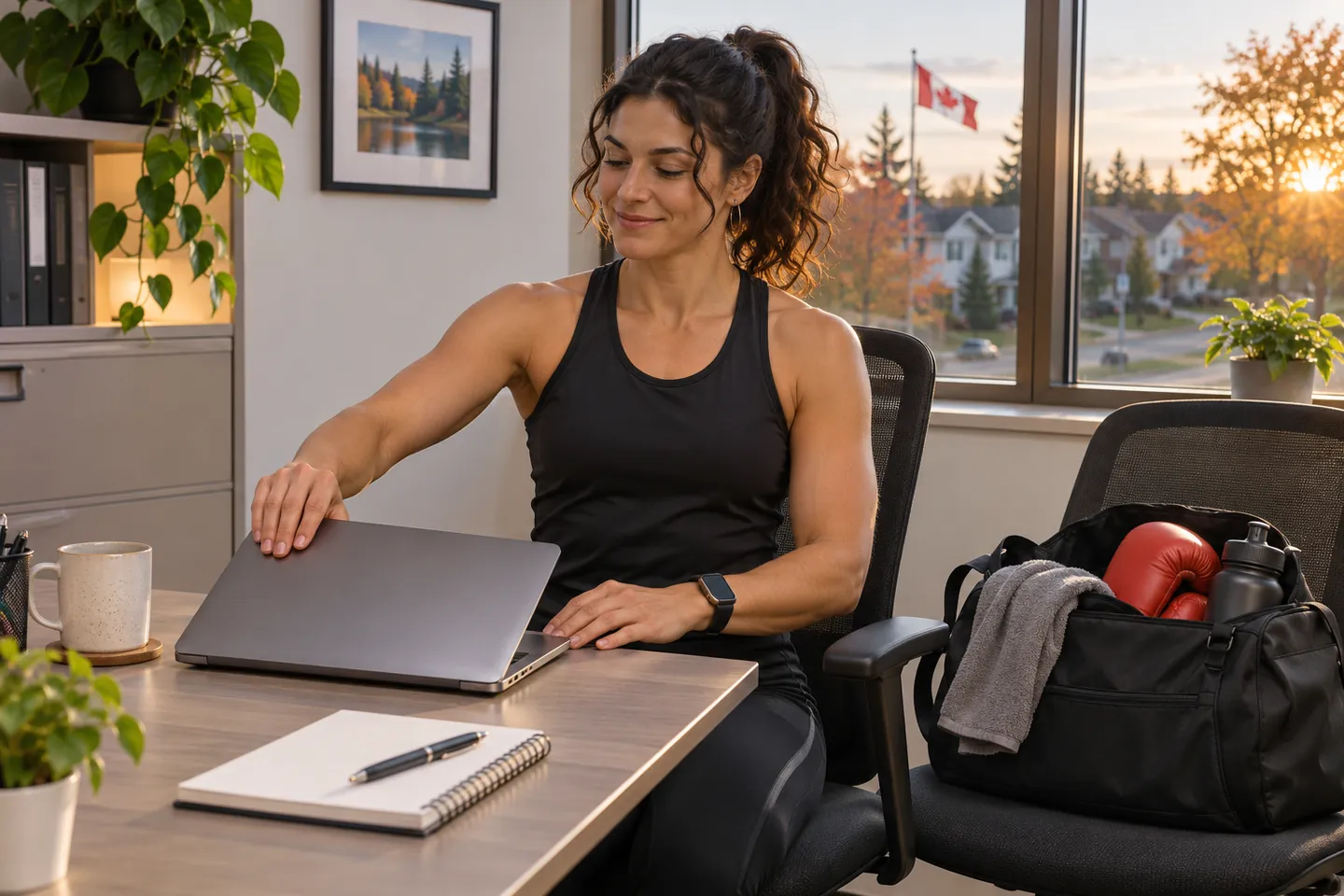
Create a workable after-work exercise routine in Mississauga with practical ideas for ending the workday, packing ahead, and making gym arrival easier.
The hardest part of exercising after desk work can happen before you leave the chair. One more message becomes another task, the planned departure slips, and a workout that looked easy to fit in the morning suddenly feels inconvenient. For people building an after-work routine in Mississauga, the transition out of work deserves as much thought as the training session itself.
This is a planning problem with several moving pieces: when work ends, where your equipment is, how you travel, and what awaits you afterward. You do not need a dramatic burst of motivation to solve every piece at once. You need an arrangement that makes the next step obvious when your attention is already tired from a full day of decisions.
Identify where the transition usually breaks down
Think about the last few times you intended to exercise after work. Did you leave too late? Forget clothing? Go home and become occupied with other tasks? Arrive at the gym without a clear idea of what to do? Each obstacle calls for a different response.
Be precise rather than describing the whole situation as a lack of discipline. If you are missing sessions because a recurring meeting ends at the same time as your appointment begins, the schedule is the problem. If the appointment time is workable but you cannot find your shoes, preparation needs attention.
Write down the most common obstacle and choose one change aimed directly at it. Trying to redesign your entire evening can make the solution harder to maintain than the original routine. A small adjustment is useful when it addresses the actual point where your plan stalls.
Give work a clear stopping process
An after-work workout needs a departure time, and a departure time is easier to respect when unfinished tasks have somewhere to go. Near the end of the workday, make a short note of what remains and what you will address next. This gives you a place to resume without repeatedly reopening the same decision.
If your role permits it, place the departure in your calendar and communicate the relevant boundary to colleagues. You do not need to share every personal detail. A clear statement of availability can reduce misunderstandings about whether you can stay for an additional meeting.
For unpredictable jobs, avoid pretending that every day can have the same ending. Identify which days are most likely to support an appointment and keep a backup plan for the others. The goal is to build around the nature of your work, not to blame yourself for a schedule that was never realistic.
Pack for the point where you will actually change
A person leaving an office may need a different bag from someone working at home. Think through where you will change clothes, where work items will remain, and which essentials must travel with you. This is more useful than copying a generic gym-bag checklist.
If you commute, check the bag before leaving home. Include the items the gym requires and the clothing you know is comfortable. Keep anything damp or dirty separate after the session so that the bag is easy to reset for the next visit.
If you work from home, set your exercise clothing somewhere visible before the workday begins. The short distance between desk and front door can still contain many distractions. Making the transition physical—closing the laptop, changing clothes, picking up the bag—can give the end of the day a clearer sequence.
Choose the route with the fewest unresolved decisions
Consider whether going directly from work to the gym fits your circumstances. For some people, a stop at home makes attendance less predictable because new responsibilities appear immediately. Others need that stop for caregiving or transport reasons. Neither arrangement is inherently better; the useful one is the one that reflects your real obligations.
Map the full evening rather than only the first journey. Where will you go after training? Do you need to collect someone, complete an errand, or prepare for the next morning? A session can feel much easier to attend when you know the rest of the evening has enough space.
In Mississauga, the route may change with your work location or household schedule. Review it when those circumstances change. A routine that worked with one office arrangement may need a different training time after a move, a new role, or a change in transit connections.
Arrive with a session you understand
Decision fatigue can make an undefined workout feel larger than it is. If you arrive knowing the purpose and general sequence of the session, you can spend less time wandering between possibilities. A written plan or coached appointment can provide that structure.
Keep the plan appropriate to the time you have. An ambitious list that you rarely finish may turn every visit into a negotiation with the clock. Ask your coach which elements matter most and how to handle a shortened appointment when necessary.
Understanding does not mean memorizing every detail. You should know where to begin, what information you need from the coach, and how to ask about anything unclear. A familiar opening routine can make the move from desk work to training feel less abrupt without requiring an elaborate ritual.
Allow an unhurried beginning
Coming straight from a busy day does not require you to jump immediately into the most demanding part of a session. Tell your coach how much time you have and whether you are arriving rushed. Let the planned preparation be part of the appointment rather than an optional piece you skip to catch up.
Use the opening minutes to pay attention to the instructions and the space around you. Put work notifications away if your responsibilities allow it. If you must remain reachable, explain that in advance so you can manage interruptions deliberately instead of repeatedly checking your phone without context.
You do not have to force yourself into a particular mood before beginning. Some days you will feel eager; others you will simply be ready to follow the plan. A useful routine can accommodate both without requiring you to prove enthusiasm at the door.
Avoid using exercise as punishment for the workday
A frustrating day can create the urge to make the workout unusually hard. Before changing the plan, ask what you are trying to accomplish. If the original session already serves your goals, adding more work because a meeting went badly may not make the evening more useful.
Tell your coach when you feel distracted or impatient. They can help keep the session focused on the intended tasks. The aim is not to ignore your mood, but to prevent it from becoming the sole author of the program.
Similarly, avoid judging a session by whether it erases every difficult feeling from work. Exercise can be a valued part of your evening without being responsible for solving every problem in the day. Completing an understandable appointment is a worthwhile result on its own.
Plan the practical landing after the gym
The routine does not end when you leave the training floor. Think about how you will get home, handle your used clothing, and prepare for whatever comes next. A simple landing process prevents the workout from leaving a trail of unfinished tasks around the house.
Put the bag in a place where you can unpack it promptly. Return reusable essentials to their usual spots, and note anything that needs replacing before the next appointment. These small actions make tomorrow’s preparation easier.
Keep the rest of the evening believable. If every gym night also includes a long errand list and several major chores, you may start avoiding the entire package. Review what can move elsewhere in the week. The training session should fit within your life rather than depend on an evening with no remaining margin.
Review attendance with curiosity
If you share responsibilities at home, make the gym evening visible in the household plan. Clarify who is handling any time-sensitive task while you are away and what you will take care of afterward. This conversation is particularly useful when an office day changes unexpectedly. A routine supported by explicit arrangements is easier to maintain than one that depends on everyone correctly guessing when you will return.
After a few weeks, look at which appointments you completed and which were difficult to reach. Search for recurring features: a particular weekday, an unreliable meeting end time, a missing item, or a route that consistently takes longer than expected. These patterns are more useful than a general judgment that evenings are impossible.
Try one change at a time when practical. Moving a session slightly later, packing at a different moment, or choosing a clearer departure routine may reveal which part matters most. If nothing about the evening works, a different time of day may be a sensible choice rather than a failure.
For help creating a session that fits your available window, see Konga’s personal training information and contact the team about current options. Bring the details of your workday, including the constraints. An after-work exercise routine becomes easier to manage when its design begins at the desk and continues all the way home.
Filed under
Keep exploring
More training insights await.