
Prepare your child for a first martial arts class in Mississauga with calm expectations, practical packing, helpful coach conversations, and a gentle review.
A child’s first martial arts class begins long before the opening activity. It begins with the explanation at home, the trip to the gym, and the moment they meet an unfamiliar adult who will lead the group. Parents can make that transition easier without rehearsing the entire lesson or promising that nothing will feel difficult.
Preparing for a first kids martial arts class in Mississauga means reducing practical surprises and leaving room for the child to respond in their own way. Some children enter eagerly; others need a little time to look around. A useful first visit provides information about the class and gives the coach a chance to meet your child. It does not need to demonstrate immediate confidence or perfect participation.
Confirm the arrangement directly
Before the visit, ask which current session is appropriate for your child’s age and experience. Confirm the start time, arrival instructions, clothing requirements, and equipment arrangements. Do not assume that a general timetable or an old social post contains all the details needed for a new participant.
Ask where parents should be during the lesson and how the gym introduces children who are attending for the first time. Knowing the arrangement helps you explain it accurately. If your child may want to observe briefly before joining, discuss that in advance rather than making a promise the coach has not agreed to.
Share relevant information privately when possible. This might include a communication preference, a practical movement limitation, or a concern about entering a new group. Focus on what helps your child participate. Avoid describing them with fixed labels in front of the class, especially labels they may experience as criticism.
Explain the visit in ordinary language
Tell your child where you are going, who will lead the activities, and what you know about the format. Keep the explanation brief and concrete. “We will meet the coach, see the room, and try the activities they show you” gives a useful picture without inventing details about a lesson you have not yet seen.
Avoid framing the class as a test of bravery or behaviour. A child should not feel that nervousness will disappoint you or that a mistake proves they were not ready. Explain that being new includes asking questions and learning where to stand. The coach expects beginners to need instruction.
Do not promise that the class will be easy or that your child will immediately make friends. Those outcomes cannot be guaranteed. You can promise your own role more accurately: you will help them arrive, listen to their questions, and speak with the coach when needed. Reliable, modest assurances are more useful than a dramatic sales pitch.
Let the child help with preparation
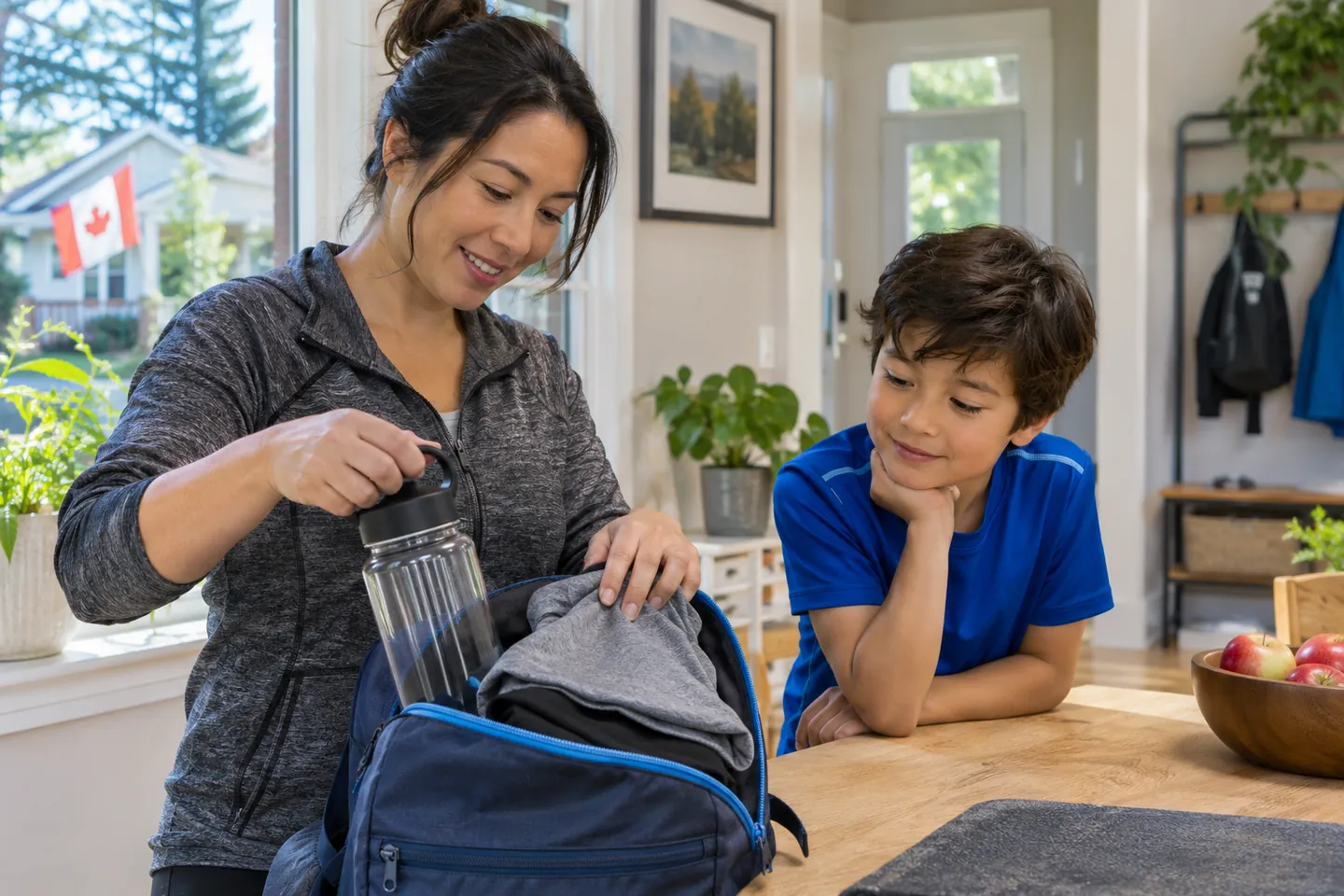
Invite your child to choose suitable clothing from the options the gym permits and help pack the required items. Keep the choices manageable. A water bottle, comfortable clothing, and any confirmed equipment may be enough for the first visit. Avoid buying a large kit before the team explains what is necessary.
Use the packing moment to answer practical questions. Where will the bottle go? Will shoes be worn in the training area? What happens after class? If you do not know, say that you will ask. Showing how to get information models a useful response to uncertainty without pretending that parents know every detail.
Pack early enough that the trip does not begin with a rushed search for missing items. A calm preparation routine cannot control every feeling, but it removes unnecessary pressure. It also gives the child a small, concrete role in getting ready rather than making the activity something adults organize entirely around them.
Plan the transition from the rest of the day
Consider what happens before the class. A child arriving directly from school or another activity may need a different transition from one coming after a quiet afternoon. Build the journey around the actual day, including the time needed to change and arrive. Mississauga travel should be part of the plan, not an afterthought.
Avoid squeezing the visit between several commitments if a less crowded option is available. The child is already managing a new setting and unfamiliar instructions. A little space around the class can make the experience easier to understand and review. Ask the gym about current alternatives if the first available time is especially difficult for your family.
On the way, keep the conversation light. Repeating a long list of rules can make the lesson sound more threatening than it is. One or two clear reminders are enough: listen to the coach, ask for help when unsure, and keep martial arts practice within the instructed activity. The coach will explain the classroom routines.
Arrive and introduce the child respectfully
Check in as directed and introduce your child by name. Where appropriate, give them room to greet the coach or answer a simple question. Do not force a performance of friendliness if they are quiet. A greeting can be learned and supported without turning the entrance into another test.
Show them the practical landmarks the team identifies: where belongings go, where to wait, and where you will be. Familiarity with those details can make the room less mysterious. Follow the coach’s lead about joining the group rather than stepping into the training area to manage the introduction yourself.
If your child hesitates, use the arrangement discussed with the coach. Avoid making new promises in the doorway, such as guaranteeing a particular activity or allowing an unapproved change to the session. Clear coordination between parent and instructor helps the child understand whose instructions apply and what the next step will be.
Support the lesson from the appropriate place
During class, follow the gym’s parent observation rules. If you are watching, resist calling out corrections, repeating the coach’s instructions, or directing your child from the sideline. They are learning to attend to the person leading the activity. A second stream of instructions can make the task harder rather than more supportive.
Notice the teaching without scoring every moment. Your child may miss a cue, look around, or need a demonstration repeated. Those moments are part of learning an unfamiliar routine. If something concerns you, make a note to discuss at an appropriate time rather than correcting it publicly across the room.
Keep your expression and reactions calm. Some children look toward a parent when unsure. A simple encouraging presence is usually clearer than elaborate gestures or visible frustration. The coach should lead the technical and group instructions, while you remain available through the arrangement the gym has established.
Make help-seeking a normal option
Before or after the lesson, remind your child that they can tell the coach when they do not understand an activity or need a pause. Use a short phrase they can remember, such as “Can you show me again?” This gives them a practical tool without scripting every possible interaction.
If they report discomfort or feeling unwell, take it seriously and communicate with the instructor. Do not insist that finishing the first class matters more than understanding the concern. Technical confusion, nervousness, and physical symptoms are different situations and may need different responses. Avoid treating them all as reluctance to be overcome.
Afterward, acknowledge any useful communication you noticed. “You asked where to stand” describes an action your child can repeat. This kind of observation is more concrete than saying they were finally brave or behaved perfectly. It shows that asking for help is part of participation, not evidence that participation failed.
Keep the first review gentle
Give your child time to transition out of class before asking many questions. A simple opening such as “What do you remember doing?” can reveal more than a checklist about whether they listened and performed correctly. Let them choose the first detail. It may be the equipment, a game, or a moment with another child.
Ask what was confusing as well as what was enjoyable. Listen without immediately explaining why they should have liked something. If their account raises a practical question, bring it to the coach. You can clarify the situation while still respecting the child’s experience of it.
Share one specific effort you appreciated, such as trying a new movement or waiting for a turn. Avoid comparing them with another child or a sibling. The purpose of the first visit is to learn about their starting point and the class fit, not establish a ranking within the group.
Decide the next step with the coach
Ask the instructor how the introduction went and what they recommend next. The coach may have observations about the suitable group, equipment needs, or a useful routine for returning. Combine that information with your child’s response and the family’s schedule before deciding how to continue.
For an introduction to kids martial arts at Konga, use the free trial page to discuss current arrangements. Prepare the practical details, explain the visit honestly, and let the first class be a first class. A successful beginning can be as simple as meeting the coach, understanding the room, and leaving with a clearer idea of the next visit.
Filed under
Keep exploring
More training insights await.