
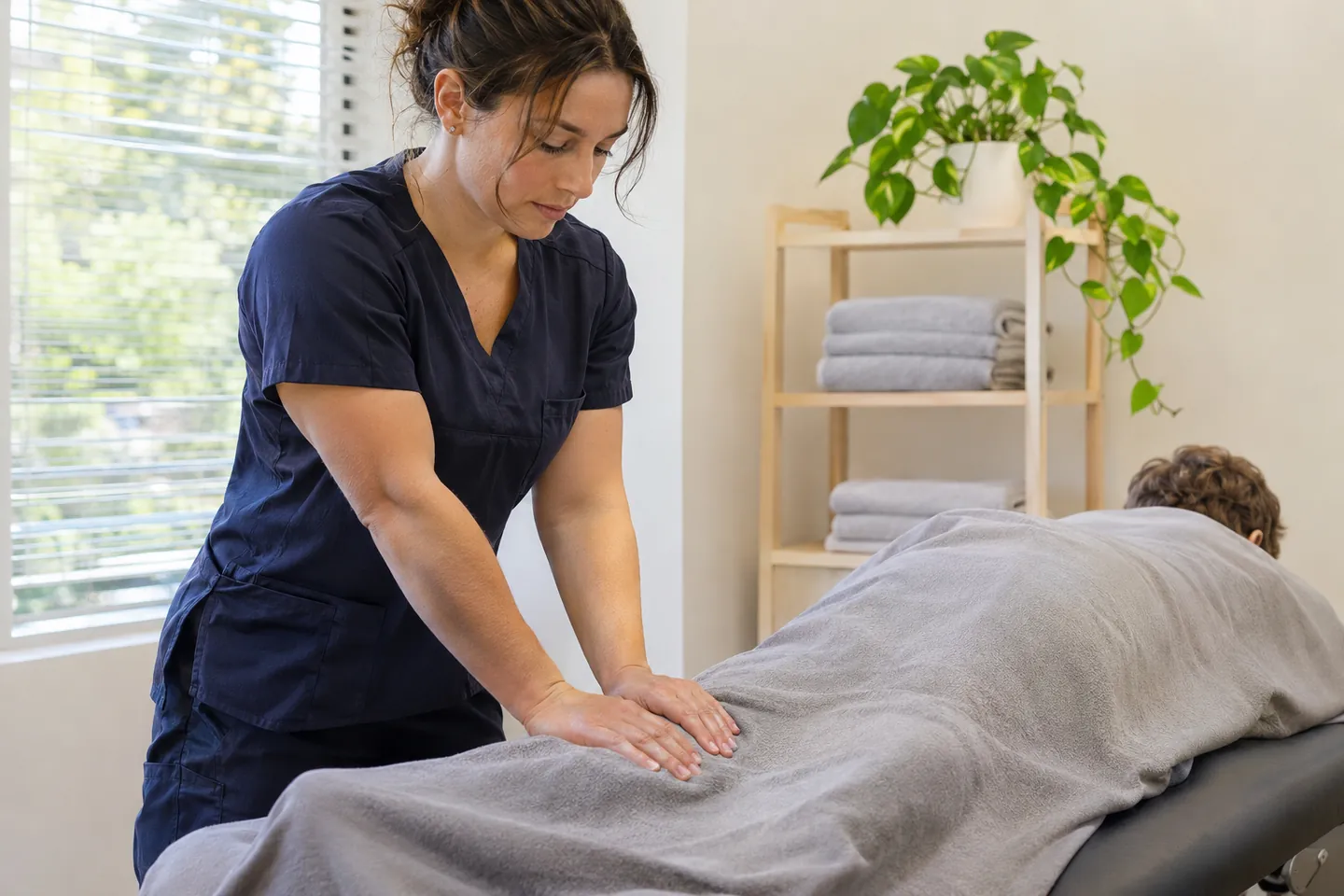
Thinking about massage therapy in Mississauga alongside training? Learn how to time appointments, talk with your therapist, and plan sessions around hard workouts.
Here is a situation many regular trainees will recognise. You have a heavy sparring night on Tuesday, strength work on Thursday, and a long jiu-jitsu class on Saturday. Your shoulders feel tight, your calves feel like rope, and someone at the gym mentions that massage helps them. You book an appointment, then wonder whether you have picked the right day.
Massage therapy can be a pleasant and worthwhile part of an active person’s routine, but it works best when it fits the rest of the week rather than competing with it. Timing, communication with your therapist, and realistic expectations all play a part. For people training in Mississauga, where work, commutes, and family commitments already make scheduling tricky, a little planning goes a long way.
This article offers practical ideas for slotting massage into a training week. It is general information, not medical advice. A registered massage therapist, and in some cases a physician or physiotherapist, is the right person to advise on your individual situation.
Be clear about why you are booking
People seek out massage for many different reasons. Some want to relax and unwind after a stressful stretch at work. Others want to address areas that feel tight or sore from training. Some are recovering from an injury under the guidance of a healthcare provider. Some simply enjoy it and find it helps them feel more comfortable in their bodies.
Each of these reasons might lead to a different type of session and different timing. A relaxing session might suit a rest day or an evening when you have nothing else planned. A session focused on specific areas might be planned around training load. A session that is part of injury rehabilitation should follow the advice of the professionals managing that injury.
Knowing your reason helps you communicate with your therapist and choose a time that makes sense. It also helps you judge whether the sessions are serving their purpose.
What massage can and cannot be expected to do
Many people report that massage helps them feel less tense, more relaxed, and more comfortable moving. Those experiences are real and worth valuing. At the same time, it is wise to be cautious about strong claims you might read online, such as massage flushing out toxins or guaranteeing faster recovery.
A balanced view is that massage can be one supportive element of recovery, alongside sleep, nutrition, sensible training load, and rest days. It does not replace them. If you are chronically under-slept and overtraining, an appointment is unlikely to undo the effects of that pattern.
If you have pain that persists, worsens, or comes with other symptoms, massage is not a substitute for proper assessment. A physician or physiotherapist can help work out what is happening and whether massage is appropriate.
Timing around hard sessions
One common question is whether to book massage before or after a hard training day. There is no single correct answer, but a few general ideas help.
Many people prefer not to have a deep, intense session right before a demanding workout or sparring class. Some find that firm pressure leaves them feeling heavy or a bit tender for a day or so, which is not ideal when you need to move sharply. If you do want something before a hard session, a lighter approach may suit better, and it is worth discussing with your therapist.
After a hard session, some people like to wait a day rather than booking immediately, particularly if they are very sore or bruised from contact training. Others enjoy a session the same evening. Paying attention to how you feel afterward, and noting it, will help you settle on a pattern that works for you.
Rest days are often a natural fit
For many trainees, a rest day or light day is the simplest slot for massage. There is no pressure to perform afterward, and you can go home and take it easy. If your week follows a rhythm, such as training Monday, Tuesday, Thursday, and Saturday, then Wednesday or Sunday may work well.
This also helps with the practical side of things. Rushing from a session across town during rush hour on the 403, arriving stressed, and then dashing back out to a class undermines the point. Booking on a quieter day gives you time to arrive calmly and leave without hurrying.
If your rest days are already full of errands and family obligations, that is fine. Choose whatever day lets you actually show up and relax rather than squeezing it in at the cost of everything else.
How often is reasonable
Frequency depends on budget, time, goals, and personal preference. Some people book occasionally, perhaps after a particularly demanding block of training or a competition. Others prefer a regular rhythm. There is no universal ideal.
If cost is a factor, as it is for most people, it may make sense to save sessions for times when you are training hardest or feeling most worn down. Some people check whether their workplace benefits cover registered massage therapy, which can affect how often they choose to go. Coverage varies, so it is worth checking your own plan details.
Whatever frequency you choose, consistency usually lets you and your therapist learn more about how your body responds than a scattered series of one-off visits with different practitioners.
Talk to your therapist about your training
A good massage therapist will ask about your health history, current activity, and any areas of concern. Give them a clear picture. Mention what sports you do, how often you train, what you did in the last day or two, and what you have coming up.
That information helps them choose an approach. A therapist working with someone who sparred hard yesterday and has a grading on Saturday may make different choices from one working with someone on a quiet recovery week. They can also adjust pressure and focus areas based on what you tell them.
During the session, speak up if the pressure is too much or not enough. Many people stay silent out of politeness, which does not help anyone. Your therapist would rather you tell them than leave uncomfortable.
Contact sports and bruising
If you train boxing, kickboxing, Muay Thai, MMA, or jiu-jitsu, you may sometimes arrive with bruises, scrapes, or sore spots from contact. Let your therapist know about these. They will generally avoid working directly on fresh bruises or broken skin, and they may need to adjust their plan.
Skin infections are also worth mentioning. Mat sports carry a risk of skin conditions that can spread through close contact. If you have a rash or suspicious skin issue, it is considerate to postpone your appointment and have it checked by a healthcare provider first.
Sore areas from contact are different from muscle tightness from training. Your therapist can help distinguish what is appropriate to work on and what should be left alone or assessed by someone else.
Combining massage with other recovery
Massage often works well alongside other supportive habits. Gentle mobility work, walking, adequate sleep, and regular meals all contribute to how you feel between training days. Some people also use stretching or yoga as part of their recovery week.
If you are working with a physiotherapist or chiropractor, coordinate your appointments sensibly. Your healthcare providers may have suggestions about how to space sessions or what to focus on. Gyms with on-site physiotherapy and chiropractic services can make that coordination simpler, but the key is clear communication between you and the professionals involved.
Avoid stacking too many recovery appointments into a single day. Several hands-on sessions back to back can leave you feeling more tired than refreshed.
Before and after your appointment
A few small habits can help sessions go well. Arrive with a few minutes to spare so you are not rushing in. Wear or bring comfortable clothing. Have a light meal beforehand rather than a large one or nothing at all. If you have trained earlier that day, a quick shower is considerate.
Afterward, many people like to take it easy for the rest of the day. Drinking water is a common habit, though not because massage requires it in any special way; staying hydrated is simply sensible for active people. If you feel unusually sore, light-headed, or uncomfortable after a session, mention it to your therapist next time or contact them for advice.
Notice how you feel the following day and how your next training session goes. Over a few weeks, these observations will help you decide what timing and frequency suit you.
When massage around competitions or gradings makes sense
People who compete or test for belts and ranks sometimes wonder about massage leading up to the event. Generally, it is wise not to try anything unfamiliar right before an important day. If you have never had a deep tissue session, the week of a competition is probably not the time to find out how your body responds.
If massage is already part of your routine, your therapist can help plan a session that suits the timing, perhaps something lighter a few days out. After the event, a session can be a pleasant way to wind down, once any injuries have been assessed appropriately.
As always, follow the advice of your coach and any healthcare professionals involved, especially if you are managing an existing issue.
Building massage into your routine
Massage therapy can be a valued part of a training life when it is planned thoughtfully. Know why you are going, choose timing that suits your training week, communicate clearly with your therapist, and keep realistic expectations about what it can do.
If you train in Mississauga and want to explore this, our gym offers massage therapy alongside training programs, which can make scheduling simpler for members. If you have questions about how massage might fit with your classes, please contact us and we can help you think it through.
Filed under
Keep exploring
More training insights await.