
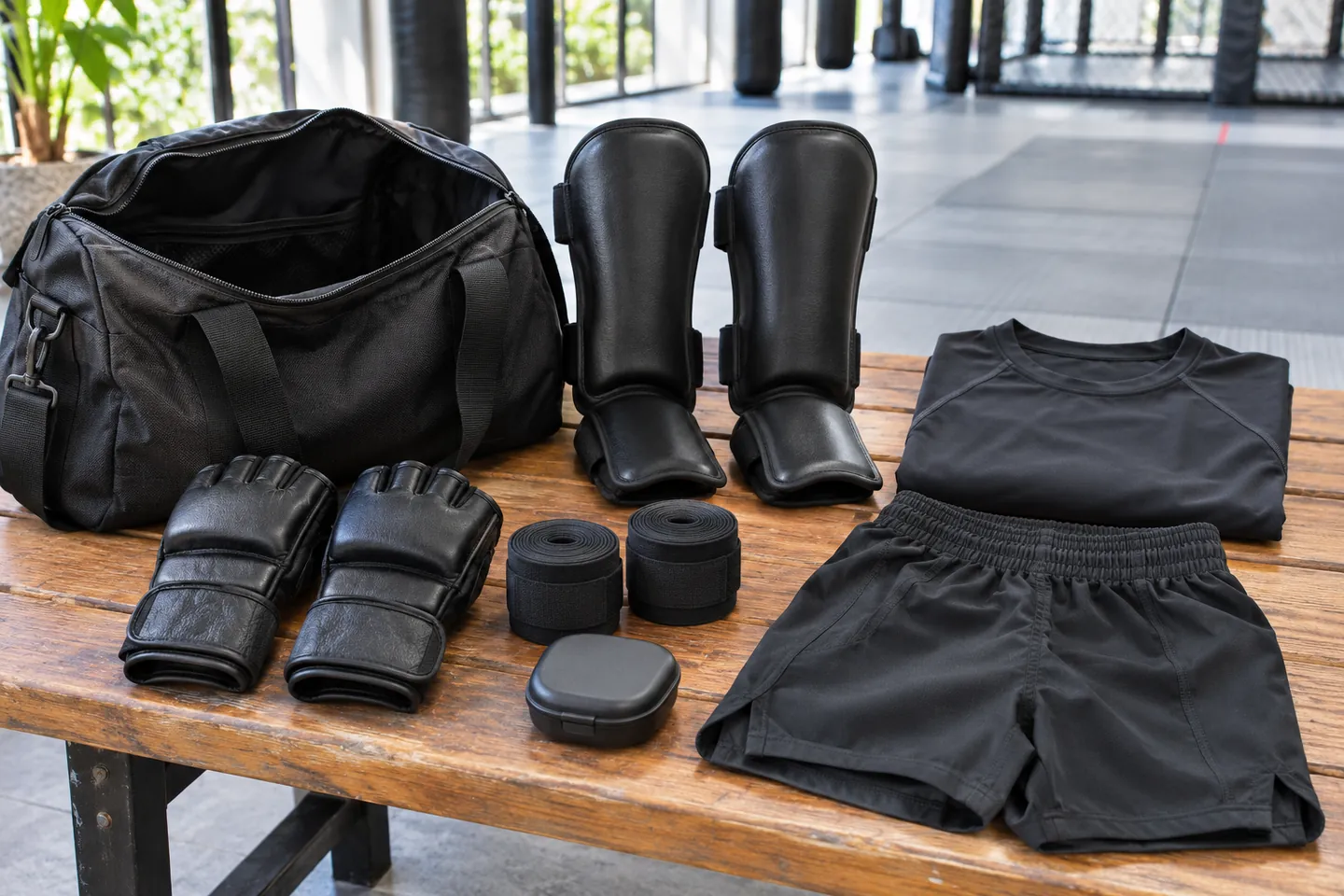
Starting MMA in Mississauga? See which gear to buy first, from mouthguard and wraps to gloves and shin guards, what can wait, and how to keep it all clean.
Walk into any combat sports store or scroll an online shop and you could spend a surprising amount of money on MMA gear before your first class. Gloves in three different sizes, shin guards, headgear, rash guards, spats, fight shorts, a groin protector, a gym bag the size of a small car. It is easy to assume you need all of it on day one.
You do not. Mixed martial arts combines striking and grappling, so the equipment list is longer than for a single discipline, but beginners need surprisingly little to get started. Most of the gear can be added gradually as you figure out which classes you attend, what your coach recommends and what fits your body.
This guide sets out a sensible order for buying MMA gear if you are starting classes in Mississauga. It covers what to have from the start, what to add over the first few months and what can safely wait. It does not recommend particular brands; your coach and your own fit preferences are better guides than any list.
First, ask your gym
Before buying anything, check with the gym. Many places have loaner equipment for trial classes and beginners, especially gloves and shin guards. Some have specific requirements for certain classes, such as gi or no-gi grappling, or sparring gloves of a certain weight.
Asking first saves money and avoids buying things you will not use. It also gives you a chance to ask the coach for their opinion on fit and quality. Coaches see a lot of gear over the years and usually have a good sense of what holds up and what falls apart quickly.
If you are trying a free trial, you will usually only need comfortable clothing and a water bottle. Gear decisions can come after you know you want to continue.
Day one: the essentials
For your very first classes, you need very little. Comfortable athletic clothing that does not have zips, buttons or pockets that could catch on a partner. Shorts without belt loops are ideal. A T-shirt or rash guard that will not ride up too much. A water bottle. A small towel. Sandals or flip-flops for walking around off the mats.
A mouthguard is worth getting early, even before you do any contact. Many drills involve partners, and accidents happen. Basic boil-and-bite mouthguards are widely available and affordable, and your coach can show you how to fit one if you have not used one before. If you have dental work or braces, speak to your dentist about appropriate options.
That is genuinely enough for most introductory classes. Everything else can be borrowed or added later.
Hand wraps
Hand wraps are long strips of fabric that you wind around your hands and wrists before putting on gloves. They help support the wrist and the small bones of the hand and keep gloves cleaner. Most striking coaches will want you to wear them once you start regular pad and bag work.
Wraps are inexpensive, and it is worth owning a couple of pairs so one can be washed while you use the other. Learning to wrap your hands takes a little practice; ask your coach to show you their preferred method, then practise at home until it feels quick and natural.
Wash wraps after every use or two. They absorb a lot of sweat and can become unpleasant quickly. A mesh laundry bag stops them from tangling in the washing machine.
Gloves for MMA classes
Glove choice in MMA is a little more complicated than in boxing. There are typically two main types. Small open-finger MMA gloves allow you to grip and grapple while still offering some protection. Larger boxing-style gloves offer more padding and are often used for bag work, pad work and striking sparring.
Many coaches ask beginners to use boxing-style training gloves for most striking drills because they offer more protection for both you and your partner. Some classes may use MMA gloves for specific drills that combine striking and grappling. Ask your coach which they want you to bring and what weight is appropriate for your size and the type of training.
Fit matters more than fancy features. Gloves should feel snug but not tight over your wrapped hands. If you can, try them on in person before buying. If you buy online, check the return policy.
Shin guards
Once you begin kicking drills with a partner, shin guards become important. They protect both your shins and your partner’s legs during controlled kicking and checking drills. Some gyms provide them for beginners; others expect you to have your own once you are training regularly.
Shin guards come in different styles. Some are slip-on sleeves; others strap on and cover the instep. MMA-specific shin guards are often slimmer to allow grappling, while Muay Thai-style guards tend to be bulkier. Your coach can tell you what is preferred in your classes.
As with gloves, fit is key. Guards should stay in place when you move and not slide around. Try kicking the air or a bag in them before you commit, if possible.
Groin protection
For men, a groin protector is recommended for most striking and sparring activities, and some gyms require it. Even in controlled drills, accidental contact can happen. There are options designed for combat sports that are more comfortable for grappling than traditional cups.
Women may also choose protective gear depending on the activities and personal preference. Ask your coach what is common in your classes and what they recommend.
This is one of those pieces of equipment that many beginners delay, then wish they had bought earlier. It is worth adding once you start partner striking work.
Grappling clothing
MMA classes usually include wrestling and grappling. For no-gi grappling, many people wear a fitted rash guard and shorts without pockets or zips. Some also wear spats or compression leggings underneath for comfort and hygiene.
A rash guard is helpful because it stays in place during grappling, reduces mat burn and keeps sweat more contained. You do not need many to start; one or two that you wash after every class are enough.
If your gym runs gi-based Brazilian jiu-jitsu classes and you plan to attend them as part of your MMA training, you will eventually need a gi too. Ask the coach whether a loaner is available until you are sure you want to continue.
Headgear and sparring equipment
Headgear is commonly used in some forms of sparring. Whether you need it, and what type, depends on your gym’s rules and the kind of sparring you will do. Many beginners do not spar for some time after starting, so headgear often falls into the “later” category.
When you do start sparring, your coach will tell you what equipment is required. That might include headgear, larger sparring gloves, shin guards and a mouthguard. Follow their guidance closely; sparring rules and equipment exist to keep everyone safe.
Do not feel pressured to start sparring before you are ready. Good gyms introduce it gradually and only when a coach believes you have the skills and control to take part safely.
What can wait
Plenty of gear can wait until you have been training for a few months, or may never be necessary for your goals. Specialised fight shorts, multiple pairs of gloves for different purposes, ankle supports, knee pads and branded bags are all optional for beginners.
Wait until you know what you need. After a few months, you will have a clearer sense of which classes you attend, how often you spar, what fits well and where you need more protection. Buying with that knowledge is far better than guessing on day one.
Also be cautious with very cheap gear that seems too good to be true. Poorly made gloves and shin guards can wear out quickly and may not protect you or your partners well. You do not need the most expensive option, but quality matters for protective gear.
Keeping your gear clean
Hygiene is important in any contact sport, especially one that combines striking and grappling. Sweat-soaked gear left in a bag becomes a breeding ground for bacteria and odour. Skin infections can spread on mats if people are careless.
Wash rash guards, shorts and wraps after every class. Air out gloves and shin guards as soon as you get home rather than leaving them zipped in a bag. Wipe them down regularly. Some people use glove deodorisers or simply stuff gloves with newspaper to absorb moisture.
Shower soon after training, keep your nails short and clean, and do not train if you have an open wound or a skin condition that could be contagious. Your training partners will appreciate it, and you will be less likely to pick anything up yourself.
Building a budget-friendly kit
If budget is a concern, you can build your kit gradually. Start with a mouthguard and wraps. Add gloves once you know your coach’s preference. Add shin guards when kicking drills begin. Add groin protection before partner striking. Leave sparring gear until your coach says you are ready.
Spreading purchases over a few months also lets you see whether MMA is the right fit for you. Some people discover they prefer one discipline, such as kickboxing or grappling, and adjust their training and gear accordingly.
Check with your gym about whether they sell any equipment or can recommend local suppliers. In a city as large as Mississauga, there are usually several options for trying gear on in person.
Packing your bag
Once you have your gear, a simple routine for packing your bag helps you avoid forgetting anything. Keep a basic list on your phone: mouthguard, wraps, gloves, shin guards, groin protection, rash guard, shorts, towel, water bottle, sandals and a bag for sweaty clothes.
Pack the night before, especially if you are coming straight from work or school. Winter commutes in Mississauga can be slow, and the last thing you want is to arrive and realise your mouthguard is still on the kitchen counter.
Keeping a spare set of wraps and a spare mouthguard in your bag can be useful too, just in case.
Ready for your first class
Starting MMA does not require a mountain of equipment. Begin with comfortable clothing, a mouthguard and water. Add wraps, gloves and shin guards as you start regular striking work, and leave sparring gear until your coach says it is time. Prioritise fit, quality and hygiene over fashion.
If you would like to try MMA in Mississauga, explore our MMA classes and book a free trial at Konga Fitness. Our coaches will be glad to advise you on what to bring and help you build your kit sensibly as you progress.
Filed under
Keep exploring
More training insights await.