
A practical parent's guide to preparing children for a martial arts summer camp in Mississauga, covering packing, sleep, nerves, food, and the first-day drop-off.
The registration form is done, the dates are in the calendar, and summer is suddenly close. For many families, a martial arts summer camp in Mississauga is a way to keep kids active between school years, give them something structured during the long July and August days, and introduce them to a sport they might stick with.
What the registration form does not cover is the preparation that makes the first week go smoothly. Kids tend to settle into camp faster when they know roughly what to expect, have the right things in their bag, and arrive rested rather than frazzled. Parents tend to settle faster too.
Below is a loose timeline, starting a couple of weeks out and ending after the first few days, with practical suggestions at each stage. Every child is different, so take what fits your family and leave the rest.
Two weeks out: talk about what camp will be like
Children handle new situations better when the unknowns are smaller. A couple of weeks before camp, start talking casually about what the days will involve. Martial arts camps typically mix skill practice, games, fitness activities, breaks, and some quieter time, though the exact structure depends on the program. If you are not sure, ask the camp staff for a general outline of a typical day.
Keep the conversation light. You are not trying to rehearse every moment, just to give your child a picture. Mention that there will be coaches who help everyone learn, other kids who are also new, and breaks for snacks and water. If your child has never done martial arts before, it can help to say that nobody expects them to know anything on day one.
Some kids will have questions you cannot answer, like whether they will have to fight. It is fine to say you will find out together. Most children’s programs focus on movement, discipline, and controlled drills rather than anything resembling a real fight, and coaches can explain how they keep things safe.
Visit or look around if you can
If the camp is held at a gym your child has not seen, a short visit beforehand can take the edge off. Seeing the mats, the change area, and where the washrooms are makes the first morning less of a leap into the unknown.
Not every family will have time for this, especially with work schedules and commutes across the city. Even looking at photos on the gym’s website or driving past the building can help a nervous child form a mental image. For kids who find transitions hard, that small bit of familiarity goes a long way.
If your child is already enrolled in regular classes, they may be familiar with the space, but camp days are longer and feel different. It is still worth mentioning that camp will have more activities and more breaks than a single class.
The week before: adjust sleep gradually
Summer often means later bedtimes, and that is part of the fun. But a child who stayed up late the night before camp will have a harder time on a full, active day. About a week before camp starts, nudge bedtimes and wake-up times back toward something closer to the school-year routine.
Small shifts tend to work better than an abrupt change the night before. Fifteen or twenty minutes earlier every couple of nights is usually manageable. If your mornings will involve a drive through Mississauga traffic, factor in the time it takes to get out the door so nobody is rushing.
Sleep is not a cure-all, but a rested child usually copes better with new people, physical activity, and the inevitable moments of frustration that come with learning something new.
Gather the gear without overbuying
Most martial arts camps need far less equipment than parents expect. Comfortable athletic clothing that allows full movement is usually the foundation: shorts or track pants, a T-shirt, and possibly a spare set if the day is long or hot. Many martial arts are practised barefoot on mats, so sandals or slip-on shoes for moving between areas can be handy.
Check with the camp before buying anything specialised. Some programs provide gloves, pads, or other equipment, while others may ask families to bring specific items. Buying a full set of gear before your child has tried the activity can be an unnecessary expense.
Label everything. Water bottles, towels, hoodies, and lunch containers all look alike in a busy camp, and a name written inside can save a lot of hunting at the end of the day.
A simple packing list
Every camp will have its own requirements, so treat this as a starting point to compare against what the program asks for:
- A refillable water bottle, ideally one your child can open and close easily
- A small towel
- A change of clothes, including socks and underwear
- Lunch and snacks if they are not provided, packed in containers your child can manage
- Any medication your child needs, handled according to the camp’s procedures
- Sunscreen and a hat if any outdoor time is planned
- A plain bag with the child’s name on it
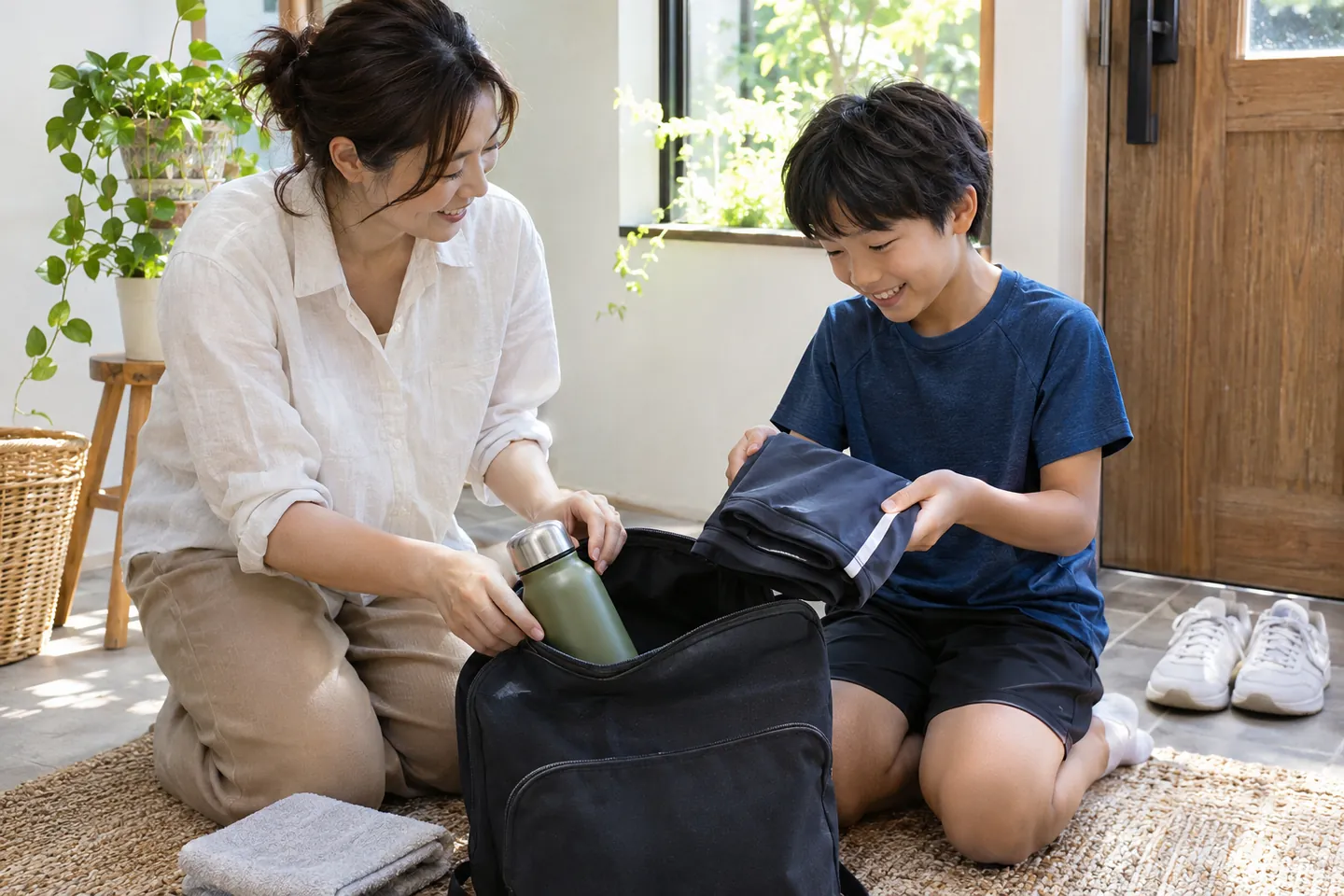
Pack the bag together the night before, at least for the first few days. Children who help pack know where things are, which means fewer worried moments looking for a water bottle in the middle of the morning.
Food that works for an active day
Martial arts camps are physical, and children who arrive hungry or skip lunch can run out of energy and patience quickly. A breakfast your child will actually eat matters more than a perfect one. If mornings are rushed, something simple and familiar is fine.
For lunch and snacks, pack food that travels well, does not need heating unless the camp offers that, and is easy to eat in a short break. Many camps have rules about nuts or other allergens, so check before packing. If your child has allergies or dietary needs, make sure the camp knows in writing and that you understand how they handle it.
Water deserves its own reminder. Summer in Mississauga can be hot and humid, and even indoor training spaces get warm. Remind your child to drink during breaks, not just when they feel thirsty, and send a bottle large enough to last or confirm that refills are available.
Share the important information with staff
Camps can only support your child well if they know what they need to know. Before the first day, make sure the program has accurate emergency contacts, pickup authorisations, and details of any medical conditions, allergies, or medications.
It is also worth mentioning anything that might help coaches understand your child: whether they are very shy, find loud environments hard, have trouble with transitions, or tend to get upset when they make mistakes. You do not need to share more than you are comfortable with, but a short note can help staff respond kindly rather than guessing.
If your child has a physical limitation, recent injury, or anything a healthcare provider has advised about activity, let the camp know and follow that professional’s guidance. Coaches can adapt drills, but they are not medical practitioners.
Handling nerves before the first day
Some children are excited to start camp. Others are anxious, and some swing between both within the same hour. All of these reactions are normal. Try not to dismiss the worries, and avoid promising that everything will be perfect.
Instead, acknowledge the feeling and offer something concrete. You might remind them that the coaches will show everyone what to do, that other kids are new too, and that you will be there at pickup. Some children find it comforting to know exactly who is picking them up and when.
Role-playing a quick introduction can help shy kids: what they might say if someone asks their name, or how they can ask a coach for help. It sounds small, but having a script ready can make the first conversation easier.
The first morning and drop-off
Aim to arrive a few minutes early, not so early that your child is waiting around for a long time, but early enough that you are not rushing through the door. Highway 401 and 403 traffic can be unpredictable on weekday mornings, so give yourself a margin.
At drop-off, a short, warm goodbye usually works better than a long, drawn-out one. Lingering can make it harder for an anxious child to settle. Introduce your child to a coach if possible, mention anything important, and then leave confidently. Staff are used to helping children through that first moment.
If your child is upset, trust the camp to help them settle, and ask whether you can call or check in later. Most children calm down once the activities start and they have something to focus on.
After the first few days
When you pick your child up, resist the urge to fire questions at them immediately. Many kids are tired and need a snack and some quiet before they want to talk. Later, open-ended questions like what was the funniest part or what did you learn often get better answers than did you have fun.
Expect some tiredness. A full day of physical activity can wear children out, especially in the first week. Earlier bedtimes, good meals, and a calm evening help. If your child mentions soreness that seems unusual, or any injury, follow up with camp staff and a healthcare provider as needed.
Keep an ear out for how your child talks about camp over the first week. Gradual excitement is a good sign. Persistent distress is worth discussing with the staff, who may have observed something useful.
Building on the summer
For some kids, camp is a one-time summer activity. For others, it sparks an interest that continues into the school year. If your child enjoys the experience, regular classes can build on what they learned and give them a consistent routine.
To learn more about what a summer at our gym looks like, visit the summer camp page, or explore our year-round kids martial arts program and the kids schedule. If you have questions about whether camp suits your child, you can always contact us and talk it through before the summer begins.
Filed under
Keep exploring
More training insights await.