
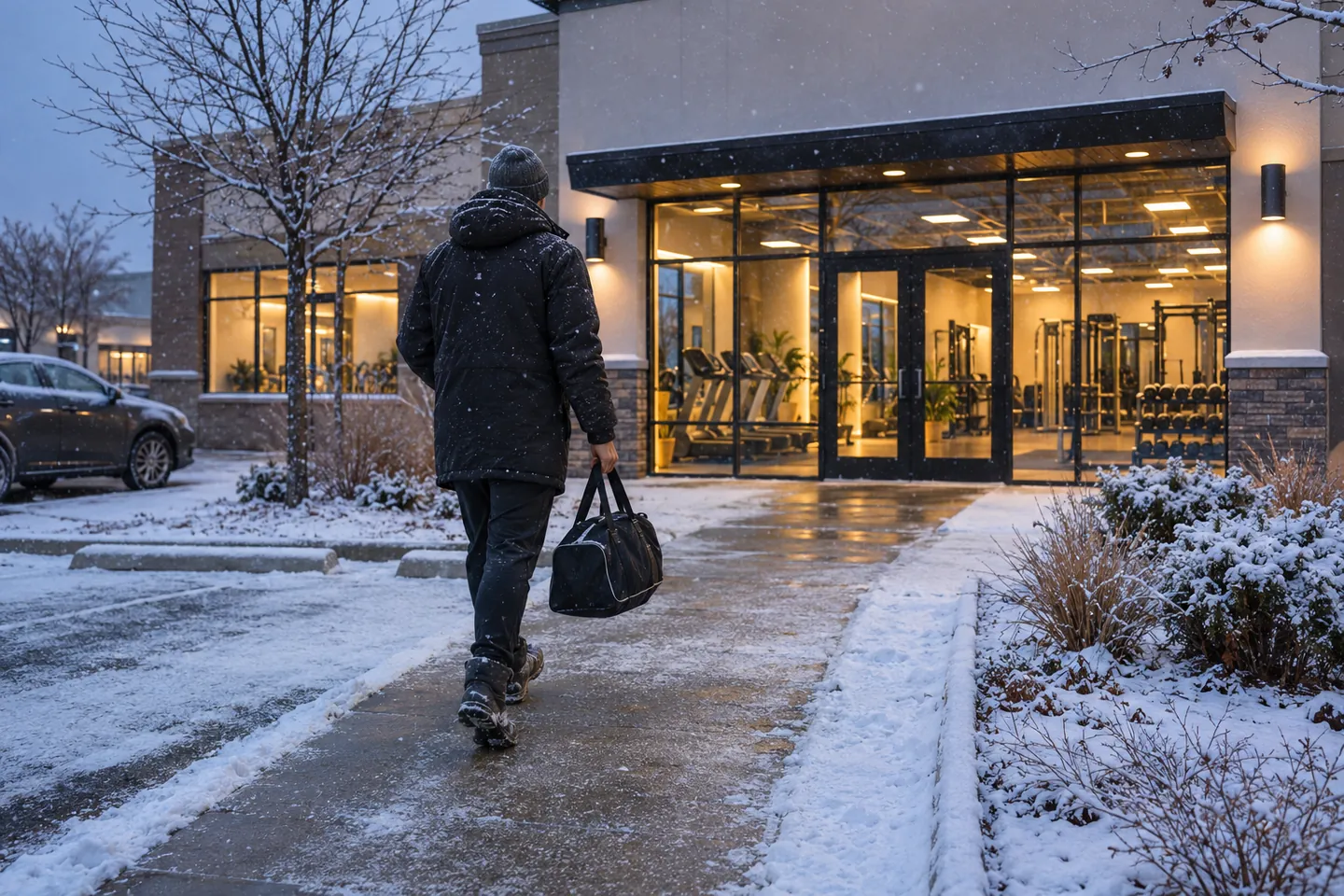
Snow, dark evenings and slow roads make training harder in Mississauga winters. Plan your gym bag, route, timing and backup sessions so you keep showing up.
The first real snowfall of the season tends to sort people into two groups. Some treat it as a minor inconvenience and leave the house ten minutes earlier. Others look out the window at four-thirty, see the dark and the flurries, and decide that training can wait until the roads are better. Then the roads stay messy for a week, and a week becomes most of January.
Neither reaction is a character flaw. Winter in Mississauga genuinely changes the cost of getting to a class. The drive along Eglinton or down to the Timberlea area takes longer, parking lots are slushy, the sun is gone before most people finish work, and the couch is warm. If you want to keep training through the cold months, it helps to treat the commute itself as something you plan, rather than something you hope will feel easy on the day.
This post is about the practical side of that plan. It covers the bag, the route, the timing, the clothing, the backup options and the mindset that makes a December or February session feel like a normal part of the week instead of a test of willpower.
Decide what counts as a weather day before the weather arrives
Most missed winter sessions are decided in the moment, usually while you are tired and looking at a grey sky. That is the worst time to make the call, because almost any excuse sounds reasonable at the end of a long day. A better approach is to decide in advance what conditions actually stop you.
For many people, a sensible rule looks something like this: if the city is advising people to stay off the roads, or if freezing rain is turning sidewalks into glass, you stay home and do something else. If it is simply cold, dark, or snowing lightly, you go. Writing that rule down, even in a note on your phone, removes a lot of daily negotiation. You are no longer asking whether you feel like going. You are only checking whether the conditions meet the line you already drew.
Be honest about safety when you set the rule. Driving in a real storm to make a kickboxing class is not discipline; it is an unnecessary risk. The point is to separate genuinely hazardous days from days that are merely unpleasant, because the second kind are far more common and they are where most of the lost training happens.
Pack the bag the night before
Winter adds layers, and layers add things to forget. Gloves, a toque, a dry pair of socks, a towel, a water bottle, hand wraps, a mouthguard, a change of shirt for the drive home. Trying to gather all of that at five o’clock while also finding your car keys and scraping the windshield is a reliable way to arrive late or not at all.
Pack the night before and leave the bag by the door or in the car. Include a small plastic bag for wet clothes so your sweaty gear does not soak everything else on the ride home. A spare pair of indoor shoes or slides is useful too, because walking into a training space with salt-crusted boots is unpleasant for everyone and most gyms will ask you to leave outdoor footwear at the entrance anyway.
One more item worth adding is something warm to change into after class. Leaving a heated room with damp hair and a sweaty shirt, then sitting in a cold car, is a quick way to feel miserable. A dry hoodie and a hat make the drive home far more comfortable, and comfort matters when you are trying to make a habit stick through several months of cold.
Give the commute an honest time budget
In summer you might know that the drive takes fifteen minutes. In winter that number is not reliable. Snow on side streets, slower traffic around the 401 and 403 interchanges, and the extra minutes spent clearing the car all add up. If you leave at the summer time, you will arrive rushed, which is when people start skipping the warm-up or deciding it is not worth walking in late.
Add a buffer of ten to twenty minutes on snowy days and treat it as part of the session. If you arrive early, you get a calm few minutes to change, wrap your hands and stretch before the class begins. That quiet arrival time often sets the tone for a better session. Coaches notice, too: the person who walks in early and settles is usually more ready to learn than the one who sprints in mid-warm-up.
It also helps to check traffic before you leave rather than after you are already sitting on a jammed road. A quick look at a map app while your car warms up gives you the option of a different route or a later class, if your gym offers one, instead of an hour of frustration.
Dress for the transition, not just the outdoors
The tricky part of winter training is not the cold outside or the heat inside; it is moving between them. You will go from a cold car to a warm gym, work hard enough to sweat, then go back out into air that may be well below freezing. Planning clothing around those transitions makes the whole experience easier.
On the way in, wear layers you can remove quickly: a jacket over a hoodie over your training shirt, for example. Inside, give yourself a proper warm-up, since muscles and joints that were cold twenty minutes ago need more time to feel ready. Your coach will lead a structured warm-up in class, but arriving a little early lets you add some light movement of your own if you tend to feel stiff in winter.
On the way out, change your shirt if it is soaked and put your layers back on before you open the door. Covering your head and hands matters more than people think after a hard session. These are small habits, but they are the difference between a winter routine you tolerate and one you quietly dread.
Use the dark evenings to your advantage
By early December the sun sets before five in Mississauga, and many people find that the darkness makes everything after work feel like the end of the day. It is easy to get home, take off your boots, and lose all interest in leaving again. The fix is often to avoid going home at all on training days.
If your schedule allows, go straight from work or school pickup to the gym. Keep the bag in the car and treat the session as the last part of your working day rather than an extra outing. Once you are inside a bright, warm training room with music and other people moving, the darkness outside stops mattering very much.
Some people find the opposite works better and switch to morning or weekend sessions for the winter months. That is a perfectly reasonable adjustment. Look at the adult schedule and ask yourself which class times you would realistically attend in January, not which ones you attended in June. The best class time is the one that survives the season.
Make the parking lot and walkway part of your safety thinking
Plaza parking lots, including industrial-commercial areas like the one around Timberlea Boulevard, can be patchy after a storm. Some sections get cleared and salted quickly; others stay icy for a day or two. Walking carefully from your car to the door is a minor point, but a slip on ice can sideline you for longer than any missed class.
Wear boots with decent grip and carry your gear in a bag you can sling over a shoulder so your hands are free for balance. Take short steps on slick surfaces. If you train late and the lot is dark, park closer to the entrance where possible and walk out with a training partner if you feel more comfortable that way.
This might sound like overly basic advice for a fitness post, but the people who train consistently through a Canadian winter are usually the people who avoid small, preventable setbacks. A sprained wrist from a fall in the parking lot costs the same weeks as a sprain on the mat.
Have a backup plan for the genuinely bad days
Some days you will decide, correctly, that staying home is the right call. Freezing rain, a major snowfall, or a road closure can make the trip unwise. Instead of treating those days as a total loss, have a short home routine ready so that the habit of training continues even when the location changes.
A home session does not need equipment or a large space. Twenty or thirty minutes of shadowboxing, bodyweight squats, push-ups, lunges, planks and some mobility work is enough to keep your body moving and your routine intact. If you take yoga classes, a gentle stretching sequence at home can serve the same purpose. The goal is not to replicate a full class. It is to keep the identity of someone who trains, even on the days you cannot get in.
Keep the backup modest so that it does not quietly replace the real thing. If you find that every snowy day becomes a home day, revisit the rule you set at the start. Home sessions are helpful as a substitute, but most people make more progress with coaching, partners and a structured class environment.
Lean on other people
Accountability is especially useful in the months when motivation dips. Training with a friend, carpooling with someone who goes to the same class, or simply getting to know a few regulars makes it harder to quietly disappear. When someone expects to see you on Tuesday, you are more likely to scrape off the car and go.
Carpooling has a practical benefit in winter too. One person drives, the other handles the bags, and you both share the load of navigating bad roads. If you live near a teammate in Meadowvale, Erin Mills or Malton, it is worth asking whether they would like to coordinate a few days a week.
Coaches can also help. If you know you struggle in winter, tell them. A short conversation about your goals for the season gives them context, and many people find it easier to show up when they know someone has noticed their effort.
Adjust expectations without lowering standards
Winter training does not need to look exactly like summer training. You might attend three sessions a week instead of four. You might choose more technical classes on the coldest nights and save harder conditioning for weekends. You might spend a little longer warming up. All of those adjustments are fine.
What matters is that the habit continues. A person who trains twice a week from December to March, without long gaps, usually arrives in spring in better condition than someone who trained five times a week in November and then stopped for six weeks. Consistency through the difficult season is often where real progress is built.
Keep a simple log of sessions attended. Seeing a row of check marks through January, even if some weeks are lighter, is encouraging, and it gives you something concrete to look back on when the weather finally turns.
Think about recovery in the cold
Cold weather can make your body feel stiffer, especially in the morning or after sitting in a car. Taking recovery seriously during the winter helps you keep training without accumulating aches. Stay hydrated even though you may not feel as thirsty, sleep well, and give yourself time to cool down properly after a session rather than rushing straight out into the cold.
If you notice persistent stiffness or a nagging pain that does not settle with rest, it is worth speaking to a qualified professional rather than pushing through. Services such as physiotherapy or massage can be part of a sensible plan, and a licensed practitioner can assess what is going on and suggest appropriate next steps.
Small comforts matter in winter too. A warm shower after training, a proper meal, and a reasonable bedtime help your body recover and make it easier to want to come back.
Start this week, not after the holidays
There is a common temptation to wait for January before getting serious about training. The trouble is that December, with its parties, travel and short days, tends to set the pattern for the months that follow. If you build the winter routine now, you arrive in the new year already in motion rather than trying to start from a standstill.
Pick two sessions for this week. Pack the bag tonight. Check the forecast, leave early, and walk in a few minutes before class. That is the whole plan. Once a couple of weeks of winter sessions are behind you, the weather becomes a detail rather than a reason.
If you are new to Konga Fitness and want to see how a winter routine could fit your schedule, you can book a free trial or browse our group classes to find sessions that suit your week. And if you have questions about timing or programs, contact us and we will help you sort out a plan that works in the cold as well as the warm months.
Filed under
Keep exploring
More training insights await.