
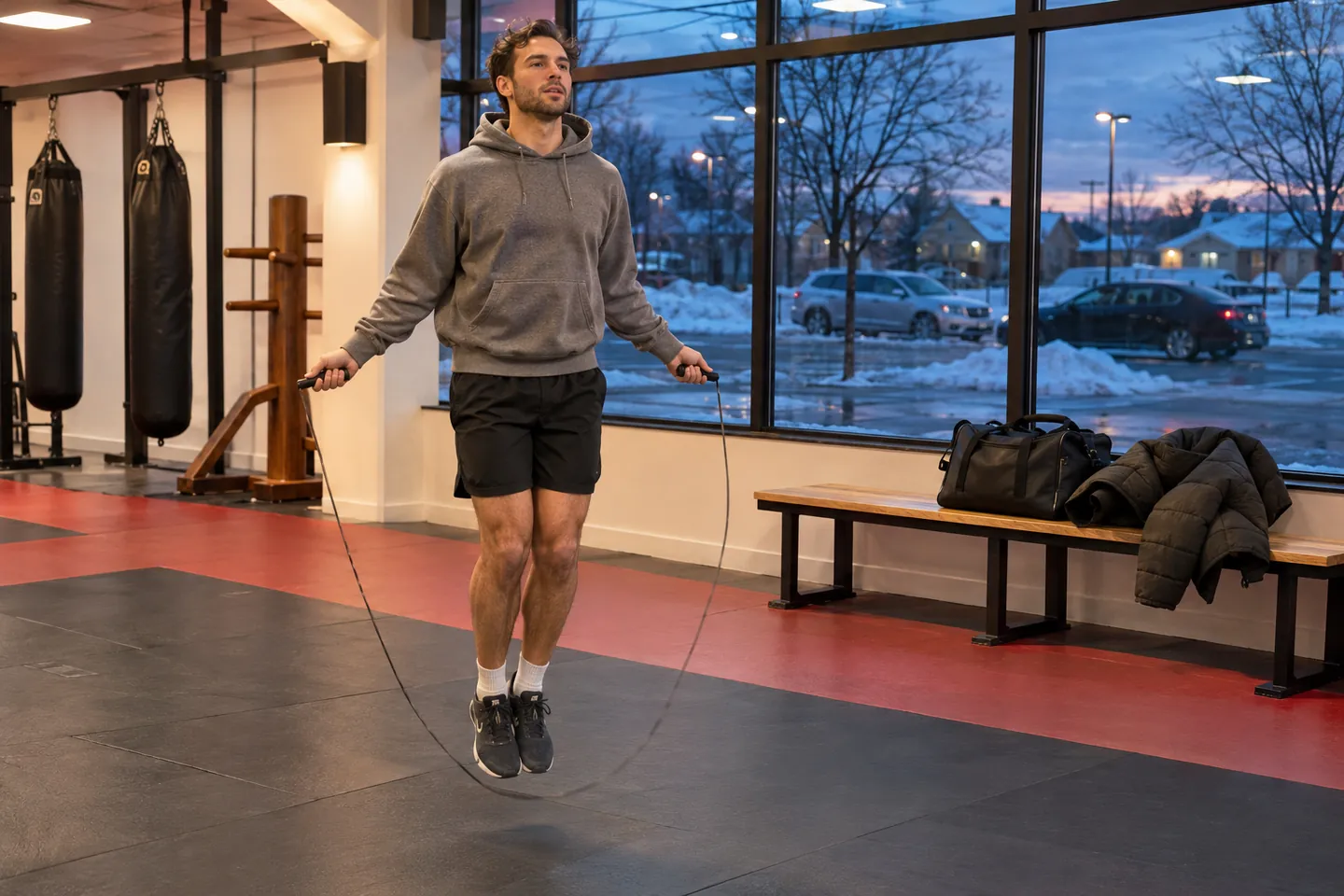
Simple ways to keep training through the December holidays in Mississauga, with minimum plans, short home sessions, travel tips and an easy return in January.
Here is a prediction for the next six weeks. Your calendar will fill with work parties, school concerts, family dinners and last-minute shopping trips. Someone will bring a tin of cookies to the office. At least one snowstorm will turn the drive home into an hour-long crawl. And somewhere around December 18, you will look at your gym bag sitting by the door and realise you have not opened it in ten days.
None of this means you lack discipline. The holiday season in Mississauga is genuinely busy, and training is one of the first things to slip when routines get disrupted. The trick is not to fight the season with an unrealistic plan, but to adjust your expectations so that some training survives it. A little movement through December makes January far easier.
This post offers a practical approach: decide on a minimum, protect a few key sessions, use short workouts when you cannot get to the gym, and plan your return before the new year arrives. No guilt, no extreme challenges, just a way to keep the thread from breaking.
Accept that December is different
The first step is honesty. Your usual four classes a week may not be realistic between late November and early January. Trying to maintain the same schedule while adding social events, travel and family responsibilities often leads to frustration, then all-or-nothing thinking, then nothing at all.
Instead, think of the holidays as a maintenance phase. The goal is to keep your habits alive and your body moving, not to set personal records. If you normally train four times a week, aiming for two might be perfectly reasonable. If you normally train twice, one solid session plus a few short home workouts may be enough.
This shift in mindset removes a lot of pressure. Hitting a modest target feels good and builds momentum, while missing an ambitious one tends to feel like failure.
Set your minimum
Choose a minimum weekly target that you are confident you can hit even in the busiest week. For many people, this is one class or gym session plus two short sessions of fifteen to twenty minutes at home. Write it down.
The minimum is not a ceiling. If you have a quieter week and can get to more classes, great. But the minimum gives you a clear line to protect. When the week gets chaotic, you know exactly what matters.
Some people like to set a minimum by days rather than sessions, such as “move for at least ten minutes every day.” Others prefer weekly targets for flexibility. Pick whichever matches how you think.
Book sessions like appointments
During the holidays, unscheduled time disappears quickly. If you want to train, put it in your calendar with the same weight you would give a dentist appointment or a work meeting. Look at the adult schedule, choose your classes for the week, and block the time.
Mornings can be especially useful in December. Evening plans tend to multiply, but early mornings often stay free. If you can manage a morning class or a short workout before work, you protect your training from late-day disruptions.
Tell people about your plans. A partner, friend or training buddy who knows you are going to class on Saturday morning can help you stick to it. Arranging to meet someone at the gym is even better; it is harder to skip when someone is waiting for you.
Short home sessions that actually help
When you cannot get to the gym, a short session at home still counts. You do not need equipment. A simple circuit of bodyweight squats, push-ups or incline push-ups, reverse lunges, glute bridges and planks can be done in fifteen minutes in a living room.
Combat sports students can shadowbox for a few rounds, working on footwork, combinations and defence. Jiu-jitsu students can run through solo movement drills like shrimping, bridging and technical stand-ups. These keep your skills fresh and your body moving.
Mobility work is another good option, particularly on days filled with sitting at dinners or in the car. Ten minutes of hip, back and shoulder stretches can help you feel less stiff and more like yourself.
Walking counts
Walking is often overlooked because it feels too easy. But during the holidays, a daily walk can do a lot: it gets you outside, helps with digestion after big meals, clears your head, and adds up to meaningful activity over a week.
Mississauga offers plenty of good walking spots when weather allows, including trails along the Credit River and the waterfront in Port Credit. On icy days, choose well-cleared routes, wear proper footwear, and consider indoor alternatives. A walk around a mall concourse before the stores get busy is not glamorous, but it works.
Make walks social when you can. Invite family members after a holiday meal. It is a pleasant way to spend time together and gives everyone a break from sitting.
Eating and drinking with some balance
Holiday food is part of the fun, and there is no need to treat it as a problem. That said, many people find they train and feel better when they keep some balance. You might enjoy the big dinners while keeping your regular meals on other days fairly simple, with plenty of vegetables, protein and water.
Alcohol can affect sleep and recovery, so if you have a class the next morning, you may want to moderate. This is a personal choice, and only you know what works for you.
If you have specific nutritional needs or health conditions, talk with a registered dietitian or your doctor for personalised advice. General tips are no substitute for professional guidance.
Protect your sleep
Late nights are common in December, and poor sleep makes everything harder: training feels tougher, motivation drops, and cravings increase. You cannot always control your schedule, but you can protect sleep where possible.
Try to keep a fairly consistent wake time, even on days off. If you have a late event, plan a lighter training day afterward rather than forcing a hard session on four hours of sleep. Short naps can help some people, though they do not replace a full night.
Remember that rest is part of training. A week with fewer sessions but better sleep may leave you in better shape than a week of exhausted workouts.
Training while travelling
Many Mississauga families travel during the holidays, whether it is a drive to visit relatives elsewhere in Ontario or a flight out of Pearson. Travel disrupts routines, but you can still keep moving.
Pack a resistance band and a skipping rope; both take almost no space. Hotel rooms and guest bedrooms are big enough for bodyweight circuits and shadowboxing. Many hotels have small gyms, and some martial arts gyms welcome visitors for drop-in classes, though you should check ahead and ask about any policies.
If travel days are long and tiring, do not force training. Walk at the airport, stretch at rest stops, and get back to your plan the next day.
Using the quieter days
The week between Christmas and New Year’s is often quieter for people who have time off work. This can be a great opportunity to fit in extra sessions, try a new class, or work on skills you have been neglecting.
Check holiday hours in advance, since schedules may change. If your usual classes are not running, consider other options such as an open session, a yoga class, or a home workout. You might also take advantage of the time to book a massage or check in with a physiotherapist about a lingering issue.
Some people enjoy setting a small challenge for this week, such as training five days in a row or attending a class they have never tried. Keep it fun and achievable.
Supporting kids through the break
If you have children enrolled in martial arts, the winter break can disrupt their routines too. Check the kids schedule for holiday changes and try to keep at least some classes on the calendar.
At home, kids can practise simple drills, stretches and movement games. Encourage them to show family members what they have learned. It is a fun way for them to stay engaged and feel proud of their progress.
Outdoor play counts too. Sledding, building snow forts and skating are excellent physical activity for kids and adults alike.
Handling the guilt of missed sessions
At some point in December, you will probably miss a session you had planned. Maybe a dinner ran late, or a child got sick, or the roads were simply too bad to bother. The important thing is what happens next. A single missed class is a non-event. The trouble starts when one miss becomes a story about how the whole month is ruined.
When it happens, skip the self-criticism and look at the next opportunity instead. Could you do fifteen minutes at home tomorrow morning? Is there a class later in the week you could swap in? Treat the plan as flexible scaffolding rather than a test you passed or failed. People who keep training for years are rarely the ones who never miss; they are the ones who come back quickly.
Plan your January return now
The best time to plan your return is before the holidays end. Decide which classes you will attend in the first week of January and put them in your calendar now. If you have a goal for the new year, write it down along with the first steps.
Expect your first few sessions back to feel a bit harder. That is normal after a period of reduced training. Start at a moderate intensity and build back up over a couple of weeks rather than trying to make up for lost time in one session.
If you are thinking about starting something new in January, such as boxing or strength and conditioning, you can book a trial before the rush and arrive in the new year already knowing what to expect.
Stay connected through the season
Holding onto training during the holiday season in Mississauga is less about willpower and more about planning. Set a realistic minimum, schedule your key sessions, use short home workouts, and give yourself permission to enjoy the season.
If you are not yet training with us and want a fresh start, book a free trial now so you can walk into January with a plan already in place. If you have questions about holiday hours or classes, feel free to contact us.
Filed under
Keep exploring
More training insights await.