
A parent's guide to introducing children to boxing in Mississauga: non-contact basics, safety, gear, coaching style, behaviour expectations, and steady progress.
It often starts in the living room. A child watches a few seconds of a boxing match or a movie scene, then spends the rest of the evening bouncing on their toes and throwing punches at the couch cushions. Parents laugh, and then a quieter thought appears: would an actual class be good for them, or is boxing too rough for a kid?
That question deserves a careful answer. Boxing for children, when it is taught properly, looks very different from the adult sport most people picture. It focuses on coordination, footwork, listening skills, fitness, and controlled technique, usually without any head contact between children. For many kids, it becomes a structured outlet for energy and a source of genuine confidence.
This guide is written for parents thinking about introducing kids to boxing in Mississauga. It covers what early classes usually include, how safety is typically handled, how to tell whether your child is ready, and what you can do at home to support them.
What kids’ boxing usually is, and is not
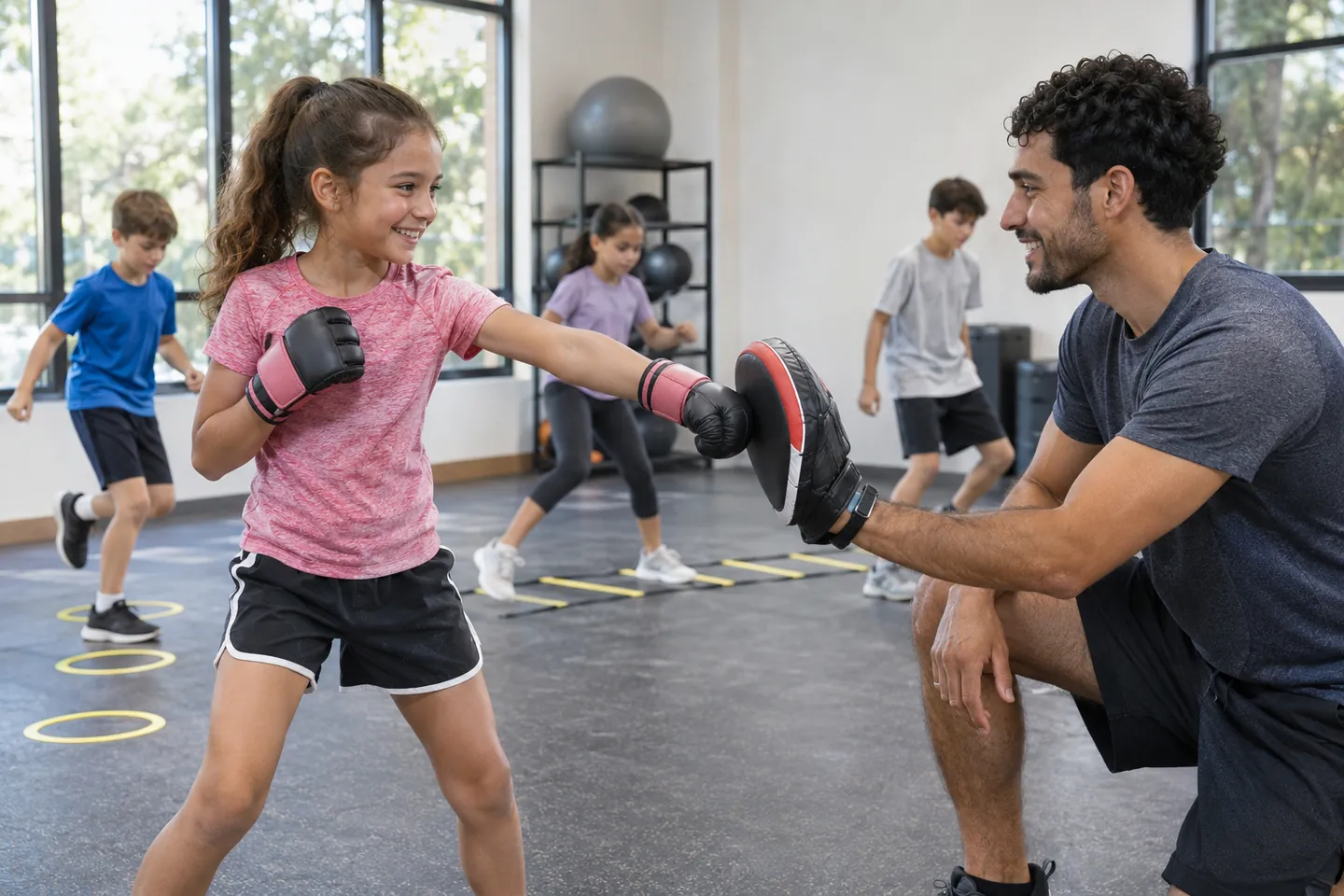
A beginner kids’ boxing class is generally a non-contact or controlled-contact skill class. Children learn how to stand, move, and punch, mostly against pads, bags, or targets held by coaches. The aim is to teach technique and build fitness in a fun, supervised setting.
What it usually is not is sparring. Introductory classes for children typically do not involve kids hitting each other, and any later contact work, if offered at all, should only happen with careful progression, appropriate protective equipment, close supervision, and parental awareness. If you are unsure how a particular program handles this, ask the coach directly. A good program will be clear and transparent.
Understanding this distinction often eases parents’ main concern. A child in a beginner boxing class spends most of the session moving, listening, and hitting pads, much like other structured sports that combine skill and fitness.
Signs your child might be ready
There is no single right age, and readiness varies widely. Some useful questions include: can your child follow multi-step instructions from an adult who is not a parent? Can they take turns and wait in line? Are they able to stay reasonably focused for the length of a class? Do they show interest, rather than being pushed by someone else?
Physical size and strength matter less than you might think. Coaches adapt drills for different ages and abilities. Emotional readiness is often more important. A child who becomes very upset when corrected, or who struggles to keep hands to themselves around other kids, may benefit from a little more time or a class format the coach recommends.
Talk to the coaching staff about your child’s personality and experience. They have seen many children start and can usually tell you whether a particular class is a good fit, or suggest waiting or trying a different program such as general kids’ martial arts.
A typical first class
Most kids’ classes start with a warm-up that feels like play: games that involve running, dodging, balancing, and reacting. These games are not just for fun. They develop coordination and spatial awareness that make boxing technique easier later.
Then the coach introduces a skill, such as the boxing stance or a straight punch. Children practise it in the air, then on pads or bags. The coach watches, corrects, and encourages. Drills are often short and varied to keep attention, with frequent changes of activity.
Classes frequently finish with a fitness challenge or game, followed by a cool-down and a moment to talk about what they learned. Many coaches also reinforce values such as respect, listening, and effort during this time.
Safety expectations parents can look for
Safety in kids’ boxing comes from several layers working together. Coaches should have clear rules about when children may strike, what they may strike, and how to stop when told. Ratios of coaches to children should allow real supervision. Equipment should be appropriately sized and in good condition.
Look for a class where the coach has full control of the room. Children should understand stop signals, wait their turn, and listen before starting drills. Watch how coaches respond to rough play. A good coach will address it immediately and calmly.
Communication with parents matters too. Coaches should be willing to discuss how they manage safety, what happens if a child is upset or hurt, and how they progress children through skills. If you have questions, ask. You should feel comfortable with the answers.
Telling the coach about your child
Before the first class, let the coach know about anything relevant: allergies, asthma, previous injuries, medical conditions, or learning or attention differences. This information helps them plan and respond appropriately. If your child has a health condition, check with their doctor before starting a new sport.
You might also mention your child’s temperament. Some kids are shy and need time to warm up. Others are bursting with energy and need clear structure. Some are anxious about loud environments. Coaches who know this ahead of time can adjust their approach, pair children thoughtfully, and help your child have a positive first experience.
Keep communication open after the first class. If your child mentions something that worried them, or you notice a change in their enthusiasm, a short conversation with the coach can often sort things out quickly.
Gear for young boxers
At the start, children usually only need comfortable athletic clothing, indoor running shoes or bare feet depending on the gym’s rules, and a water bottle. Many programs have loaner gloves for trial classes. As your child continues, the coach might recommend their own gloves and, later, hand wraps.
Glove size matters. Gloves that are too big or too small can affect technique and comfort. Ask the coach for recommendations before buying. Avoid purchasing expensive equipment until your child has shown sustained interest and the coach has advised what is appropriate.
Teach your child to care for their gear. Taking gloves out of the bag after class to air dry and washing wraps regularly are good habits that also build responsibility.
Discipline and behaviour expectations
One reason many parents choose kids’ boxing is the structure. Classes typically have clear expectations about listening, respecting coaches and classmates, and following rules. Children learn that boxing skills are used only in class, only on designated targets, and only when the coach says so.
That last point is important. Parents sometimes worry that learning to punch will make a child more aggressive. In well-run programs, coaches repeatedly emphasise that boxing is a sport with rules and that the skills are not for use against siblings, classmates, or anyone outside the gym. Reinforcing this message at home helps.
Many children respond well to clear, consistent structure. Knowing exactly what is expected, and earning praise for meeting those expectations, can be motivating. Some parents notice improvements in focus or patience over time, though every child is different.
Supporting progress at home
You do not need to coach your child at home, but you can support their learning. Ask what they practised in class and let them show you. Praise effort and listening rather than how hard they punched. Encourage them to practise stance or footwork in a safe space, without hitting people or furniture.
Watch for signs that your child is enjoying the process. Excitement before class, wanting to show you new skills, and talking about friends from class are good indicators. If your child seems reluctant, have a calm conversation to understand why. Sometimes it is a small issue, such as feeling unsure about a particular drill, that a coach can address.
Avoid turning boxing into pressure. Children tend to stay with activities they enjoy. Long-term involvement, built on fun and gradual skill development, usually matters far more than rapid progress.
Balancing boxing with school and other activities
Families in Mississauga often juggle school, homework, other sports, music lessons, and long commutes. Adding a new activity should feel manageable. One or two classes a week is a common starting point for children. You can always add more later if your child is enthusiastic and the schedule allows.
Pay attention to rest. Children need sleep and downtime to recover from physical activity and to stay happy and focused at school. If your child seems overtired, consider whether their schedule needs adjusting.
During the school year, evenings can be busy, while summer may offer more flexibility. Some families use summer programs or camps as a way to introduce new activities with less pressure.
When a different program might suit better
Boxing is one option among several. Some children thrive in boxing’s focused, striking-based structure. Others might enjoy a broader kids’ martial arts program that includes kicks, movement, and different drills, or a grappling-based class. If your child does not take to boxing, that does not mean martial arts are not for them.
Coaches can often suggest alternatives based on what they observe. Trying different programs over time is a reasonable way for children to find what they enjoy most.
It also helps to give a new activity a fair trial before deciding. The first two or three classes can feel unfamiliar for any child: new faces, new rules, and a coach whose voice they do not know yet. A few weeks of steady attendance usually gives a clearer picture than a single session. If your child is still unhappy after that, talk with them and the coach together about what is not working, and treat the decision as information rather than a failure. Plenty of kids who drift away from one sport find their footing in another, and the habits they practised along the way, such as listening, waiting their turn, and trying again after a mistake, travel with them.
Getting started with kids’ boxing at Konga Fitness
Introducing kids to boxing can give them a fun, structured way to build coordination, fitness, and confidence. The key elements are a supervised environment, age-appropriate drills, clear rules, and open communication between coaches and parents.
If you are considering a class for your child in Mississauga, read about our kids boxing program, check the kids schedule, and book a free trial so your child can try a session while you talk with the coach about their needs.
Filed under
Keep exploring
More training insights await.