
Learn jump rope skills for boxing in Mississauga, from choosing a rope and finding rhythm to basic footwork patterns, rounds, and avoiding common beginner mistakes.
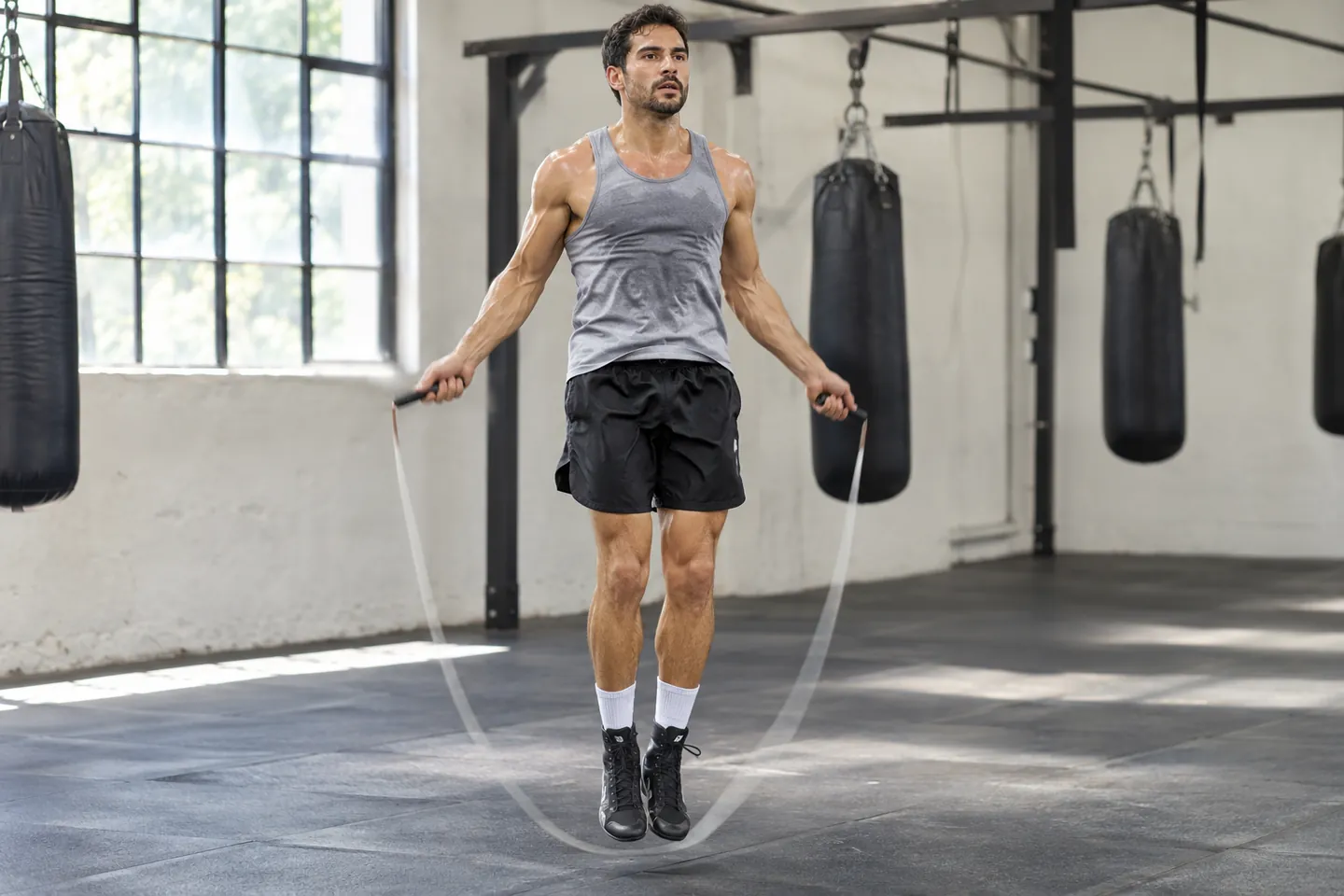
Spend a few minutes in a boxing gym and you will hear it before you see it: the steady tick of ropes hitting the floor, sometimes slow and even, sometimes so fast it sounds like rain. Skipping rope is one of the oldest traditions in boxing training, and it remains common for good reason. It warms the body, builds rhythm, and trains the light, springy footwork that boxing relies on.
For beginners, though, the rope can be humbling. It catches on your feet, smacks your shins, and seems to tangle at the worst moments. Watching experienced boxers float through a round of skipping can make it look effortless, which only adds to the frustration when you trip for the fifth time in thirty seconds.
If you are starting boxing in Mississauga and finding the rope tricky, this guide is for you. It covers why the rope matters, how to get started, and how to build skill gradually so that skipping becomes a useful part of your training rather than a source of frustration.
Why boxers skip rope
The jump rope offers several benefits that carry over directly into boxing. It encourages you to stay light on the balls of your feet, which is similar to how many boxers move in their stance. It builds rhythm and timing, both of which are central to footwork, punching combinations, and defensive movement.
Skipping is also a convenient way to raise your heart rate and warm up the body before more demanding work. Many coaches use it at the start of a session to prepare the legs, ankles, shoulders, and lungs. Others use it between rounds or at the end of training as conditioning.
Beyond the physical benefits, there is a mental side. Skipping requires attention and coordination. When you lose focus, the rope tells you immediately. That feedback helps build concentration, which is valuable when you move on to pads, bags, and partner work.
Choosing a rope
You do not need an expensive rope to start, but the right one makes learning easier. Many beginners do well with a basic rope that is not too light. Very light speed ropes turn quickly but can be hard to feel, which makes timing more difficult. A slightly heavier rope moves more slowly and gives clearer feedback.
Length matters too. A common method is to stand on the middle of the rope with one foot and pull the handles up along your body. Many people find a length that reaches roughly to the armpits works well for beginners, though preferences vary. Ask your coach to check the length if you are unsure.
If your gym provides ropes, try a few different ones to see what feels comfortable. Some people prefer beaded ropes, which make a clearer sound and are easier to see. Others prefer coated cable ropes for their smooth movement. There is no single right answer.
Start with the basic bounce
The foundation of all skipping is a simple, small two-footed bounce. Before involving the rope, practise bouncing lightly on the balls of your feet, keeping your knees slightly bent and your jumps low. You only need to clear the floor by a small amount.
Once that feels comfortable, hold both rope handles in one hand and swing the rope at your side while bouncing. This lets you practise timing without tripping. Try to match each bounce to the moment the rope hits the floor. The sound helps you find the rhythm.
When you feel ready, switch to a normal skip. Start slowly, focusing on smooth, low bounces. If you trip, that is completely normal. Reset calmly and start again. Counting your successful skips in a row can help you notice improvement over time.
Turn the rope with your wrists
A common beginner mistake is swinging the rope with the whole arm. Large arm movements make the rope’s path less predictable and tire the shoulders quickly. Most coaches teach turning the rope with the wrists and forearms while keeping the elbows relatively close to the body.
Watch yourself in a mirror if possible. Are your hands drifting far out to the sides or high above your waist? Try to keep them at roughly hip height, a little out from your body. Small, efficient movements make the rope easier to control.
This relaxed upper body connects well with boxing. Tension in the shoulders makes punching slower and less efficient, too. Learning to stay relaxed while the rope turns supports a similar quality in the rest of your training.
Keep your jumps low
Beginners often jump too high, as if trying to make sure the rope never touches their feet. High jumps are tiring, harder to time, and put more stress on the ankles, knees, and calves. Experienced skippers tend to keep their jumps low and quick.
Aim to clear the rope by a small margin. Land softly on the balls of your feet and let your ankles and knees absorb the landing. If you hear heavy thumps as you land, try to make your landings quieter. Quiet landings usually mean better control.
If you have any concerns about your joints, particularly your ankles, knees, or calves, start with short intervals and progress gradually. If you experience pain, stop and consult a qualified professional. Our physiotherapy team can assess persistent discomfort if needed.
Build up with intervals
Instead of trying to skip continuously for several minutes from the start, use short intervals. You might skip for thirty seconds, rest for thirty seconds, and repeat several times. As your coordination and conditioning improve, gradually extend the working intervals.
Many boxing gyms structure skipping in rounds, often matching the timing of boxing rounds. Working up to complete rounds of skipping is a common goal for beginners. It does not need to happen quickly. A few weeks of steady practice often makes a noticeable difference.
Track your progress simply. Note how long you skipped, how many trips you had, and how you felt. Over time, you will see your rounds become smoother and longer, which is a satisfying marker of improvement.
Introducing footwork patterns
Once the basic bounce is comfortable, you can start introducing variations. These patterns build coordination and make skipping more engaging. Common variations include:
- The boxer skip, where you shift your weight lightly from one foot to the other in a relaxed rhythm.
- Alternating feet, similar to running on the spot, with the rope passing under each foot in turn.
- Side-to-side hops, moving a little left and right with each turn of the rope.
- Forward and backward hops, practising small movements in different directions.
Introduce one variation at a time and return to the basic bounce whenever you need to reset. Your coach may suggest specific patterns that connect to the footwork you are learning in class.
Connecting the rope to boxing footwork
The rope is not just conditioning. It trains the type of movement that boxing footwork relies on: staying light, moving efficiently, and maintaining rhythm. Some coaches encourage practising skipping in your boxing stance, with one foot slightly ahead of the other, to make the connection more direct.
As you become more skilled, you might notice that your footwork in class feels lighter and more rhythmic. Moving around the bag or responding to your coach’s pads may feel more natural. These carryover effects tend to appear gradually over weeks and months.
Pay attention to how the rope influences your mindset as well. The calm, focused rhythm of a good skipping round is similar to the composed state many boxers aim for during training. Learning to find that rhythm with the rope can help you find it elsewhere.
Common beginner mistakes
Several mistakes appear often. Swinging with the whole arm, jumping too high, looking down at the feet, tensing the shoulders, and trying to go too fast too soon are all common. Each makes skipping harder than it needs to be.
When you notice a problem, focus on correcting one thing at a time. If you are jumping too high, work on low bounces for a few sessions. If your arms are swinging wide, focus on keeping your elbows close. Trying to fix everything at once usually leads to more tripping and frustration.
Do not be discouraged by tripping. Even experienced boxers occasionally catch the rope. What matters is how quickly and calmly you restart. Treat each trip as a small reset rather than a failure.
Practising at home and in the gym
Skipping is easy to practise outside the gym, which makes it a useful addition to your routine. You need a rope, some clear space, and a suitable surface. Avoid very hard surfaces like concrete when possible, and check that ceilings are high enough. In a Mississauga apartment or townhouse, consider your neighbours and the noise of landing, especially if you skip early in the morning or late at night.
Wear supportive athletic shoes rather than skipping barefoot or in socks. Shoes help protect your feet and provide a stable base. Make sure your space is free of obstacles that the rope could catch on.
In the gym, ask your coach for feedback on your technique. A few minutes of attention to your wrist movement, posture, or rhythm can make a big difference. Bringing your own rope can also help, as you will get used to its weight and length.
Patience pays off
Learning to skip rope well takes time. For some people, it clicks within a few sessions. For others, it takes weeks. Both are normal. The key is regular, patient practice without too much self-criticism.
Celebrate small improvements: fewer trips, longer intervals, smoother rhythm, or a new footwork pattern. These steps add up. Before long, the rope that once felt awkward may become one of the most enjoyable parts of your training.
Start your boxing training
If you want to learn the rope, footwork, and boxing fundamentals with experienced coaching, explore our boxing classes and check the adult schedule for times that fit your week. You are welcome to book a free trial and experience a class before committing. The rope may trip you up at first, but with patience it becomes a reliable partner in your training.
Filed under
Keep exploring
More training insights await.