
Compare fitness kickboxing and technical kickboxing classes in Mississauga by pace, coaching, contact, equipment and goals so you can choose the right fit.
Two people sign up for “kickboxing” in the same week. One expected loud music, a sweat-soaked hour of bag rounds and a great workout. The other expected detailed instruction on how to throw a proper roundhouse kick, check a low kick and put together combinations with a partner. Both walk out of their first class confused, because they each went to the other one.
That mix-up happens more than you’d think. In Mississauga, as in most cities, the word “kickboxing” covers a broad range of classes. Some are primarily fitness sessions that use kickboxing movements as the vehicle for a hard workout. Others are technical classes focused on learning the martial art itself, where conditioning is a by-product rather than the main point.
Neither is better. They serve different goals and suit different people. This article lays out the differences so you can choose the class that matches what you actually want, or decide to combine both.
The short version
Fitness kickboxing is usually built around continuous movement, high energy and a sense of accomplishment at the end of a hard hour. Instruction exists, but the class keeps moving, and the primary aim is a full-body workout.
Technical kickboxing is built around learning skills. The pace varies more. There may be moments of standing still while the coach explains a detail, followed by partner drills, pad rounds and, for some students, eventually sparring. Fitness improves, but the main aim is to get better at kickboxing.
Many gyms offer both styles of session, and some classes blend elements of each. Knowing which one you’re stepping into prevents frustration and helps you get the most out of the time.
What a fitness-focused class feels like
Picture a room full of heavy bags and a coach calling out combinations over music. The warm-up flows straight into rounds of punches, kicks and knees on the bag, broken up by bodyweight exercises like burpees, squats or mountain climbers. Rest periods are short. The goal is to keep your heart rate up and finish feeling like you’ve done serious work.
Technique cues are usually simple: keep your hands up, turn your hip on the kick, breathe. Coaches walk around and make quick corrections, but there isn’t much time for in-depth breakdowns. Partner work, if any, tends to be light and structured, such as holding pads for each other in a basic pattern.
These classes are popular for good reason. They’re fun, social, and genuinely demanding. For someone whose primary goal is fitness, they offer an engaging alternative to treadmills and machines.
What a technical class feels like
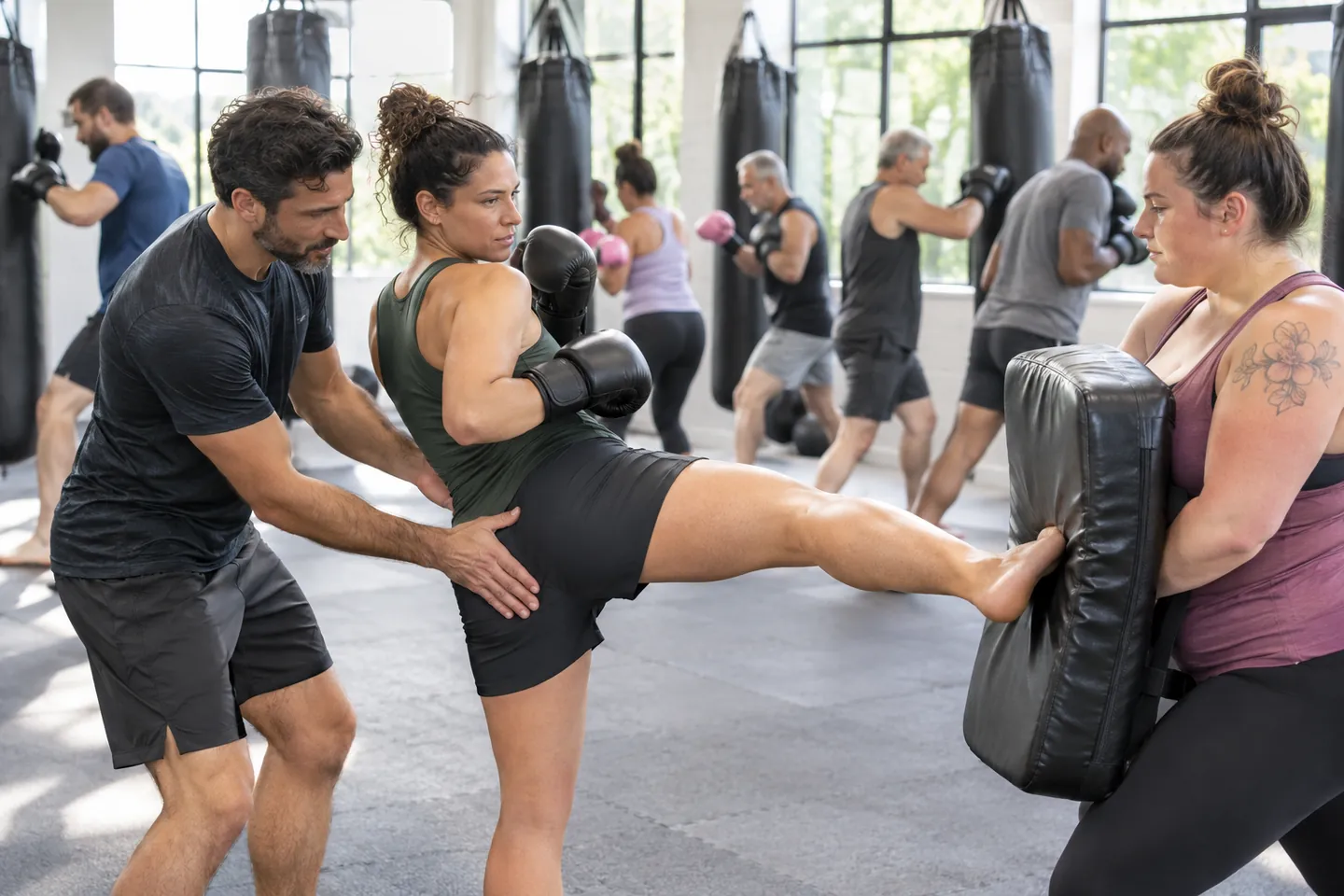
A technical class looks different. The coach might spend several minutes demonstrating a single kick, breaking it down into stance, pivot, hip rotation and recovery. Students then practise slowly in the air, then on pads with a partner, gradually adding speed. The coach circulates, making individual corrections and asking students to repeat with adjustments.
Later in class, you might drill combinations or defensive responses. For example, one partner throws a low kick while the other practises checking it, then they switch. These drills require attention and control. Speed is added only once the movement is reasonably clean.
Conditioning still happens, often at the end of class, but it’s usually a smaller portion of the session. The aim is for you to walk out understanding something you didn’t before, not just to be exhausted.
Who tends to prefer each style
Fitness kickboxing often suits people who want a hard, enjoyable workout without needing to master technique. It can be a great fit for busy professionals squeezing in an after-work session, people who find traditional gym workouts boring, or anyone who likes the energy of a group moving together.
Technical kickboxing tends to suit people who enjoy learning skills, who are curious about the martial art itself, or who might want to spar or compete someday. It can also appeal to people who find that focusing on technique makes training more mentally engaging.
Plenty of people enjoy both. Some start with fitness classes to build a base, then gradually shift toward technical training as their curiosity grows. Others do technical classes primarily but drop into a fitness session when they want a hard sweat without much thinking.
Contact and partner work
Fitness kickboxing generally involves little or no contact with other people. You hit bags and occasionally pads. That makes it accessible for people who aren’t interested in being struck or striking a person.
Technical kickboxing involves more partner work by nature. You’ll hold pads for each other, practise defensive drills and, in some programs, eventually progress to controlled sparring. Sparring should always be optional, supervised and introduced gradually. Beginners in a technical class are not expected to spar until they’ve learned the basics and feel ready.
If contact makes you nervous, ask the coach what a typical class involves. A good gym will explain how partner drills work and let you progress at your own pace.
Equipment differences
For fitness classes, you’ll typically need hand wraps, gloves and comfortable workout clothes. Shoes may or may not be worn, depending on the gym. Equipment needs are usually minimal.
Technical classes may require more over time: shin guards for kicking drills, a mouthguard for partner work and possibly headgear if sparring is involved. You won’t need everything on day one. Ask the gym what’s required as you progress.
Good gloves are worth investing in for either style. A coach can help you choose an appropriate size and weight for the kind of training you’re doing.
Learning curve and expectations
In fitness kickboxing, you can often feel competent quickly. The movements are kept simple enough that most people can follow along within a session or two, even if their technique isn’t perfect.
Technical kickboxing has a steeper and longer learning curve. Early classes can feel humbling because there’s so much detail to absorb. Your kicks might feel awkward, your balance shaky and your combinations clumsy. That’s normal and part of the process. Progress tends to feel slower at first but builds into real skill over months.
Setting expectations helps. If you go into a technical class expecting a nonstop workout, you might feel underwhelmed. If you go into a fitness class expecting detailed coaching on every kick, you might feel rushed.
Injury risk and pacing
Any striking class carries some risk of strain or minor injury, particularly to wrists, ankles, shins and knees. In fitness classes, the risk often comes from fatigue: when you’re tired and moving fast, form can slip. Pace yourself, modify exercises as needed and don’t feel pressured to keep up with the fittest person in the room.
In technical classes, the risk sometimes comes from trying to do too much too soon, such as kicking with force before your technique is ready. Focus on control first. Speed and power come later.
If you have existing injuries or health concerns, let the coach know before class. They can suggest modifications. For ongoing issues, consider talking with a qualified professional such as a physiotherapist.
Thinking about your goals
Ask yourself what you’d like to get out of kickboxing over the next six months. If the answer is mainly fitness, stress relief and enjoyment, a fitness class may be ideal. If the answer includes learning to kick properly, understanding defence and possibly sparring, a technical class may suit you better.
Consider your schedule too. Many people in Mississauga have limited evening time between commutes, family obligations and work. If you can only manage two sessions a week, choose the class that most closely matches your main goal and enjoy the other style occasionally.
It’s also fine to change your mind. Goals shift. Someone who started for fitness may discover a love of technique, and someone who started technical training might later want a simpler workout during a busy season.
Questions to ask before your first class
A quick conversation with the front desk or a coach can save a lot of confusion. Ask whether the session you’re looking at is mainly conditioning or mainly skill instruction. Ask whether partner drills are part of it and whether beginners are grouped separately or mixed in with experienced students. Those three answers usually tell you most of what you need to know.
It’s also worth asking what a newcomer typically does in the first few weeks. In a fitness class, the answer might be “follow along and modify anything that feels like too much.” In a technical class, it might be “learn the stance, a few basic strikes and how to hold pads safely for a partner.” Neither answer is wrong. They simply describe different experiences.
Finally, ask how the gym helps people move between the two. Some students begin in conditioning sessions and later want more instruction, or the other way around. Knowing there’s a path in either direction makes the first choice feel less permanent, which takes some pressure off when you’re new and just want to get started.
Combining both approaches
If you’re interested in both, a mix can work well. For example, you might attend one or two technical classes a week to learn skills and one fitness class for conditioning. The technical work can make your fitness classes more effective because your form improves. The fitness work can help you handle the demands of longer technical sessions.
Some students also add strength and conditioning or Muay Thai as they progress, depending on their interests. There’s no single correct path.
Trying both before deciding
The best way to know which style suits you is to try them. Notice how you feel after each class. Did you enjoy the challenge? Did you leave curious, satisfied or wanting more? Your reactions are a better guide than any article.
Take a look at our kickboxing program and the adult schedule to see what’s available, then book a free trial at our Timberlea Boulevard gym. Our coaches can help you figure out which format fits your goals and how to get started comfortably.
Filed under
Keep exploring
More training insights await.