
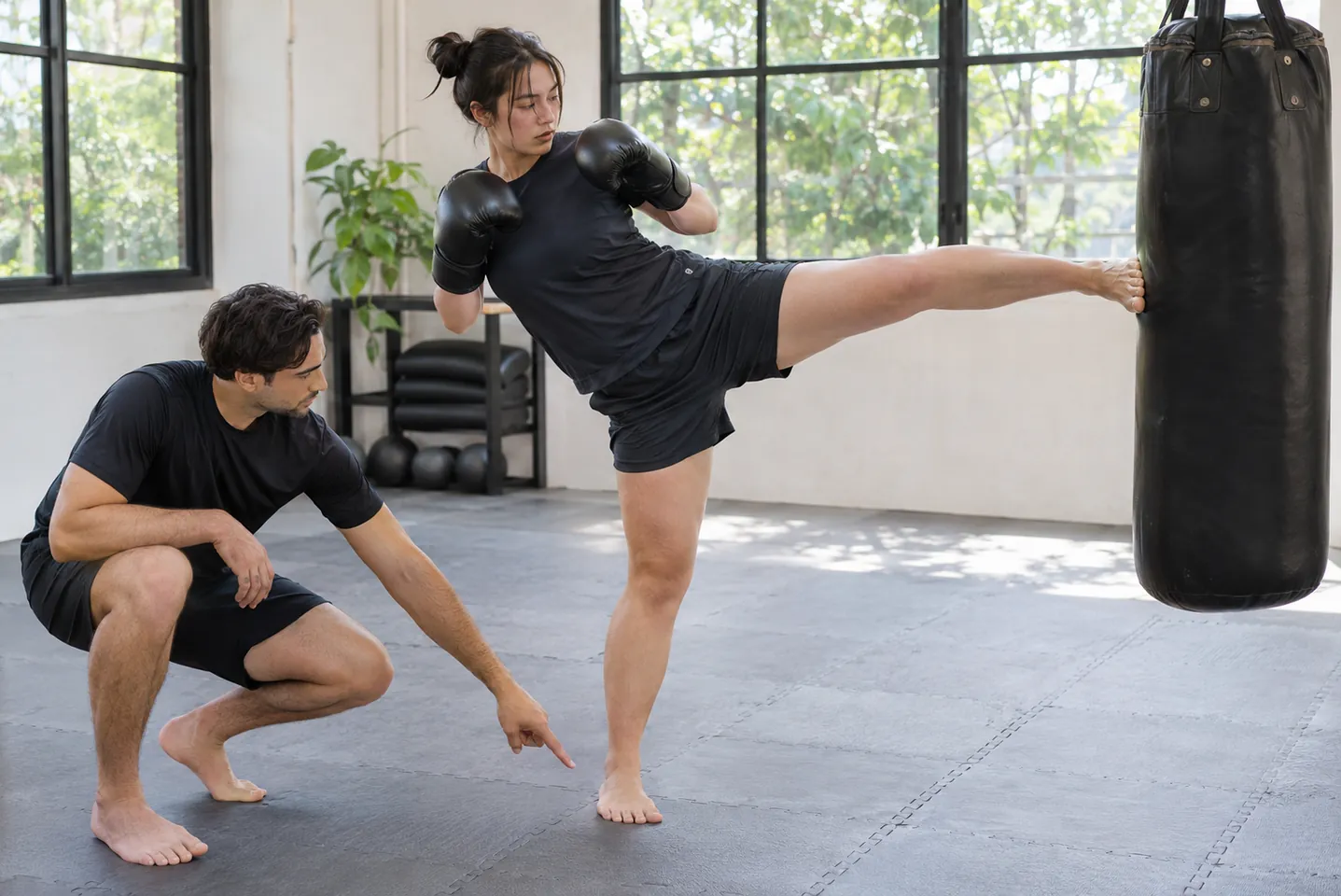
What beginner kickboxing classes in Mississauga usually cover first: stance, basic punches and kicks, pad work, pacing, partner etiquette, and steady progress.
Ask a handful of people why they signed up for a kickboxing class and you will hear very different answers. One wants a workout that does not feel like a treadmill. Another has watched fights for years and finally wants to try the techniques. Someone else just needs a reason to get out of the house after a long week of remote work. Almost none of them walk in knowing how to throw a proper kick.
That is completely normal. Beginner kickboxing in Mississauga, as in most good gyms, is built on the assumption that you are starting from zero. The first classes are less about fitness tests or sparring and more about learning a vocabulary: how to stand, how to move, how to throw a few basic strikes, and how to train safely around other people.
Below is an honest look at what those early sessions usually teach, why coaches sequence things the way they do, and how to get more out of each class without rushing ahead.
Lesson one: the stance comes before everything
Most beginner classes start with stance, and many students are surprised by how much time it takes. You will typically be shown how to position your feet, how to bend your knees slightly, where to hold your hands, and how to keep your chin tucked. It can feel like a lot of detail for something as simple as standing.
The reason is that every punch and kick begins and ends from this position. If the stance is too narrow, kicks feel wobbly. If it is too wide, moving becomes slow and punches lose their connection to the legs. If your hands drift, your guard opens up. A coach is giving you a home base you can return to after every technique.
Expect to hear corrections about stance for weeks, even months. That is not a sign that you are doing badly. Experienced kickboxers still adjust their stance constantly. Treat each correction as useful information rather than criticism, and try to notice when you drift so you can reset on your own.
Lesson two: moving without falling apart
Once you can stand in a stable position, the next step is usually footwork. Beginners are often taught to step forward, back, and to the sides while keeping roughly the same stance shape. The basic idea is that the feet move without crossing and without bringing you into an awkward, unbalanced position.
Footwork drills can feel tedious, especially when you came to hit things. But moving well is what lets you reach a target, step out of range, and stay balanced while kicking. It also protects your knees and ankles by reducing the awkward twisting that happens when your feet get tangled.
A helpful approach is to keep footwork slow at first. Speed tends to come naturally with repetition, but rushing early often reinforces messy habits. If you lose your stance while moving, stop, reset, and try again with smaller steps. Smaller, cleaner steps are almost always better than long, lunging ones in the early weeks.
The first punches
Most kickboxing programs introduce the jab and the cross early, often followed by hooks and uppercuts. The jab is a straight punch with the lead hand; the cross is a straight punch with the rear hand that usually involves more rotation through the hips and rear foot. Your coach will show you the specific style used in the gym.
In early classes, the emphasis is usually on form, not power. You might shadowbox in front of a mirror, practise slowly in the air, or touch pads held by a partner or coach. Students who try to hit hard from the start often find that their shoulders tire quickly, their hands drop, and their balance suffers.
It helps to think about each punch as a full cycle: leave the guard, extend, and return to the guard. The return is just as important as the strike. Leaving your hand out after a punch is one of the most common beginner habits, and correcting it early saves a lot of trouble later.
The first kicks
Kicks are what make kickboxing feel different from boxing, and most beginners are eager to learn them. Common early kicks include the front kick, sometimes called a teep or push kick, and the roundhouse kick. Each has its own mechanics, but both rely heavily on balance, hip movement, and the supporting leg.
The supporting foot is often the hidden detail. In many kicks, the standing foot needs to pivot to allow the hips to turn and the kick to travel smoothly. Beginners frequently keep that foot planted and then wonder why the kick feels stiff or why their knee feels strained. Listen carefully when a coach talks about the supporting leg.
Flexibility is another common worry. You do not need to kick high to learn kicking well. Low and middle kicks are a fine place to start, and many beginners find that their range improves gradually with regular training and mobility work. Forcing a high kick before your hips are ready usually leads to poor balance rather than better technique.
Combining strikes into short sequences
After a few sessions, coaches typically start linking techniques. A simple combination might be a jab followed by a cross, or a jab, cross, and a low kick. These sequences teach you to transition smoothly from one strike to the next while keeping your balance and guard.
Beginners sometimes try to memorise long combinations. In the early stages, short ones are more useful. Two or three strikes performed cleanly will teach you more than six strikes thrown in a scramble. If a combination feels too complex, ask whether you can break it into parts and practise each section before putting it together.
Pay attention to where you finish. A good combination ends with you back in stance, hands up, ready to move or strike again. If you end each sequence leaning forward, facing the wrong direction, or with your hands down, slow down until the ending becomes reliable.
Pad work and what it is really for
Pad work is one of the most enjoyable parts of class for many people. Holding pads for a partner and striking pads they hold for you lets you practise timing, distance, and accuracy against a moving target. It also builds teamwork, because both people need to pay attention.
Holding pads is a skill in its own right. Beginners are usually taught to hold the pads firmly, meet the strike rather than letting the pad fly back, and call out combinations clearly. If you are unsure how to hold for a particular kick, ask before the round begins. A badly held pad can be uncomfortable for both partners.
When you are striking, remember that accuracy matters more than force. Hitting the centre of the pad with good form is the goal. Your partner is trusting you to strike with control, especially with kicks, and taking care with them makes the drill better for both of you.
Bag work and pacing a round
Heavy bags give you a chance to practise without a partner. You can work on distance, combinations, and footwork while the bag provides some resistance. Many classes include rounds on the bag, often timed, with short breaks between them.
Pacing is one of the hardest things to learn in your first month. New students often start the first round with huge energy and then struggle to finish the class. A steadier approach is to work at a pace you could maintain for several rounds, focusing on clean technique. You can always build intensity as your conditioning improves.
Breathing plays a big role here. Many beginners hold their breath when they strike. A coach may suggest exhaling sharply with each punch or kick. It can feel unusual at first, but it tends to help you stay relaxed and keep going longer.
Conditioning: the part you can scale
Most kickboxing classes include some conditioning work, such as skipping, bodyweight exercises, core work, or short high-effort intervals. This is often where beginners feel the most pressure, because it is easy to compare your output with someone who has been training for years.
You can and should scale conditioning to your current level. That might mean doing fewer repetitions, taking a short break, or choosing an easier variation of an exercise. Let the coach know if you have any injuries or health concerns before class, so they can suggest modifications. If you have a medical condition or have been inactive for a long time, it is sensible to check with a doctor before starting a new exercise program.
Conditioning improves with consistency. Many people find that a class which felt overwhelming in week one becomes noticeably more manageable after a few weeks of steady attendance. That progress usually comes from showing up regularly, not from trying to win every round.
Partner etiquette and the culture of the room
Kickboxing is a contact sport, but beginner classes are built around control and cooperation. Learning how to be a good partner is part of what the first classes teach, even if it is never formally announced. That means listening to instructions, communicating clearly, and adjusting your power to your partner’s level.
Simple courtesies go a long way: bring clean gear, keep your nails trimmed, say thank you after a round, and let your partner know if something is uncomfortable. If you are paired with someone more experienced, it is fine to ask them for tips. If you are paired with someone newer, be patient and keep the intensity appropriate.
Sparring, if offered at all, generally comes much later and only with coach approval, proper protective equipment, and clear rules. Beginners are not expected to spar to learn the basics, and you can train kickboxing for fitness and skill without ever sparring if that is your preference.
What gear you will need at the start
For your first class, comfortable athletic clothing and a water bottle are usually enough. Many gyms have loaner gloves for trial sessions. As you continue, you may want your own boxing gloves and hand wraps, and eventually shin guards for partner kicking drills. Ask a coach what is recommended before buying anything.
It is better to buy gear once you know the style of training you will be doing. A coach can explain glove sizes, wrap lengths, and what is appropriate for the drills in class. Keeping your gear clean and dry is also part of being a respectful training partner.
Measuring progress in the first months
Progress in kickboxing is not always obvious from one session to the next. Some useful signs include remembering combinations more easily, returning to stance automatically, needing fewer reminders about your guard, and finishing rounds with more energy than before.
Keeping a short note after class can help. Write down one technique you worked on and one correction you received. Over a few weeks, you will often see the same notes repeated and then gradually disappear as the corrections stick. That is real progress, even if it does not feel dramatic.
It is also normal to have frustrating sessions. Some days your kicks feel off, or you forget a simple combination. Those days are part of learning a physical skill. Consistency across weeks matters far more than any single class.
Starting kickboxing at Konga Fitness
The first kickboxing classes are about building a foundation: a stable stance, simple footwork, a few clean strikes, and the habits that make training safe and enjoyable with other people. Everything more advanced is built on top of those basics.
If you would like to try kickboxing in Mississauga, take a look at our kickboxing program and the adult schedule, then book a free trial to experience a beginner-friendly class and ask a coach any questions about getting started.
Filed under
Keep exploring
More training insights await.