
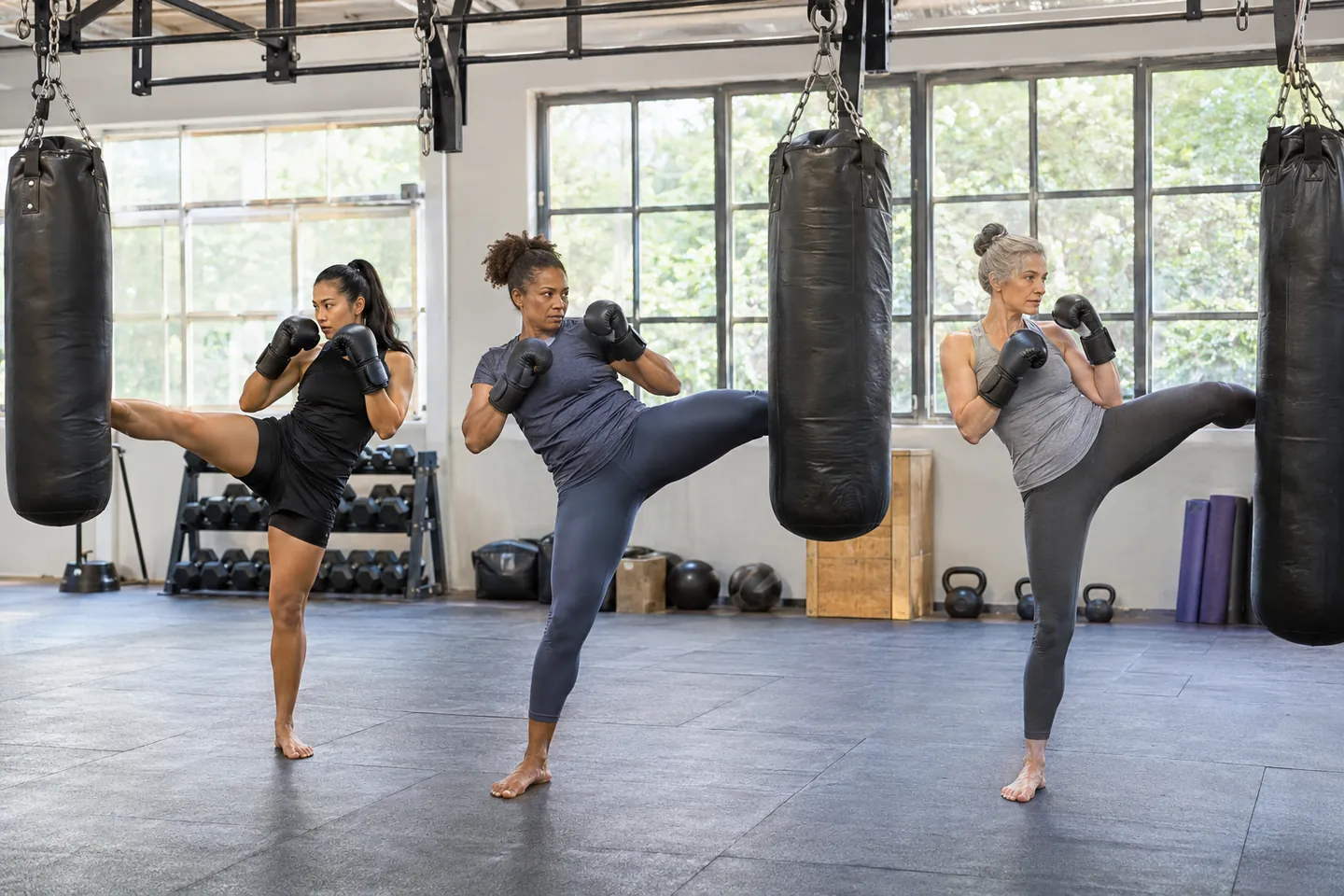
What women in Mississauga can expect from kickboxing: first-class nerves, technique basics, fitness benefits, partner work, gear, and choosing the right class.
Will I be the only beginner? Do I need to be fit first? What if I feel awkward throwing a kick in front of other people? These are some of the most common questions women ask before trying a kickboxing class, and they are entirely reasonable. Walking into an unfamiliar gym takes some courage, especially when the activity involves gloves, bags and partners.
The reassuring news is that kickboxing is one of the more approachable combat sports for new students, and many women in Mississauga take it up with no previous experience at all. It is energetic and demanding, but it is also structured, technical and adaptable. A good class meets you where you are and helps you improve from there.
This article looks at what kickboxing involves, what a first class usually feels like, the benefits women often mention, and how to choose a class that suits your goals in Mississauga.
What kickboxing actually is
Kickboxing combines punches from boxing with kicks, and in some styles knees, delivered from a balanced stance. Students learn techniques such as the jab, cross, hook and uppercut alongside round kicks, front kicks and teeps. These are practised in combinations on bags, pads and in the air.
There are different approaches to kickboxing. Some classes are primarily fitness-focused, using kickboxing techniques to deliver a high-energy workout. Others emphasize skill development, with more time spent on technique, defence and partner drills. Many classes blend both, offering a solid workout while teaching proper form.
Contact levels vary as well. Most beginner and fitness classes involve no sparring. Striking happens on bags or pads held by a partner or coach. Sparring, if offered, is usually optional and introduced gradually after students have a solid foundation. You are always in control of how far you go.
Your first class
Most first classes begin with a warm-up that may include skipping, light jogging, dynamic stretches and bodyweight exercises. This prepares the body and helps you settle into the room. Do not worry if you cannot keep up with every exercise. Take breaks when needed and move at your own pace.
The coach will then teach basic techniques, starting with stance and guard. You will learn how to stand, where to keep your hands, and how to move your feet. From there, you will practise simple punches and kicks, often in the air first and then on bags or pads.
It is normal to feel uncoordinated at the start. Kicking, in particular, requires balance and hip mobility that take time to develop. Coaches expect this and will give you corrections and encouragement. Everyone in the room was a beginner once, and most will remember how it felt.
Fitness benefits you can feel
Kickboxing is a full-body workout. Punches engage the shoulders, arms and core, while kicks work the hips, legs and glutes. Moving around the bag or partner develops footwork and coordination. The combination makes classes both physically demanding and engaging.
Many women notice improvements in cardiovascular fitness within a few weeks of regular training. Rounds of bag work and pad drills elevate the heart rate, and the rest periods between rounds help build the ability to recover quickly. Over time, rounds that once felt exhausting become manageable.
Strength and mobility develop as well. Repeated kicks build hip strength and flexibility, while punching combinations build upper-body endurance. Holding a guard and maintaining stance work the core in a functional way. These benefits carry over into daily life, from carrying groceries to playing with children.
Confidence and stress relief
Beyond the physical side, many women say kickboxing helps them feel more confident. Learning to strike with power and control, moving with balance, and completing demanding rounds can change how you feel about your own strength. That confidence often shows up in other areas of life.
Kickboxing is also a popular way to release stress. Hitting a bag after a long day at work or a hectic commute on the 401 can feel deeply satisfying. The focus required to execute combinations leaves little room for worrying about other things, and many people leave class feeling calmer and clearer.
That said, kickboxing classes are not a substitute for self-defence courses, and they are not therapy. They can be part of a healthy routine that supports wellbeing, but if you are dealing with significant stress, anxiety or other concerns, it is important to seek support from qualified professionals as well.
Working with partners
Partner drills are a common part of kickboxing classes. One person holds pads while the other strikes, then you switch. This can feel unfamiliar at first, especially holding pads, which is a skill in itself. Coaches will show you how to hold pads safely and give your partner useful targets.
Many women find partner work one of the most enjoyable parts of class. It adds variety, builds trust, and creates a sense of teamwork. Working with someone else also helps you develop timing and accuracy in ways that bag work alone cannot.
You can communicate with your partner about pace and power. If you are new, let them know. If something feels uncomfortable, speak up. A well-run class encourages respect and control, and your partner should be focused on helping you learn rather than testing you.
Women-only and mixed classes
Some women prefer to start in a women-only environment, while others are comfortable in mixed classes from the beginning. Both have advantages. Women-only classes can feel more relaxed for some people, especially when trying something new. Mixed classes offer a wider range of training partners and class times.
At Konga Fitness, women’s classes offer a supportive space for women to train, while kickboxing classes on the regular timetable welcome all adults. Many women begin with one option and later try the other as their confidence grows.
There is no right or wrong choice. Consider your comfort level, your schedule and your goals. Visiting a class or speaking with the team can help you decide which environment suits you best.
Gear and practical preparation
For your first few classes, you usually need comfortable athletic clothing, a water bottle and a towel. Many gyms have loaner gloves for beginners, though you may want your own pair if you continue. Hand wraps help protect your wrists and knuckles and are inexpensive.
Kickboxing is typically done barefoot on mats, so you will not need special shoes. Remove jewellery before class, and tie back long hair. If you wear a hijab or other head covering, sport-specific options are available, and coaches are generally happy to accommodate your needs.
If you have a medical condition, are pregnant, or have past injuries, talk with your doctor before starting. Let the coach know as well so they can suggest modifications. Kickboxing is adaptable, and many exercises can be adjusted to suit different needs.
Power comes from technique, not size
A common worry among new students is that they are not strong enough to hit hard. In kickboxing, much of the force behind a strike comes from mechanics rather than muscle. A cross gains power from the rear foot pivoting and the hips turning. A round kick gains power from the supporting foot rotating and the hip coming over. When those pieces line up, even a light, smaller person can produce a crisp, solid strike.
That is why coaches spend so much time on details that seem small: the angle of the back heel, the position of the shoulder, where the eyes look. Learning these details makes your strikes more effective and also protects your joints, because the force travels through your body in a sensible line instead of being absorbed by a wrist or knee.
Expect your power to grow slowly and then suddenly. For weeks, a kick may feel weak and uncoordinated on the bag. Then one evening, the pivot and the hip turn happen at the same moment, and the bag jumps. Those moments are a big part of what keeps people coming back to class.
Building skills over time
Like any martial art, kickboxing rewards consistency. Attending two or three classes per week allows you to practise techniques regularly and build on what you learned in previous sessions. Over time, combinations become smoother, kicks become stronger, and footwork becomes more natural.
Set small goals to track progress. You might aim to keep your guard up throughout a round, land a clean round kick on the pads, or complete a full class without needing extra breaks. Celebrating these milestones helps maintain motivation.
As your skills develop, you may want to explore related disciplines. Some kickboxing students become interested in Muay Thai, which adds elbows, knees and clinch work, or boxing, which focuses more deeply on hand technique and head movement. Each offers a different challenge.
Balancing training with life
Women in Mississauga often juggle work, caregiving, school runs and household responsibilities. Fitting regular training into that mix can be difficult, and it is important to find a schedule that is realistic. Two consistent classes per week often produce more progress than four sporadic ones.
Look at the adult schedule and identify times that work with your routine. Different time slots might suit different weeks, depending on work and family demands. Having a regular slot helps make training a habit rather than something you have to decide on each day.
Recovery matters too. Sleep, nutrition and rest days support progress and reduce the risk of injury. If you feel unusually tired or sore, take an extra rest day or choose a lighter session such as yoga.
Finding a supportive community
One of the most rewarding parts of kickboxing is the community that forms around it. Training alongside the same people each week builds friendships and accountability. Many women say they look forward to class as much for the people as for the workout.
Do not hesitate to introduce yourself, ask questions and stay a few minutes after class to chat. Coaches and members are usually happy to help newcomers feel welcome. Over time, the gym can become a place where you feel at home.
If you are curious about kickboxing, the simplest way to find out whether it suits you is to try it. Konga Fitness offers a welcoming place to start in Mississauga, and you can book a free trial or contact the team with any questions about classes, schedules or what to bring.
Filed under
Keep exploring
More training insights await.