
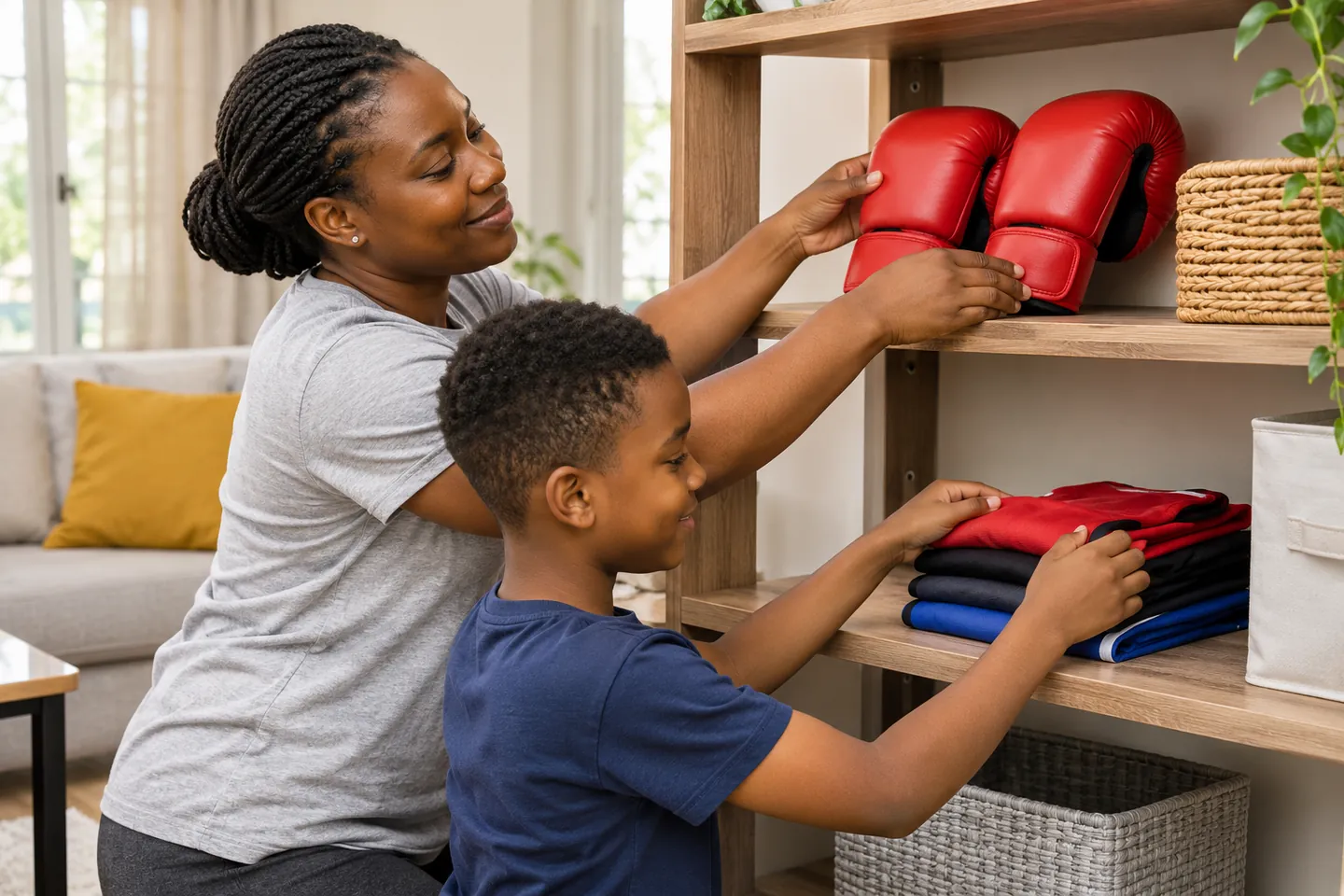
Build a practical kids martial arts equipment routine in Mississauga with clear storage, age-appropriate responsibilities, care instructions, and class preparation.
A child’s martial arts bag can become a small mystery between classes. A bottle disappears, clothing remains packed, and the item needed next time is somewhere in the car. The problem is rarely solved by telling a child to be more responsible without explaining the routine. Equipment care is a set of practical tasks that can be taught gradually, with adults managing what the child is not yet ready to do.
Teaching kids martial arts equipment care in Mississauga begins with knowing what the class actually requires and how each item should be handled. Manufacturer instructions and the gym’s rules should guide the details. The family can then build a simple routine for packing, unpacking, storage, and checking condition. The aim is a ready kit and a manageable responsibility, not a spotless bag used as a measure of character.
Confirm the current equipment list
Ask the coach what your child needs for the sessions they attend. Do not purchase or pack every item associated with martial arts. Requirements can differ by class, age group, and activity. A short, accurate list is easier for a child to understand and easier for an adult to maintain.
Clarify which items are personal and which are provided or shared under the gym’s arrangements. Do not assume borrowing is available, and do not assume siblings can share every item. Ask about the actual policy and follow it. This avoids confusion when both children need something at the same time.
If an item is unfamiliar, ask what it is used for and how it should be prepared. A child may be able to carry equipment without understanding its role. The coach can explain the class use, while the family handles the practical storage and care routine around it.
Read the care instructions before inventing a method
Different materials can require different handling. Read the manufacturer’s guidance and keep it accessible. Do not assume that everything can go into the same wash or be treated with a household cleaner. A method that seems convenient may be unsuitable for the item.
Ask the gym about any additional rules for equipment used in class. If the instructions appear unclear or conflicting, clarify them before proceeding. The goal is to follow a suitable process, not choose the strongest-smelling product or the quickest method. Avoid exposing children to cleaning tasks beyond their age and ability.
Explain the routine to your child in simple terms. They do not need a lecture about materials. They need to know which items go in which place and when an adult should help. A clear division of responsibility prevents the child from improvising with products or appliances to finish a task independently.
Create a predictable landing place after class
Choose where the bag will be unpacked when the family returns home. The location should make it easy to follow the relevant care and drying instructions. Avoid leaving used items packed indefinitely because the next class seems far away. A short routine soon after arrival is easier to remember than an uncertain task scheduled for later.
Separate used clothing from items that need a different care process. Put the bottle in its usual place and return small accessories to a known container once they are ready. The arrangement does not need to look like a professional equipment room. It needs to be understandable and repeatable in your home.
Let the child perform a manageable part. A younger child might place clothing in the designated basket while an adult handles the rest. An older child may complete more steps with supervision. Teach the sequence before expecting independent performance, and revisit it when the equipment changes.
Make storage serve the next visit
Store clean, ready items where they can be found easily and according to their care requirements. If the kit is spread across several rooms, packing becomes a search. A consistent place reduces decisions and gives the child a clearer picture of what belongs to the activity.
Keep ownership clear when siblings train. Separate bags or appropriate identification can prevent mix-ups. Follow the item’s instructions and the gym’s rules before adding labels or markings. Do not alter protective equipment in a way that could affect its use simply to make identification easier.
Check the storage arrangement from the child’s perspective. Can they reach the items they are expected to manage? Do they know which shelf or container is theirs? A routine may fail because the environment is awkward, not because the child is careless. Small practical changes can remove repeated friction.
Teach packing as a sequence
Use a short checklist based on the confirmed class requirements. For some children, a few words are enough; others may find simple pictures helpful. Keep the list current and avoid including items that are no longer needed. A useful checklist reduces memory demands rather than adding another thing to argue about.
Pack before the final rush when possible. The night before or an earlier part of the day may work better than the moment everyone is leaving. Give the child a clear task and allow time to complete it. Adults can check the kit without turning the check into a surprise test.
If something is missing, solve the immediate issue and then review the routine. Ask where the item was last used and whether it needs a better storage place. Repeated reminders about responsibility may not address the actual cause. A practical system should make the desired action easier to complete.
Include a simple condition check
Adults should inspect equipment for damage or changes that affect its use. Ask the coach what signs should prompt a check and when an item should no longer be used. Do not rely on a universal replacement date from another family, since condition and use can vary.
Teach the child to report when something feels different, does not fasten properly, or appears damaged. They should not hide the issue because they worry about losing class time or causing an expense. Reporting a problem is part of responsible participation. The adult and coach can decide what to do next.
Avoid home repairs that are not approved for the equipment. Tape, stitching, or other improvised changes may not be appropriate for an item’s function. Ask the manufacturer or coach for relevant guidance. A repair should be based on suitability, not simply whether it makes the item look usable again.
Keep sharing rules clear
Children may offer equipment to a friend who forgot something. The intention can be generous, but the gym’s rules still apply. Teach your child to ask the coach rather than deciding independently. The instructor can manage the situation and explain what is appropriate for the class.
The same principle applies at home. A sibling’s kit should not become a toy box or an invitation to practice strikes together. Equipment is used only in the instructed context, and family members are not practice targets. Clear storage and boundaries help separate class participation from rough play.
If an item is outgrown or no longer needed, ask whether it is suitable to pass along. Another family should know its condition and intended use, and the receiving child still needs an appropriate fit. Giving something away does not remove the need for a careful check.
Keep responsibility proportionate to age and experience
A child who has just started may need repeated guidance through the routine. That does not mean the responsibility is pointless. Teach one manageable step, let it become familiar, and add another when appropriate. The process should reflect the child in front of you rather than a comparison with an older sibling.
Avoid assigning the entire kit to the child and then stepping in only when something goes wrong. Shared checks and clear demonstrations make the expectation fairer. Adults remain responsible for decisions involving fit, condition, cleaning products, and anything else beyond the child’s knowledge or ability.
Acknowledge specific contributions. “You put the bottle and clean clothes in the bag before we left” tells the child what helped. Do not connect equipment care to whether they performed well in class. The routine applies on a difficult lesson day as much as on an enjoyable one.
Review the system when the schedule changes
A new class time, school routine, or transport arrangement may require a different packing plan. Notice when the existing sequence stops working and adjust it. A bag that was easy to prepare on a weekend may need attention earlier when the family travels directly from school.
Include every adult involved in the updated routine. They should know what is ready, what still needs care, and what the child is expected to manage. Clear handovers prevent one person from assuming another has checked the kit. The child should not have to carry the whole communication burden between adults.
For current requirements, explore kids martial arts at Konga and ask the team through the free trial page or the usual family communication channel. A useful equipment routine is simple enough to repeat and specific enough to follow. It gives children a practical role in their activity while keeping adults responsible for the decisions that require adult judgement.
Filed under
Keep exploring
More training insights await.