
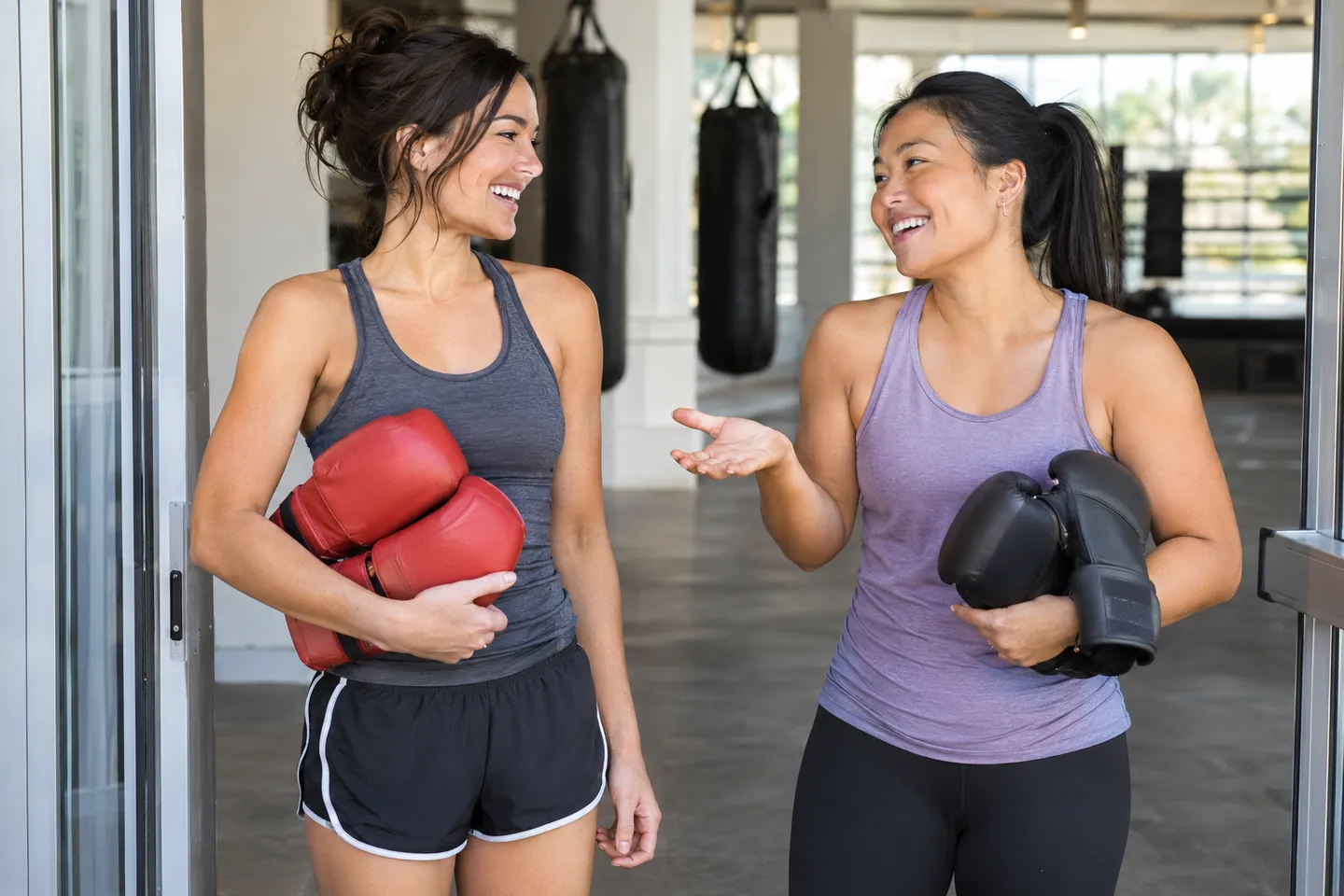
Start boxing with a friend in Mississauga while keeping goals clear, sharing preparation, respecting different paces, and learning partner drills thoughtfully.
Starting boxing with a friend can make the first visit feel more familiar. You have someone to coordinate the trip with, compare practical questions, and laugh with when both of you forget which glove goes where. That shared beginning can be useful, provided the friendship does not become a rule that you must learn at the same pace or want exactly the same experience.
Learning boxing with a friend in Mississauga works best when you share the preparation and keep individual goals visible. You can attend together while receiving different corrections, using different pacing adjustments, or choosing different participation boundaries. The class is a shared appointment, but the learning still belongs to each person.
Compare your reasons before booking
Have a simple conversation about why each of you wants to try boxing. One person may be interested in technique while the other mainly wants an engaging fitness class. Those goals can sometimes fit the same session, but you should not assume they always will.
Explain your contact preferences too. If one person wants noncontact training and the other is curious about sparring, acknowledge the difference without treating it as a problem to solve through persuasion. Ask the gym which current options match each goal.
The conversation does not need to produce a permanent agreement. You are choosing a first visit. A clear starting point prevents disappointment caused by discovering that you imagined very different classes while using the same word boxing.
Make the enquiry specific to both people
When contacting the gym, explain that two beginners want to attend and describe any relevant differences in experience or preferences. Ask whether the same class is suitable and how new participants are introduced. Do not rely on one person’s enquiry to cover details that apply only to the other.
Confirm booking requirements for each participant. A shared plan does not necessarily mean one booking includes both people. Check current arrival instructions, equipment needs, and any registration steps before setting out.
If you hope to work together during partner drills, ask how pairings are handled. The coach may choose partners based on the exercise or other practical considerations. Attending with a friend should not depend on a guarantee that you will be paired for every activity.
Share logistics without making one person the manager
Decide how you will travel and where you will meet. Include the time needed to arrive ready, not merely reach the building. If you are coming from different parts of Mississauga, choose a plan that does not make one person’s delay automatically disrupt both visits.
Each person should prepare their own required equipment and confirm that it is ready. You can remind each other, but avoid making one friend responsible for every booking, message, and packed item. A routine is easier to maintain when both participants understand the practical details.
Discuss what happens if one person cannot attend. Agree in advance that the other can still go if they want. This small decision can prevent a shared beginning from turning into a schedule that stops whenever either calendar becomes busy.
Let the coach teach both of you
A friend may be tempted to explain the drill while the coach is still demonstrating. Pause the side conversation and listen first. Even if one of you has previous experience, the current exercise may use a particular version or cue that deserves attention.
Ask your own questions. If your friend understands the sequence, that does not mean you should pretend to understand it too. A concise clarification can help the coach identify the exact point you need explained.
Avoid becoming each other’s unofficial instructor. You can remind a friend of the agreed sequence or tell them a target feels unclear, but technical corrections should come from the coach. This keeps the friendship from becoming a contest over who understands boxing better after two classes.
Expect different learning speeds
One person may remember combinations quickly while the other finds footwork more intuitive. Another difference may appear when pads or a bag are introduced. These variations do not establish a permanent ranking between you.
Focus on the cue assigned to you. If your friend receives a different correction, it may reflect a different learning need rather than a more advanced status. Ask the coach what your current priority is and give that task enough attention.
Celebrate specific progress without turning every session into a comparison. You can acknowledge that a friend remembered a sequence while also noticing your own clearer reset. The shared interest does not require identical results to remain enjoyable.
Keep encouragement separate from pressure
A reminder about a planned class can be helpful. Repeatedly pushing someone to attend after they have said no can change the interaction. Agree on the kind of encouragement each person wants rather than assuming that stronger pressure always creates better commitment.
During class, do not urge a friend to increase force, skip a pause, or accept contact beyond the coach’s instructions. Encouragement should support the agreed task. It should not replace the other person’s judgement or the instructor’s role.
If your friend needs an adjustment, let them communicate it. You can support the conversation without speaking over them. Each participant should have room to explain their own experience and make their own participation choices.
Treat partner drills as structured work
When you are paired together, confirm the sequence, roles, contact level, and stopping cue just as you would with any other partner. Familiarity can make people assume too much. A friendship does not eliminate the need for clear instructions.
Do not add surprise movements as a joke or change the drill to make it more entertaining. The coach has assigned a task for a reason, and both participants need to know what is happening. Save unrelated conversation for a suitable break.
If something becomes unclear, stop and ask the coach to watch. You do not need to settle a disagreement about target placement or timing through repeated attempts. A brief clarification can make the next repetition useful for both of you.
Be open to training with other classmates
A coach may rotate partners to match the session’s goals. Follow the process and bring the same communication habits to the new pairing. Working with someone else can reveal how clearly you understand the instructions without relying on a friend’s familiar habits.
Introduce yourself briefly and confirm the drill. Do not assume the new partner wants the same pace or contact level you used previously. The coach’s instructions and the current agreement remain the reference.
Returning to your friend afterward can still be part of the experience. You have not lost the shared activity because you spent a round learning with someone else. The class can provide both companionship and a wider group learning environment.
Plan for different pacing needs
Even when two friends begin together, they may need different pauses or versions of an exercise. Ask the coach how modifications work and use them without making the difference embarrassing. A shared class does not require matching every repetition.
If one person finishes a segment earlier or needs to step aside, follow the instructor’s directions rather than abandoning your own task automatically. You can check in at an appropriate moment. The coach is there to manage the session and help each participant.
Avoid interpreting a harder day as a statement about motivation. Describe the practical experience and make the next decision accordingly. Friendship is more useful when it leaves room for ordinary variation instead of demanding a consistent performance from both people.
Talk after class without grading each other
A post-class conversation can help you remember what happened. Ask what each person learned, which cue helped, and what question remains. Those prompts create a more useful discussion than deciding who looked better or worked harder.
If you noticed something about your friend’s movement, avoid presenting it as a technical diagnosis. Encourage them to ask the coach if they are interested. Your perspective may be incomplete, especially while you are both learning.
Keep the next step practical. Confirm the next appointment, review any equipment preparation, and decide whether the class format still suits both goals. A short conversation can preserve the useful parts of the session without turning it into an extended comparison.
Let the routines diverge if needed
After several visits, one person may want a different class time or format. That does not make the shared start unsuccessful. It may mean the experience helped each of you understand your preferences more clearly.
You can continue attending some sessions together, compare questions afterward, or simply support each other’s separate routines. Do not make the friendship dependent on identical training choices. The activity should fit both lives rather than force one person into the other’s plan.
Use the boxing program information and a trial enquiry to choose a suitable first visit. Share the practical preparation, then let each person learn honestly. A good training friendship makes room for clear boundaries, different questions, and the pleasure of beginning something new alongside someone you know.
If you share transport, keep a separate plan for cancellations and early departures. Confirm who will drive, where equipment will be stored during the trip, and how each person will get home if the schedule changes. Settling these ordinary details beforehand lets the friendship remain a source of company instead of making every class depend on a last-minute negotiation.
Filed under
Keep exploring
More training insights await.