
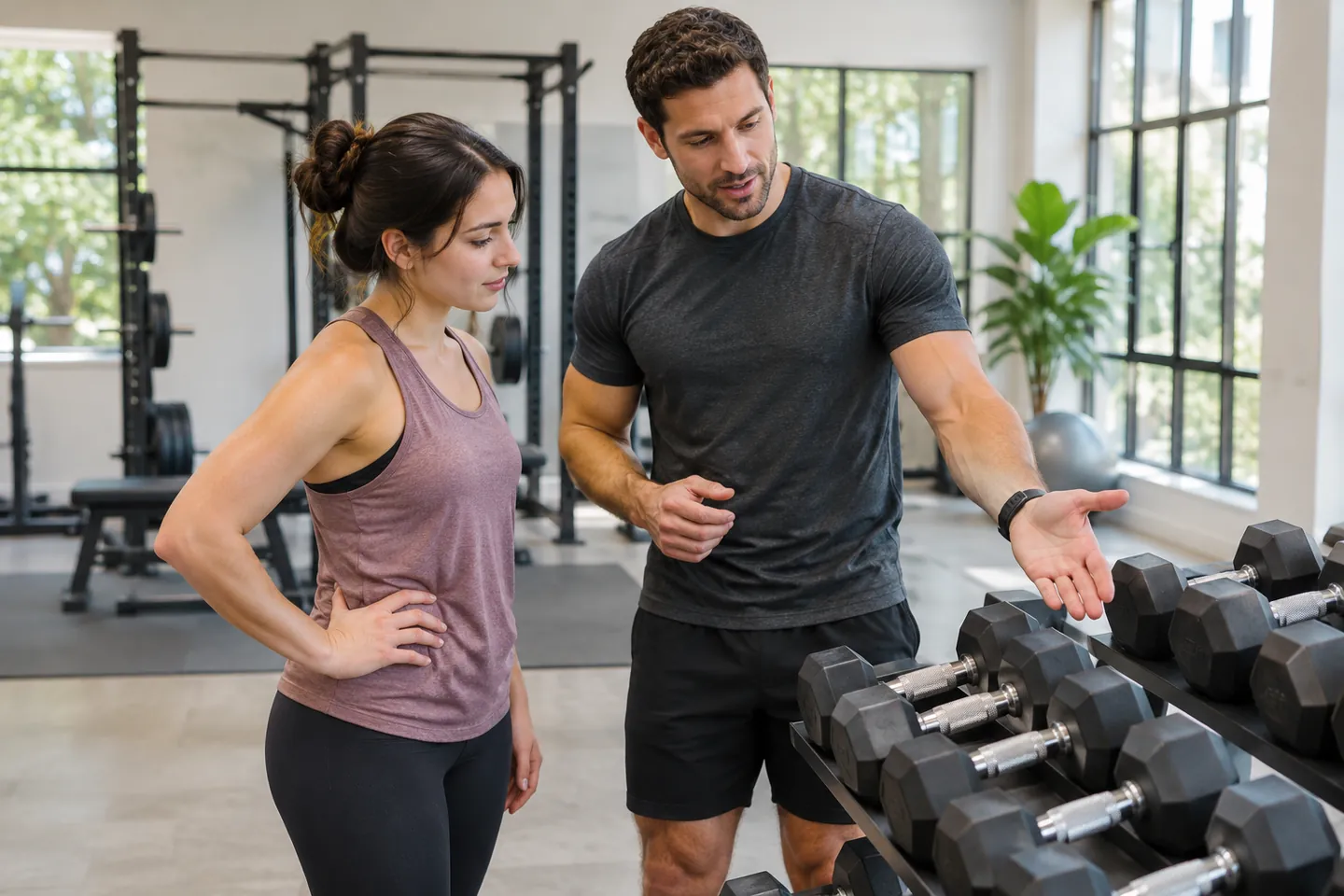
Learn the language of strength training in Mississauga, from sets and repetitions to equipment setup, useful coaching questions, and keeping a clear log.
Strength training can seem like a language everyone else learned before you arrived. People refer to sets, repetitions, resistance, and exercise variations as though the meanings are obvious. Learning strength training basics in Mississauga begins by making those words useful and connecting them to what happens during an actual session.
You do not need to memorize an entire exercise library before starting. It is more helpful to understand a few movements, learn how the equipment is prepared, and know what questions to ask when something is unclear. This guide focuses on that learning process. A coach can use your goals and starting point to decide which exercises and amounts of work belong in your own program.
Understand what resistance means in the gym
Resistance is what you work against during an exercise. Depending on the movement, it may come from a dumbbell, a machine, a band, or your own body position. The equipment can change the way a task is performed, but owning or using a particular object is not what makes a session meaningful.
For a beginner, the useful question is why a certain tool has been selected. A coach may choose equipment because it is available, easy for you to set up, or suited to the movement you are learning. Ask for that explanation. It can help you stop viewing the gym as a hierarchy in which some pieces of equipment count and others do not.
Avoid assuming that every exercise with the same name will feel identical across different equipment. A machine version and a free-weight version may require different setup instructions. Treat a change of equipment as something to learn rather than a reason to skip the explanation.
Translate sets and repetitions into a sequence
A repetition is one complete performance of the movement as instructed. A set is a group of repetitions performed together. If a program lists several sets, it is describing repeated groups of work with the rest or transition specified by the plan.
Ask your coach what counts as the beginning and end of a repetition for the exercise you are learning. This is particularly useful when the movement includes a pause, a return to a starting position, or work on one side at a time. Clear counting prevents uncertainty from distracting you during the task.
Do not assume that the written repetition count tells the entire story. The exercise version, resistance, pace, and rest arrangement also shape the session. If you are given a written plan, have someone walk you through a sample line so you understand how all the instructions fit together.
Learn setup as part of the exercise
The exercise begins before the first repetition. You may need to position a bench, adjust a seat, choose a handle, or arrange enough space around you. Ask to see those steps and then practise them with the coach observing.
It can help to record settings that are specific to the equipment you use. A brief note about a machine seat position may make the next visit easier. Remember that settings can differ across machines, so the note should identify the relevant equipment rather than becoming a rule you apply everywhere.
Also learn how to finish and leave the station ready for the next person. Return equipment according to the facility’s expectations and ask where items belong if you are unsure. These details are part of becoming comfortable in the environment, not minor etiquette trivia you are expected to know automatically.
Ask for the purpose of the movement
A short explanation of purpose can make an exercise easier to remember. You might be learning a squat pattern, a pulling movement, or how to control a particular setup. You do not need a detailed anatomy lesson to understand why it appears in your program.
Ask which one or two features deserve attention on the first attempts. A long list of cues can be difficult to apply while everything is unfamiliar. The coach can help select the most useful focus and add detail as you become comfortable with the basic task.
When a cue does not make sense, say so. A phrase that helps one person may confuse another. Requesting a demonstration or a different explanation is part of learning. You are not failing the instruction by needing it translated into language you can use.
Choose a starting challenge with guidance
It can be tempting to choose resistance by copying a nearby person or selecting a number that looks respectable. Neither tells you what is appropriate for your current task. Work with the coach to establish a starting point that lets you understand and practise the intended movement.
Describe your experience during the set. Let the coach know whether you are losing track of the instructions, finding the task unexpectedly demanding, or feeling ready for a different challenge. That feedback complements what they can observe.
The American College of Sports Medicine’s personal trainer textbook chapter on resistance training emphasizes technique when introducing beginners to resistance exercise. In practical terms, give yourself permission to learn the task before treating the equipment number as the main achievement.
Understand why rest belongs in the plan
A pause between sets is not necessarily a sign that you are wasting time. It is part of the session structure. Ask how the rest period should be handled in your program and whether you are meant to remain at the same station or move elsewhere.
Use that time to prepare for the next set, review a cue, or report what you noticed. Avoid adding unrelated exercises simply because waiting feels unfamiliar. If the session includes paired movements or a circuit, follow the intended sequence and ask how the transitions work.
This is also a practical moment to clarify equipment sharing. Busy facilities may have expectations about alternating use or keeping a station available. Ask the staff how to handle the situation rather than assuming you should either occupy everything nearby or abandon your plan immediately.
Keep a record that helps the next session
A beginner’s training log can be brief. Record the exercise version, the work completed, relevant equipment settings, and one useful observation. You might note a cue that helped or a setup step you want to review next time.
Be specific enough to recognize the exercise later. “Rows” may be less helpful than a description that includes the machine or handle you used. Your coach can tell you which details matter for the program, so the record remains useful without becoming burdensome.
Avoid turning every note into a judgment. “Needed another demonstration of the starting position” is information. “Bad at this” gives you nothing concrete to act on. A factual record supports learning because it tells you what to ask about when you return.
Let repetition become familiar before chasing novelty
Repeating an exercise gives you another opportunity to remember the setup and apply feedback. A familiar plan can also make it easier to notice which parts remain confusing. Constantly changing every movement may feel entertaining but can leave you repeatedly learning new instructions.
This does not mean a program should never change. Ask how changes will be decided and what signs the coach will consider. The explanation should connect the next step to your goals and experience rather than treating novelty as the only way to keep a session worthwhile.
You can also bring your preferences into the discussion. If a movement is particularly engaging or an equipment setup is frustrating, describe why. Your feedback helps the coach understand how the program feels in practice while preserving a clear purpose for the work.
Build independence through small demonstrations
Equipment availability is another useful topic to discuss before training on your own. Ask what to do if the station listed in your plan is occupied. Your coach might provide a specific alternative, change the order, or explain when waiting makes sense. Having that conversation in advance prevents you from improvising an unfamiliar exercise simply because the usual equipment is unavailable.
Keep alternatives written beside the original movement if they are part of your plan. Include the setup details that differ, rather than assuming one name tells you everything. If you have not been shown the alternative, ask for a demonstration before relying on it. This small amount of preparation can make independent visits more straightforward while keeping the program understandable. It also gives you a clear way to report what you actually completed when you next meet with your coach.
One useful learning check is to explain the next exercise back to your coach. Show where you would set up, describe the starting position, and identify the cue you intend to use. The coach can correct misunderstandings before they become habits you carry into independent sessions.
Try this with a manageable number of movements rather than attempting to prove you remember everything at once. Becoming independent is a gradual process of understanding, practice, and clarification. Asking a question after several visits is still a normal part of that process.
If you want guided instruction, Konga’s personal training page introduces its service. Contact the team to discuss your experience and current goals. A strong beginning is not a performance of expertise. It is a clear, repeatable way to learn the work in front of you and return knowing a little more than you did before.
Filed under
Keep exploring
More training insights await.