
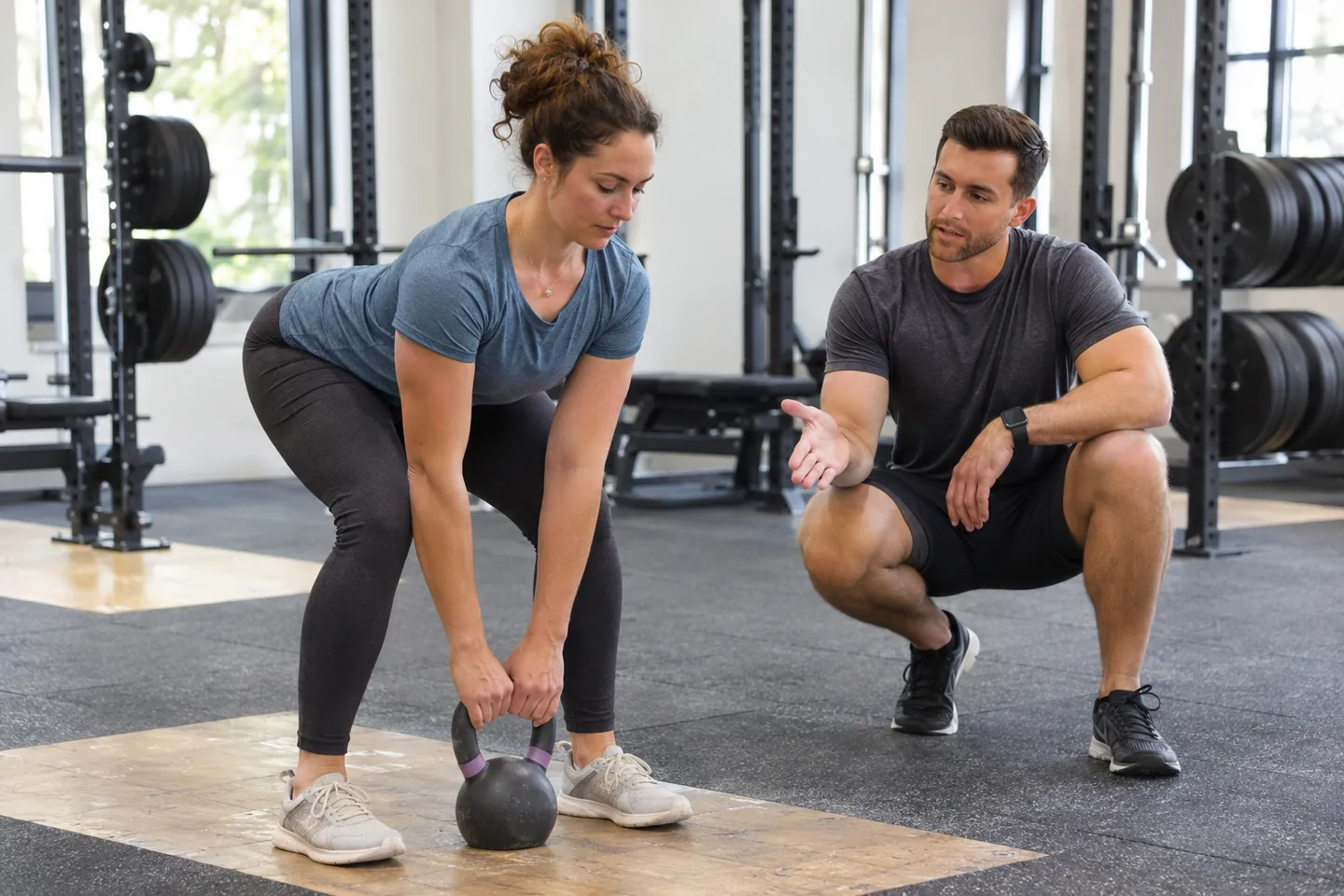
Learning the deadlift with a coach in Mississauga: hip hinge practice, setup, bracing, choosing a starting variation, sensible progression, and useful feedback.
Mention the deadlift to someone who has never lifted, and you will often get one of two reactions. Some picture a powerlifter with a bar bending under enormous plates and assume it has nothing to do with them. Others have heard that it is “bad for your back” and steer clear. Both reactions miss what the movement really is for most people: a structured way to practise picking something up off the floor.
That everyday quality is part of why the deadlift is so widely taught. Lifting a box, a suitcase, a child, or a bag of soil all involve some version of the same pattern. Learning to perform that pattern with control, under a gradually increasing load, can be a useful part of a strength program. The key word is “learning”. It is a skill, and like any skill, it goes better with good instruction.
This article explains what learning the deadlift with a coach in Mississauga typically looks like, why a coach can help, and how to approach the first few weeks sensibly. It does not replace in-person coaching, and anyone with back pain, a past injury, or a medical condition should speak with a qualified health professional before starting.
Why a coach helps with this lift in particular
Some exercises are fairly forgiving to learn on your own. The deadlift is harder to self-assess because you cannot easily see your own back, hips, and bar path while you are performing it. What feels straight may not be. What feels like a hinge may actually be a squat or a rounded reach.
A coach provides an outside view. They can watch from the side, notice where the movement changes under fatigue, and give you a cue that makes sense to your body. Often, a single well-chosen cue changes more than ten minutes of reading. They can also stop you before small issues become ingrained habits.
There is a practical benefit as well. A coach can help you choose a sensible starting weight and a progression plan, so you do not jump too quickly to loads that outpace your technique. That planning is especially useful for people who are enthusiastic and tempted to add weight every session.
The hinge comes before the bar
Many coaches start not with a barbell but with the hip hinge. The hinge is the movement of pushing the hips back while keeping the spine in a relatively neutral position and the shins fairly vertical. It is the core of the deadlift, and it is often unfamiliar to beginners who are used to bending primarily at the waist or the knees.
Hinge drills can be simple. A coach might ask you to stand near a wall and reach your hips back to touch it, or hold a dowel along your back to give you feedback about spinal position. These drills can feel almost too basic, but they reveal a lot about how you naturally move.
Spending time on the hinge pays off. When you later add load, you already understand the shape you are aiming for. If the movement starts to break down, you can return to the drill and rebuild it. Coaches often revisit hinge practice in warm-ups long after a student has progressed to heavier lifts.
Choosing a starting variation
There are several ways to deadlift, and the conventional barbell deadlift from the floor is not always where beginners start. A coach might choose a kettlebell deadlift, a trap bar deadlift, or a barbell lifted from blocks or a rack to reduce the range of motion. Each option changes the demands slightly.
Kettlebell deadlifts are a common entry point because the weight sits between your feet, and lighter loads are easy to find. Trap bar deadlifts let you stand inside the bar, which some people find more comfortable. Raised barbell pulls let you practise the pattern without having to reach as low, which can help if hip or hamstring mobility is limited.
The best starting point depends on your body, your experience, and your goals. A coach will usually try a few options and watch how you move. Do not be discouraged if your starting variation is not the one you see on social media. The goal is to build the pattern well, then progress.
Setting up: feet, grip, and position
The setup is where much of the work happens. A coach will typically show you where to place your feet, how far the weight should be from your shins, and how to take your grip. These details vary depending on the variation and your body proportions, so the cues you hear may differ from what someone else hears.
You will also hear about creating tension before the weight leaves the floor. That might mean pulling the slack out of the bar, setting your shoulders, and getting your body into a stable position before you start to lift. Beginners often try to yank the weight off the floor in one motion. Learning to set up deliberately helps the lift feel smoother.
Expect to repeat the setup many times. It is common for coaches to have you set up, pause, reset, and set up again before even lifting the weight. That repetition builds a routine you can rely on when the weight becomes heavier and fatigue begins to affect concentration.
Bracing and breathing
Bracing refers to creating stiffness through your trunk so that your spine stays stable as you lift. It often involves taking a breath and tightening your midsection before starting the pull. Coaches describe this in different ways, and you may need to try a few cues before one clicks.
Bracing is a skill rather than a single trick. It can feel strange at first, especially if you are used to breathing casually during exercise. Some people over-brace and feel light-headed; others barely brace at all. A coach can help you find a reasonable middle ground and remind you to breathe between repetitions.
If you have high blood pressure, a heart condition, are pregnant, or have other medical considerations, discuss breath-holding and bracing with your doctor before attempting heavier lifts. Your coach can adjust technique and loading to suit any guidance you receive.
The lift and the return
Once the setup and brace are in place, the lift itself involves pushing through the floor and bringing the hips forward until you are standing tall. Coaches often watch whether the hips and shoulders rise together, whether the weight stays close to your body, and whether you finish without leaning back excessively.
The lowering phase matters just as much. Beginners sometimes drop the weight or let their position fall apart on the way down. A controlled return, following the same hinge pattern in reverse, keeps the movement consistent and prepares you for the next repetition. Your coach will tell you whether to reset completely between repetitions or keep a steady rhythm.
Do not chase speed early on. A smooth, controlled repetition teaches you more than a fast, messy one. As your technique stabilises, your coach may introduce different tempos or intentions, but the foundation is controlled movement.
Feedback you can actually use
Good coaching feedback is usually short and specific. Rather than a list of ten corrections, you might hear one cue at a time: “push the floor away”, “keep the weight closer”, “finish tall”. Focus on that one cue for a set, then check in with the coach.
Video can also be helpful. Some coaches will film a set from the side so you can see what they see. Comparing what you felt with what the video shows can be eye-opening. Just remember that a single frame can be misleading; watch the whole repetition and discuss it with your coach.
Ask questions. If a cue does not make sense, say so. A coach would much rather rephrase than watch you guess. If something feels uncomfortable, tell them immediately. Discomfort that is not normal muscular effort is a signal to pause and reassess.
Progressing without rushing
Progression in the deadlift often happens in small steps. A coach might add a little weight each week, increase the number of sets, or move you from a raised variation to the floor. The pace depends on your consistency, recovery, and how well your technique holds up.
It is tempting to chase numbers, especially when early progress feels quick. Beginners often see rapid improvement as their technique and coordination improve. That early phase is exciting, but it eventually slows down. Planning for a gradual, steady approach makes it less likely that you will hit a wall or develop discomfort.
Remember that the deadlift is one exercise among many. A balanced program will also include pushing, pulling, squatting, carrying, and core work. If you are a martial artist, your strength sessions will also need to fit around your class schedule so that you are not too fatigued for skill work.
Deadlifts and martial arts training
Many people at Konga Fitness combine strength training with boxing, Muay Thai, jiu-jitsu, or MMA. The hip hinge and posterior chain strength developed through deadlifting can support athletic movement in general. That said, how much it helps any particular sport depends on many factors, and strength training works best as part of an overall plan.
Scheduling is important. A heavy deadlift session the day before hard sparring or a demanding grappling class can leave your legs and back tired. A coach can help you place strength work where it supports rather than competes with your martial arts training.
When to seek professional advice
If you have a history of back injuries, disc problems, hip or knee issues, or any ongoing pain, speak with a physiotherapist, chiropractor, or doctor before learning to deadlift. They can assess your situation and suggest whether, when, and how to include hinge movements in your training.
During training, sharp pain, pain that radiates, numbness, or tingling are signals to stop and seek professional advice. Muscular effort and next-day soreness are normal; those other symptoms are not something to push through.
Starting coached strength training at Konga Fitness
Learning the deadlift with a coach is about building a reliable pattern: a good hinge, a deliberate setup, steady bracing, controlled lifting and lowering, and gradual progression. With patient instruction, many people find it becomes one of the more satisfying lifts to practise.
If you would like guidance in Mississauga, explore our personal training and strength and conditioning programs, or contact us to talk about your goals and any concerns before you start.
Filed under
Keep exploring
More training insights await.