
Notice meaningful kids martial arts progress in Mississauga through class habits, clearer questions, cooperation, and practical skills beyond visible milestones.
Visible milestones are easy to remember. A certificate, a new piece of equipment, or a formal assessment gives a family something clear to talk about. Ordinary progress is quieter. A child understands the opening routine without help, asks a useful question, or returns to a difficult task after a pause. These changes may not produce a photograph, but they can make the class increasingly manageable and meaningful.
Noticing kids martial arts progress beyond belts in Mississauga begins by asking what the program actually teaches and how it recognizes learning. Do not assume that every martial art or gym uses the same rank system, assessment schedule, or terminology. Confirm the current structure with the coach. Whatever the formal milestones, parents can also look for practical changes in how the child participates.
Learn the program’s own measures
Ask the coach how progress is assessed in the class your child attends. Find out whether there are formal milestones and what they represent. Avoid importing expectations from another discipline or a sibling’s previous program. The same visible symbol can mean different things in different settings, and some programs use other ways to describe development.
Ask what beginners are currently working on and which behaviours help them learn. The answer may include technical tasks, understanding routines, or working appropriately with others. This gives you a context for observing the class. Without it, parents may focus on whatever looks most impressive rather than what the coach is actually teaching.
Clarify how families should ask for updates. A thoughtful progress conversation may need more time than the few moments between classes. Use the program’s communication process and prepare specific questions. The aim is to understand your child’s next step, not negotiate a milestone because a certain amount of calendar time has passed.
Notice familiarity with the routine
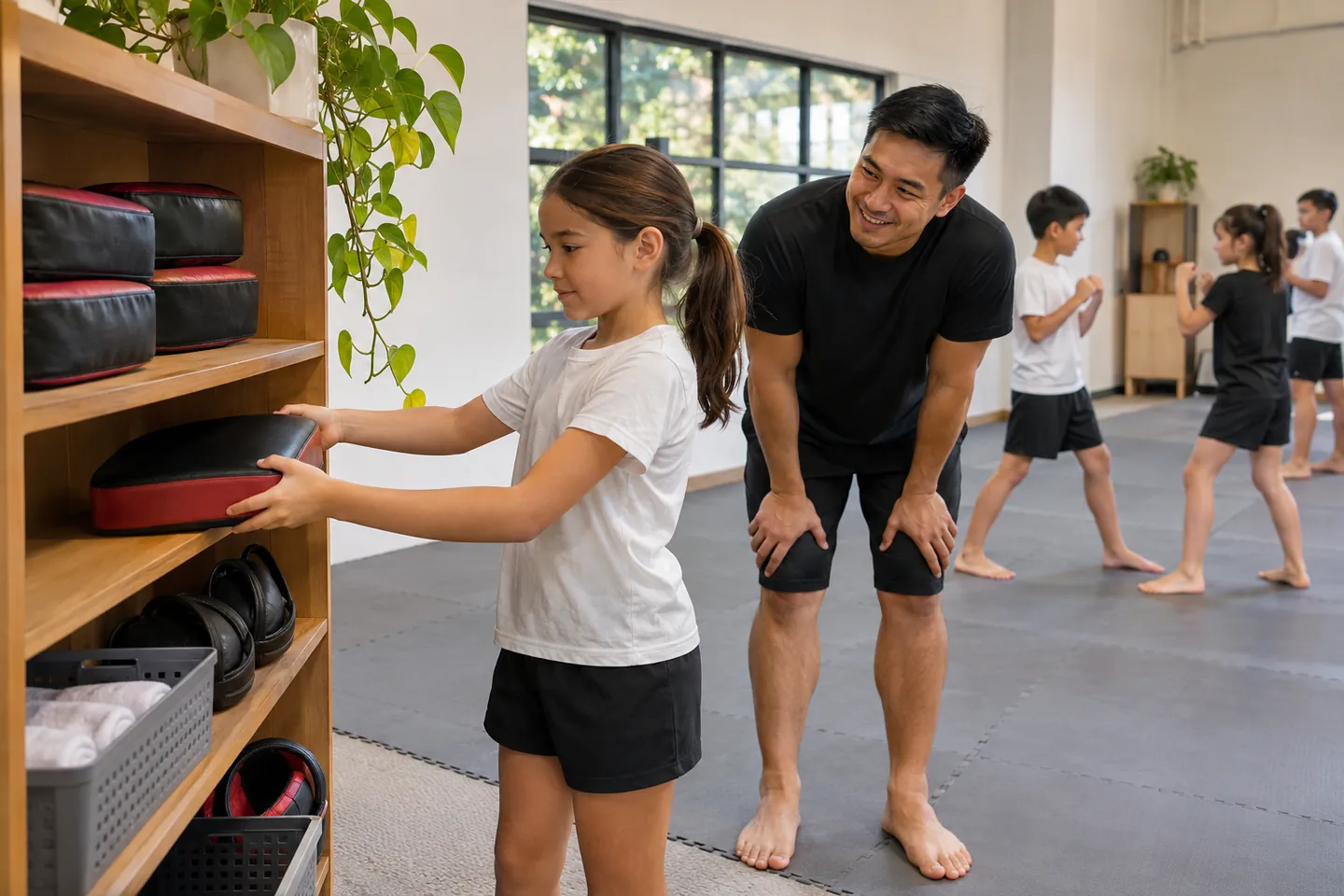
A child who initially needed help finding the group may begin arriving with a clearer sense of what happens next. They may know where belongings go, how to prepare approved equipment, or when to wait for instruction. These changes reduce the amount of uncertainty surrounding the lesson.
Do not dismiss routine familiarity as unrelated to learning. When the environment becomes more understandable, the child has a clearer opportunity to attend to the activity. The progress is practical rather than dramatic, but it can be part of a more independent and comfortable class experience.
Recognize the specific action without exaggerating it into a personality transformation. “You knew where to put your bag today” is enough. The child can see what changed and may feel more capable of repeating it. Broad claims about becoming a completely different person are unnecessary and difficult to support.
Look for better questions
At first, a child may say only that a movement is impossible or confusing. Over time, they might identify the part they do not understand and ask the coach to show it again. That change is useful because it gives the instructor something specific to address. Asking well is part of learning a skill.
A question does not mean the child is falling behind. It may show that they are noticing more detail than before. Encourage appropriate help-seeking and learn how the coach invites questions during the session. The child should not feel that appearing knowledgeable is more important than understanding the task.
After class, ask what they clarified rather than testing them on terminology. A simple conversation about the lesson can reveal growing awareness. Avoid turning every journey home into an oral exam. The goal is to notice useful participation, not create another setting where the child worries about giving the expected answer.
Observe how corrections are used
A child may initially hear a correction as a sign that they did something wrong and stop engaging. Later, they may try the suggested change and check whether it helped. That is a meaningful shift in how they use instruction, even if the movement still needs practice.
Describe the behaviour you saw. “You tried the slower version after the demonstration” identifies an action. It is more informative than praising toughness or saying the child finally listened. Keep feedback respectful and connected to the coach’s actual guidance rather than your own technical interpretation.
Do not expect every correction to be applied immediately or permanently. Learning can be uneven, and a familiar detail may become harder when another action is added. Ask the coach how the task is progressing before deciding that the child has lost ground. The exercise may have changed in ways that are not obvious from the sideline.
Include cooperation in the picture
Progress can appear in how a child works with a partner. They may wait for readiness, follow the agreed sequence, respect a stop signal, or switch roles more clearly. These behaviours help create a workable shared drill. They matter even when the striking or movement skill is still developing.
Avoid ranking children by who appears stronger or faster. The coach may be asking each student to work on a different detail. A useful partner is not necessarily the one who produces the most visible action. Cooperation includes listening and remaining within the boundaries of the exercise.
If your child describes a partner challenge, ask how they handled the communication and whether they involved the coach when needed. This keeps attention on a learnable response rather than assigning blame immediately. Technical supervision and pairing decisions belong with the instructor.
Recognize clearer boundaries outside class
A child may become better able to explain that martial arts techniques are practiced only in the instructed setting. They may decline to demonstrate a strike on a sibling or ask the coach before attempting a movement at home. These choices show understanding of context and responsibility.
Reinforce the boundary consistently. Konga’s kids program information emphasizes not practicing martial arts on family members. Do not create exceptions because a child wants to show progress or a relative asks for a demonstration. A visible display is not necessary to prove that learning is happening.
If the family wants home activities, ask the coach for appropriate noncontact options. Equipment care, preparation, and ordinary listening games can also support the routine without becoming technical practice. Keep the child’s progress connected to responsible participation rather than how many moves they can perform in the living room.
Use the child’s own account
Ask your child what feels more familiar now than at the beginning. Their answer may differ from what you noticed. They might mention knowing a classmate’s name, remembering where to stand, or understanding a particular instruction. These details can reveal changes that are invisible from the parent seating area.
Listen without immediately redirecting the conversation toward the milestone you expected. A child who values a small social or practical development is giving you information about their experience. You can still ask the coach about technical progress while allowing the child to describe what matters to them.
Do not require constant enthusiasm as evidence that the class is working. Children can enjoy an activity while having difficult sessions or mixed feelings. Look at the broader pattern and the quality of the learning environment. A single quiet ride home does not settle the whole question.
Keep records light and useful
If you want a record, write down an occasional specific observation or a coach’s agreed next focus. Avoid scoring every class or creating a chart that turns ordinary participation into a performance review. The record should help you remember questions and changes, not make the child feel monitored continuously.
Photographs and videos should follow the gym’s rules and the required permissions, especially when other children appear. A family does not need footage of every lesson to recognize development. Some of the most useful progress is a conversation or a new routine that can be described without a camera.
Review notes with the coach when appropriate. Ask whether your observations fit what they see and what the next step should be. This keeps the record grounded in the actual instruction and prevents parents from building their own assessment system alongside the program.
Avoid turning time into entitlement
Attendance creates opportunities to learn, but a certain number of weeks does not automatically establish a particular outcome. Ask how the program decides readiness for any formal milestone. The criteria should come from the program, and questions about them should be discussed directly rather than inferred from another child’s timeline.
Do not frame a delayed milestone as proof that the child is disappointing the family. Explore what remains to be learned and whether the expectations are clear. The coach may identify a specific task, or the family may need a better understanding of the system. Either way, a practical conversation is more useful than pressure.
For current information, explore kids martial arts at Konga and use the free trial page to discuss the program. Ask about formal progress while also noticing the quieter changes that make learning possible. Clearer questions, responsible routines, and cooperative practice give a fuller picture of development than any single visible milestone can provide.
Filed under
Keep exploring
More training insights await.