
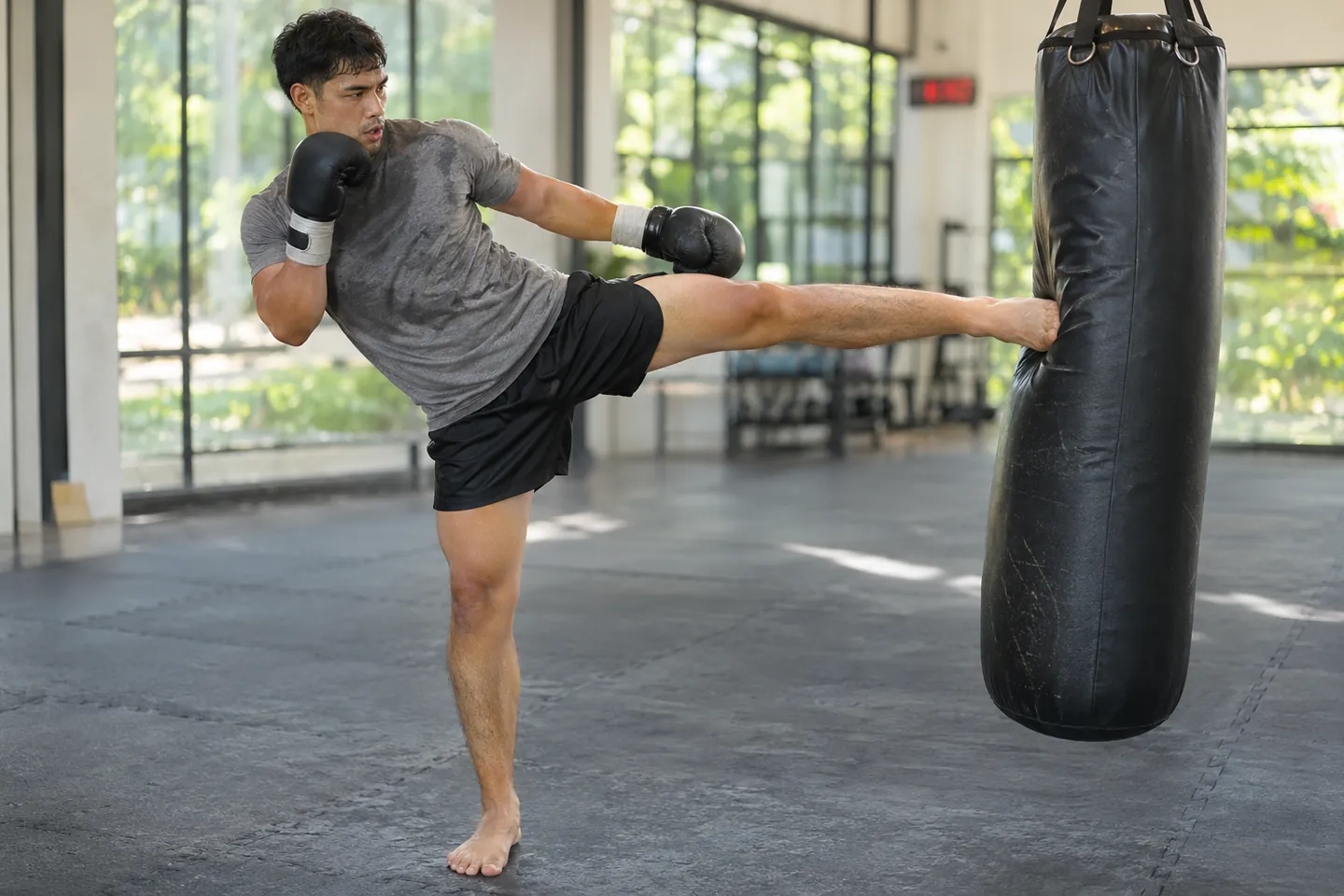
New to Muay Thai in Mississauga? Learn how beginners build conditioning for rounds, kicks and clinch work, with simple drills, sensible pacing and recovery tips.
The first Muay Thai class usually goes something like this. The warm-up feels fine. The technique section is interesting, if a bit confusing. Then the coach says “three rounds on the bag,” and somewhere in the middle of round two your arms feel like they are filled with sand, your kicks start landing with your shin pointing in odd directions, and your breathing sounds like an old furnace. You look around and everyone else seems to be coping. You wonder how they do it.
The answer is that they have built Muay Thai-specific conditioning over time, and so can you. Conditioning for beginners in Mississauga is less about punishing extra workouts and more about learning to breathe, pace yourself and gradually extend how long you can move well. Your classes will do much of the work, especially at first. What you do between them, and how you approach the rounds themselves, makes a real difference.
This post covers what makes Muay Thai tiring, how to manage your energy in class, which supplementary training is worth adding, and how to recover so you can keep showing up. It is written for adults who are new to the sport or returning after a long break.
Why Muay Thai is so tiring at first
Muay Thai uses the whole body. Punches, elbows, knees and kicks all come from the legs and hips, travel through the core, and finish with the arms or legs. Even a single round kick requires you to pivot on one foot, rotate your hips, swing your leg and recover your stance. Repeat that dozens of times and the demand adds up quickly.
Beginners also spend a lot of energy inefficiently. Tension in the shoulders, held breath, overly wide stances and swinging for power on every strike all burn fuel. Experienced students look relaxed because they have learned which muscles to use and which to leave alone.
There is a mental load too. When you are thinking hard about technique, your body tends to tense up. As movements become familiar, that tension fades, and you find you can do more with less effort.
Breathing is the first skill
Many new students hold their breath when they strike. It is a natural reaction, but it quickly leads to exhaustion. Learning to breathe with your techniques is one of the most valuable conditioning skills you can develop.
A common approach is to exhale sharply through the nose or mouth with each strike, often with a short hissing sound. Between combinations, breathe in through your nose if you can. Your coach may have specific cues; follow those. The goal is a rhythm that keeps air moving rather than stopping and starting.
Practise this during shadowboxing, when you are not under pressure. Throw a slow combination, exhale with each strike, then reset and breathe. Over time, it becomes automatic, and you will notice that rounds feel more manageable.
Pacing your rounds
Beginners often start a round at full speed, throwing as many strikes as possible, then fade badly after a minute. A better approach is to pace yourself so you can finish the round with the same quality you started with.
Think of each round as a series of bursts with brief resets. Throw a combination with good technique, step out, reset your guard, breathe, then go again. This mirrors how Muay Thai actually works and allows you to maintain form.
As your conditioning improves, the resets get shorter and your bursts get longer. Do not rush this progression. A round of clean, controlled work is far more valuable than a round of exhausted flailing that teaches your body bad habits.
Relaxation as a conditioning tool
It sounds strange, but learning to relax is one of the best ways to improve your endurance. Tight shoulders, clenched jaws and stiff legs drain energy and slow you down. Between strikes, try to let your shoulders drop slightly and your hands rest in your guard rather than gripping tensely.
Your coach may remind you to “stay loose” or “breathe.” Take those cues seriously. Check in with yourself during rounds: are your shoulders up by your ears? Is your jaw clenched? Small adjustments can make a big difference.
Relaxation does not mean being sloppy. It means using the right muscles at the right time and letting the others rest. That efficiency is what allows experienced fighters to train for many rounds.
Skipping and footwork
Skipping is a staple of Muay Thai training for good reason. It builds rhythm, light footwork and calf endurance, and it is a great warm-up. If you are new to skipping, start with short intervals, such as thirty seconds on and thirty seconds off, and build up gradually.
Do not worry about fancy tricks. A simple two-foot bounce or alternating steps is enough. Focus on staying light on the balls of your feet and keeping the rope turning with your wrists rather than your whole arms.
If skipping bothers your calves, shins or Achilles, reduce the volume and build slowly, or use other footwork drills instead. Persistent pain should be checked by a qualified professional.
Adding easy aerobic work
Classes provide plenty of high-intensity work. What many beginners lack is an aerobic base, which helps you recover between rounds and between sessions. Easy cardio, done at a pace where you can hold a conversation, is a good way to build this.
Options include stationary cycling, brisk walking, light jogging if your joints tolerate it, or easy shadowboxing at a steady pace for twenty to thirty minutes. One or two sessions a week on non-class days is plenty for most beginners.
Keep it genuinely easy. The temptation is to push the pace, but the benefits of this kind of work come from consistency at low intensity, not from making each session hard.
Strength for resilience
Muay Thai involves repeated impacts, rotations and single-leg balance. Building general strength can help your body handle these demands and may make you feel more stable when kicking and checking.
Focus on fundamental movements: squats, lunges, hip hinges, rows, push-ups and carries. Single-leg exercises like split squats and step-ups are particularly helpful for kicking balance. Core work that resists rotation, such as Pallof presses, can also support your strikes.
If you are unsure how to structure this, a strength and conditioning class or a few sessions with a personal trainer can help you build a program that complements your Muay Thai without leaving you too sore to train.
Shin conditioning, sensibly
Beginners often ask about conditioning their shins for kicking and checking. Traditional methods vary, and some online advice is extreme. For recreational students, the most sensible approach is gradual exposure through normal training: kicking pads and bags with good technique over months and years.
Do not try to speed this up with harsh methods. Pain is not progress. Use shin guards for partner drills as your coach directs, and build up kicking volume steadily.
If you develop persistent shin pain, swelling or bruising that does not resolve, stop and consult a qualified professional. Konga Fitness offers physiotherapy for members who need assessment.
Clinch work and its demands
The clinch is a distinctive part of Muay Thai, involving close-range grappling, knees and off-balancing. It is surprisingly tiring because it combines pulling, pushing, posture and constant small adjustments.
For beginners, clinch work is usually introduced slowly with drills rather than live practice. Focus on posture, hand positions and breathing. Strength in the neck, upper back and grip helps, but technique matters most.
Expect clinch drills to leave you winded at first. That is normal. Over time, as you learn to use structure rather than muscle, it becomes more efficient.
Recovery between sessions
Conditioning improves when you recover, not just when you train. Give your body time to adapt by scheduling rest days, especially in your first months. Two or three Muay Thai classes a week is a common starting point.
Sleep is the foundation of recovery. Aim for consistent, sufficient sleep, particularly before training days. Eat regular meals with enough protein and carbohydrates to fuel your sessions, and stay hydrated. For individual nutrition advice, speak with a registered dietitian.
Light movement on rest days, such as walking, stretching or a yoga class, can help you feel less stiff. Massage is another option some students use to help them feel looser between sessions.
Winter, schedules and showing up
For many students in Mississauga, the hardest part of conditioning is not the rounds but getting to class. Dark evenings, slushy parking lots and a slow drive along the 401 can make the couch look very appealing in January. Conditioning is built through accumulated sessions, so the classes you skip matter more than any single drill you do.
A few small habits help. Keep your gym bag packed with wraps, gloves, a water bottle and a dry change of clothes, and leave it by the door or in the car. Pick class times you can reach without rushing, and if a week goes sideways, aim for one session rather than none. Arriving a few minutes early also gives you time to skip rope, loosen up and settle your breathing before the warm-up begins, which makes the first rounds noticeably easier.
Tracking your progress
Conditioning gains can feel invisible from week to week, so tracking helps. Note how many rounds you complete comfortably, how quickly your breathing settles between rounds, and how your technique holds up late in class.
Many beginners notice meaningful improvement within a month or two of regular training. Rounds that felt impossible become manageable, and you start to enjoy the later parts of class rather than just surviving them.
Celebrate those changes. They are the result of consistent effort, and they open the door to more advanced training.
Start training Muay Thai
Muay Thai conditioning for beginners in Mississauga is built one class at a time. Focus on breathing, pacing and relaxation, add some easy aerobic work and basic strength training, and give yourself enough rest to adapt.
Explore our Muay Thai program to learn more about classes, and book a free trial to experience your first rounds with a coach who can guide your pace. Everyone in the room started out gasping in round two; give yourself the same patience they had.
Filed under
Keep exploring
More training insights await.