
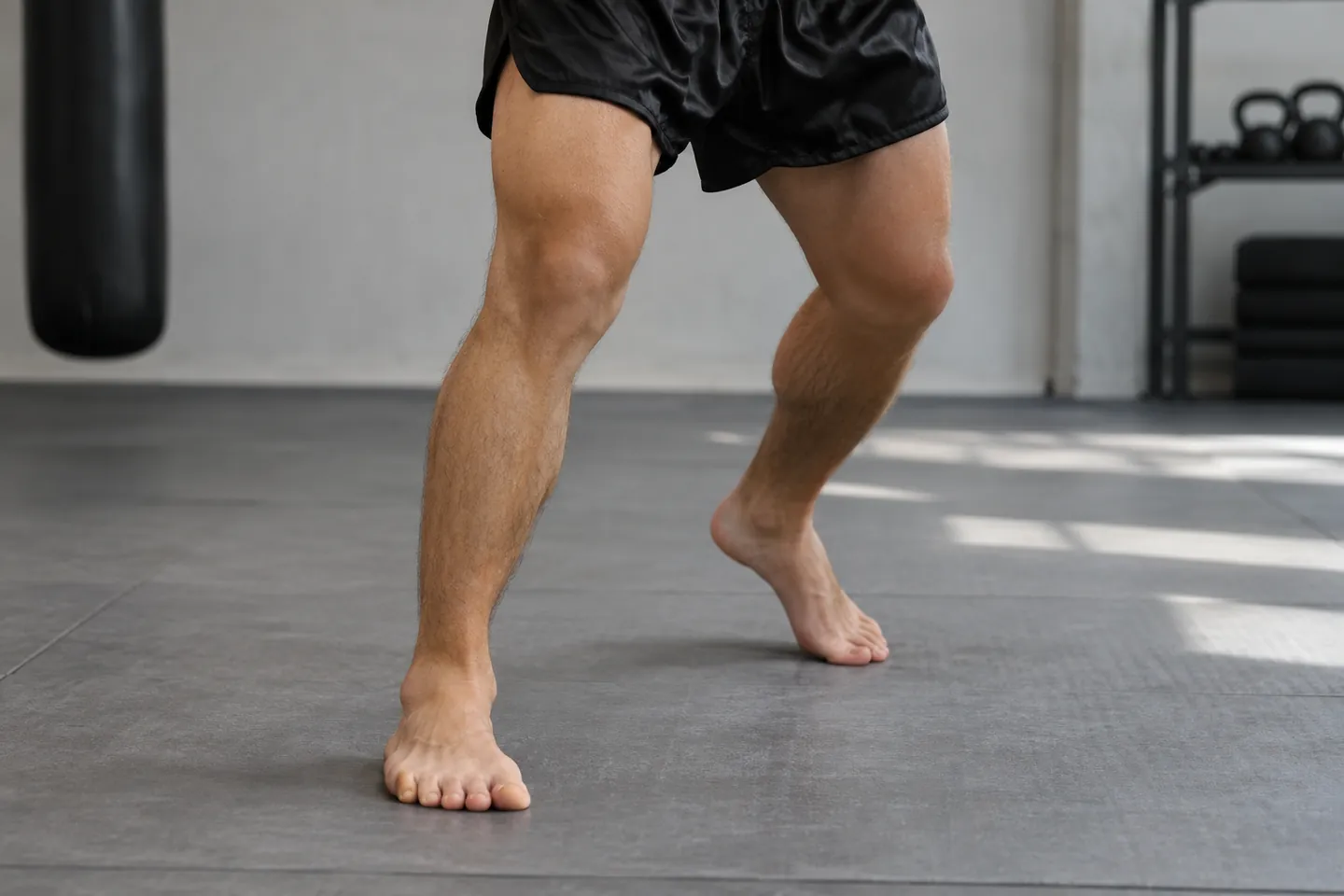
Explore beginner Muay Thai footwork in Mississauga through manageable steps, clear coaching cues, shared-space awareness, and thoughtful practice habits.
Footwork can feel like the quiet part of Muay Thai. There is no satisfying pad sound, and a short step may not look impressive from across the room. Yet beginners often discover that moving their feet changes everything else. A combination that feels manageable while standing still becomes confusing once a step is added. That is a good reason to give movement its own attention.
Learning Muay Thai footwork in Mississauga does not require memorizing a long catalogue of named patterns before joining a class. It starts with understanding the step your coach has assigned, knowing where it finishes, and staying aware of the people around you. A modest movement done with purpose can teach more than a busy sequence copied without context.
Give the step a job
Before practicing, understand why you are moving. The drill might ask you to follow a coach’s direction, maintain an agreed distance from a pad, or return to a starting position after a technique. Each purpose changes what you should notice. If you only think “move faster,” you may complete plenty of motion without learning the intended task.
Ask the coach to demonstrate both the beginning and the finish. Students sometimes watch the first foot carefully and miss what the rest of the body does afterward. Seeing the full action helps you recognize the result you are trying to reproduce. A successful repetition includes arriving somewhere useful, not merely departing from the original spot.
Keep the language practical. “Where should I be able to stop?” or “Do I reset before the next step?” can clarify a drill quickly. You do not need technical vocabulary to ask a good question. In fact, plain descriptions often make it easier for a coach to understand exactly where you became uncertain.
Let the size of the movement stay manageable
New students may take a large step because they want the movement to look decisive. A coach may instead ask for a smaller action that lets the student remain organized. Follow that guidance even if the result feels less dramatic. The aim is to complete the assigned movement with control, not to cover the greatest possible distance.
If you repeatedly need an extra shuffle to regain your position, mention it. That observation gives the coach something concrete to watch. The answer may involve changing the step, slowing the exercise, or returning to the starting stance. Avoid trying to solve the problem by making the following movement larger and hoping everything catches up.
Movement size also needs to fit the space. A class is shared, and another student may be working just outside your immediate focus. Look at the training area before the drill begins. Know which direction your group will travel and where the boundaries are. Staying within those boundaries is part of the exercise.
Learn one direction before combining several
Moving forward, backward, and sideways can become a jumble when introduced too quickly. If the coach gives you a sequence, ask to review the part you keep losing. Practicing a smaller section is not a retreat from learning. It is a way to identify which transition needs attention before the entire sequence is repeated again.
During a demonstration, notice whether the coach wants a pause between directions. Some exercises deliberately separate movements so students can check their positions. Others connect them. Do not erase a requested pause because continuous motion looks more advanced. The structure of the drill often exists to make a particular detail visible.
Once a direction feels more familiar, resist turning the exercise into your own choreography. Additions can distract you from the lesson and surprise a partner. The coach can introduce variations when appropriate. Staying with the assigned task gives you a fair chance to understand it and gives the coach a clear basis for feedback.
Keep attention available for the room
Staring at your feet is understandable when you are learning where they belong. It also makes it harder to follow demonstrations and notice nearby people. Ask the coach how to check your position without remaining bent over or looking down continuously. A short visual check may be useful, followed by a return to the attention pattern requested in class.
Be especially deliberate when students change stations or partners. Stop the drill before moving through someone else’s training area. Carry equipment in a way that does not obstruct your view, and wait when another pair is completing an exercise. These transitions may seem separate from footwork, but they require the same awareness of space and direction.
If the room arrangement is unclear, ask where your pair should stand. Do not assume that an empty-looking strip of mat is available for travel. It may be an access route or part of another drill. Clear positioning helps everyone practice without spending the round worrying about collisions.
Add hands only when the task is understood
A beginner may move comfortably until a punch is added, then forget the step entirely. This is a normal challenge of combining tasks. Tell the coach which part disappears when the movements are connected. That information is more useful than repeating the whole combination at increasing speed while hoping it eventually resolves itself.
The coach may separate the components temporarily: establish the position, perform the step, then add a controlled action. Follow the order provided. Avoid guessing that a different sequence from a video is interchangeable. Even when two drills look similar, the timing and learning purpose may differ.
Pay attention to the finish. After the assigned strike, are you able to hear the next instruction and reset without stumbling into another movement? If not, reduce the pace with the coach’s guidance. The end of one action is often where the next action becomes either manageable or unnecessarily complicated.
Use partner drills as conversations
When footwork involves a partner, confirm who initiates movement and what the other person should do. A simple exercise can become confusing if both people believe they are leading. Ask the coach to clarify the roles before starting. Good partner work begins with a shared understanding, not with guessing who will move first.
Keep the pace appropriate for both people and for the instruction. If your partner needs to stop, stop. If you lose the pattern, say so and reset. Trying to hide confusion by moving faster makes it harder for the partner to respond and harder for the coach to see the original issue.
Avoid introducing contact or surprise attacks into a movement drill. A task focused on following, spacing, or positioning should remain that task unless the coach changes it. Consent to one exercise is not permission for a different one. Predictability lets beginners practice the intended skill without unnecessary uncertainty.
Distinguish repetition from rushing
Repeating a movement gives you opportunities to notice details, but only if enough attention remains to notice them. If each repetition becomes a race to begin the next, you may stop checking the finish. A brief reset can make the practice more informative. Use the rhythm the coach sets rather than counting success only by quantity.
One useful question after a short practice block is, “Which step felt hardest to repeat?” The answer may identify a particular direction or transition. Bring that observation to the coach. It gives the next demonstration a focus and helps you remember the correction when the class moves on.
Do not treat an occasional smooth repetition as proof that every detail is settled. Equally, do not treat one awkward attempt as proof that nothing is improving. Look for a pattern over several sessions. Familiarity often develops unevenly, with one movement becoming easier before another catches up.
Make home practice modest and specific
If you want to practice between classes, ask for a short noncontact footwork task suitable for your available space. Explain whether you have a clear room, a shared living area, or very little room at all. The coach can help you decide whether a standing reset is more appropriate than traveling steps.
Check the floor, surrounding furniture, pets, and other people before beginning. Do not practice energetic movement on a surface that feels slippery or unstable. Avoid adding strikes toward household objects. The purpose of a home rehearsal is to revisit a familiar instruction, not to recreate a busy training floor without supervision.
Stop if you cannot remember the movement clearly. Write down the question and ask at the next class. Practicing an uncertain pattern for a long time may simply make the uncertainty more familiar. Sometimes the most useful between-class action is preparing one focused question for the person who can watch you move.
Fit the learning into an ordinary week
A Mississauga training routine has to coexist with work, school runs, errands, and travel. Footwork does not require a separate daily project to deserve attention. Arriving consistently and choosing one movement focus during class can be a realistic approach. Avoid setting an elaborate practice schedule that makes returning to the gym feel like falling behind.
Keep a short record if it helps. Note the direction practiced, one cue, and any question still unresolved. Read the note before the next session, then let the coach’s current instruction guide you. A training journal should support attention rather than become a competing syllabus.
As your familiarity grows, progress may look like needing fewer extra steps, finding your position sooner, or communicating more clearly during a partner drill. Those changes matter because they make further learning easier. They do not need to produce an impressive video to count.
You can learn more about Muay Thai at Konga or arrange a starting conversation through the free trial page. Bring a willingness to slow down, look at the whole movement, and ask where the step should finish. Reliable footwork begins with that level of attention and develops through coached practice over time.
Filed under
Keep exploring
More training insights await.