
Feel more comfortable with Muay Thai gym etiquette in Mississauga, from arriving and listening to sharing equipment, respecting partners, and asking questions.
New students often worry about an invisible rulebook. They may know that a martial arts class involves respect but remain unsure what that means in everyday terms. Should you enter the training area immediately? Can you ask a question during a demonstration? Is it rude to request a different pace from a partner? These concerns can make an otherwise welcoming visit feel complicated.
Muay Thai gym etiquette in Mississauga is easiest to understand as a set of habits that help people share a learning space. The exact customs vary by gym, so ask about local expectations. Beyond those customs, the practical principles are straightforward: arrive prepared, listen when someone is teaching, communicate clearly, and treat other people’s time and boundaries with care.
Learn the room’s actual routines
When you first arrive, ask where to check in, where belongings belong, and when to enter the training area. Do not assume the arrangement matches a previous gym or a video. A short introduction lets staff direct you and prevents you from standing uncertainly in a place that others need to use.
Follow the gym’s footwear, mat, and equipment rules. If you do not understand the reason for a rule, you can ask respectfully at an appropriate moment. You do not need to pretend familiarity. Most practical confusion is easier to resolve before class than halfway through an exercise.
Watch for any opening or closing customs explained by the coach. Participate as instructed, and ask if the wording or action is unfamiliar. Learning the routine is part of becoming comfortable in the group. There is no need to invent a formal ritual based on something you saw in another martial art.
Arrive with enough time to prepare
Being on time means being ready for the start, not necessarily entering the building at the exact moment instruction begins. Allow time to put belongings away, prepare approved equipment, and orient yourself. Mississauga travel can be unpredictable, so use what you learn from the first journey to adjust your departure next time.
If you are late, follow the gym’s process for joining. Do not walk through an active drill or begin training without checking with the coach. A brief acknowledgement and a clear instruction about where to join are more useful than a lengthy explanation that interrupts everyone. Discuss any recurring scheduling issue outside the main teaching time.
Sometimes work or family responsibilities will interfere despite your planning. That does not require shame, but it does call for communication. Ask whether a different class time is more realistic. A routine that repeatedly depends on rushing may need a practical adjustment rather than another promise to hurry faster.
Make listening visible through your actions
When the coach addresses the group, stop side conversations and pause equipment adjustments when possible. Face the demonstration so you can see the complete instruction. If you miss a detail because you were occupied, ask for clarification without expecting a partner to reconstruct the whole explanation from memory.
Questions are part of learning, but timing helps. Let the demonstration finish unless there is an immediate concern that needs attention. Then ask the specific question that remains. A concise question about the current task helps the group move forward; a long story about an unrelated video can wait until a more suitable moment.
Avoid performing the movement at full speed while the coach is explaining it. You may miss the next detail and distract someone nearby. If the instructor asks the group to copy along, follow that direction. Otherwise, watch first and practice when invited. Attention is a practical form of respect.
Be clear with a new partner
Introduce yourself and share relevant experience briefly. If you are new to the drill or the equipment, say so. That information helps the pair start at an appropriate level and tells the coach where additional instruction may be useful. Quietly hoping the partner will notice can leave both people guessing.
Confirm the assigned sequence and pace before starting. Do not add surprise actions, extra contact, or a harder level of effort because you think the partner can handle it. The exercise has agreed boundaries. Respecting them allows both people to concentrate on the skill the coach intended to teach.
If a partner requests a stop or adjustment, respond immediately. They do not owe you a debate about whether the request is justified. Pause, clarify what is needed, and involve the coach if appropriate. Being easy to communicate with is one of the most valuable qualities a training partner can bring.
Share knowledge without taking over
An experienced student may know a helpful detail, but partner practice is not an invitation to deliver a separate lesson. Follow the coach’s instructions about peer feedback. If you notice a practical problem, describe it briefly or ask the instructor to watch. Avoid giving a beginner several competing corrections at once.
A new student should also feel free to ask the coach directly rather than accepting every confident statement from a partner. Different people may use different shorthand, and a well-meant explanation can still be confusing. The instructor can keep the lesson consistent and decide which detail deserves attention first.
Encouragement works best when it does not create pressure. “Take your time; we can reset” gives a partner room to learn. Insisting that someone continue because you believe they can do more may ignore information they have not shared. Support the task while leaving the person able to speak honestly.
Treat equipment as part of the shared space
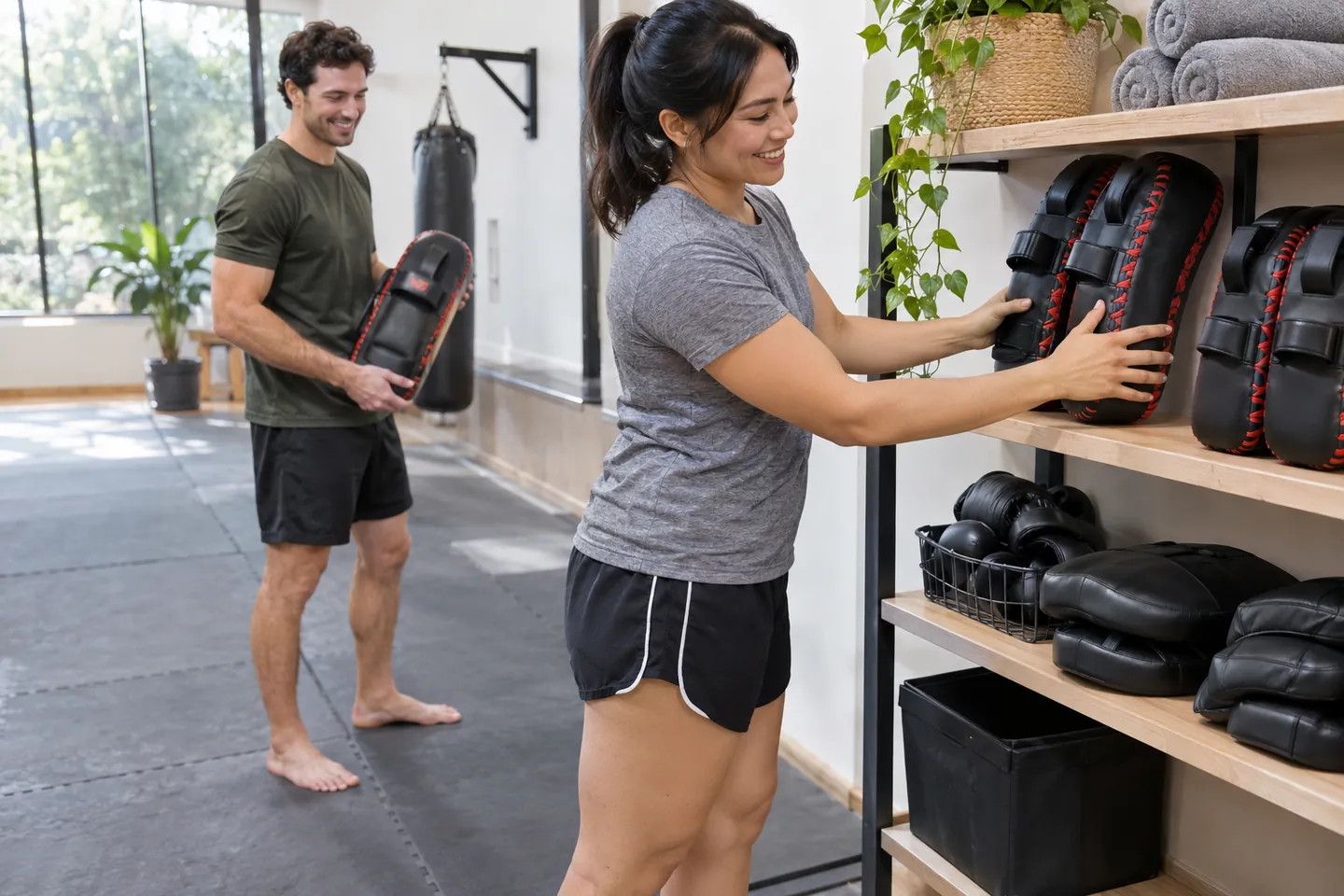
Use only the equipment assigned or permitted for the exercise. Ask before taking an item from another pair’s area, even if it appears unused. They may be about to switch roles or begin a different drill. A brief question prevents confusion and keeps the class organized.
Follow the gym’s instructions for cleaning and returning shared items. Put equipment where it belongs rather than leaving it near the storage area for someone else to finish. If something appears damaged or does not work as expected, tell staff. Passing the problem silently to the next student is not a useful solution.
Keep personal items out of movement paths. A water bottle, loose wrap, or bag can become an obstacle when people change stations. Use the designated storage areas and check your space when the class ends. The final tidy-up is part of participating in a shared environment, not an optional favour.
Respect privacy around cameras and conversation
Ask about the gym’s recording policy before filming. Even if you want a clip of your own movement, other students may appear in the background. Their participation in a class does not automatically mean they agree to be recorded or posted online. Seek the required permission and choose a setup that respects everyone involved.
Do not interrupt the lesson repeatedly to stage content. If filming is permitted, arrange it at an appropriate time and keep the purpose clear. A short learning clip can be useful; a prolonged production can interfere with other people’s training. The room belongs to the class, not to one person’s feed.
Apply the same care to conversation. A partner may share a personal limitation to explain an adjustment. That information does not become a story for the changing area or a group chat. Keep the discussion relevant to the drill and let the person decide what else they want to disclose.
Handle mistakes without creating a scene
Everyone can misunderstand a sequence, bump equipment, or miss a cue. Stop when needed, acknowledge what happened, and follow the coach’s guidance. A concise apology may be appropriate, but repeated self-criticism can shift the partner’s attention from practice to reassuring you. Focus on the adjustment that helps the next attempt.
If you are frustrated, avoid blaming the holder, the instructions, or the room before asking for help. Describe the problem calmly. “We keep starting at different moments” is a shared issue the coach can observe. “My partner cannot hold pads” is a judgement that may make cooperation harder.
When a genuine concern about another person’s behaviour persists, bring it to the coach or staff privately. You do not need to settle it through an argument during the round. Clear reporting gives the team an opportunity to address the situation and explain the relevant expectations.
Finish with the same attention you started with
At the end of class, listen for closing instructions, return equipment, and thank the people who worked with you. Check that you have collected your belongings without leaving the area disorganized. These habits make it easier for the next group to begin and show appreciation in a concrete way.
If you need a longer conversation with the coach, ask when there is time. They may be preparing another session or helping a new arrival. A brief request to arrange a discussion respects both your question and the rest of the schedule. You are more likely to receive a thoughtful answer when there is room for it.
For newcomers to Muay Thai at Konga, the free trial page is a useful place to begin asking about the first visit. You do not need to memorize a secret code before joining. Learn the gym’s routines, communicate honestly, and make your partner’s experience part of your attention. Everyday respect is usually visible in those ordinary choices.
Filed under
Keep exploring
More training insights await.