
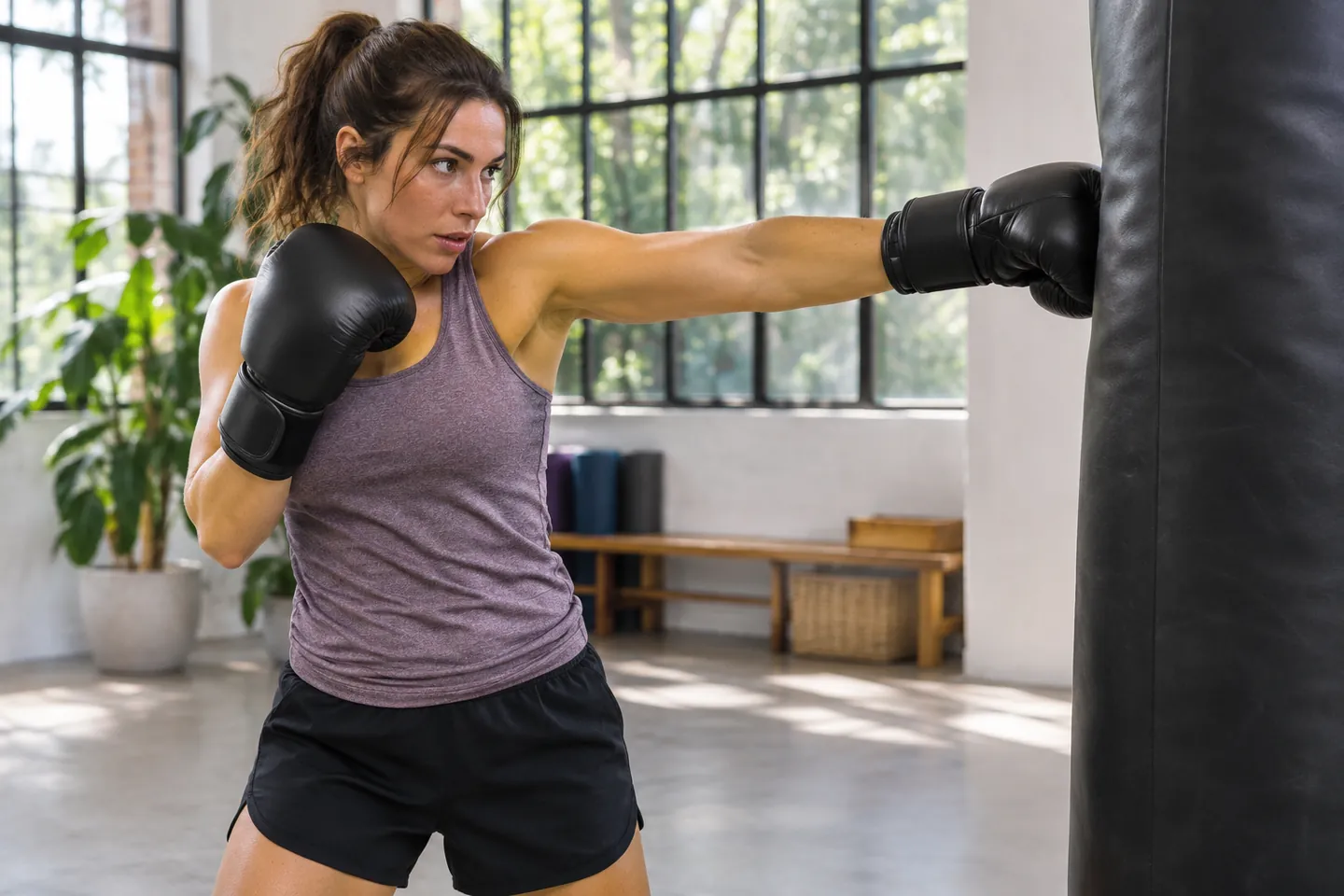
Explore noncompetitive boxing in Mississauga with clear goals, questions about contact, meaningful skill practice, and practical ways to choose a suitable class.
You can be interested in boxing without wanting a bout on the calendar. Perhaps the appeal is learning a skill, practising a short combination, or attending a class with a clear structure. A competitive goal is one possible reason to train, but it is not the only reason an adult might find the activity worthwhile.
Noncompetitive boxing in Mississauga begins with explaining what you do want and asking how a particular class serves that goal. It is also important to separate noncompetitive from noncontact. A person can train without entering competitions while still participating in contact drills. If you want to avoid contact, say that explicitly rather than expecting one word to communicate both preferences.
Define the experience you are seeking
Start with a concrete description. You might want to learn basic technique on bags and pads, attend a boxing-themed fitness class, or practise movement without sparring. Each description gives the gym something useful to answer.
Avoid treating the absence of competition as an incomplete goal. “I want to understand the basics and enjoy a regular class” is a valid starting point for a coaching conversation. The instructor can help you identify appropriate tasks and ways to review progress within that scope.
Your preference does not need to be permanent. You can remain noncompetitive indefinitely or revisit your goals later. What matters now is that the class and coach understand the experience you are choosing today.
Clarify contact separately
Ask what each type of drill involves. Solo movement, bag work, pad holding, rehearsed partner exercises, and sparring are different activities. A session may include several of them, so a general description may not answer your participation questions.
If you want no strikes directed at you, state that in plain language. Ask whether the class can accommodate that boundary throughout the session and what alternatives are available. Do not assume that a beginner or fitness label automatically resolves the issue.
When a new drill is introduced, listen for changes in the task. Your agreement to one activity is not an automatic agreement to every later variation. Clear information allows you to decide knowingly and helps the coach choose a suitable option.
Choose a class by its teaching content
Look for an explanation of how the session is organised and what beginners learn. Does the coach introduce stance and movement? Is there time for feedback? How are new participants helped when a sequence is unfamiliar? These questions reveal whether the format matches your interest in learning.
A class can be demanding without providing much technical instruction, and a technical lesson can include slower periods. Neither format is automatically wrong. The important question is whether it offers the experience you are seeking.
Ask to understand the current session rather than relying only on a promotional photograph or a broad program name. Schedules and formats can change. A short conversation before attending can prevent a mismatch between what you imagine and what the class actually does.
Give skill practice a meaningful direction
Without a competition date, you may wonder what you are working toward. Choose small, observable learning goals with the coach. You might aim to find your stance more readily, connect two familiar punches, or return to position after a short step.
Those goals can be reviewed without inventing a competitive test. The coach can observe the same task over time and explain what has become clearer. Progress can mean fewer reminders, a more consistent reset, or a better understanding of target distance.
Do not assume that meaningful practice requires constant novelty. Repeating a simple movement with a clearer cue can be useful. The purpose is to deepen your understanding of the activity you chose, not to accumulate techniques as proof that the class is sufficiently serious.
Understand the role of equipment work
Bags and pads can give noncompetitive participants concrete tasks, but they still require instruction. Ask where to stand, which movement to use, how much contact is appropriate, and how to reset when the target moves.
The sound of impact is not the only measure of a useful repetition. You also need to understand the sequence and its ending. A controlled round focused on one cue can provide more relevant learning than a hurried round in which you lose the movement entirely.
If partner padwork is included, learn both roles. Holding equipment is part of the drill, not an automatic skill. Confirm the sequence and contact level before beginning, and stop when either participant needs clarification. The coach should guide the shared task.
Keep fitness goals and skill goals clear
You may enjoy both the physical effort and the technical learning. Ask how the class balances them. A session might include a slower instruction period followed by more familiar conditioning work, or it may emphasise one aspect more strongly.
During a technical drill, choose a pace that lets you follow corrections. During a fitness segment, use the version and pacing the coach considers appropriate for you. The distinction helps you understand why different parts of the class may feel different.
Avoid judging the whole session only by exhaustion. If you learned a movement or clarified a recurring question, that is relevant to your goal. A noncompetitive routine can have several useful outcomes without turning any one sensation into the only measure of success.
Ask for equipment that fits the activity
Before buying gloves, explain exactly which activities you plan to do and ask what the gym requires. Equipment choices should follow intended use, gym rules, manufacturer guidance, and individual fit. You do not need gear for a hypothetical competition simply to feel legitimate.
Try gloves with the wraps required for class and ask for help with the setup. If something feels uncomfortable or shifts, address it before continuing. A product label or a friend’s recommendation does not replace checking how the equipment works for you.
Keep care routines straightforward. Follow the manufacturer’s instructions, unpack damp items after class, and check equipment before the next visit. These habits support regular participation regardless of whether your goals are competitive or recreational.
Build a routine around ordinary life
A noncompetitive goal can still deserve a protected place in your calendar. Choose a session you can reach reliably and include travel, changing, equipment preparation, and the return journey in the plan. The full appointment matters more than the class duration alone.
For a Mississauga schedule, consider the route at the time you intend to attend. A convenient location on a map may not be equally convenient after work. Give yourself enough margin to arrive ready rather than making every class begin with a rush.
Start with a manageable frequency and review it with the coach after several visits. You do not need to match someone preparing for a bout or someone with a different work schedule. Your routine should serve your goals and remain practical enough to continue.
Avoid borrowing claims from other settings
Learning boxing movements in a recreational class does not automatically establish competitive readiness or self-defence ability. Keep your description of progress close to what you have actually practised. You can say that a sequence is becoming clearer without making a broader claim about fighting performance.
If self-defence is a separate goal, discuss it explicitly with an appropriate provider and ask what their instruction includes. Do not assume every boxing-themed class covers the same situations or decisions. Different goals may require different teaching content.
This realistic framing does not reduce the value of recreational learning. An activity can be engaging and worth practising without promising an outcome outside its scope. Clear expectations make it easier to appreciate the class for what it actually offers.
Notice the culture around different goals
Pay attention to how the gym responds when you say you do not want to compete. A useful response should explain suitable options and expectations. You should not need to invent competitive ambitions to receive careful instruction.
Observe whether classmates respect participation boundaries too. Encouragement should support the agreed task, not pressure someone into contact or a different intensity. If a drill becomes unclear, involve the coach rather than negotiating a significant change alone.
Your own attitude contributes to the environment. Respect participants who have different goals, including those who do compete. Shared space works best when each person follows the session’s instructions and recognises that not everyone is pursuing the same next step.
Review the routine on its own terms
After several classes, ask whether you are learning what you hoped to learn and whether the schedule works. Identify one skill that became more familiar and one question that remains. Those observations can guide the next phase of training.
You can review the boxing information and make a trial enquiry with your goals stated plainly. Ask about current noncompetitive and noncontact options as separate questions. The resulting conversation should make the choice clearer.
A recreational boxing routine does not need a future fight to justify today’s practice. It needs suitable instruction, clear participation choices, and goals you can understand and review. When those pieces fit, learning the basics can remain a worthwhile activity in its own right.
Keep one current question in your training notes, such as how to maintain distance during bag work or how to finish a combination clearly. Bringing that question back to class gives the routine continuity. You are not waiting for a competition to create purpose; you are choosing a specific piece of learning that makes the next visit useful.
Filed under
Keep exploring
More training insights await.