
Support kids martial arts in Mississauga with simple noncontact home activities that emphasize listening, space awareness, equipment routines, and family fun.
Children sometimes come home from martial arts eager to show what they learned. That enthusiasm is worth welcoming, but it does not mean the living room should become a sparring area. A parent may not know the technical instruction, a sibling has not agreed to be a training partner, and household furniture is not class equipment. Home participation needs a different purpose and clear boundaries.
Simple noncontact martial arts play at home in Mississauga can support the routines around learning without recreating impact drills. Think about listening, remembering a sequence of ordinary actions, respecting space, and caring for equipment. If you want a child to rehearse a specific martial arts movement, ask the coach for an appropriate task first. The activities below are family play ideas, not a replacement lesson or technical training plan.
Agree that people are never practice targets
Set one clear rule before any activity: nobody practices strikes on family members, friends, pets, or household objects. Say it in ordinary language and apply it consistently. Konga’s kids martial arts information explicitly emphasizes not practicing martial arts on family members. Bringing that same boundary home helps the child understand that class skills come with context.
Do not create exceptions because a sibling says they do not mind or a parent offers to hold a cushion. Willingness does not establish the equipment knowledge or coaching needed for a striking drill. Keep home play noncontact and leave impact activities within the instructed setting.
If a child wants to demonstrate, invite them to explain the lesson verbally or describe the equipment the coach used. They can share their interest without making another person part of the demonstration. When a technical question appears, write it down for the instructor rather than improvising an answer and practicing it repeatedly.
Choose a space before choosing a game
Look at the actual room available. Move ordinary obstacles where practical and keep the activity away from stairs, sharp edges, fragile items, and busy passageways. If there is not enough clear space for movement, choose a seated or standing listening game instead. The activity should fit the room rather than forcing the room to fit an ambitious idea.
Check whether the floor and footwear are suitable for the gentle movement you have planned. Avoid running, jumping, or turning quickly on a surface that feels slippery or unstable. Keep pets and younger siblings out of the immediate play area unless the activity is designed for everyone present.
Establish a simple stop word that ends the game immediately. Practice responding to it before starting. The adult should remain attentive, and the child should know that they can also ask to stop. Clear boundaries make a short game easier to enjoy because nobody has to guess when the rules apply.
Try a calm stop-and-start game
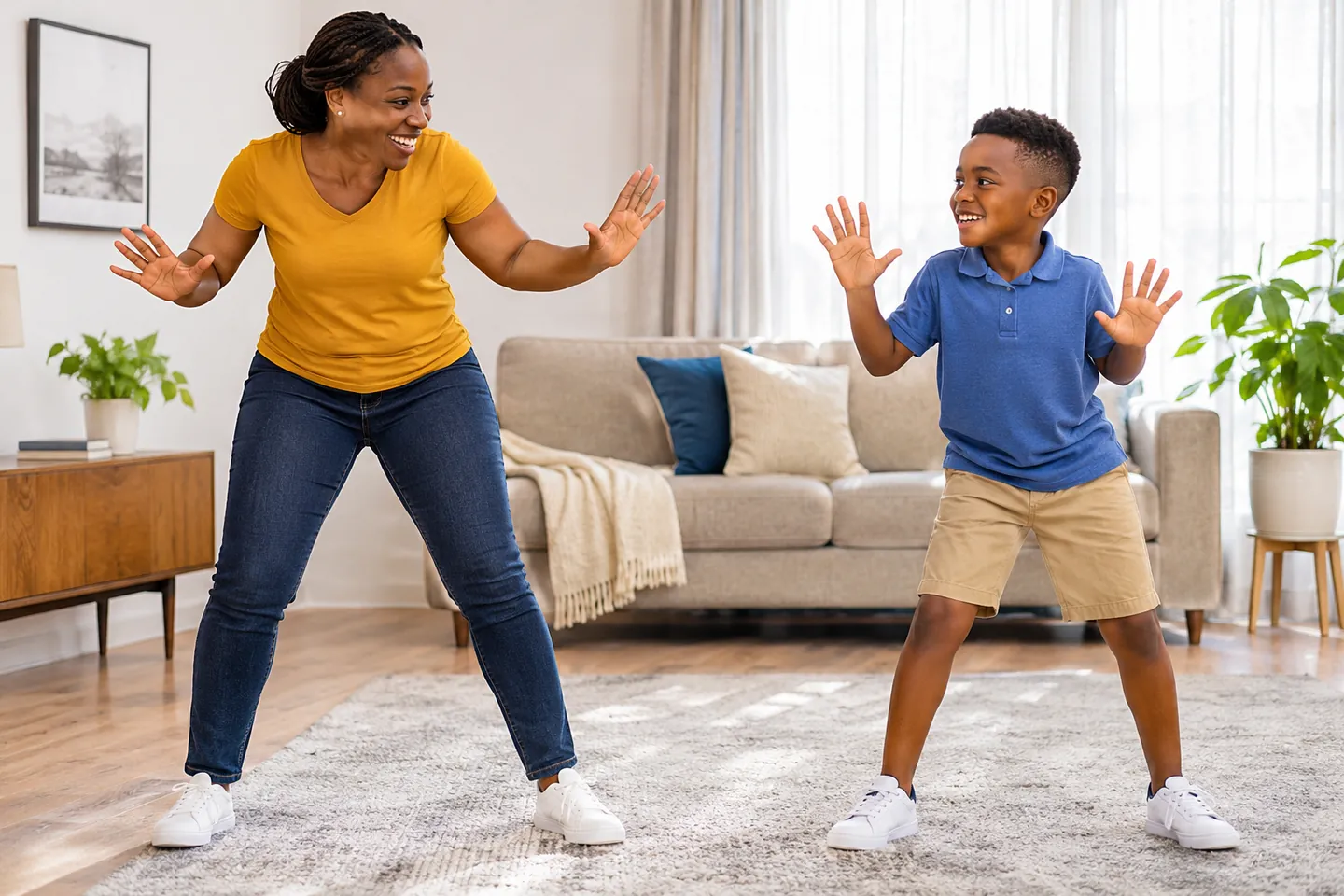
For a basic listening activity, invite the child to walk slowly within the clear area and pause when you give the agreed signal. Keep the pace gentle and the directions simple. This is ordinary movement play, not a martial arts footwork lesson. Do not add punches, kicks, or contact with another person.
After a few turns, let the child give the signal while you participate. Changing roles makes the game cooperative and gives them a chance to communicate clearly. Follow their signal as carefully as you expect them to follow yours. The point is shared attention, not catching someone making a mistake.
End while the activity remains enjoyable. There is no required duration or score. If the child becomes frustrated, simplify the rule or choose a different activity. A family game should not become a test of whether the child deserves to attend class. Keep the connection light: listening for a clear cue is a useful habit in many settings.
Build a short sequence from everyday actions
Choose two or three ordinary actions, such as standing still, raising an open hand, and sitting on a stable chair. Demonstrate the sequence and let the child try it. Use only actions suitable for the child’s abilities and surroundings. This explores remembering instructions without teaching a martial arts combination.
If the sequence is confusing, reduce it. Ask the child which part they remember and build from there. Avoid turning the game into a rapid-fire memory contest. The useful experience is noticing that an unclear sequence can be broken into smaller pieces and explained again.
Let the child create a simple sequence for you as well. They may discover that instructions need to be clear and complete before another person can follow them. Keep the actions gentle and noncontact. If they propose a strike or an unsafe movement, redirect the idea to an ordinary action within the established rules.
Use observation instead of correction
A child may enjoy describing something they noticed in class: where the equipment goes, how the group knows instruction is starting, or how partners take turns. Ask them to tell you about the routine. This gives them a way to share learning without a physical demonstration or a parent judging technique.
You can turn the conversation into a small drawing activity if that interests the child. They might draw a bag checklist or a simple picture of the training room’s different areas. The drawing does not need to be accurate or polished. Its purpose is helping them explain what is familiar and what remains confusing.
If the explanation reveals a misunderstanding, avoid immediately presenting yourself as the technical authority. Ask the coach at the next appropriate opportunity. A parent can support curiosity while keeping the instructor responsible for the class content. That separation prevents home enthusiasm from creating competing versions of the lesson.
Make equipment routines a cooperative activity
Invite the child to help prepare the approved items for class. Depending on age and ability, they might locate the bottle, choose suitable clothing, or check that a required item is in the bag. Give them a manageable responsibility and provide help where needed. The task should be clear enough to complete without repeated guessing.
After class, follow the manufacturer’s and gym’s care instructions together. Separate used clothing, place items where they can be cared for appropriately, and return small accessories to their usual spot. Do not introduce cleaning products or methods that are unsuitable for the material. An adult should manage any task beyond the child’s ability.
This routine can support independence without becoming a reward system for performance. Packing the bag is part of participating in the activity, regardless of whether the child remembered every class instruction. Recognize the practical contribution: they helped make the next visit easier for the family.
Ask for one coach-approved rehearsal if needed
If the child specifically wants to practice a movement at home, speak with the coach. Explain the space available and ask whether there is a simple noncontact task appropriate for the child. The answer may be a position review, a limited movement, or a recommendation to wait until the next class.
Follow the instruction as given. Do not add speed, obstacles, weights, or partner challenges to make it more exciting. Those changes can turn a suitable task into a different activity. If you or the child cannot remember the details, stop and ask again rather than filling the gaps from a video.
Keep the child free to say that they do not want extra practice. Attending a class does not mean every evening must contain martial arts work. Home rehearsal should have a clear purpose and fit the child’s interest. Ordinary play, rest, and other activities remain part of family life.
Leave competition out when it stops being fun
Siblings may quickly turn a gentle game into a contest about who is faster, stronger, or more skilled. Watch for that shift and return to a shared task when needed. You can have everyone follow the same calm signal or take turns inventing a simple sequence without keeping a score.
Avoid using one child’s performance to correct another. Different ages and experiences make direct comparison unhelpful, and the family setting can intensify the feeling. Give each child a role they can understand. A younger sibling might simply choose the next ordinary action while an older child explains it clearly.
If the activity becomes rough, stop it. Do not negotiate exceptions to the noncontact rule in the middle of excitement. Reset the expectation and choose a quieter option if appropriate. The boundary should remain stable even when the children are enthusiastic about their class skills.
Let home support stay small
The best family activity may last only a short while and end with everyone still interested. There is no need to create a daily training requirement. Ask whether the play helped the child share an interest, follow a clear instruction, or prepare for the next visit. Those are enough reasons for it to exist.
For guidance connected to your child’s actual lessons, explore kids martial arts at Konga and discuss questions through the free trial page or the team’s normal communication process. Keep technical instruction with the coach and home activities noncontact. That approach lets enthusiasm travel beyond the gym while preserving clear limits about where and how martial arts techniques are practiced.
Filed under
Keep exploring
More training insights await.