
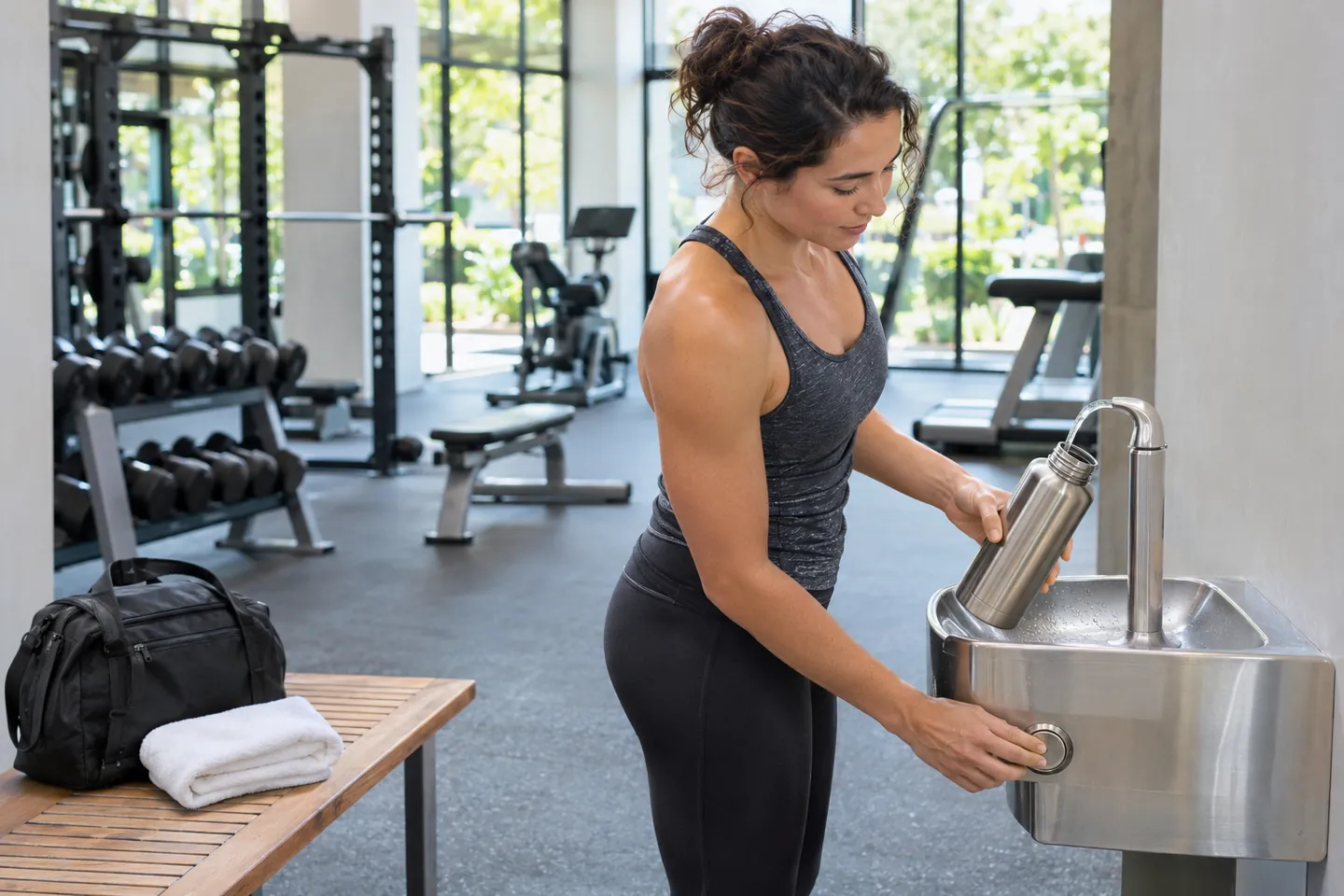
Simple, realistic hydration habits for people who train in Mississauga, covering water through the workday, gym bag routines, and when to ask a professional.
Hydration advice has a way of becoming either too vague or too complicated. On one end, you hear “drink more water” with no indication of what that means for someone who works a desk job and trains three evenings a week. On the other, you find detailed formulas, specialised powders, and urine colour charts that make a basic habit sound like a science project.
Most people who train regularly in Mississauga need something in between: a few simple routines that make it easy to drink enough through the day, show up to class reasonably well prepared, and recover sensibly afterwards. That is what this article focuses on. It is not medical or dietary advice, and anyone with a health condition or specific needs should talk to a doctor or registered dietitian. But for ordinary active adults, a handful of habits can make training feel noticeably better.
The idea is to make hydration boring in the best possible way, something that happens in the background without much thought.
Start with the workday, not the workout
Many people only think about water when they are packing their gym bag. By then, the day is mostly over. If you have spent eight hours in an office, a warehouse, a classroom, or a car, how much you drank during those hours matters more than a few gulps before class.
One practical approach is to tie drinking to things you already do. Fill a glass when you make your morning coffee. Keep a bottle on your desk or in your vehicle’s cup holder. Take a few sips each time you finish a meeting, a delivery, or a task. These anchors turn hydration into a series of small moments instead of a single decision you might forget.
If your job makes this difficult, for example because you cannot easily leave a line, a counter, or a hospital floor, plan around your breaks. Drinking something at each break, plus with meals, is a reasonable baseline for many people. Your own needs depend on your body, your activity, and the environment, so pay attention to how you feel rather than chasing a precise number.
Use a bottle you actually like
It sounds trivial, but the container matters. People are more likely to drink from a bottle that is easy to carry, easy to clean, and pleasant to use. If your current bottle leaks in your bag, is awkward to drink from while driving, or always tastes slightly odd, you will reach for it less often.
Choose something that fits your life. A larger bottle might suit someone who sits at a desk. A smaller, lighter one might work better for someone who moves around all day. Some people prefer a straw lid; others want a wide mouth for adding ice. There is no right answer, only the one that you will reach for without thinking.
Wash it regularly. A bottle that has been sitting in a hot car with old water in it is not inviting. Rinsing it out at the end of the day and letting it dry overnight keeps it ready for the morning.
Notice your own signals
Thirst is one obvious cue, but it is not the only one. Some people notice that they feel sluggish, irritable, or headachy on days when they have not drunk much. Others notice changes in how training feels, such as tiring earlier than usual or finding it harder to concentrate during technique work.
Those signals can have many causes, including poor sleep, stress, or not eating enough, so do not assume every tired evening is about water. Still, keeping a loose eye on patterns can be useful. If you consistently feel better on days when you drink regularly, that is helpful information for building a routine.
If you experience persistent headaches, dizziness, unusual fatigue, or other symptoms that worry you, speak with a doctor. Hydration habits are part of general wellbeing, but they are not a substitute for proper medical assessment.
Before class: steady, not sudden
A common mistake is to realise in the parking lot that you have barely had anything to drink all day and then gulp down a full bottle right before a conditioning class. That often leads to a sloshing stomach during burpees or skipping, and it does not undo a day of very little fluid anyway.
A steadier approach is to drink reasonably through the afternoon and have a moderate amount in the hour or so before training. The exact timing depends on what feels comfortable for you. Some people can drink right before class without issue; others prefer a gap. Experiment a little on lighter training days so you know what works before a harder session.
Food plays a role too. Many foods contain water, and regular meals contribute to your overall fluid intake. If you tend to skip lunch on busy days and then train in the evening, consider whether a small snack and a drink in the afternoon would make your session feel better.
During class: use the natural breaks
Most martial arts and fitness classes have built-in pauses. There is a break between rounds of pad work, a moment while the coach demonstrates a new technique, a transition from warm-up to drilling. Those are good times for a few sips.
Keep your bottle somewhere easy to reach, such as along the wall or near the mat edge, following the gym’s guidance. If you have to dig through a bag in the change room every time you want water, you will drink less. Some people find it helpful to set a simple rule, such as taking a sip at every break, regardless of whether they feel thirsty.
You do not need to drink large amounts mid-class. Small, regular sips tend to be more comfortable, especially before activities involving lots of movement, rolling, or bending. Large gulps right before a grappling round can make lying on your back uncomfortable.
After class: a small routine
Once class ends, it is easy to get caught up in conversation, changing, and getting home. A small after-class routine helps. Finish what is in your bottle on the way to the car, or refill it at the gym and drink some on the drive. When you get home, have a glass with your evening meal or snack.
After particularly sweaty sessions, some people like to weigh themselves before and after training to get a rough sense of how much fluid they lose. That can be informative, but it is not necessary for most recreational trainees. If you are curious about a more precise approach for your specific needs, a registered dietitian or sports medicine professional can help.
Recovery overall involves sleep, food, and rest, not just fluids. Treat hydration as one part of a broader routine rather than a magic fix for soreness or fatigue.
Coffee, tea, and other drinks
People often wonder whether coffee and tea count. Beverages other than water contribute to your fluid intake, and for many people, moderate amounts of coffee or tea fit fine into an active routine. How caffeine affects you personally, including your sleep and how you feel during training, is worth paying attention to.
Sugary drinks, energy drinks, and alcohol are a different matter. They might be part of your life in moderation, but they are not ideal as your main source of fluids around training. Alcohol in particular can affect sleep and recovery. If you have questions about how specific drinks fit into your situation, a doctor or dietitian is the right person to ask.
Sports drinks and electrolyte products are heavily marketed to anyone who exercises. For many ordinary classes, water and regular meals are enough. Some people with long, very sweaty sessions or specific medical needs may benefit from other options, but that decision is best made with professional guidance rather than advertising.
Seasonal changes in Mississauga
Your habits may need to shift through the year. In summer, humid days and warm gyms mean more sweat, and you may find yourself reaching for your bottle more often. Outdoor activities like weekend soccer, cycling the waterfront trail toward Port Credit, or yard work add to the total.
Winter brings its own challenges. Cold weather often makes people feel less thirsty, and dry indoor heating can leave you feeling parched without realising why. People sometimes drink less in January and February simply because water does not sound appealing when it is minus fifteen outside. A warm herbal tea in the evening or a glass of room-temperature water may be easier than an ice-cold bottle.
Being aware of these seasonal patterns helps you adjust before problems appear. If you notice training feeling harder at a particular time of year, check whether your drinking habits have quietly changed.
Gym bag essentials
A well-packed gym bag makes good habits easier. Keep a reusable bottle in it at all times, or a spare if you carry your main one to work. A small towel is useful for sweat. Some people like to pack a simple snack for after class if they have a long drive home through traffic on Highway 10 or Mavis.
Make packing part of your routine the night before. Check that your bottle is clean, your towel is fresh, and your training clothes are ready. When the bag is ready to go, it is one less thing to think about at the end of a long day, and you are more likely to arrive prepared.
When to talk to a professional
General habits work for most people, but some situations call for individual advice. If you have kidney, heart, or other medical conditions, take medications that affect fluid balance, are pregnant, or have been told to limit or increase fluids, follow your healthcare provider’s guidance. Do not change medical instructions based on a blog post.
Likewise, if you are preparing for competitions that involve weight classes, talk to a qualified professional about safe approaches. Rapid weight changes involving fluid restriction can carry serious risks and should never be attempted without appropriate supervision.
Your coach can help you plan training, and a doctor, registered dietitian, or sports medicine practitioner can help with individual nutrition and fluid needs. Using the right expert for each question keeps you safer.
Building the habit gradually
If your current routine involves very little water, do not try to overhaul everything at once. Pick one anchor, such as a glass with breakfast or a bottle on your desk, and stick with it for a week or two. Then add another, such as finishing your bottle on the drive home from class.
Small changes are easier to keep. Over time, you may find that you rarely think about hydration at all because the habits have become automatic. That is the goal: not a perfect daily total, but a steady routine that supports your training and your day.
Train with support at Konga Fitness
Good hydration habits are a small piece of a bigger picture that includes consistent training, rest, and sensible nutrition. You do not need complex systems to make a difference, just a few routines you can maintain.
If you are looking for structured training in Mississauga, explore our group classes or personal training, and contact us if you have questions about getting started. A coach can help you build a routine that fits your schedule and goals.
Filed under
Keep exploring
More training insights await.