
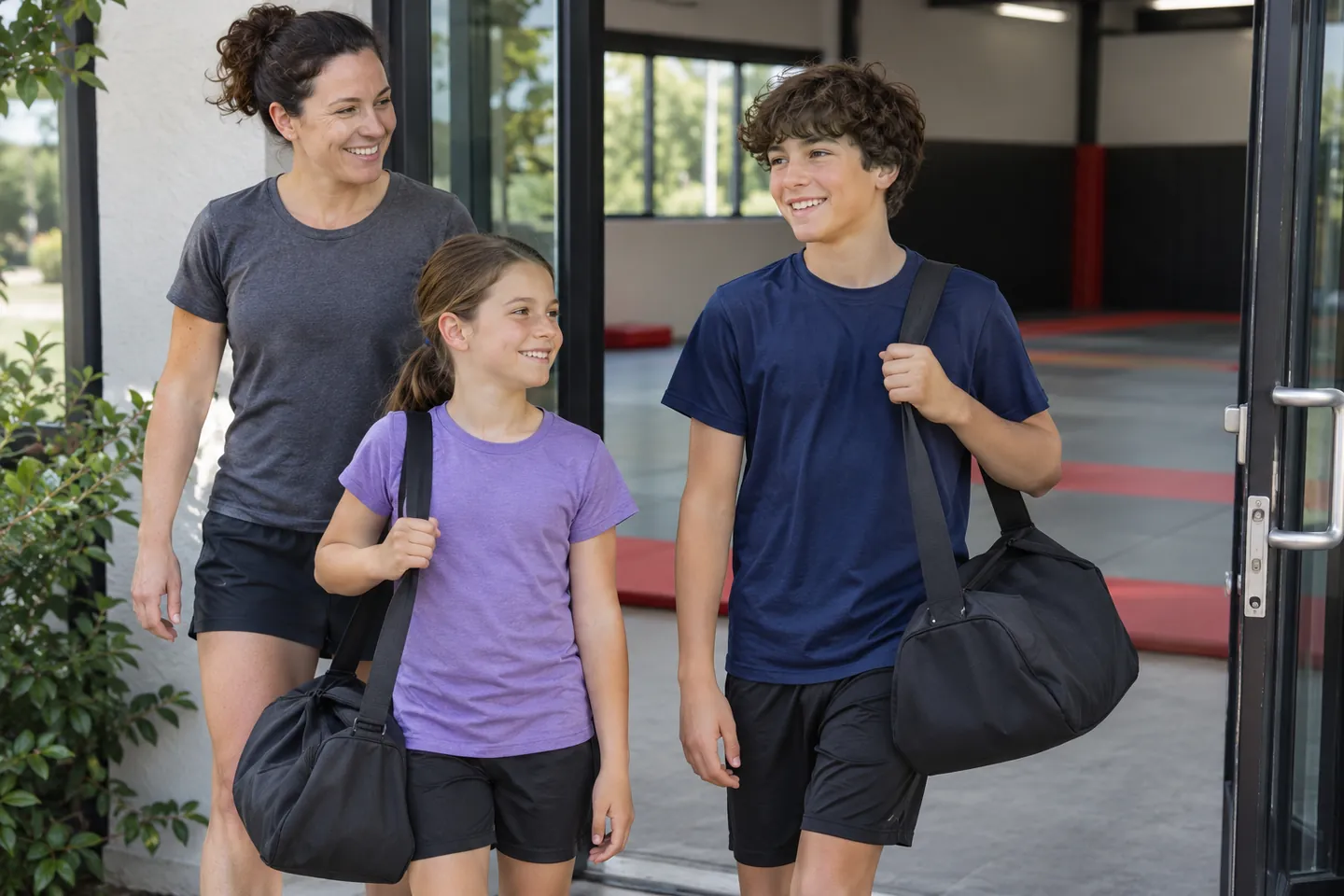
Help siblings enjoy martial arts in Mississauga with individual goals, practical class planning, clear home boundaries, and less comparison between children.
When one child enjoys martial arts, signing up a sibling can seem like an easy next step. The family already knows the route, the equipment routine feels familiar, and the children may enjoy sharing an interest. Yet the second child is not entering the same experience in exactly the same way. They bring their own age, temperament, curiosity, and relationship with being compared.
Helping siblings enjoy martial arts in Mississauga means treating them as individual students within a shared family routine. Some may attend the same suitable class; others may need different groups or prefer different activities. The goal is not to make their progress match. It is to give each child a fair introduction and keep the shared interest from becoming another household competition.
Ask each child what they want to try
Speak with the children individually as well as together. A younger sibling may want to join because the older child looks confident, while the older child may value having an activity of their own. Neither response needs to be judged immediately. Understanding the interest gives you useful information before contacting the gym.
Avoid presenting enrollment as automatic because the family is already traveling to the class. Convenience matters, but the child should still have a chance to understand the activity and express a response. A trial visit can provide information without requiring a long-term promise at the kitchen table.
Do not ask one child to sell the program to the other. Enthusiasm can be shared naturally, but a sibling should not become responsible for persuading or managing the new student. That role can create pressure on both sides. Parents and the coach should handle the practical introduction and expectations.
Confirm appropriate placement separately
Ask the gym which current classes suit each child’s age and experience. Do not assume siblings can or should attend together. The program may group students using criteria that differ from the family’s preferred timetable. Understanding the placement helps you make a decision based on the actual teaching structure.
Share relevant information about each child without comparing them. “One prefers to observe a demonstration twice” is more useful than “One is much less confident than the other.” Specific descriptions help the coach plan support while preserving each child’s dignity. Avoid discussing perceived weaknesses in front of the sibling.
If the children are placed together, ask how partner work and individual instruction are handled. They should not automatically become each other’s partners or assistants. The coach may want them to work with other students. A shared class can still provide separate learning experiences and new social connections.
Give each child their own starting point
A sibling who has attended longer may know the routines and terminology, while the newcomer is still learning where belongings go. That difference is experience, not a permanent ranking of ability. Make the distinction clear when talking at home. The new student deserves the same patience the first child received at the beginning.
Set expectations with the coach for each student. One may be working on remembering a sequence while the other is learning how to ask for help. Those goals need not look alike. A useful family conversation recognizes the individual task rather than declaring who had the better class.
Avoid using one child’s success as proof that the other should find something easy. The statement may overlook differences in age, instruction, and comfort with the group. It also makes the successful child part of the correction. Keep feedback tied to the coach’s guidance for the student receiving it.
Keep household boundaries unmistakable
Sharing a martial arts interest does not make siblings practice targets for each other. State clearly that strikes, rough demonstrations, and improvised contact games are not part of home practice. Konga’s kids program emphasizes not practicing martial arts on family members. Reinforce that expectation consistently, including when both children say they agree.
Do not ask the more experienced sibling to hold a cushion or teach techniques at home. They may know how to participate in a supervised drill without being ready to instruct or manage it independently. If the children want extra practice, ask the coach for an appropriate noncontact task with clear limits.
If play becomes rough, stop it rather than debating which child started. Re-establish the boundary and separate the martial arts lesson from ordinary sibling conflict. Training should not become a source of authority one child uses over another. Both should know that class skills remain within the instructed context.
Let encouragement stay voluntary
Siblings can be supportive in small ways: reminding each other where a bag is, celebrating an enjoyable lesson, or sharing a familiar arrival routine. Let that support arise without assigning one child the role of permanent helper. The older or more experienced student also deserves to focus on their own class.
If a child offers technical advice, redirect detailed questions to the coach. A sibling’s version may be incomplete or different from the instruction the newcomer received. Keeping technical guidance with the instructor prevents a family disagreement from becoming a debate about who knows the correct movement.
Do not require public praise between siblings as proof of sportsmanship. Some children are comfortable offering it; others feel awkward when adults script the exchange. Model respectful interest yourself and acknowledge concrete supportive actions when they occur. The shared activity does not need to produce a performance of perfect harmony.
Organize equipment so ownership is clear
Separate bags or clearly identified items can reduce ordinary confusion. Follow the gym’s guidance about which equipment is personal and whether anything may be shared. Do not assume that two siblings can use the same item simply because it appears to fit both. Class requirements, hygiene routines, and timing all matter.
Give each child an age-appropriate role in preparing and caring for their own kit. The tasks may differ. One might check a simple picture list while another manages more of the packing independently. Different responsibilities can be fair when they reflect ability and experience rather than a demand for identical treatment.
After class, follow the relevant care instructions and return items to their usual places. Avoid making one sibling responsible for both bags merely because they are older. Clear ownership supports the routine and reduces resentment. Adults should help where the task exceeds a child’s ability.
Plan the waiting time as well as the class time
If siblings attend different sessions, consider what the waiting child will do within the gym’s rules. Ask about the available space and expectations. Do not assume they can play on unused mats or join activities informally while waiting. The training area remains part of the coached environment.
Bring suitable quiet activities if permitted and explain the plan in advance. A child who spends a long period waiting may experience the evening differently from the sibling who trains first. Include that time when deciding whether the schedule is workable for the family.
If the arrangement repeatedly creates stress, discuss current alternatives with the team. Perhaps another day or transport plan would work better. Convenience should be evaluated across the whole evening, including travel, waiting, and the return home. A shared activity is less enjoyable when one child consistently feels they are only accompanying the other.
Review experiences without creating a ranking
After class, give each child room to describe their own experience. Ask what they learned or what they want to ask next time. Avoid opening with “Who did better?” even as a joke. The framing can encourage children to search for evidence against one another instead of reflecting on the lesson.
Notice different forms of progress. One child may have remembered a routine; another may have handled a correction more calmly. Describe those actions separately. The goal is not to produce equal praise by inventing matching achievements. It is to recognize what was meaningful in each student’s actual experience.
If a child feels overshadowed, listen without immediately explaining why the comparison is unfair. Ask what situations create that feeling and discuss practical adjustments. The coach may be able to provide separate feedback or clarify individual goals. A private conversation can be more helpful than a family debate about who receives enough attention.
Allow interests to diverge
One sibling may continue enjoying martial arts while another decides it is not the right fit. Explore the reasons thoughtfully and speak with the coach before drawing conclusions. The issue might be the class format, the schedule, or the surrounding family dynamic. It may also be a genuine difference in interest.
Continuing or stopping should not become a statement about which child is more determined. Families can value effort while recognizing that children need not share every activity. The successful outcome is a suitable learning experience for each child, not a matching set of commitments.
Read about kids martial arts at Konga and use the free trial page to discuss suitable options for each sibling. Bring their individual questions, confirm class placement, and plan the shared logistics carefully. With clear boundaries and room for separate progress, a common interest can remain something the children enjoy rather than something they use to measure each other.
Filed under
Keep exploring
More training insights await.