
A low-stress approach to meal planning around training weeks in Mississauga, with ideas for batch cooking, snacks, late classes, and busy workdays.
Most people who train regularly have had this evening at least once. Class ends at eight-thirty, you get home hungry, the fridge holds a jar of mustard and half an onion, and the choice is between cooking from scratch while tired or ordering something you did not really want. Neither option feels great, and by the time you eat it is late enough that sleep suffers too.
Meal planning sounds like the solution, but it often conjures images of colour-coded spreadsheets and fifty identical containers. That level of organisation works for some people. For many others, a much lighter approach is easier to keep up and still makes training weeks run more smoothly.
This post offers a simple, flexible way to plan meals around a training schedule in Mississauga, with its long commutes, varied work hours, and busy family calendars. It focuses on logistics rather than nutrition prescriptions. For individual dietary advice, especially if you have medical conditions, allergies, or specific goals, a registered dietitian is the right person to consult.
Start with your calendar, not a recipe book
The most useful first step in meal planning has nothing to do with food. It is looking at the week ahead. Which evenings do you train? Which days start early or end late? When are kids’ activities, shift changes, or long drives?
Once you can see the shape of the week, the food decisions become clearer. A night with a late class probably calls for something ready to reheat. A rest day with more free time might be a good evening to cook something that also provides leftovers. A morning with an early session might need a breakfast you can eat quickly or take with you.
Ten minutes on a Sunday, or whichever day suits you, spent sketching the week out on paper or a phone note is often enough. You do not need to plan every meal. Even identifying the two or three trickiest days makes a difference.
Pick a few anchor meals
Rather than planning seven unique dinners, many people find it easier to choose two or three anchor meals for the week. These are dishes you can make in a larger quantity and eat more than once, either as they are or with small changes.
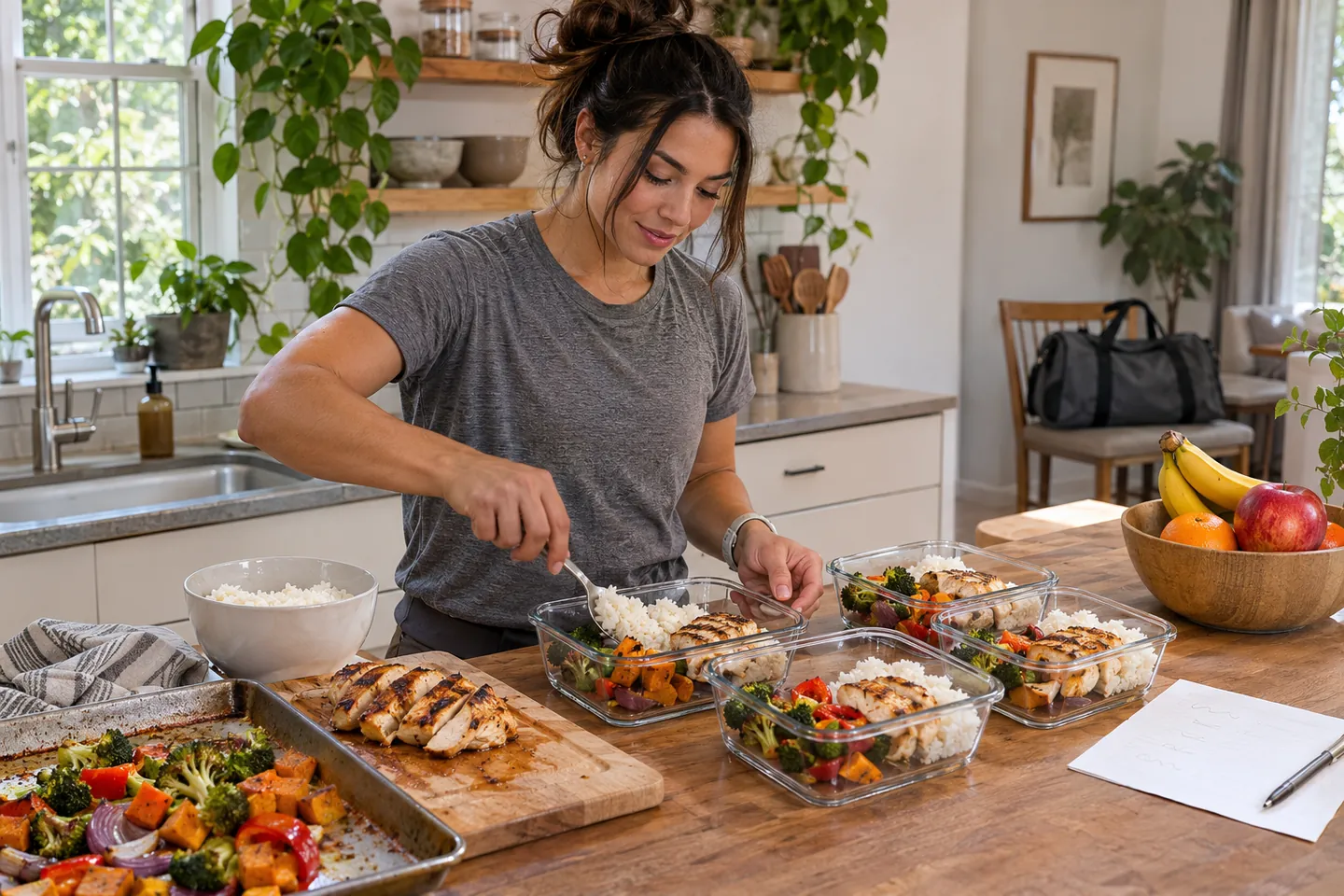
A pot of chili, a tray of roasted vegetables and chicken, a big batch of rice and lentils, or a pasta sauce can each stretch across several meals. Leftovers can be eaten as is, wrapped in a tortilla, served over greens, or paired with different sides to keep things interesting.
Choose anchor meals you genuinely enjoy and know how to make. A new, complicated recipe is fun on a slow weekend but is a risky choice for the backbone of a busy training week.
Build meals from simple components
Another approach, which some people find even easier, is cooking components rather than complete dishes. You might cook a grain, roast a tray of vegetables, prepare a protein source, and make a sauce or two. Then, through the week, you mix and match.
Monday might be a rice bowl with chicken and vegetables. Wednesday might be a wrap with the same chicken plus raw vegetables and a different sauce. Friday might use the remaining vegetables in an omelette. The components stay the same, but the meals feel different.
This approach is forgiving. If a plan changes because of overtime or a cancelled class, components can be used in many ways rather than going to waste.
Thinking about meals before training
Many people find it uncomfortable to train hard on a full stomach and equally uncomfortable to train on an empty one. The right timing and size of a pre-training meal or snack is quite individual and often requires a little experimentation.
As a general idea, some people prefer a regular meal a few hours before training and perhaps a small snack closer to the session if they feel hungry. Others prefer to train after only a light snack. Martial arts with lots of rolling, bending, or body contact can make a heavy stomach particularly unpleasant, so many people keep pre-class food lighter.
Notice how you feel in training after different eating patterns. Over a few weeks, you will learn what suits you, and you can build your plan around that rather than following a rule that does not fit your body.
After training and late evenings
Evening classes create a common challenge: you finish late, you are hungry, and you want to sleep reasonably soon. A pre-planned option ready to reheat removes much of the stress. Many people prefer something not too heavy at that hour, though again this varies.
If you know you will be home late on certain days, earmark leftovers from an anchor meal specifically for those nights. Some people pack a container to eat straight after class if they have a long drive home along the 403 or through Meadowvale and Erin Mills traffic.
Morning trainees face a different problem. If you train early and go straight to work, breakfast may need to travel with you. Overnight oats, yogurt with fruit, or a simple sandwich are practical for many people, though choose whatever works with your preferences and any dietary needs.
Snacks that travel well
Busy training weeks often mean eating on the move. Having a few practical snacks available can prevent long gaps that leave you ravenous by dinner or low on energy before class.
Useful snacks tend to be easy to carry, not easily crushed, and quick to eat. Fruit, nuts if you are not allergic and your workplace or gym allows them, cheese, crackers, yogurt in a cooler bag, boiled eggs, or homemade muffins are all common choices. Keeping a few in your gym bag or car can be handy.
Snacks do not need to be elaborate. The goal is simply to bridge the gap between meals on days when your schedule is unusual.
Grocery shopping with less stress
A short grocery list based on your anchor meals and snacks can make shopping faster and reduce food waste. Group items by section of the store if that helps you move through quickly.
Mississauga offers plenty of grocery options, from large supermarkets to smaller international grocers, which can make it easier to find ingredients for a wide range of cuisines. Shopping once or twice a week, rather than daily, saves time for many people, though some prefer smaller, more frequent trips.
Online grocery ordering and pickup can save time during particularly busy weeks. Whatever method you use, a plan helps you buy what you need rather than wandering the aisles hungry after training.
Cooking for a household
If you live with others, meal planning often involves more than your own preferences. Partners, children, and roommates may have different schedules, tastes, and dietary needs.
Building meals from components can help here too. A base of rice, vegetables, and protein can be served in different ways for different people. Children may prefer components separated, while adults might want sauces and spices. Shared anchor meals that most of the household enjoys simplify things considerably.
Involving others in planning and cooking spreads the load. Older children can help with simple tasks, and partners can take turns cooking or shopping. Meal planning becomes easier when it is not one person’s job alone.
Cultural foods and flexibility
Mississauga is a diverse city, and many families cook food rooted in South Asian, Middle Eastern, Caribbean, East Asian, African, European, or Latin American traditions, among many others. Meal planning for training does not mean abandoning those foods.
Many traditional dishes already lend themselves well to batch cooking and leftovers. Curries, stews, rice dishes, and soups are often easy to cook in larger quantities and reheat. The idea is simply to adapt familiar cooking to the rhythm of your training week, not to replace it with a generic plan.
If you have questions about balancing traditional foods with specific training goals, a registered dietitian familiar with diverse diets can be a valuable resource.
Fasting periods and religious observance
Some people in Mississauga observe religious fasting periods or follow dietary practices tied to their faith. During these times, training and eating patterns may need to change significantly.
It is sensible to discuss these periods with your coach so training load can be adjusted if needed. Many people shift training times, reduce intensity, or focus on lighter skill work during fasting periods. Meal planning may shift toward what can be eaten during permitted hours.
For specific advice on training and nutrition during fasting, especially if you have medical conditions, consult a physician or registered dietitian.
Keeping it realistic
The biggest risk with meal planning is making it so ambitious that it collapses after a week. A plan that covers a few key meals and snacks, adjusts when life changes, and still allows for the occasional takeout night is more sustainable than a rigid system.
Some weeks will not go to plan. Overtime happens, children get sick, and classes get rescheduled. That is fine. The habit of looking at the week ahead and preparing a little is valuable even if the details change.
Over time, you will likely develop a rotation of reliable anchor meals and snacks that make planning almost automatic. That is when meal planning starts to feel less like a chore and more like a normal part of your week.
Supporting your training week
Simple meal planning can make training weeks less stressful by reducing last-minute decisions and helping you arrive at class fuelled and ready. It does not need to be elaborate to be useful.
If you are building a regular training routine in Mississauga, our coaches can help you plan a schedule that fits your life, whether through personal training or group classes. To see how training fits into your week, you can book a free trial and take it from there.
Filed under
Keep exploring
More training insights await.