
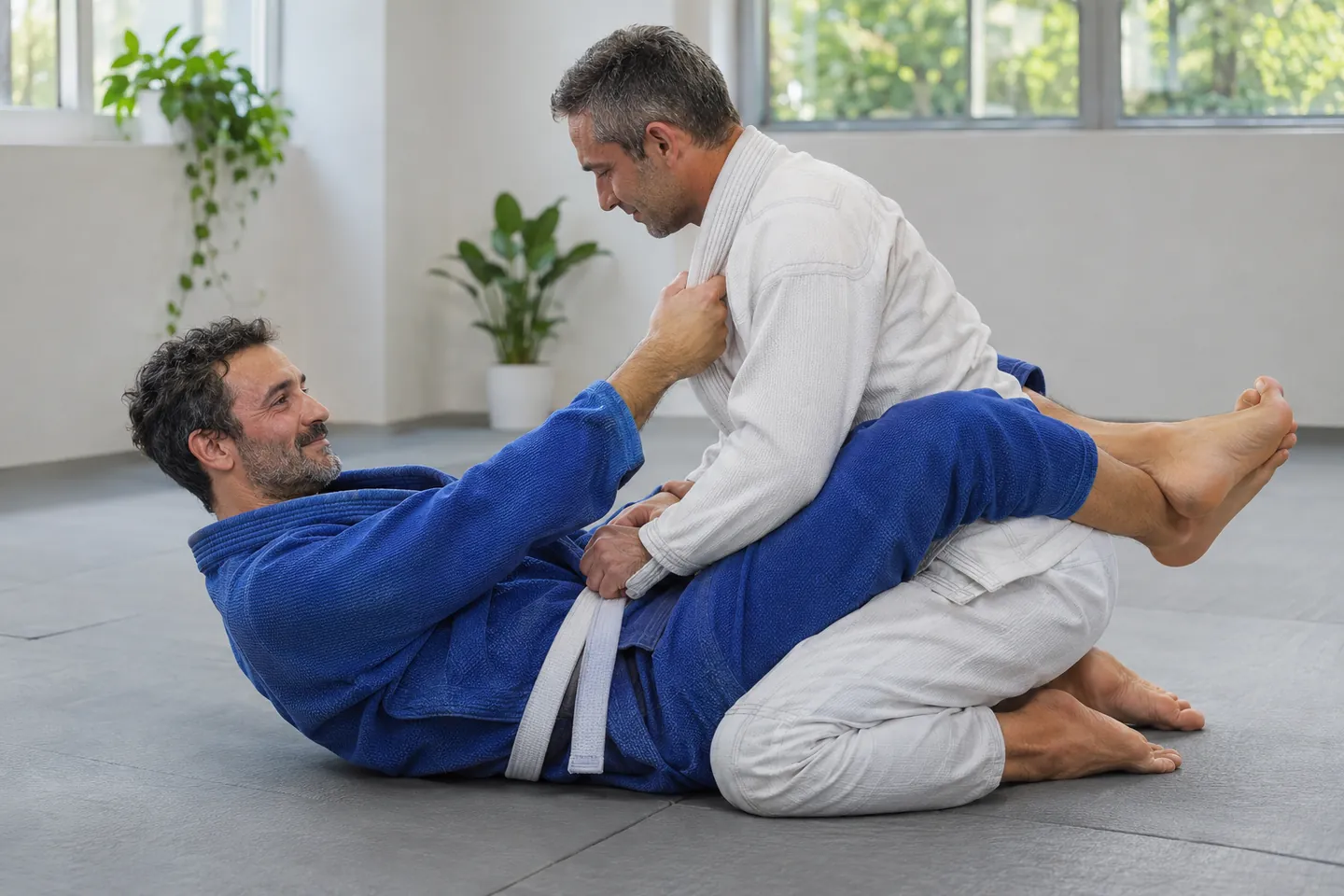
Thinking about Brazilian jiu-jitsu after 35 in Mississauga? Learn how to pace your first months, pick training partners, protect your body and enjoy the learning.
There is a persistent idea that Brazilian jiu-jitsu belongs to people in their twenties who can roll for two hours and bounce off the mats the next morning. Walk into almost any adult class in Mississauga, though, and you will find accountants, nurses, tradespeople, parents and grandparents tying white belts for the first time. Many of them started well after their thirty-fifth birthday.
Starting later does change the approach. Recovery may take longer, old injuries may need respect, and the schedule is usually shared with work and family. None of that is a reason to stay off the mat. It is simply a reason to begin with a little more intention.
This guide is for adults in Mississauga who are curious about jiu-jitsu but wondering whether it is too late. It covers how to approach your first classes, how to pace the early months, and what tends to help people keep training for years rather than weeks.
Why the art suits older beginners
Jiu-jitsu is built around leverage, position and timing. Strength and athleticism certainly help, but the art was developed specifically so that technique could compensate for physical disadvantages. That makes it unusually forgiving for people who are not at their athletic peak.
It is also a deeply technical activity. There is always another detail to learn, another position to understand, another small adjustment that changes how a technique works. Many adults who start later find this endless problem-solving more rewarding than the physical side. It gives the mind something absorbing to work on while the body gets fitter.
Finally, the pace of a typical class can be adjusted. Drilling is cooperative and controlled, and live rounds can be done at a level of intensity that suits both partners. You are not required to match the output of the youngest, fittest person in the room, and good coaches will not expect you to.
Before your first class
If you have any medical conditions, past surgeries, or ongoing joint, back or neck issues, speak with your doctor or a qualified health professional before starting. Jiu-jitsu involves close contact, rolling, bridging and being pinned under another person’s weight. Knowing your limitations ahead of time is far better than discovering them mid-roll.
It is also worth thinking about your general condition. You do not need to be fit to begin, but a few weeks of walking, light strength work and some mobility practice can make the first classes more enjoyable. Simple movements such as hip bridges, bodyweight squats, and getting down to the floor and back up again are a good preview of what jiu-jitsu asks of your body.
Practical preparation matters too. Trim your fingernails and toenails, bring a water bottle, and arrive a little early to meet the coach. Tell them about any injuries or concerns before class begins. That conversation helps them pair you with suitable partners and suggest modifications when needed.
What the first few weeks feel like
Most beginners are surprised by how tiring jiu-jitsu is, even at a moderate pace. Gripping, holding positions and moving on the ground use muscles in unfamiliar ways. Your forearms, neck and core may feel it the next day. That is normal, and it usually eases as your body adapts.
Mentally, the first weeks can be humbling. You will be in unfamiliar positions, often underneath someone, and not sure what to do. Techniques that looked simple during the demonstration may feel confusing when you try them. Everyone goes through this stage, regardless of age.
What helps most is lowering expectations about performance and raising expectations about learning. Instead of trying to win positions, aim to understand one idea per class. Perhaps it is how to keep your elbows close in bottom position, or how to shrimp away from pressure. Small, clear lessons accumulate into real competence over time.
Pacing your training week
The most common mistake older beginners make is doing too much too soon. Enthusiasm is high, the classes are enjoyable, and it is tempting to train five days a week. Then a sore shoulder or a tweaked knee forces a long break, and momentum is lost.
A more sustainable starting point is two classes per week, with at least a day of rest between them. That gives your body time to recover and your mind time to absorb the material. After a couple of months, if you feel good and your schedule allows, you can consider adding a third session.
Pay attention to how you feel on the days after training. Some muscle soreness is expected, but persistent joint pain, sharp sensations, or fatigue that lingers for several days are signs to scale back. Missing a class to recover is not a setback. It is part of training intelligently, and it is a habit that helps people keep practising into their fifties, sixties and beyond.
Choosing partners and setting the tone
Partner selection matters more in jiu-jitsu than in many other activities. In drilling, you will usually work with whoever is next to you, but during live rounds you often have some choice. As a newer, older student, it is perfectly reasonable to look for partners who are controlled and communicative.
Experienced students are often excellent partners for beginners because they can control the pace and do not need to use force. Other beginners can be more unpredictable simply because they have not learned to move efficiently yet. Neither is good or bad, but it helps to be aware of the difference.
Before a round, a short conversation can set expectations. Mentioning that you are new, that you have a sensitive shoulder, or that you would like a light pace is normal and respected in a well-run class. If a round ever feels unsafe, it is fine to stop, tap, and reset. Your long-term health is more important than any single exchange.
Tapping early and often
Tapping is how you signal that you submit, and it is one of the most important skills you will learn. For older beginners especially, tapping early is essential. Joints and connective tissue may not tolerate stress as well as they once did, and there is nothing to be gained from holding out against a submission.
Tap with your hand on your partner or the mat, or verbally if your hands are trapped. Do it as soon as you feel pressure that you cannot escape from, rather than waiting until it becomes painful. Good training partners will release immediately.
It also helps to think of tapping as part of the learning process. Each tap shows you a position or mistake to study. Instead of feeling frustrated, try to notice how you ended up in that spot. Over time, you will start to recognize those situations before they become dangerous.
Protecting your body outside class
What you do between classes has a big influence on how well you tolerate jiu-jitsu. Strength training helps protect joints and makes positions feel more stable. A simple routine of squats, hinges, rows, presses and carries, done once or twice a week, can make a noticeable difference. If you would like help building one around your mat time, personal training or a strength and conditioning class can provide structure.
Mobility work is also useful. Hips, thoracic spine, neck and shoulders are heavily involved in jiu-jitsu. Gentle stretching and controlled movement drills, or a weekly yoga session, can help you move more comfortably on the mat.
Sleep, hydration and nutrition all affect recovery as well. You do not need a perfect routine, but consistent sleep and regular meals make it easier to bounce back between sessions. If you notice persistent aches, a session with a qualified physiotherapy or massage professional can help you understand what your body needs, though they should be the ones to assess and guide any treatment.
Fitting jiu-jitsu into a busy life
For many adults in Mississauga, the biggest barrier is not physical but logistical. Work hours, commutes on the 401, children’s activities and household responsibilities all compete for time. A training plan that ignores these realities usually does not last.
Look honestly at your week and choose class times you can attend consistently, even if that means only two sessions. Consistency over months matters much more than intensity over a few weeks. Keep a gym bag packed and ready so that small obstacles do not become reasons to skip.
Communicate with the people you live with. Let them know when you plan to train and how it fits into the household schedule. Many people find that once family members understand why training matters to them, it becomes easier to protect that time. Some even end up bringing their kids to kids martial arts classes on the same evenings.
Measuring progress in the right way
Belt promotions in jiu-jitsu can take a long time, and they vary from academy to academy. If your only measure of progress is a new belt, the early years can feel slow. A better approach is to notice smaller signs of improvement.
You might find that you can survive longer in bottom positions, that you understand what your partner is trying to do, or that you are calmer when someone heavier is on top of you. You might feel more comfortable getting down to the ground and up again, or notice that you are less winded after a round. These are real changes, and they matter.
Keeping a training journal can help. After each class, write down one technique you learned, one thing that went well and one question you have. Over months, the journal becomes a record of how far you have come, which is encouraging on days when progress feels invisible.
The social side of training
One of the most valuable parts of jiu-jitsu is the community. Spending time on the mat with the same group of people builds trust and friendship quickly. For adults whose social lives have narrowed to work and family, that sense of belonging can be a welcome change.
Many academies have members from a wide range of ages and backgrounds. You might find yourself drilling with a university student one night and a retired engineer the next. Those conversations, both on and off the mat, often become a big part of why people keep coming back.
Be patient with yourself in the early weeks. It can take a little while to feel at home in a new environment. Ask questions, say hello to people, and stay for a few minutes after class when you can. The connections tend to build naturally.
Taking the first step
Starting jiu-jitsu after 35 is not about proving anything. It is about learning a fascinating skill, getting stronger and more mobile, and joining a supportive community. Many people find it becomes one of the most rewarding habits in their lives.
If you are curious, the Brazilian jiu-jitsu program at Konga Fitness in Mississauga welcomes adult beginners of all ages. You can book a free trial to experience a class, meet the coaches, and ask questions about how to start at a pace that suits your body and your schedule.
Filed under
Keep exploring
More training insights await.