
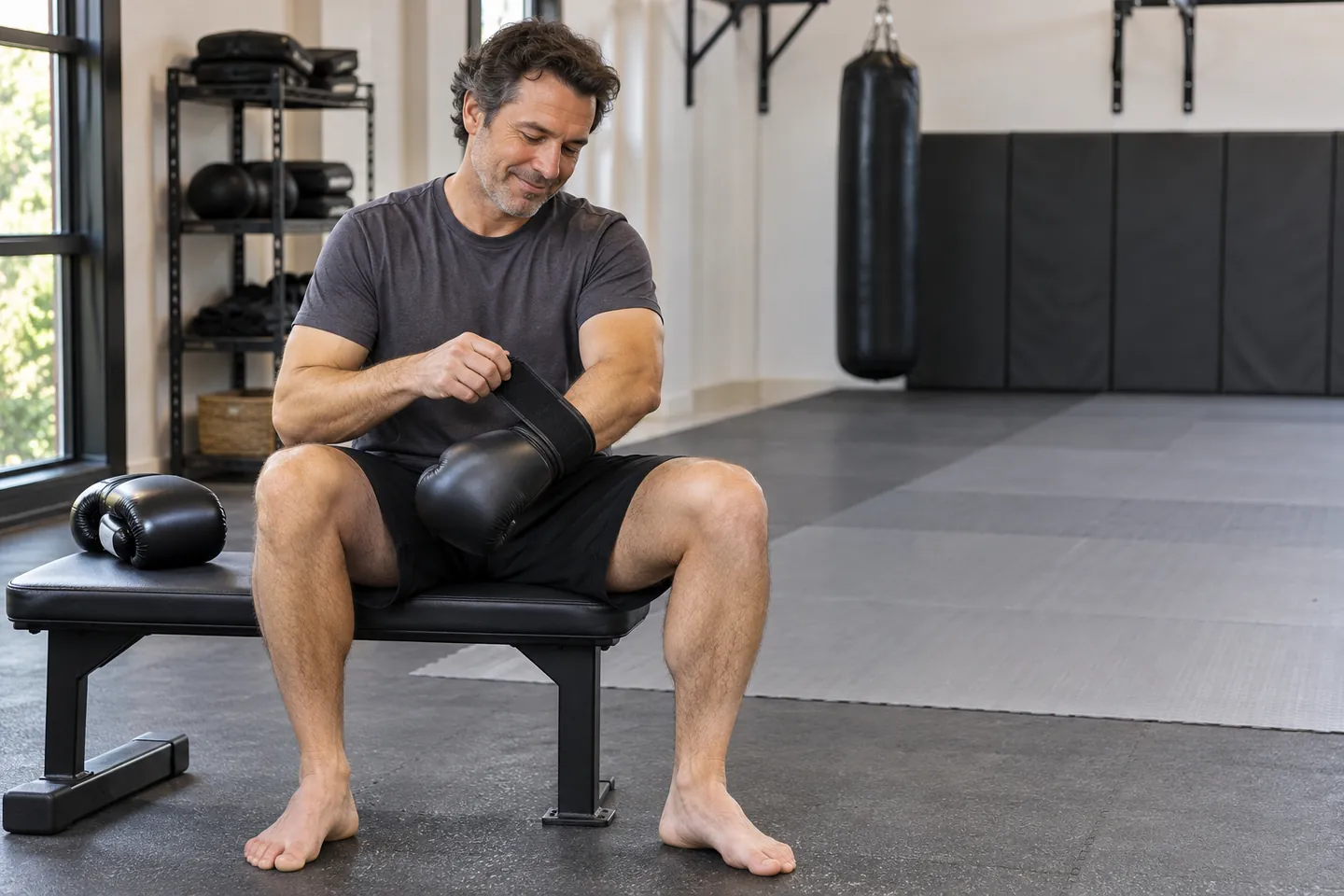
Consider Muay Thai after thirty in Mississauga with realistic beginner goals, practical scheduling, clear coach conversations, and a manageable first month.
Starting something new as an adult can feel more exposed than it did at school. You may be competent at work, reliable at home, and accustomed to knowing what you are doing. Then a martial arts coach asks you to stand in an unfamiliar position, and suddenly you are a beginner again. That change in role can be more unsettling than the exercise itself.
If you are considering Muay Thai after thirty in Mississauga, you do not need a story about reclaiming your youth or proving that age is irrelevant. You need a suitable class, clear expectations, and a routine that fits your present life. The useful question is how to begin as the person you are now, with your current interests, responsibilities, and starting point.
Define the reason in your own words
Perhaps you want a more engaging activity than your usual gym routine. Perhaps you have always been curious about martial arts and finally have room to try. Maybe you would like a regular class that asks you to learn something with other people. Each reason is enough to begin a conversation with a coach.
Avoid borrowing a competitive goal because it sounds more legitimate. Recreational learning does not need to be presented as a temporary stage before fighting. Tell the coach what interests you and ask which sessions fit that intention. Clear goals help you evaluate the program without measuring it against ambitions you do not actually hold.
Make the first goal concrete and modest. Attending an introductory class, understanding the basic format, and deciding whether to return are useful outcomes. They are more manageable than promising a complete physical transformation before you have learned where to put your bag. The first decision is about beginning, not forecasting every future result.
Separate age from actual starting information
Being over thirty does not tell the coach everything they need to know. Your previous activity, current familiarity with exercise, and practical movement limitations are more informative than the number alone. Share relevant details plainly. You may have years of recreational sport behind you or be returning after a long period without structured activity.
If you have a health concern or uncertainty about participating, seek appropriate guidance from a qualified healthcare professional. In class, explain the practical limitations the coach needs to understand. Avoid asking the instructor to diagnose a condition from a brief description. Coaching and medical assessment are different responsibilities.
Do not assume that every unfamiliar sensation is caused by age, or that every younger student will find the class easy. Those assumptions can distract from the actual task. Describe what you experience during the exercise and let the coach respond to the specific movement rather than a broad story about what adults can or cannot do.
Choose a class that welcomes your level
Ask which session is intended for someone with no Muay Thai experience. A program may include students with different backgrounds, so clarify how beginners are introduced and supported. You should know what the first class involves, what equipment is required, and whom to speak with when you arrive.
Ask how contact activities are handled and what expectations apply to new students. Do not infer the answer from dramatic photographs or another person’s experience at a different gym. Understanding the program’s progression helps you decide whether the setting matches your interests and comfort with the activity.
Notice the quality of the conversation. Are your questions answered clearly? Can you explain a concern without being pushed into a different goal? A welcoming atmosphere includes useful information, not just friendly language. The first exchange should leave you better able to picture the visit and make an informed choice.
Build the schedule around ordinary obligations
A training plan needs to survive a normal workweek, not only an unusually quiet one. Look at the actual class time and the journey across Mississauga. Consider whether you will travel from home, work, or another commitment. A realistic route and departure time matter as much as enthusiasm when the day becomes busy.
Choose an initial attendance pattern you can repeat. Ask the coach what makes sense for a beginner and your availability. Avoid announcing an ambitious schedule that depends on never working late, never needing groceries, and never helping anyone at home. A sustainable commitment gives learning a better foundation than a short burst of overbooking.
Agree on practical arrangements with the people affected by the schedule. If someone else handles dinner or a school pickup while you train, discuss the plan rather than assuming it will work itself out. Adult routines often involve other people, and clear coordination makes the class easier to attend without resentment or last-minute scrambling.
Allow yourself to look new
A beginner may worry that everyone is watching every mistake. In practice, other students have their own instructions and learning tasks. You do not need to hide uncertainty by moving quickly or pretending to understand a combination. Say that you are new and ask the question that will help you participate.
Specific questions are especially useful. “Where do I reset after that step?” gives the coach something clear to demonstrate. “Am I too old for this?” may express a real fear, but it does not identify the movement problem. You can discuss the broader concern while still keeping the immediate lesson focused on something actionable.
Treat corrections as information about a skill, not a judgement about your competence as an adult. The coach is helping you learn an unfamiliar activity. Being corrected does not erase the expertise you have elsewhere. It simply means that this room is a place where you are allowed to develop a new kind of knowledge.
Learn to communicate during partner work
Introduce yourself to your partner and share your experience level. Confirm the assigned drill and pace before starting. If you are unsure how to hold equipment, ask for instruction. Being older than another student does not require you to appear more knowledgeable, and being new does not mean you should remain silent.
Request adjustments directly when needed. A clear “I need a slower reset” is easier to respond to than an apologetic smile while you struggle. Respect the same request from your partner. Cooperation is built through these small exchanges, not through proving who can tolerate the most confusion or effort.
Avoid turning a partner into your coach unless the instructor has assigned a teaching role. A helpful student may offer a cue, but the coach should guide technical progression. When advice conflicts, ask for clarification. You will learn more from a consistent instruction than from trying to satisfy several versions at once.
Let the first month be information gathering
During the early weeks, pay attention to what makes attendance easier and what repeatedly interferes. You may discover that packing equipment the night before matters more than buying another item. You may also learn that a certain class time is less practical than it looked on paper. Adjust the routine using that information.
Notice learning changes as well. Perhaps you recognize the warm-up structure, understand a few instructions sooner, or feel less awkward asking for help. These developments count. They make the next class easier to enter and create room for technical details that were difficult to absorb during the first visit.
Do not demand visible results on a fixed timetable as proof that the activity is worthwhile. Different people begin with different aims and circumstances. Evaluate whether the program is engaging, appropriately coached, and compatible with your routine. Those questions can support a thoughtful decision about continuing without relying on promises.
Keep extra work proportionate
It can be tempting to compensate for starting later by doing a large amount outside class. Before adding home practice, ask the coach what would help. A brief noncontact rehearsal of a familiar position may be useful; an improvised collection of advanced drills may create more confusion than progress.
Do not turn every rest day into a test of commitment. You are learning how the class fits into a broader life, and additional activity should be considered in that context. If you feel unwell or experience pain, stop the relevant activity and seek appropriate guidance rather than treating the issue as a challenge to your determination.
Use your experience as an adult where it helps: organize the calendar, ask clear questions, and make practical adjustments. You do not need to recover a younger version of yourself to learn. You can bring patience, communication, and a realistic understanding of your responsibilities into the process from the beginning.
Make the next step specific
If Muay Thai interests you, replace another week of abstract wondering with a concrete inquiry. Read about Muay Thai at Konga and use the free trial page to ask about a suitable introduction. Confirm the time, equipment arrangements, and beginner expectations directly with the team.
Arrive ready to learn rather than prove a point about age. A worthwhile first month may leave you with a workable schedule, a few familiar movements, and a growing understanding of what you enjoy about the sport. That is a practical foundation for continuing. The decision to start can belong to your present life without needing to compete with anyone else’s timeline.
Filed under
Keep exploring
More training insights await.