
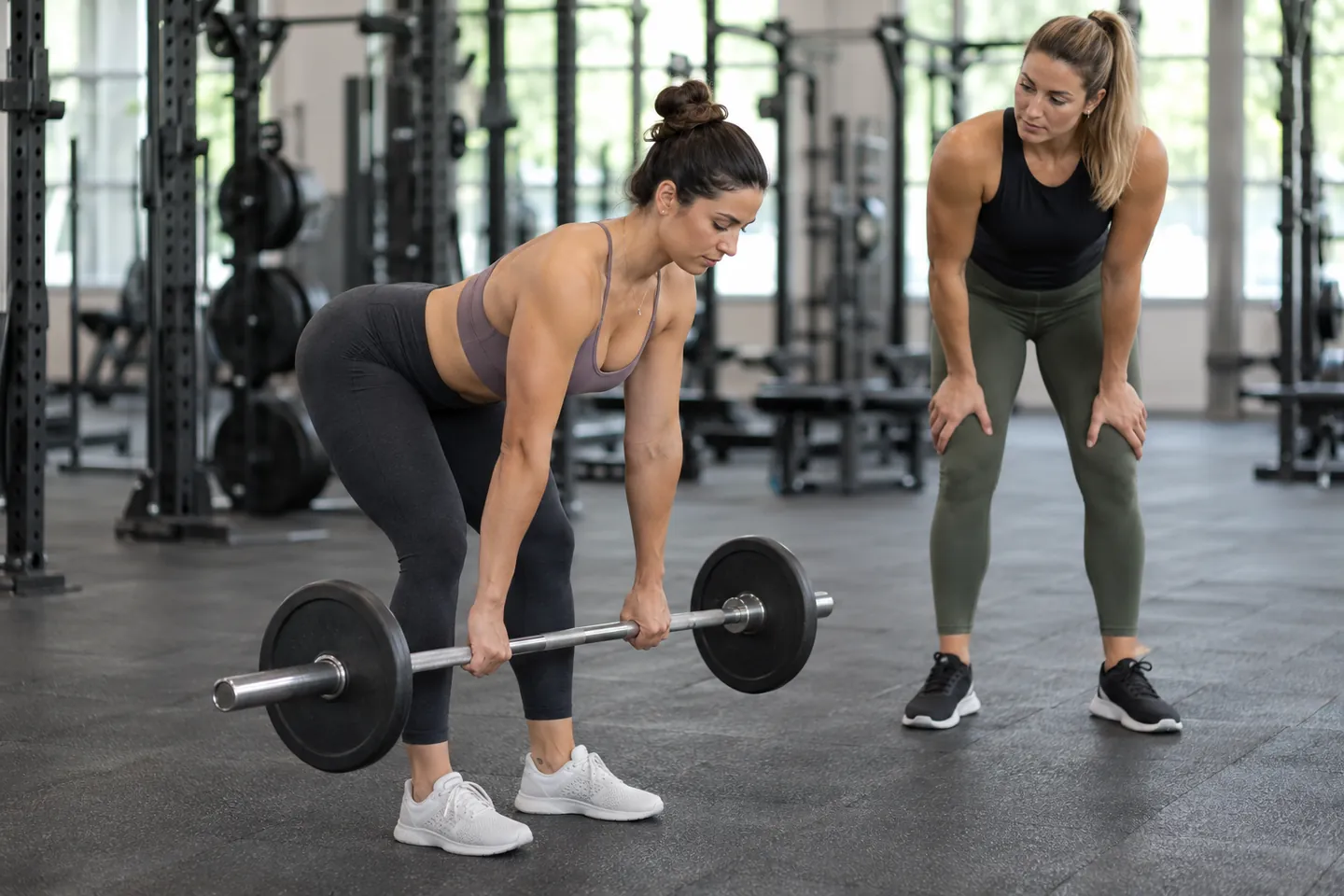
A practical guide to strength training for women in Mississauga, covering first sessions, basic lifts, progression, recovery, confidence, and getting good coaching.
Walk into the weights area of almost any gym and you may notice something that is slowly changing. More women are picking up barbells, kettlebells, and dumbbells, not as an afterthought to cardio, but as the main event. Many of them started out unsure, a little self-conscious, and not quite sure what to do first. Plenty of them started in Mississauga, in gyms not unlike ours.
If you are a woman considering strength training, you might have questions. Where do I begin? Will I know what I am doing? What if I feel out of place? These are reasonable questions, and the answers are more encouraging than you might expect.
This article covers the practical side of getting started: what a first block of training might involve, how to think about progress, and how to find the support that makes the process easier. It is written for beginners and for women returning after time away, whether that absence was due to work, family, injury, or simply life.
Why strength training is worth considering
Strength training builds the ability to lift, carry, push, and pull with more confidence. Those abilities show up everywhere in daily life: carrying groceries up to an apartment, lifting a child, moving furniture, or managing a heavy suitcase through Pearson. Many women also find that strength work improves how they feel in other activities, from running to martial arts to yoga.
Beyond the physical side, there is often a psychological benefit. Watching the weight on the bar increase over a few months gives you clear, objective evidence of progress. That kind of evidence can be motivating in a way that other forms of exercise sometimes are not.
Health organisations generally recommend muscle-strengthening activity as part of a balanced routine for adults. If you have specific health conditions, are pregnant, or are recovering from an injury, speak with your doctor or a qualified health professional about what is appropriate for you before you begin.
Addressing the common worries
A common concern is the fear of becoming bulky. For most women, building significant muscle size requires years of dedicated, high-volume training and specific nutrition. A typical beginner strength program is far more likely to make you feel stronger and more capable than to change your appearance dramatically. Your body will respond in its own way, and you remain in control of your training choices.
Another worry is feeling intimidated in the weights area. This is entirely understandable. Weight rooms can feel like spaces where everyone else knows the unwritten rules. One of the best remedies is having a plan before you walk in, so you know exactly what you are going to do. Another is training with a coach or a group, which removes the sense of being alone and uncertain.
Some women worry about injury. Like any physical activity, lifting carries some risk, but learning proper technique, starting with manageable loads, and progressing gradually reduces that risk considerably. Good coaching is particularly valuable here.
The foundational movements
Most beginner strength programs revolve around a handful of basic movement patterns. These include squatting, hinging at the hips, pushing, pulling, and carrying. Each pattern can be trained with many different exercises, from bodyweight versions to barbell lifts.
A squat might start as a bodyweight squat to a box, progress to a goblet squat holding a kettlebell, and eventually become a barbell squat. A hinge might begin with a hip hinge drill using a dowel, then a kettlebell deadlift, and later a Romanian deadlift or conventional deadlift. Pushing and pulling movements might include push-ups, rows, presses, and pulldowns.
You do not need to master every variation. A coach will usually choose the versions that suit your current ability and goals, and progress you as you improve. The important thing is learning each pattern with control before adding significant load.
Your first few weeks
The first weeks of strength training are mostly about learning. You are getting familiar with the movements, the equipment, and the feeling of effort. Loads should usually be light enough that you can focus on technique and finish each set with some energy to spare.
Expect some muscle soreness after early sessions, particularly in the day or two afterward. This is common when starting a new activity. It usually lessens as your body adapts. If you experience sharp pain, joint pain, or anything that concerns you, stop and consult a qualified professional.
Two or three sessions per week is a common starting frequency for beginners, with rest days in between. That gives your body time to recover and adapt, and it is manageable alongside work, commuting across the city, and other commitments. Your coach can help you decide what fits your situation.
Progression without rushing
Progress in strength training usually comes from gradually increasing the challenge. That might mean adding a little weight, performing an extra repetition, or improving control and range of motion. Small increments over many weeks lead to meaningful changes.
Beginners often progress quickly in the first few months, as the body learns to coordinate movements more efficiently. That early phase can be very motivating. Eventually, progress slows, and that is normal. At that stage, structured programming becomes more important.
Avoid the temptation to add weight before your technique is consistent. A lift performed with sound form at a moderate weight is more valuable for learning than a heavier attempt that breaks down. Ask your coach whether you are ready to progress, rather than guessing.
Recovery and everyday life
Strength is built during recovery, not just during training. Sleep, nutrition, stress, and overall activity levels all influence how you feel from session to session. Many women balance training with demanding jobs, caregiving responsibilities, and long commutes on the 401 or 403. Those demands affect recovery too.
If you have had a particularly stressful week or a run of poor sleep, it is reasonable to adjust your training. Lighter loads, fewer sets, or a mobility session may serve you better than forcing a heavy day. Listening to how you feel is part of training sustainably.
Some women notice that their energy and performance vary across their menstrual cycle. Experiences differ widely. If you notice patterns, it can be useful to note them and adjust training accordingly. If you have questions about your cycle or symptoms, a doctor is the right person to consult.
Nutrition basics, kept simple
Eating enough to support training is important. Many people starting strength work underestimate how much food they need to recover well, especially if they are also trying to manage their weight. Severe restriction can leave you feeling tired and make progress harder.
General guidance includes eating regular meals with a source of protein, plenty of vegetables and fruit, and enough overall energy to support your activity. Staying hydrated, especially during warm Mississauga summers, also matters.
For personalised nutrition advice, particularly if you have health conditions, dietary restrictions, or specific goals, consult a registered dietitian. A coach can offer general guidance, but individual nutrition planning is best handled by a qualified professional.
Finding the right environment
The environment you train in can affect how comfortable and motivated you feel. Some women prefer training alongside other women, at least at first. Others are happy in a mixed setting as long as the atmosphere is respectful and welcoming.
At Konga Fitness, our women’s classes provide a supportive space for women to train together. Many women also join our strength and conditioning sessions, which combine structured strength work with conditioning in a coached group setting.
If you prefer one-on-one attention, personal training offers a program built around your goals, schedule, and any physical considerations. A coach can teach technique, adjust loads, and help you progress at an appropriate pace.
Building confidence in the weights area
Confidence grows with familiarity. The more often you train, the more comfortable you will feel with the equipment, the movements, and the space itself. Something that feels awkward in your first week can feel completely routine by your tenth.
Keep a simple training log. Write down the exercises, the weights, and how they felt. Looking back after a month or two, you will likely be surprised by how far you have come. That record also helps your coach plan your next steps.
Do not be afraid to ask questions. Asking how to adjust a machine, set up a barbell, or perform a lift correctly is a sign of good judgment. Coaches and experienced gym members are usually happy to help.
Strength alongside other training
Many women come to strength work because they already do something else: martial arts, running, yoga, or recreational sports. Lifting can support those activities well, but it helps to plan how they fit together. Heavy leg training the day before a long run or a hard kickboxing class, for example, may leave you feeling flat.
Talk with your coach about your whole week rather than just your lifting days. They can help you place strength sessions where they complement your other activities rather than compete with them. Sometimes that means fewer exercises per session, or lighter work during a busy stretch of the week.
Over time, many women find that strength training makes other activities feel more comfortable. Stairs, hills, and long days on your feet may become easier. Those everyday improvements are often the changes people mention first when they talk about why they kept lifting.
A note for women returning to training
If you have trained before and are returning after a break, it is tempting to pick up exactly where you left off. Your body may need time to readjust. Starting with lighter loads and rebuilding gradually is usually wiser than trying to match previous numbers immediately.
Returning after pregnancy, illness, or injury requires particular care. Clearance from a health professional is an important first step. A physiotherapist can be especially helpful in guiding a safe return to lifting, particularly when pelvic health or a specific injury is involved.
Patience is key. Many women find that strength returns more quickly than they expected once they get back into a routine, but rushing that process can lead to setbacks.
Ready to start lifting
Strength training can be a rewarding, long-term part of your fitness, and you do not need prior experience to begin. Explore our women’s classes or strength and conditioning programs to find an option that suits you, and book a free trial to try a session with a coach. The first lift may feel unfamiliar, but it is the beginning of a skill that can serve you for years.
Filed under
Keep exploring
More training insights await.