
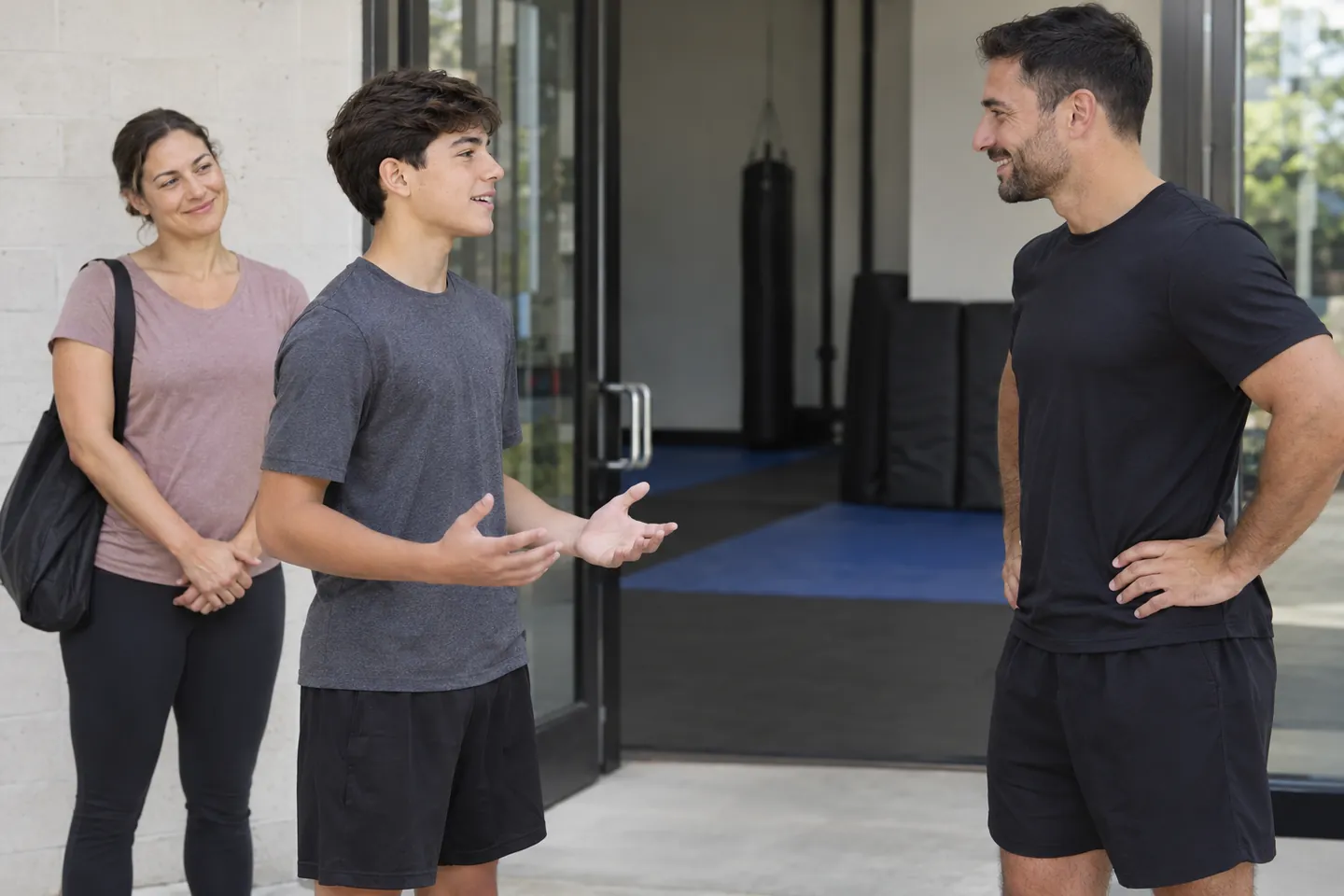
Help teen martial arts beginners in Mississauga explore a suitable class with their own goals, clear expectations, practical scheduling, and respectful support.
Starting a martial art as a teenager can involve two different worries at once. The movements are unfamiliar, and being visibly new may feel uncomfortable. A teen may be interested in training but reluctant to enter a room where other students already know the routines. Parents can help, although too much explanation on the teen’s behalf may make the introduction feel less like their own choice.
A practical start for teen martial arts beginners in Mississauga combines the teen’s interests with clear information about the available program. Ask the gym which current class is appropriate for the student’s age and experience; do not assume a particular youth or adult placement. Then build a plan that addresses the actual lesson, travel, equipment, and expectations. The first visit should answer questions rather than require a new identity.
Let the teen explain the interest
Ask what draws them to martial arts. They may enjoy the idea of learning a sport, want an activity outside school, or be curious after seeing a friend train. Their answer does not need to sound like a long-term ambition. A genuine interest in trying the class is enough to begin gathering information.
Avoid turning the activity into a corrective message about the teen’s personality. Statements that they need discipline, confidence, or less screen time may be part of a parent’s concern, but they can make the program sound like a punishment. Discuss what the class actually offers and let the teen have a role in evaluating it.
If they are unsure, ask what information would help. They may want to know the age range, whether beginners are common, or how partner work is introduced. These are practical questions. Answering them is more useful than insisting they have nothing to worry about before anyone understands the concern.
Confirm the appropriate class directly
Contact the gym with the student’s age, experience level, and interests. Ask which current session the team recommends and why. Age categories and program arrangements can vary, so do not rely on a friend’s placement or an old schedule. The appropriate introduction should come from the team running the class.
Clarify what the first session includes and whether prior experience is expected. Ask about equipment, arrival procedures, and any registration requirements. A teen who knows the practical sequence can spend less attention guessing where to go and more attention following the lesson.
Discuss contact expectations explicitly. The student should understand how any contact activities are introduced, what prerequisites apply, and how questions or concerns are handled. Do not assume that signing up means agreeing to every possible activity from the first day. Clear information supports an informed decision by both the teen and parent.
Give the teen a voice in the conversation
Where appropriate, let the teen ask some of the questions directly. Parents can help prepare them beforehand and fill in practical details when needed. The goal is not to abandon support but to allow the student to begin a relationship with the coach. They are the person who will receive the instruction during class.
Avoid answering every question immediately on their behalf. A short pause may give them time to respond. If they prefer help, provide it without turning the exchange into a demonstration of independence. The level of support should fit the individual, and relevant privacy or communication needs should be respected.
Share sensitive information through an appropriate private channel. The teen should not have to hear personal concerns discussed publicly at the entrance. Explain what information the coach needs for participation and involve the teen in that discussion where appropriate. Respectful handling of details can make the introduction feel more trustworthy.
Normalize being a beginner without minimizing it
It is reasonable to feel awkward when learning unfamiliar movements in front of others. Saying “Nobody cares” may not address that experience. A more useful message is that the class has a process for beginners and that questions are expected. Then ask the coach what that process actually looks like.
Encourage specific help-seeking. “Can you show the reset again?” is easier to act on than silently hoping the next repetition makes sense. The teen does not need to master technical terminology before asking a clear question. Plain descriptions of the point of confusion are enough.
Avoid promising immediate competence. A first class may include moments of uncertainty, and that does not make the visit unsuccessful. The important observations are whether the instructions were understandable, support was available, and the student could participate within appropriate expectations. Those are fair criteria for reviewing the experience.
Keep social expectations modest
A class can provide contact with other students, but instant friendship is not guaranteed. Do not make social success the test of the first visit. Learning names, exchanging a brief introduction, and working respectfully with a partner can be meaningful early steps without requiring a new friend group immediately.
If a friend already attends, ask how the gym handles pairing and class placement. The teen should not assume they will spend every drill together. Working with different students may be part of the program. Knowing that in advance can prevent disappointment and reduce reliance on one familiar person.
Respect privacy around photos and online sharing. Ask about the gym’s recording policy, and do not post images of the teen or other students without the relevant permission. A beginner may want to explore the activity before it becomes family social media content. Their comfort with that choice deserves consideration.
Plan around school and ordinary commitments
Look at the actual class time, travel route, and return home. A Mississauga journey from school may differ from one from home. Include preparation and any handover between adults. The plan should fit a normal week, not depend on every assignment and transport connection going perfectly.
Discuss how training interacts with homework, family responsibilities, and other interests. The teen should have input into the routine, while adults remain responsible for practical arrangements within their role. A shared plan is more likely to work than a schedule imposed without considering the student’s day.
Start with an attendance pattern recommended by the coach and realistic for the family. Avoid framing missed sessions as proof that the teen is not serious before looking at the circumstances. If a conflict repeats, adjust the plan. A sustainable routine may require a different time rather than more pressure.
Make equipment decisions together
Confirm what is needed for the introductory session before buying. Ask about fit, class use, and care. A teen may enjoy choosing equipment, but the decision should meet actual requirements. Appearance and online popularity do not replace suitability for the program.
Give the student a practical role in preparation and care that matches their ability. Agree on where items belong and when the bag is packed. Adults may still need to check condition, manage purchases, and help interpret care instructions. Clear responsibilities are more useful than assuming independence will happen automatically.
Do not use expensive equipment as a demand for a guaranteed long-term commitment. Make purchase decisions thoughtfully and discuss expectations honestly. The first stage of participation is also information gathering. A suitable kit should support learning without turning every uncertain feeling into a question about money already spent.
Review the class without conducting an interview
After the session, give the teen space to transition before asking for a full report. Start with one useful question: what interested them, what was confusing, or whether the class matched the explanation. Let their response guide the conversation rather than working through a parent’s prepared list of desired benefits.
Listen to mixed feedback. They may like the activity but dislike the travel time, or enjoy the coach while feeling unsure about a partner task. Those distinctions help identify what needs clarification. Avoid forcing the experience into a simple success-or-failure judgement.
If a concern involves discomfort, pain, or another student’s behaviour, take it seriously and follow up appropriately. Technical learning difficulties, health concerns, and interpersonal issues need different responses. Do not treat every objection as a lack of resilience or expect a recreational class to resolve every broader concern.
Choose a next step the teen understands
Agree on how future questions will be raised. A teen may prefer to speak directly with the instructor about a movement while asking a parent to handle scheduling. That division can change as familiarity grows. Making it explicit avoids unnecessary intervention and ensures that practical concerns still reach the right person. Support works best when everyone understands who is handling the next conversation.
If the student wants to return, confirm the next suitable session and one practical thing to prepare. If they remain uncertain, identify the unanswered question and discuss it with the coach. The next step should be concrete enough that the teen knows what will happen, rather than a vague promise to become more committed.
Explore Konga’s program options and kids martial arts information, then use the free trial page to ask about placement for a teen beginner. A good start respects the student’s voice, provides clear coaching, and fits the actual week. It gives them a fair opportunity to learn what they enjoy about the activity and whether they want to continue.
Filed under
Keep exploring
More training insights await.