
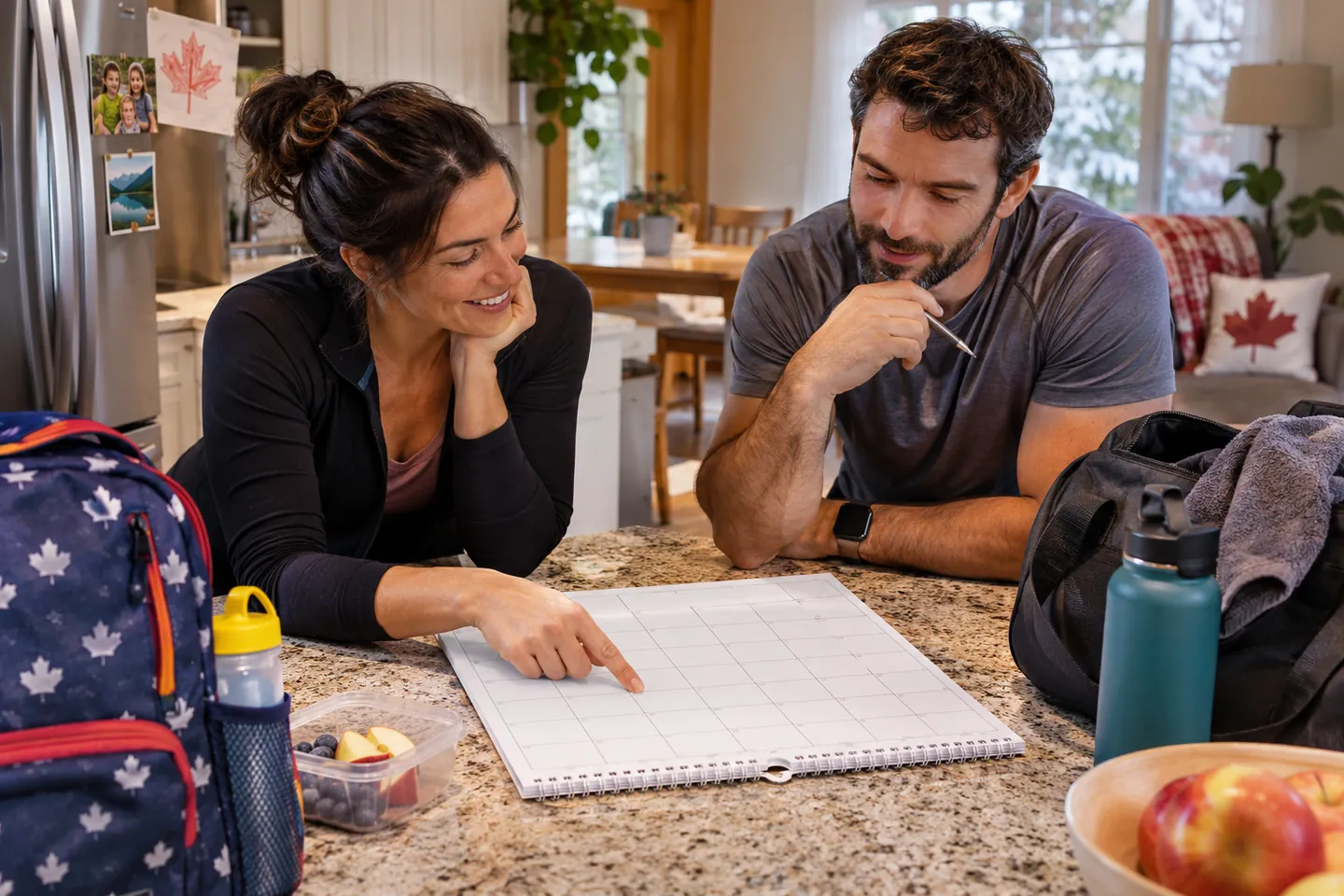
Fit training into busy family weeks in Mississauga with shared calendars, realistic travel time, clear handoffs, and practical plans for changing appointments.
A family calendar can look manageable until everyone needs to be in a different place at the same time. Training during busy family weeks in Mississauga requires more than finding an empty hour. It involves travel, handoffs, shared responsibilities, and knowing which arrangements remain workable when one appointment changes.
The goal is not to produce a perfect schedule in which exercise always wins. It is to give training a clear, realistic place alongside the other things that matter. A plan becomes more useful when the people affected understand it, the full journey is included, and there is a sensible response to interruptions. That allows a busy week to be adjusted without turning every change into a debate about commitment.
Put all the fixed commitments in one place
Start with the appointments that have limited flexibility: work shifts, school events, caregiving, classes, and other scheduled responsibilities. Use a shared calendar or a written list that the relevant people can access. The tool matters less than whether everyone is looking at the same information.
Include the less visible commitments too. Travel between destinations, preparing to leave, and collecting someone afterward occupy real time. A gym appointment may fit between two events on paper while the journeys make it impossible in practice.
Once the full picture is visible, identify training windows that do not depend on another appointment finishing unusually early. A realistic opening may be less glamorous than the ideal time you first imagined, but it provides a more dependable basis for the week.
Define the complete training absence
When discussing a gym visit with the household, include departure and return times. Saying that the session lasts an hour does not explain how long you will be unavailable. Travel and changing time are part of the arrangement.
This is particularly relevant when moving between several Mississauga destinations. A session near work may fit naturally before returning home, while a separate evening trip may require another handoff. Compare the complete routes rather than measuring every option only from your front door.
Be clear about what happens immediately afterward. If you need to collect someone or complete an errand, include it. The household can coordinate more accurately when your training block reflects the actual evening rather than a shortened version that omits the transitions.
Share responsibility without making assumptions
If another adult covers a task while you train, discuss the arrangement explicitly. Confirm what needs to happen, when it happens, and whether the same arrangement works every week. Avoid relying on a pattern that existed previously if schedules have changed.
Reciprocity may take different forms in different households. The important point is that the arrangement feels understood and workable to the people involved. A brief conversation about responsibilities can prevent resentment that later appears to be a disagreement about exercise.
If you are the only available caregiver at a particular time, recognize that constraint rather than building a plan around unavailable help. Ask the facility about current scheduling options and explore windows that genuinely fit your responsibilities. Clear information is more useful than repeated attempts to force the same unsuitable time.
Choose the priority sessions for a crowded week
A busy week may not support every activity you would normally choose. Identify which appointments are the most practical and useful to preserve. If you work with a coach, ask how to prioritize the training plan when time is limited.
Be specific about the available windows. A coach can discuss a realistic arrangement more easily when you provide actual days and durations rather than a general statement that life is hectic. Explain any fixed departure time before the session begins.
Avoid assuming that every week needs identical attendance to count as a routine. The planning process can remain consistent even when the number or timing of appointments changes. What matters is knowing what you are doing this week and how you will return to the usual pattern when the temporary pressure passes.
Build a backup around a real opening
A useful backup is a time you could actually attend, with transport and responsibilities accounted for. It should not be a vague promise to squeeze the session in somewhere. Check whether the facility has relevant availability and understand its booking terms.
Decide what triggers the backup. Perhaps a late meeting removes the usual window, or a family appointment changes the route. Having a defined response reduces the number of decisions you need to make during the disruption itself.
If no suitable backup exists, identify the next normal appointment. One missed session does not require an improvised chain of replacements. The practical objective is to keep the broader routine clear rather than letting a single change consume the rest of the week’s planning.
Prepare the items that are under your control
Family weeks contain enough unpredictable details without adding avoidable searches for shoes or clothing. Reset your gym bag after a visit and keep the essentials in a consistent place. A brief check before a busy day can prevent a last-minute packing problem.
If several people are leaving for activities, separate their equipment clearly. Similar bags, bottles, or outer layers can become mixed together when departure is rushed. A simple storage arrangement often works better than relying on everyone to remember which item belongs where.
Do not turn preparation into another large household project. Focus on the few things that allow you to leave on time. The system should reduce work at the point of departure, not create a demanding ritual that only fits quiet evenings.
Communicate changes early and precisely
When a plan changes, tell the people affected as soon as you reasonably can. State the practical difference: departure time, return time, transport, or responsibility. Clear information is easier to act on than a general message that the evening is now complicated.
Contact the facility according to its current process if the appointment is affected. Shared family scheduling does not remove the need to follow booking or cancellation arrangements. Knowing those terms in advance helps you choose a service that matches the unpredictability of your week.
Avoid asking others to guess whether the original plan still applies. A short confirmation can prevent someone waiting for a handoff that has moved or assuming you are available when you are travelling. Communication is part of the training logistics, not a separate courtesy added only when convenient.
Keep home alternatives specific
If you want an option for days when travel is impossible, discuss it with your coach before you need it. Describe the actual space, equipment, and time available at home. Ask what, if anything, is suitable within your current plan.
Do not assume that a crowded home automatically offers a usable exercise environment. Interruptions, shared space, and supervision responsibilities may limit what is realistic. A home option should fit those circumstances rather than merely remove the journey from the original gym workout.
If an alternative is agreed, keep the instructions accessible and clear. Know the assigned exercises and what to do if the environment is not suitable that day. The backup should reduce uncertainty, not require you to invent a new session while managing several other tasks.
Avoid making the family calendar a competition
Exercise matters, and so do the other commitments in the household. Framing every scheduling conflict as proof that someone does not support your goals can make practical negotiation harder. Begin by identifying the actual overlap and the available alternatives.
Likewise, avoid assuming your own appointment should always be the first thing removed. A balanced conversation considers the whole calendar and the needs of everyone involved. The objective is a workable arrangement, not a fixed rule that one person’s activity always wins or always disappears.
If the same conflict returns, review the standing schedule. A recurring problem may need a different training day or a revised household division of tasks. Repeating the same argument each week is a sign that the arrangement needs clearer design.
Use a short weekly review
At a predictable time, look ahead together where appropriate. Confirm the important commitments, select training windows, and identify any unusual travel or handoffs. Keep the review short enough that it becomes a useful habit rather than another meeting nobody wants.
Look back only far enough to learn something practical. If a departure was consistently late, ask why. If a new appointment time worked well, preserve it. The review should produce a small number of decisions that make the coming week clearer.
For older children or other household members who manage parts of their own schedules, share the information they need at an appropriate level. The aim is coordination, not making everyone responsible for your training. Each person should understand the pieces that affect them.
Let the plan change as the household changes
Family routines evolve. A new school term, work arrangement, or caregiving responsibility can make a previously useful appointment less convenient. Reconsider the schedule when those conditions change rather than waiting for repeated missed sessions.
Konga’s personal training service and group classes provide starting points for exploring structured options. Contact the team to confirm current availability and discuss the windows you can realistically protect. Bring the complete schedule constraints into the conversation.
A useful family-week training plan is specific enough to follow and flexible enough to review. Everyone knows the important handoffs, your preparation is ready, and interruptions have a clear response. That ordinary coordination gives exercise a practical place in the household instead of leaving it to compete for whatever time remains.
Filed under
Keep exploring
More training insights await.