
Practical ways to train well on a budget in Mississauga: which gear deserves your money, what can wait, and how to get real value from every class you attend.
Money is one of the most common reasons people put off starting a new activity, and it’s rarely talked about openly in fitness circles. Gear lists online can make it seem like you need a full wardrobe of branded clothing, several pairs of gloves, supplements, a smartwatch and a home gym before you’re allowed to walk into a class. You don’t.
Training on a budget in Mississauga is less about finding the cheapest option for everything and more about deciding where your money genuinely improves your experience and where it doesn’t. A few purchases matter a great deal for safety, hygiene and comfort. Many others can wait, or never happen at all.
This article is a practical look at spending wisely: what to prioritize, what to skip, and how to get more out of the classes and coaching you’re already paying for.
Start with your goal, not a shopping list
Before buying anything, get clear on what you’re trying to do. Are you planning to take beginner boxing classes twice a week? Try jiu-jitsu? Build general strength? Your goal determines what you actually need.
Someone starting boxing will need hand wraps and gloves fairly quickly. Someone starting Brazilian jiu-jitsu might need a gi eventually but can usually begin in athletic clothing. Someone doing group classes may need little more than comfortable clothes and a water bottle.
Resist the urge to buy for the athlete you hope to be in a year. Buy for what you’re doing now. If you’re still training in six months, you’ll know far more about what you actually need, and your purchases will be smarter.
The few items worth paying for
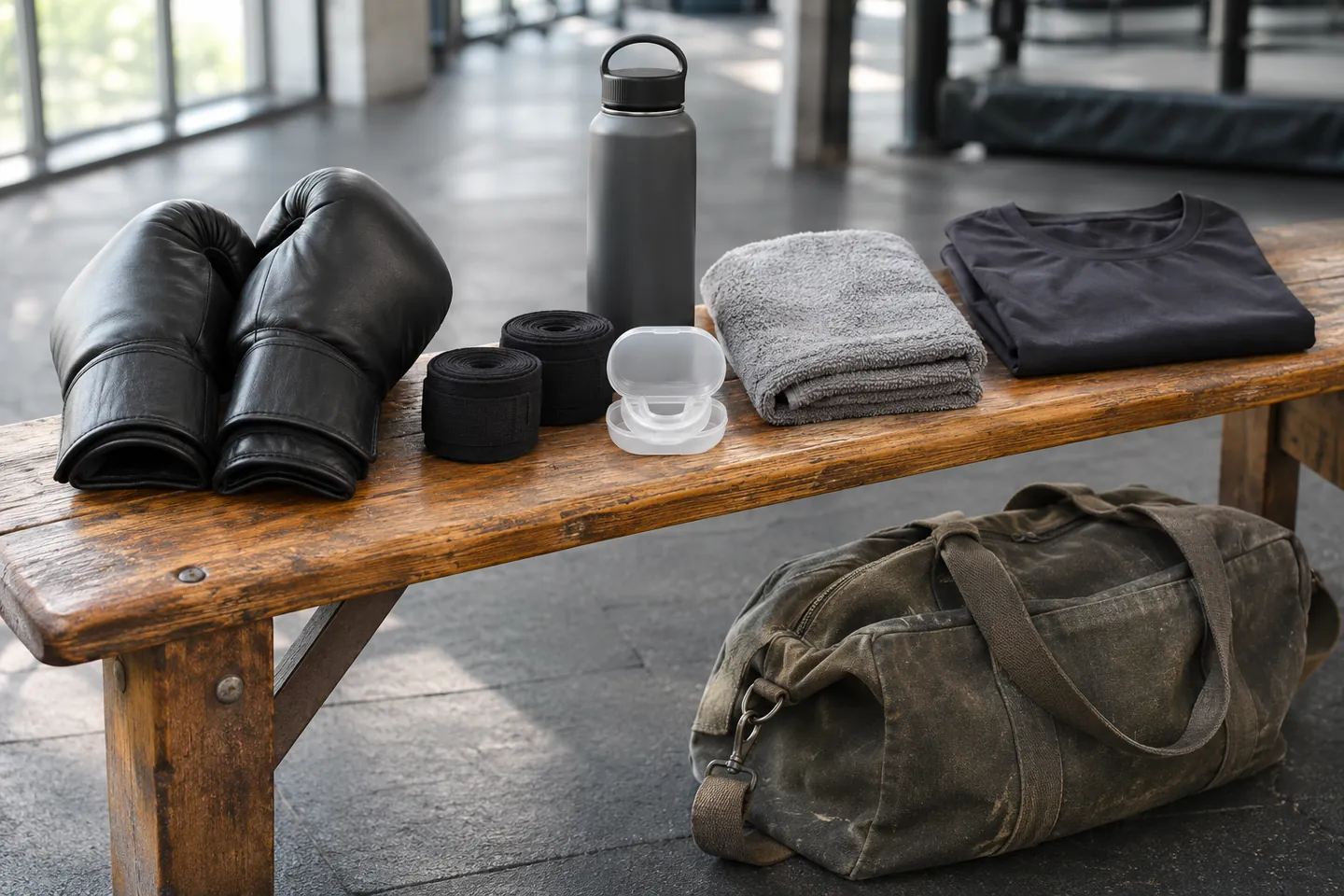
Some items are worth spending a reasonable amount on because they protect you or your training partners. For striking sports, a decent pair of gloves that fits properly is one of them. Cheap gloves can wear out quickly, lose their padding or fit poorly, which may increase discomfort for your hands and wrists.
A mouthguard is another priority if you’ll be doing any partner work. Even an inexpensive boil-and-bite version is far better than nothing. If you continue training seriously, you may eventually decide a better-fitting option is worth it.
Supportive footwear matters for classes where shoes are worn, especially if you have foot, knee or ankle concerns. You don’t need specialized shoes for every activity, but worn-out runners with collapsed soles may not serve you well.
What can safely wait
Plenty of things can wait until you’re sure you’ll stick with training. Expensive branded clothing, for example, does nothing for your technique. Any clean, comfortable athletic clothing will do. Old t-shirts and shorts are perfectly fine for most classes.
Fitness trackers and smartwatches can be useful for some people, but they’re not necessary. You can gauge effort by how you feel and track progress in a notebook.
Supplements are another area where people often spend money unnecessarily. Most people can meet their nutritional needs through regular meals. If you’re considering supplements, talk to a doctor or registered dietitian first rather than relying on marketing.
Hand wraps, gloves and the borrowing question
Many gyms offer loaner gloves for beginners. That’s useful for a first class or two while you decide whether you enjoy the activity. Over time, though, using your own gloves is more hygienic and gives you a consistent fit.
Hand wraps are inexpensive and personal; they absorb sweat and should be washed regularly. Buying your own pair early is usually a good idea even if you borrow gloves for a while.
When you do buy gloves, ask a coach for advice on weight and size. Buying the wrong pair because it was on sale isn’t a saving if you need to replace it soon after.
Getting value from every class
Once you’re paying for classes, the best way to stretch your money is to make each session count. Arrive on time so you don’t miss the warm-up and introduction. Listen carefully to instructions. Ask questions when something isn’t clear.
Focus on one or two key points per class rather than trying to absorb everything. After class, jot down what you learned. This makes your next session more productive because you’re building on knowledge rather than starting fresh each time.
Consistency also improves value. Two classes a week every week will usually teach you more than five classes one week followed by two weeks off. Pick a schedule you can sustain, check the adult schedule for sessions that fit around work and family, and stick with it.
Using free and low-cost options wisely
Many gyms offer a free trial class. It’s a smart way to check whether a gym, a coach and a style suit you before committing. Use it to ask questions about class formats, what you’ll need and how beginners are supported. You can book a free trial with us to see a class in person.
Outside the gym, plenty of useful training is free. Walking or jogging along Mississauga’s trails and parks, bodyweight exercises at home and simple mobility routines cost nothing. These can complement your classes and help you build fitness between sessions.
Online videos can be a helpful supplement, but be cautious. Not all online instruction is accurate, and practising techniques without feedback can create habits that need to be corrected later. Use videos to reinforce what your coach teaches rather than to replace instruction.
Home equipment: less is more
If you want to train at home, start small. A skipping rope, a resistance band and a mat can support a wide range of exercises. These items are compact, affordable and useful for warm-ups, conditioning and mobility work.
Larger purchases like heavy bags, racks or machines are worth thinking about carefully. They take up space, may require installation and can be expensive. Many people buy them with good intentions and then use them rarely. If you’re curious, try training at home with minimal equipment for a few months first.
Second-hand equipment can be a reasonable option for some items, such as dumbbells or kettlebells, which tend to hold up well. Inspect anything used carefully, and avoid second-hand protective gear like mouthguards.
Planning around transportation costs
Getting to and from the gym is part of your training budget. In a city as spread out as Mississauga, transportation can add up, whether it’s fuel, parking or transit fares. Choosing a gym that’s reasonably convenient to your home or workplace can save money and time.
Some people combine trips, training on the way home from work or before errands, to reduce extra driving. Carpooling with a training partner can also help, and it adds accountability.
If transportation is a significant cost, consider whether fewer, longer sessions or a mix of gym and home training makes sense for your situation.
Recovery on a budget
Recovery doesn’t need to be expensive. Sleep, hydration and regular meals are free or low-cost and have a big impact on how you feel. A simple foam roller or massage ball can be helpful and inexpensive.
Professional services like massage or physiotherapy can be valuable, especially if you’re dealing with a specific issue. Some workplace benefits or insurance plans include coverage for these services, so it may be worth checking what your plan offers.
If money is tight, prioritize professional help for issues that aren’t resolving on their own or that affect your daily life. Don’t ignore pain to save money; addressing a problem early may prevent bigger issues later.
Avoiding common spending traps
One common trap is buying a lot of gear right after signing up, driven by excitement. Wait a few weeks before making non-essential purchases. You’ll have a better sense of what you actually need.
Another trap is chasing new equipment or programs constantly. Sticking with a consistent approach often produces better results than switching frequently.
A third trap is paying for training you don’t use. If you’ve committed to a plan, make it a priority to attend. If your circumstances change, communicate with the gym about options rather than letting sessions go unused.
Looking after what you buy
The cheapest gear is the gear you don’t have to replace. Gloves last longer when you let them air out after every session instead of leaving them zipped in a bag in the trunk of a car. Opening them up, wiping them down and storing them somewhere dry makes a noticeable difference, especially in humid Mississauga summers.
Hand wraps should be washed and fully dried between uses; rolling them neatly afterward keeps them from tangling and fraying. A gi, if you train jiu-jitsu, generally lasts longer when washed in cold water and hung to dry rather than tumbled on high heat. Shoes kept only for indoor training stay cleaner and wear more slowly than ones also used for errands.
These habits take a few minutes each week, and they also make you a better training partner. Clean, well-kept equipment is more pleasant for everyone on the mat or around the bags, and it means the money you did spend keeps working for you for much longer.
Talking to the gym about options
Gyms often offer different membership types, class packages or arrangements for families and students. It’s worth asking what’s available rather than assuming the first option you see is the only one. Be honest about your budget and goals; staff can often suggest something that fits.
You might also ask whether there are ways to try different programs before committing to one. This can help you find the activity you enjoy most without wasting money on the wrong fit.
Spending where it counts
Training doesn’t have to be expensive to be effective. The most valuable investments are usually consistency, good coaching and a few essential pieces of equipment. Everything else is optional.
If you’re ready to start, contact us with any questions about programs and what you’ll need, or look through our programs to find a class that fits your goals. Spend where it counts, keep things simple and focus on showing up. That’s where the real progress happens.
Filed under
Keep exploring
More training insights await.