
Practical ways to keep training through hot, humid summer days in Mississauga, from timing and fluids to clothing, pacing, and knowing when to call it a day.
By early July, the weather has usually changed its personality. The spring mornings that felt perfect for a run along the waterfront in Port Credit give way to sticky afternoons, and by the time evening classes start the air inside even a well-ventilated gym can feel thick. Ontario summers are known for humidity as much as heat, and that combination changes how training feels.
None of this means you need to stop exercising for two months. Plenty of people train comfortably through summer in Mississauga. It does mean that some habits that work fine in October need adjusting in July, and that paying attention to your body becomes more important on the hottest days.
What follows is a collection of practical, common-sense adjustments. It is general guidance rather than medical advice. If you have a heart condition, take medications that affect heat tolerance, are pregnant, or have other health concerns, talk with your physician about how heat affects you specifically.
Why heat and humidity make training harder
When you exercise, your body produces heat, and one of its main ways to shed that heat is sweating. Sweat cools you as it evaporates from the skin. In dry heat, evaporation happens readily. In humid conditions, the air already holds a lot of moisture, so sweat evaporates more slowly and cooling becomes less efficient.
That is why a humid day at a moderate temperature can feel more exhausting than a drier day that is technically hotter. Your heart rate may be higher for the same effort, you may tire sooner, and sessions that normally feel routine can feel like a grind.
Recognising this helps set expectations. If your usual workout feels harder on a humid evening, it is not necessarily a sign that your fitness has declined. Conditions have changed, and adjusting effort to match them is sensible rather than lazy.
Give yourself time to adjust
Bodies generally become better at handling heat with gradual exposure over a period of days to weeks. People who move from an air-conditioned office straight into an intense workout on the first hot day of the year often struggle more than they expect.
When the first real heat wave arrives, consider scaling back intensity or duration for a while and building back up as you become more accustomed. This applies particularly to anyone returning from vacation in a cooler place or coming back after a break from training.
Be especially thoughtful if you are new to exercise altogether. Starting a training routine in the middle of summer is perfectly possible, but easing in is even more important than usual.
Check conditions before you go
It is worth getting into the habit of glancing at the forecast on summer days. Environment Canada issues heat warnings for the region when conditions reach certain thresholds, and local news and weather apps generally report them. On those days, adjusting your plans is reasonable.
For outdoor workouts, the time of day makes a big difference. Early mornings are often cooler and less humid than late afternoons. A run along the Credit River trails at seven in the morning can feel entirely different from the same route at four in the afternoon.
Indoor training can also get hot, particularly in spaces with lots of people and limited air conditioning. If your gym tends to warm up during busy evening classes, a slightly earlier or later session may feel more comfortable.
Drinking enough without overthinking it
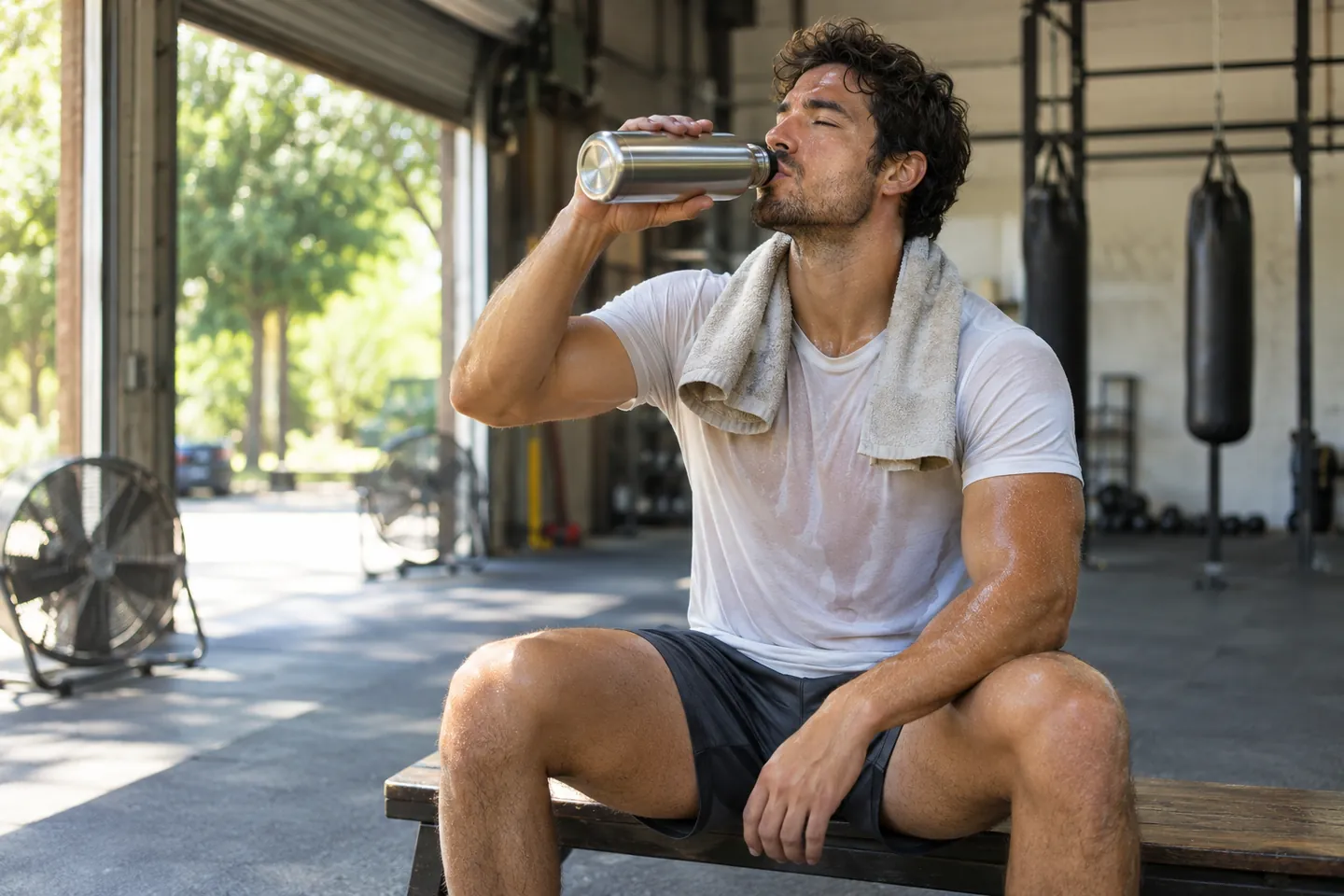
Fluids matter more in summer because you lose more water through sweat. A simple approach is to start sessions reasonably well hydrated, bring a water bottle, and drink during breaks rather than waiting until you feel very thirsty.
For most people doing typical gym sessions, water is enough. During very long or very sweaty sessions, some people use drinks with electrolytes, but for many everyday workouts this is not necessary. If you have questions about your specific fluid or electrolyte needs, a registered dietitian or physician can help.
It is also possible to drink too much water, though this is uncommon in normal gym training. The sensible middle path is to drink regularly according to thirst and conditions, not to force large volumes all at once.
Dress for the weather
Clothing can make a noticeable difference. Lightweight, breathable fabrics that allow sweat to evaporate are generally more comfortable than heavy cotton. Loose fits can help air circulate. Light colours absorb less heat if you are training outdoors in the sun.
For martial arts, some gear is unavoidable. Jiu-jitsu gis, gloves, shin guards, and headgear all trap heat. On very hot days, you might use lighter-weight training clothes where appropriate, remove gear during rest periods, and wipe down between rounds.
Sun protection matters outdoors as well. A hat, sunscreen, and sunglasses help, and choosing shaded routes or parks can make outdoor sessions more pleasant.
Adjust pacing and intensity
On hot, humid days, it often makes sense to lower intensity or shorten sessions. That might mean longer rest periods between rounds, fewer intervals, or swapping a hard conditioning session for something more moderate.
This is not a sign of weakness. Experienced athletes adjust training to conditions all the time. A slightly easier session that you complete comfortably is more valuable than a hard one that leaves you feeling unwell or wiped out for the next two days.
Coaches can help here. If you are training in a group class and the room is hot, it is perfectly fine to take extra rest, step out for water, or work at a lower intensity than others. A good coach will support that.
Know the warning signs
Heat-related illness can range from mild to serious. Symptoms people commonly report include heavy sweating, dizziness, headache, nausea, cramps, unusual fatigue, confusion, or feeling faint. Some people notice they have stopped sweating despite feeling very hot, which can be a concerning sign.
If you notice any of these during training, stop exercising, move to a cooler place, rest, and drink some water if you are able. Let a coach or someone nearby know how you are feeling. If symptoms are severe or do not improve, seek medical help promptly.
Look out for others too. A training partner who seems confused, unsteady, or unusually pale or flushed may need attention. In an emergency, call 911.
Plan around the rest of your day
Summer training does not happen in isolation. A day spent working outdoors, sitting in a hot car on the 401, or running errands in the sun can leave you tired before you even reach the gym. Take that into account when deciding how hard to train.
Meals also matter. Training on an empty stomach in heat can leave some people feeling light-headed. A modest snack an hour or two beforehand, and a proper meal afterward, can help, though everyone’s preferences are different.
Sleep can be harder to come by on hot, muggy nights, especially in homes without air conditioning. Poor sleep affects recovery and how training feels. If you have had a rough night, a lighter session may be the wiser choice.
Training children and teens in the heat
Children and teens can be more vulnerable to heat in some ways, and they may not always recognise or report when they are struggling. If your child is attending summer camps or classes, make sure they have a water bottle, appropriate clothing, and know they can take breaks.
Good programs plan for heat by adjusting activities, building in more rest, and encouraging regular drinking. Parents can reinforce these habits at home and pay attention to how their children feel after activities.
If a child seems unusually tired, irritable, or unwell after a hot day of activity, encourage rest and fluids, and seek medical advice if you are concerned.
Shifting goals for the season
Some people find it helpful to adjust their goals for the summer. Instead of chasing new personal bests in conditioning, they focus on maintaining consistency, refining technique, or building strength in sessions that are less heat-intensive.
Technical skill work is a good fit for summer. Slower drills, form practice, and lighter partner work let you keep progressing without the heat becoming a major barrier. Strength sessions with longer rest periods can also feel more manageable than continuous cardio on very hot days.
Then, when cooler weather returns in September, many people find that their base is solid and they can push intensity again comfortably.
Making the most of air-conditioned and indoor options
If outdoor heat is particularly oppressive, indoor training spaces can be a welcome refuge. Many gyms have air conditioning, fans, and the option to open doors on cooler evenings. Classes like yoga or technique-focused sessions can be especially pleasant in summer.
Group classes have another advantage: coaches who notice when the room is getting too hot and can adjust accordingly. Training alone outdoors, you have to make all those judgements yourself.
That said, indoor spaces can still get warm with many people moving, so the same principles of pacing and fluids apply.
Keeping training enjoyable through summer
Summer in Mississauga does not need to be a break from fitness. With some thought about timing, fluids, clothing, and pacing, most people can keep training comfortably and safely through July and August. Listening to your body, and being willing to dial things back on difficult days, matters more than any particular rule.
If you want structured sessions in a supervised environment this summer, take a look at our group classes and the adult schedule to find times that suit you, or book a free trial and talk with a coach about how to approach training during the hotter months.
Filed under
Keep exploring
More training insights await.