
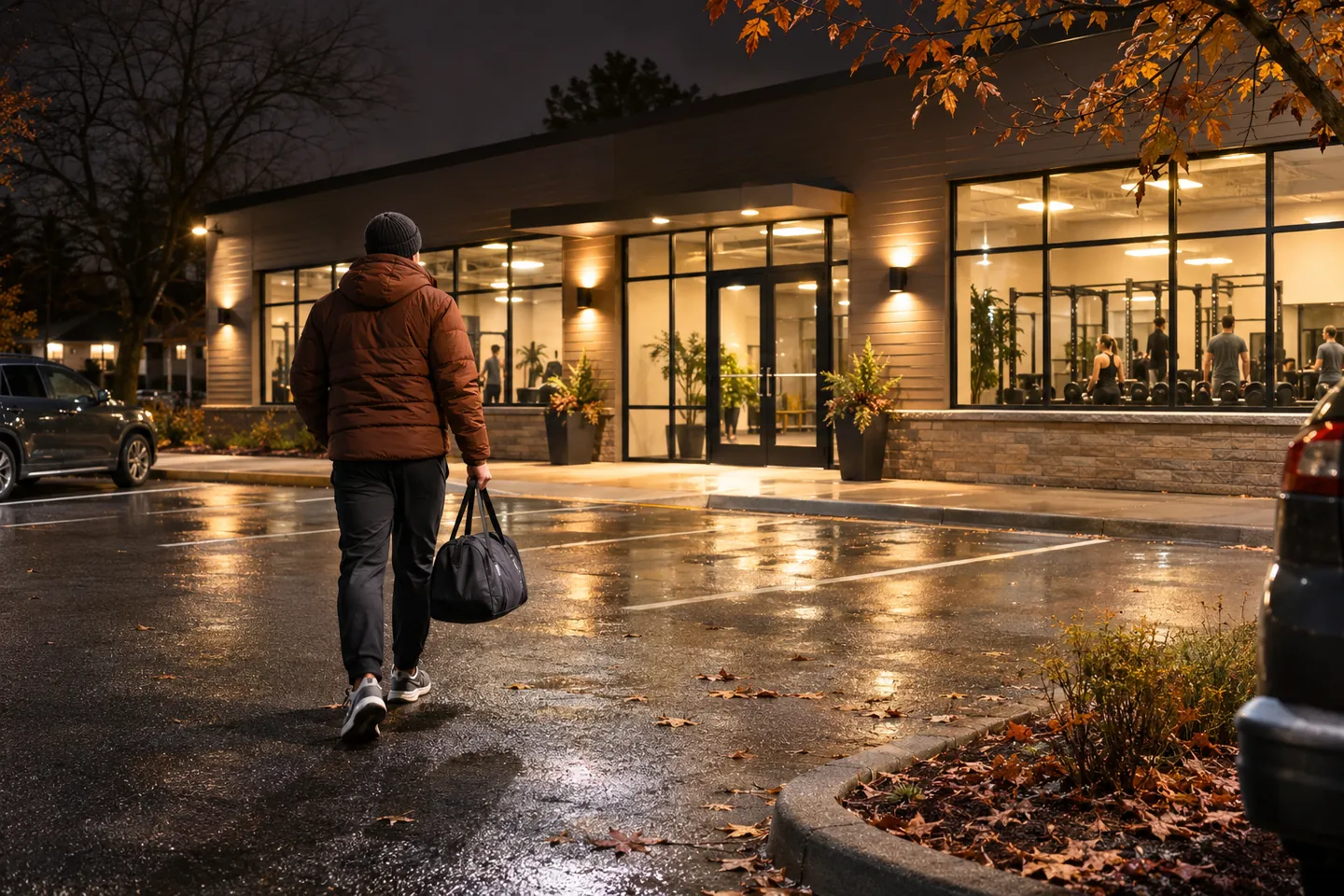
Ideas for keeping your training going as Mississauga evenings get dark early: planning, motivation, safe travel, warm-ups, light, sleep and indoor options.
Sometime in early November, the clocks go back, and the evening you knew in September disappears almost overnight. You leave work and it is already dusk. By the time dinner is finished, it feels like midnight. The couch looks warmer than it did a month ago, and the idea of driving across Mississauga to a 7 p.m. class begins to need a bit more persuading.
This seasonal dip is extremely common. Shorter days, colder weather and the general slowing-down of late autumn affect energy and motivation for a lot of people. None of that means your training has to stall until spring. With a few practical adjustments, training through darker evenings in Mississauga can become a steady, even comforting, part of the colder months.
What follows is a collection of approaches that members and coaches tend to find useful: planning around the dark rather than fighting it, making the commute easier, warming up properly in the cold, and looking after sleep and mood as the season changes.
Expect the dip and plan for it
It helps simply to acknowledge that motivation may drop in November and December. When you expect it, a low-energy evening feels like a predictable seasonal pattern rather than a personal failing. You can then plan around it instead of being surprised every time.
Planning might mean booking classes ahead for the week, setting out your gym bag the night before, or arranging to meet a training partner at a particular session. Small commitments made in advance are harder to talk yourself out of at 5:30 p.m. when it is dark and drizzling. Decisions made in daylight tend to be braver than decisions made after sunset.
Look at the adult schedule and choose two or three sessions that genuinely fit your week. Treat them as appointments. If you miss one, you have a clear plan for the next one rather than a vague intention to “get back into it”.
Go straight from work
One of the most effective tactics for darker evenings is avoiding the trip home first. Once you are home, warm and changed into comfortable clothes, the barrier to going back out rises sharply. Going directly from work to the gym removes that decision point.
Keep a packed bag in the car or at work. Include training clothes, a towel, water, any equipment like wraps or gloves, and a snack if you will be training a while after lunch. If your commute runs along the 401 or 403, check whether leaving directly lets you avoid the worst traffic or simply turn the drive into a reasonable stop on the way home.
If you take transit, look at whether there is a route that lets you stop at the gym between work and home. A small change in routine can make attendance much easier through the winter months.
Morning or lunchtime alternatives
For some people, the solution is to shift training to a different part of the day during the darker months. Mornings in late autumn are also dark, but some people find the bright lights of a gym a helpful way to wake up. Others find lunchtime sessions an excellent way to catch the limited daylight on the way in and out.
Not everyone has that flexibility, and there is no need to overhaul your whole routine. Even moving one session a week to a weekend morning can take pressure off weekday evenings. Saturday and Sunday classes are often a good fit when weekday energy is low.
Experiment over a few weeks and notice which pattern actually leads to consistent attendance. The best time to train is the one you will reliably keep.
If you share a household, talk the plan through with the people you live with. Darker evenings often mean more pressure around dinner, homework and errands, and a session that clashes with family routines is easy to drop. Agreeing in advance that Tuesday and Thursday evenings are training nights, or that weekend mornings are yours for an hour, removes a lot of last-minute negotiation. It also makes it more likely that someone will nudge you out the door when the sofa is winning.
Travelling safely in the dark
Darker evenings bring practical safety considerations. If you walk or cycle to the gym, wear bright or reflective clothing and use lights. Mississauga drivers are coping with the same early darkness and often with wet roads, so visibility matters. Plan routes that are well lit and familiar.
Drivers should allow extra time once the weather turns. Rain, fog and the first snowfall can slow traffic considerably, and arriving rushed and stressed is not a great start to a session. Keep a scraper, some winter washer fluid and a warm layer in the car as the season progresses.
Parking lots can be dark and slippery in late autumn and winter. Wear footwear with decent grip for the walk from the car, and change into training shoes inside. It is a small habit that prevents an annoying slip before you even reach the door.
Warming up properly in the cold
When you arrive from a cold evening, your body may feel stiff. Muscles and joints usually move more comfortably once they are warm, so a thorough warm-up matters more in late autumn and winter. Arrive a few minutes early if you can, and use that time to move gently.
A sensible warm-up might start with light cardio such as skipping, easy shadowboxing or a few minutes on a bike, followed by dynamic movements for the hips, shoulders, ankles and spine. Your coach will lead a warm-up in class, but adding a bit of your own before it starts can help if you tend to feel stiff.
Keep a layer on until you are warm. Many people take their jacket off immediately and then feel cold and tight for the first ten minutes. A light hoodie or long sleeves during the warm-up, removed once you are moving well, is a simple fix.
Light, mood and energy
Shorter days can affect mood and energy for many people. Some notice they feel flatter, sleep more, or crave comfort food as the light fades. For most, these changes are mild. For some, they are more significant. If you notice persistent low mood, loss of interest in things you usually enjoy, or other concerning changes, please speak with your doctor.
Getting outside during daylight when you can, even for a short walk at lunch, is often suggested as a helpful habit in the darker months. A weekend stroll along the Credit River or by the lake at Port Credit can be a pleasant way to catch some light while staying active.
Training itself can feel like a bright spot in a dark week. The gym is warm and well lit, there are familiar faces, and the effort tends to leave people feeling more awake. You may find that the session you almost skipped turns out to be the best part of your day, though of course that will not happen every time.
Choosing sessions that lift you
When motivation is low, choose sessions you genuinely enjoy. If a particular class leaves you feeling energised, prioritise it. If another feels like a chore, consider swapping it for something different during the winter months. You can always return to it in spring.
Social classes can be especially valuable. Group sessions offer structure, encouragement and a bit of company on long, dark evenings. Our group classes cover a range of styles, and finding one or two that you look forward to can make the season much easier.
Calmer formats have a place too. A yoga session on a dark, cold evening can be a soothing way to move, stretch and unwind, especially if you are already training harder elsewhere in the week.
Protecting sleep in the darker months
Darker evenings can blur the line between “evening” and “night”, and some people find their sleep shifts as a result. Training late can also make it harder to settle, particularly after intense sessions. A wind-down routine after evening training helps: a warm shower, a light meal if you need one, dimmer lights and less screen time before bed.
Try to keep your sleep and wake times reasonably consistent through the season. Irregular sleep tends to make low energy worse, which in turn makes training feel harder. If you train in the evening and find sleep difficult, experiment with slightly earlier sessions or gentler ones on certain nights.
Recovery services can also help some people feel better through a heavy training block. Massage is one option members use to support recovery, alongside sensible sleep and nutrition.
Adjusting expectations, not abandoning goals
The darker months do not have to be a time of peak performance. If you maintain your fitness through November and December, keep learning technique and arrive in the new year in roughly the same shape, that is a good outcome. Some people even find this season ideal for steady, unglamorous work on fundamentals.
Set goals that suit the season. Instead of chasing big performance numbers, you might aim to attend a certain number of classes per week, work on a specific technical skill, or complete a block of strength training. These process goals are easier to keep when energy dips.
Be kind to yourself on harder weeks. Missing a session because of a snowstorm or a cold is not a disaster. The goal is to keep the habit alive, not to be perfect.
Keeping the habit alive at Konga Fitness
Dark evenings are part of life in Mississauga from late autumn until the clocks change again in spring. With planning, a packed bag, a sensible warm-up and some attention to light and sleep, training can stay consistent and even become a welcome anchor through the colder months.
If you would like to find a class that fits the season, check the adult schedule and book a free trial at our Timberlea Boulevard location. A warm, bright gym and a friendly group can make the walk across a dark parking lot well worth it.
Filed under
Keep exploring
More training insights await.