
Understand push and pull training in Mississauga through movement examples, coaching questions, equipment choices, and a clearer way to read your program.
Push and pull are two words that can make a strength program easier to discuss. They describe broad directions of effort, and coaches often use them when explaining how different exercises fit together. Understanding push and pull training in Mississauga does not require turning every workout into a technical classification exercise. It requires enough familiarity to ask useful questions about the movements you are practising.
Perhaps you enjoy pressing exercises and regularly skip rows because the cable station feels confusing. Perhaps your plan lists several unfamiliar names and you cannot see how they relate. Or perhaps you have heard that a program must contain a precise push-to-pull ratio and wonder whether your own routine is wrong. These are good reasons to ask for an explanation, rather than copy another person’s exercise list.
What the labels can explain
In everyday gym language, a push exercise often involves moving resistance away from you, while a pull often involves bringing it toward you. A chest press and a row provide recognizable examples. The labels are broad organizing tools; they do not capture every detail of a movement, and not every exercise fits neatly into a simple description.
Ask your coach to point out the examples in your actual program. This is more useful than memorizing a large chart of exercises you may never use. You might discover that two differently named movements serve related purposes, or that an exercise you thought was entirely unfamiliar resembles a pattern you have already practised.
Direction also matters within these broad categories. A movement performed in front of you differs from one performed overhead, and equipment choices can change the setup. The practical lesson is to ask what has changed rather than assuming that understanding one push or pull means you automatically understand all the others.
These categories can help you notice preferences. If you repeatedly choose the exercises you know and avoid the ones that require equipment adjustment, the pattern may reflect confidence rather than a deliberate training decision. Naming that issue gives you a concrete learning goal for the next coached session.
Why balance deserves a conversation rather than a slogan
A balanced program is not necessarily one with identical numbers written beside two categories. The meaning depends on the person, the purpose of the program, and the work included across the whole week. A coach should be able to explain how your exercises relate to your goals without relying on a universal slogan.
Bring the entire routine into the conversation. Include classes, sport practices, independent workouts, and any other planned training. Looking at one isolated session may hide the fact that another day has a different emphasis. The useful unit of review is the arrangement the coach is actually trying to create.
Ask what is currently receiving attention and why. You might be spending more time learning a movement that is unfamiliar, repeating an exercise to improve your understanding, or using a variation because it suits the available equipment. Those are reasons that can be discussed and reviewed.
Avoid treating a preferred exercise as something you must abandon simply because another category needs attention. The discussion may be about adding clarity, adjusting priorities, or learning an alternative. A useful program explanation helps you understand the whole rather than turning every exercise choice into a verdict about whether you have trained correctly in the past.
Make unfamiliar equipment less mysterious
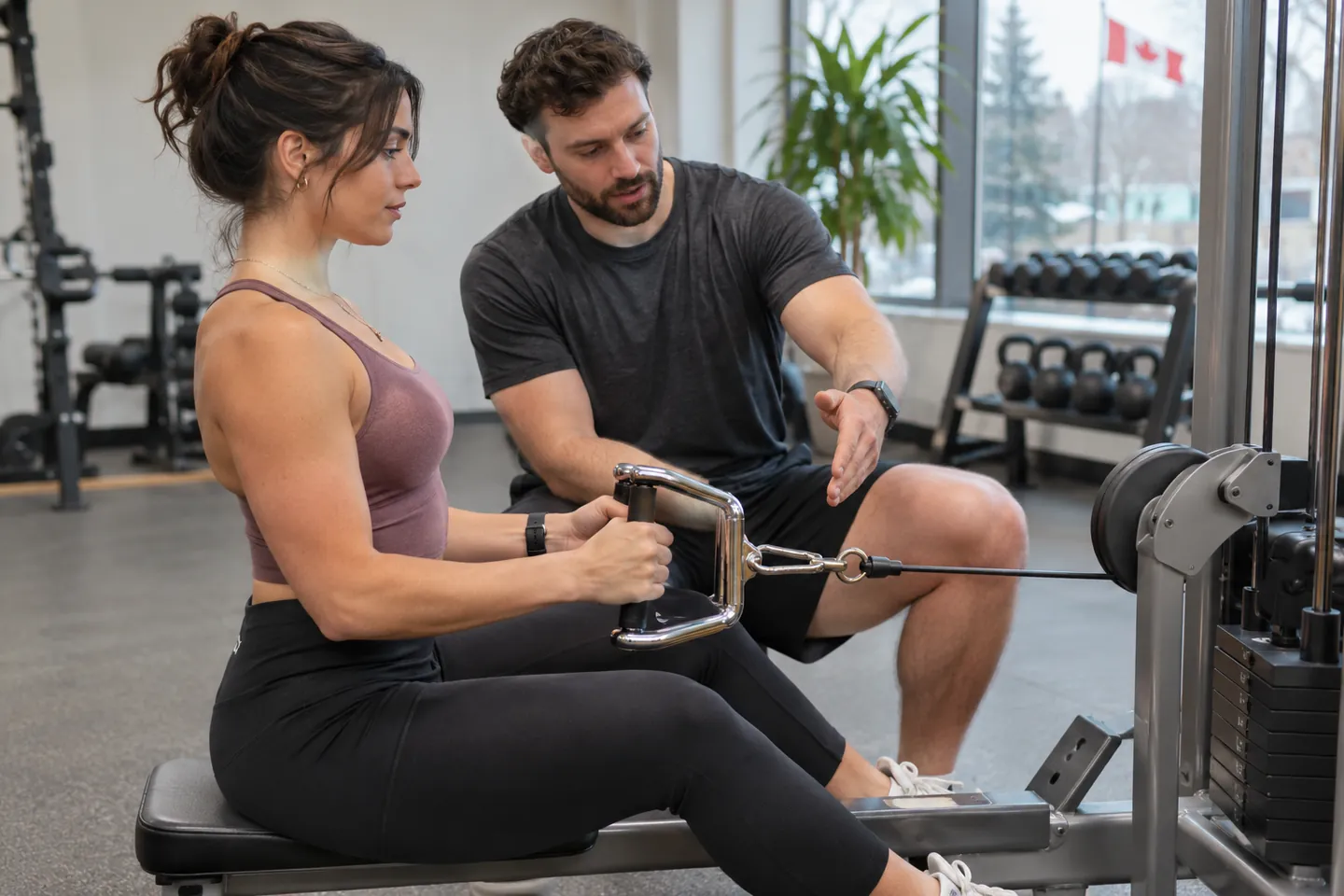
Many people avoid a movement because they do not know how to set up the station. Cable attachments, seat adjustments, and handles can make a simple instruction look complicated. Ask the coach to demonstrate the preparation separately from the exercise itself.
Then repeat the setup while they observe. Identify the parts that need adjustment and the details you should check each time. If a setting is specific to the machine, record it with a description of that machine. A number remembered without context may not help when you encounter a different model.
For a pulling movement, you might need to understand which handle the plan specifies and how the cable station is arranged. For a pushing movement, you may need to learn a seat or bench position. The exact details belong to the exercise you are assigned, so resist borrowing instructions from a nearby person who is performing another version.
Ask how to leave the equipment afterward and where attachments belong. Learning the full process—from approaching the station to returning the items—can make independent training more comfortable. You are no longer trying to solve several administrative puzzles while also remembering a movement cue.
Use a learning comparison during coaching
A helpful coaching conversation can compare two exercises you already perform. Ask what is similar in the setup process, what differs in the movement, and which cue matters most for each. The goal is understanding, not constructing an elaborate technical explanation.
For example, you might notice that both exercises require a clear starting position and controlled attention to the coach’s instruction, while the equipment and direction differ. That observation gives you a useful general habit without pretending that the exercises are interchangeable.
You can organize the conversation around four plain questions:
- What is the purpose of this exercise in my current plan?
- Which setup details should I check before beginning?
- What should I pay attention to during the next set?
- What would make you change this version or its difficulty?
Write the answers in your own words. If you cannot explain an instruction back, ask for another demonstration. Learning the vocabulary should make the practical work clearer, not create a new layer of jargon between you and the coach.
If something feels wrong or painful, stop and report it. The label push or pull does not tell you whether a particular exercise is appropriate for your circumstances. Your experience and the coach’s observation remain part of the decision about the assigned task.
Keep substitutions specific
Busy gyms sometimes require flexibility. Before training independently, ask what to do when the intended station is occupied. A replacement exercise should be something your coach has explained, not merely the first movement you recognize from the same broad category.
Two exercises can both be pulling movements while having different setup requirements and purposes in a program. The category helps organize the conversation, but it does not remove the need to understand the replacement. Record any agreed alternatives beside the original exercise and include the details that differ.
You can also ask whether changing the order is acceptable. Sometimes waiting, moving to another planned task, or using an assigned alternative may be the appropriate response. Having the options discussed in advance reduces the temptation to improvise a completely different session under time pressure.
If you make an agreed change, record what you actually completed. That gives the coach accurate information at the next review. A log that lists the original plan even when you performed something else can make the record confusing and hide a practical equipment issue that needs solving.
Notice what you consistently avoid
After several sessions, review which movements you approach confidently and which you postpone. Look for the reason. You may dislike a setup, forget an instruction, feel uncertain asking someone to share equipment, or simply prefer the exercises that are already familiar.
Each reason suggests a different next step. A forgotten setup may need a written note. An unclear movement may need another demonstration. An awkward equipment-sharing situation may need guidance about the facility’s expectations. Avoidance becomes easier to address when it is described precisely.
Do not assume the answer is always to force yourself through the original version. Discuss your observations with the coach. There may be a useful alternative, or the original exercise may become more comfortable once the confusing part is clarified. Your role is to provide honest information; the coaching discussion can then connect that information to the program.
This is also a chance to notice progress that does not involve a new equipment number. You may now recognize the station, prepare it without help, and explain the exercise’s place in your plan. Those changes make the routine easier to follow and create a clearer basis for future decisions.
Read the program as a connected plan
The purpose of learning push and pull terminology is to understand your training better. You should be able to see why different movements appear, how the sessions relate, and what questions remain. You do not need to become attached to a particular split or label before you have established a routine you can attend.
When reviewing the plan, bring practical information alongside exercise questions. Tell the coach how much time you have, which equipment creates delays, and which instructions are difficult to remember. A theoretically tidy plan still needs to work inside an ordinary appointment.
Konga’s personal training information provides an introduction to guided training. Contact the team to discuss your starting point and current options. A useful outcome is a program you can describe plainly, perform with appropriate instruction, and review using accurate notes. The vocabulary earns its place when it helps you do that work with greater clarity.
Filed under
Keep exploring
More training insights await.