
Thinking about a women's fitness or martial arts class in Mississauga? Learn what sessions usually involve, how to prepare, and how to ask about adjustments.
A women’s class is, at its simplest, a training session where everyone on the floor is a woman. The coaching, the drills, and the effort are real. What changes is the atmosphere, and for many people, that change is exactly what makes it possible to walk through the door in the first place.
Women choose these classes for all sorts of reasons. Some feel more comfortable learning a new skill without an audience of men. Some have cultural or religious preferences around mixed training. Some are returning to exercise after pregnancy, illness, or a long break and want a gentler social starting point. Others simply enjoy the camaraderie. None of those reasons need justifying.
If you are considering women’s classes in Mississauga and are not sure what actually happens during one, this guide covers the common elements, how to prepare, and how to make the experience work for you. Specific formats differ from gym to gym, so it is always worth asking the coaching staff about the details of the class you are interested in.
The tone of the room
The first thing many women notice is the tone. Classes often feel relaxed and welcoming, with a mix of complete beginners and people who have trained for a while. There is usually plenty of conversation before and after, and an understanding that everyone is working at their own level.
That does not mean the sessions are easy. Women’s classes can be every bit as demanding as mixed ones. What tends to differ is the sense that it is fine to ask questions, take a break, or try something slowly. Without the self-consciousness some people feel in mixed settings, it can be easier to focus on learning.
Coaches play a large role in setting this tone. A good coach will introduce new members, explain drills clearly, and make sure nobody feels left out. If you are new, let the coach know so they can help you settle in.
What a session might include
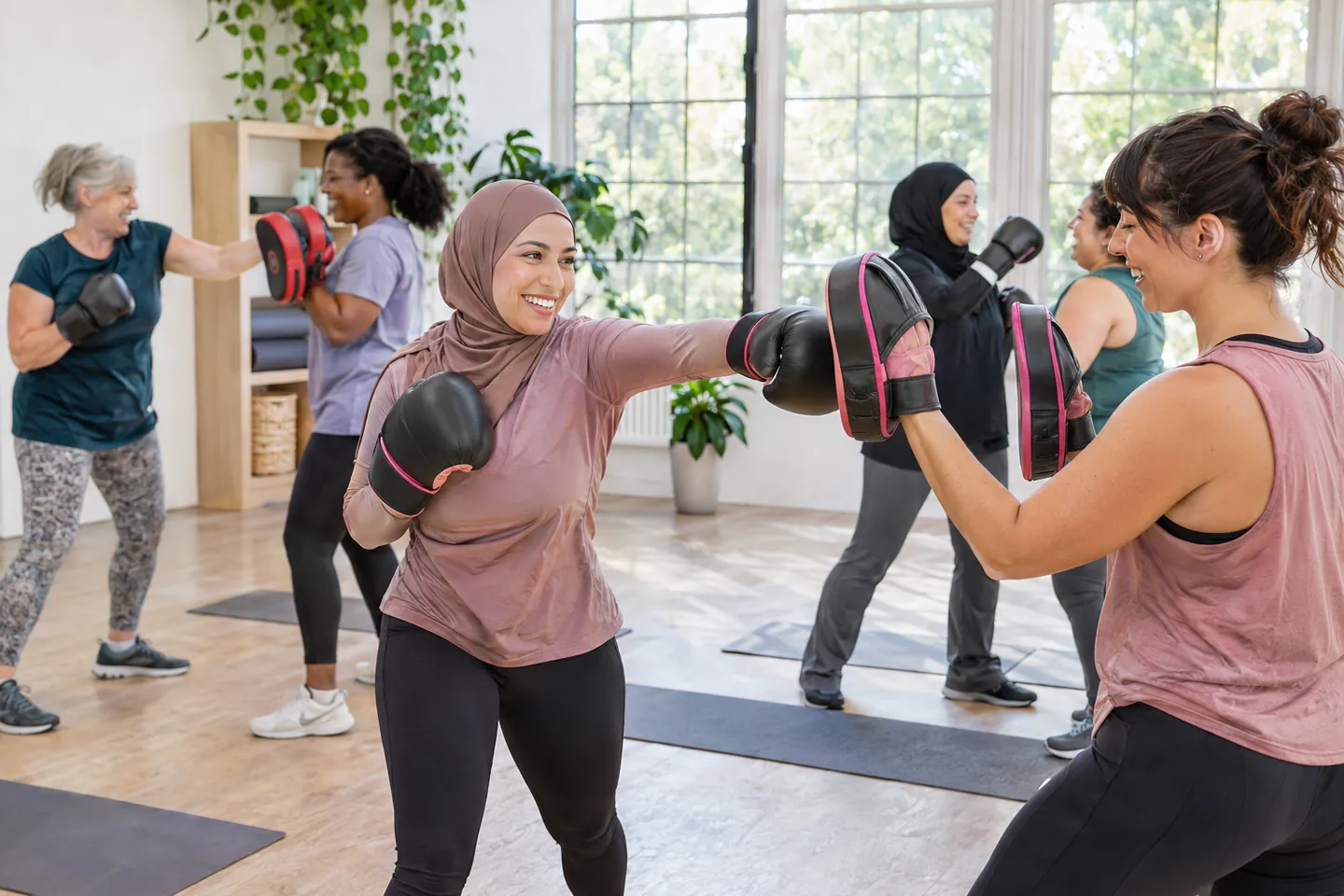
Many women’s classes combine elements of martial arts with general fitness. A session might include a warm-up, some technical work such as boxing or kickboxing combinations, partner pad work, and a conditioning segment. Some classes focus more on self-defence awareness, others on fitness, and others on a particular discipline.
The structure is often similar to other group classes. A coach demonstrates a technique, participants practise it, and the session builds toward combining skills or completing a circuit. Breaks are built in between rounds, and the coach moves around the room giving feedback.
If you have a particular interest, for example in learning to punch properly or improving general strength, ask which class format matches it best. Coaches can usually point you toward the session that suits your goals.
You do not need to be fit to start
One of the most common worries is not being fit enough. Women often say they want to get in shape before joining a class. That approach can delay starting indefinitely. Classes are designed to build fitness over time, and coaches expect people to arrive at very different levels.
Every exercise can be scaled. If a drill involves jumping, there is usually a lower-impact version. If push-ups from the floor are too difficult, they can be done from the knees or against a wall or bench. If a round is too long, you can take a short break and rejoin. Nobody expects you to keep pace with someone who has trained for years.
What matters more is showing up consistently. Many women find that after a few weeks of regular attendance, they can do more than they expected, and the classes start to feel familiar rather than intimidating.
Health, pregnancy, and life stages
Women’s bodies go through many changes over a lifetime, and training can be adapted to different stages. If you are pregnant, recently postpartum, managing a pelvic health concern, going through perimenopause or menopause, or living with a chronic condition, speak with your doctor or another qualified health professional about exercise before starting a new program.
Once you have that guidance, share any relevant information with your coach. You do not need to give details you are uncomfortable sharing. Something as simple as “I need to avoid jumping right now” or “I’m returning after having a baby” is enough for a coach to suggest modifications.
Some women find it helpful to work with a physiotherapist alongside their training, particularly around pelvic health or returning after injury. A physiotherapist can assess your situation and offer advice that a fitness coach is not qualified to give. The two roles complement each other well.
Clothing and cultural considerations
Wear clothing you can move in comfortably. Breathable athletic wear, supportive footwear for fitness portions (or bare feet on mats if the coach directs), and layers you can adjust are generally sensible. A supportive sports bra is worth investing in for any class with jumping or striking.
Many women wear modest clothing such as long sleeves, leggings, and sport hijabs during training. That is completely normal. If you have questions about what is appropriate for certain drills, such as whether loose garments might catch during partner work, ask the coach. They can suggest options that keep you comfortable and safe.
Remove jewellery before class, particularly rings and earrings, because they can catch on gloves or pads. Tie back long hair. Bring a water bottle and a small towel.
Partner work and personal space
Many women’s classes include partner drills, such as holding pads for each other or practising simple self-defence movements. Partner work is usually done at a controlled pace, and you can communicate with your partner about what feels comfortable.
If you feel uncomfortable with any type of contact, speak to the coach. They can pair you with someone you know, adjust the drill, or give you an alternative. A good class respects personal boundaries and recognises that some women may have reasons for being cautious about physical contact.
Partner work can also be one of the most enjoyable parts of class. Holding pads for someone, encouraging them through a round, and then switching roles builds trust and friendship surprisingly quickly.
Learning technique at your own pace
Technique matters in martial arts, and women’s classes usually take the time to teach it properly. You might spend several sessions learning to stand in a stable stance, throw a straight punch, or perform a basic kick. Repetition is part of the process.
If you feel slow to pick something up, remember that everyone learns physical skills differently. Some people understand a movement quickly but take time to make it smooth. Others need several demonstrations before it clicks. Ask the coach to show the technique again or break it into smaller parts.
Over time, many women find great satisfaction in skills they once thought were beyond them. Landing a clean combination on the pads or completing a full class without stopping can be genuinely confidence-building moments.
Self-defence expectations
Some women’s classes include self-defence elements. These can be valuable for building awareness, confidence, and basic physical skills. However, it is important to keep expectations realistic. No class can guarantee safety in every situation, and the most useful lessons often involve awareness, boundary setting, and avoiding danger rather than physical technique alone.
A good coach will be honest about this. They might teach practical movements while also discussing situational awareness and making safe choices. If self-defence is your primary goal, ask how the class approaches it and whether there are specific sessions focused on it.
Fitting classes into a busy week
Many women in Mississauga balance work, caregiving, school runs, and household responsibilities. Finding time for training can be one of the hardest parts. Looking at the schedule and choosing a regular slot, even just once or twice a week, is a realistic starting point.
Some women find that classes during school hours or in the early evening work best. Others prefer weekends. Commuting from places like Meadowvale or Erin Mills can affect which times are practical. Choose times you can reasonably maintain rather than an ambitious plan that falls apart in the first busy week.
Training with a friend can help. Having someone to drive with, to remind you, and to share the experience can make it easier to keep going when motivation dips.
Moving between women’s and mixed classes
Some women train exclusively in women’s classes, and that is completely valid. Others use women’s classes as a starting point and later add mixed sessions in a particular discipline, such as boxing or jiu-jitsu, once they feel more confident. Some do both regularly.
There is no right path. If you are curious about mixed classes at some point, talk to the coach about what they involve and whether they suit your goals. If you prefer to stay in women’s classes, that is your choice to make. The goal is a training routine you enjoy and can sustain.
Asking good questions before you start
Before your first session, consider asking a few questions. What does a typical class include? Do I need any equipment? Is there anything I should tell you about my health or experience? Which class would you recommend for a complete beginner? Most coaches are glad to answer and appreciate the chance to prepare.
You can also ask whether the class includes martial arts techniques, general fitness, or a mix, and what the general pace is like. Knowing what to expect can reduce nerves significantly.
Trying women’s classes at Konga Fitness
Women’s classes offer a supportive, focused environment for learning skills, building fitness, and meeting other people who share similar goals. You do not need experience, a particular fitness level, or special equipment to begin.
If you are interested in training in Mississauga, learn more about our women’s classes, review the adult schedule, and book a free trial to experience a session and ask the coach any questions in person.
Filed under
Keep exploring
More training insights await.