
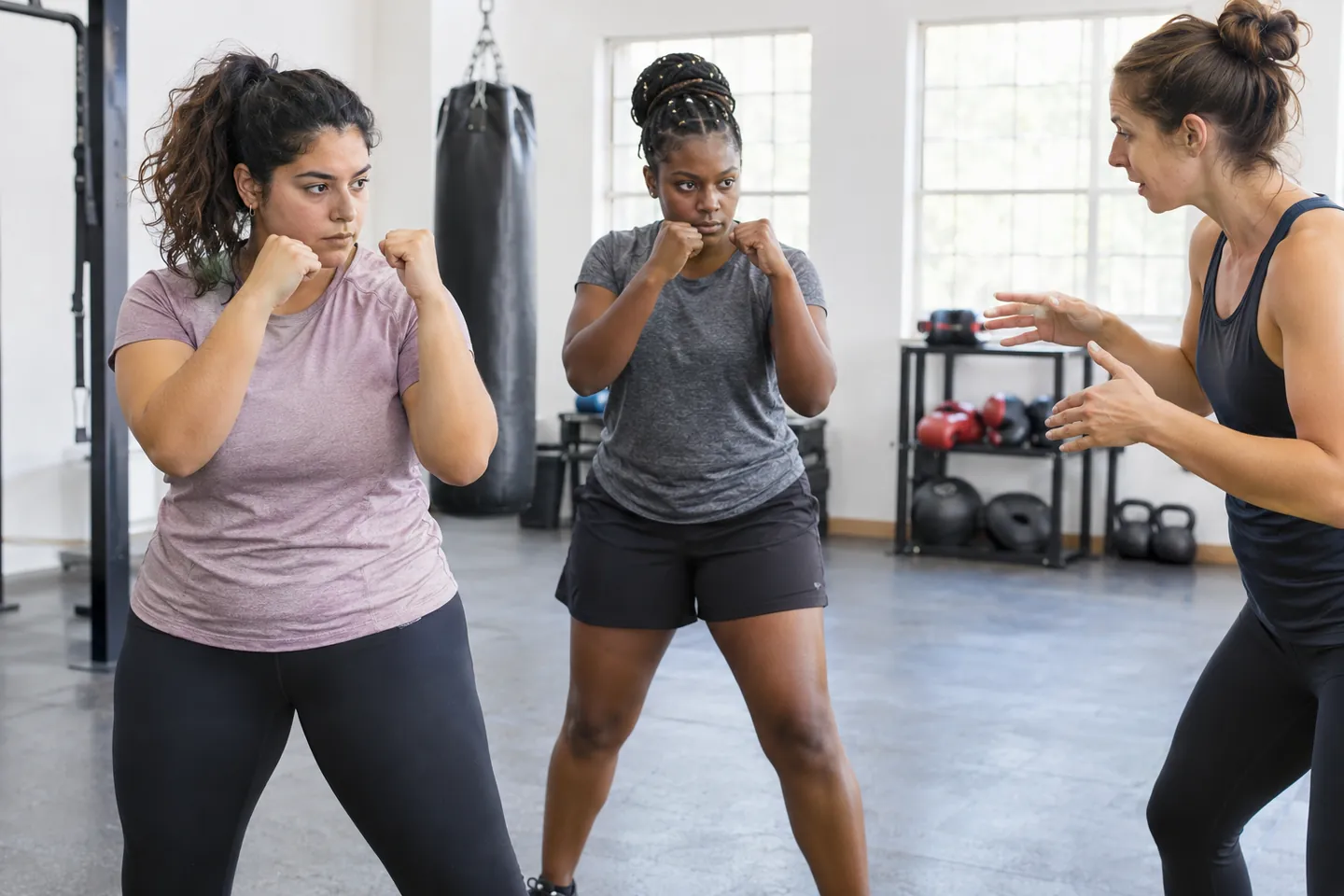
Explore starting boxing in Mississauga as a woman, with practical questions about coaching, class format, equipment fit, partner choices, and personal goals.
Women come to boxing with different interests. One person wants to understand the technique, another enjoys a structured fitness class, and another is simply curious about an activity she has never tried. There is no need to fit those reasons into a single story about confidence, appearance, or toughness. Your own goal is enough to begin a useful conversation.
For women starting boxing in Mississauga, the important questions are practical: how beginners are taught, what the class includes, how equipment is fitted, and whether participation choices are respected. A good first enquiry should help you understand the actual experience rather than rely on broad promises about what boxing is supposed to do for every woman.
Start with your own reason for attending
Write a sentence describing what you want to explore. You might want noncontact technique, an engaging class, or a chance to learn something alongside a friend. The sentence can be simple and provisional. You are identifying a starting point, not committing to a lifelong goal.
Avoid borrowing someone else’s motivation because it sounds more impressive. You do not need competitive ambitions to ask for careful instruction, and you do not need an appearance-related goal to participate in fitness. A clear personal reason helps the coach explain whether the session fits.
If your interest changes after several classes, revisit the conversation. Perhaps you discover that you enjoy technical practice more than expected, or that the schedule matters more than a particular format. Learning what you prefer is part of choosing a useful routine.
Ask about the actual class format
Find out whether the session is designed for beginners and what activities it currently includes. Ask about solo practice, bags, pads, partner drills, and any contact expectations. The word boxing can describe several formats, so get the details that matter to your decision.
If you have a preference for a women-only or mixed class, ask whether the gym offers a suitable option. Do not assume availability from promotional language or from seeing one photograph. Current information about the session is more useful than guessing who usually attends.
Ask how new participants are introduced to the group. Will the coach explain the equipment and basic stance before the main drill? How are unfamiliar sequences taught? Those questions reveal more about the learning experience than a general statement that all levels are welcome.
Evaluate how your questions are answered
Notice whether the response addresses what you actually asked. If you enquire about technique and receive only comments about weight loss or appearance, ask again in clear terms. Your stated interest should guide the discussion rather than an assumption about why women attend.
Look for explanations that help you act. You should be able to understand what to bring, when to arrive, and how the first visit will work. Friendly encouragement is welcome, but practical information is what lets you prepare.
During class, observe how corrections are delivered. A useful cue identifies something you can try, such as a shorter step or a clearer return. You should have room to ask for another demonstration without being treated as though the question undermines your effort.
State contact preferences explicitly
If you want to train without sparring or strikes directed at you, say so before participating. Ask which drills match that preference and whether alternatives are available within the class format. Do not rely on the word beginner to settle the issue.
A preference can remain stable or change, but it should always be yours to communicate. You do not need to accept contact to prove seriousness, and an enthusiastic partner does not decide the boundaries for you. Ask what each new activity involves before agreeing to it.
Respect other participants’ choices in the same way. A useful training environment allows people to understand and communicate their participation. The coach should be involved when a pairing or drill requires clarification rather than leaving beginners to negotiate a significant change alone.
Ask how partners are selected
Partner work can introduce questions about experience, size, comfort, and the purpose of the drill. Ask how the coach makes pairings and how to request an adjustment if something is not working. You do not need to wait until a round becomes uncomfortable to learn the process.
Before starting, confirm the sequence, roles, intensity, and stopping cue with your partner. Both people should understand the same task. A drill becomes easier to learn when neither person has to guess what the other intends.
If a partner changes the sequence or contact level unexpectedly, stop and involve the coach. Keep the description factual. “We agreed on this drill, but the task has changed” gives the instructor a clear issue to resolve without turning the moment into an argument about ability.
Fit equipment to the person and activity
Ask what gloves and wraps the class requires before buying. Equipment should be chosen for its intended use and individual fit. A label aimed at women does not by itself answer whether the glove suits your hand or the gym’s requirements.
Try the glove with the wraps you will wear, and ask for help checking the setup. Notice whether the thumb, fingers, palm, and closure feel appropriate. If something pinches or shifts, raise the issue before training with it.
Avoid choosing based only on colour or a generic size recommendation. The coach and manufacturer’s guidance can help narrow suitable options, but your actual fit still matters. If loan equipment is available for an initial visit, confirm the process and requirements in advance.
Choose clothing around movement and comfort
Wear athletic clothing that lets you raise your arms, bend your knees, and take short steps without constant adjustment. Your attention belongs on the lesson, so choose a setup that feels dependable during movement.
Ask about footwear and changing facilities if those details affect your visit. You can also ask practical questions about modest clothing preferences or other participation needs without assuming the gym already knows them. Clear information helps both you and the instructor prepare.
Secure hair and follow the gym’s guidance about jewellery. Bring the personal items you need for the journey home. These are ordinary preparation decisions, not a requirement to look like someone who has already been training for years.
Give yourself room to be a beginner
The first session may involve unfamiliar words, equipment, and room routines alongside the movements themselves. That is a lot of information. Choose one or two learning priorities with the coach instead of expecting to remember everything immediately.
Ask for a slower demonstration when needed. If you understand the first punch but lose track of the transition, say exactly that. Specific questions make it easier for the instructor to simplify the task and help you find the point of confusion.
Do not compare your first attempts with an experienced participant’s routine. You may be watching someone who has repeated the same basics many times. Your current task is to learn the starting point and return with a clearer question, not to match their fluency on day one.
Keep your goals separate from unsolicited commentary
A class can be physically demanding without making body appearance the centre of every conversation. If comments about weight, shape, or comparison do not match your goals, communicate your preference. You can ask to focus feedback on technique, participation, or another relevant objective.
The same applies to assumptions about personality. You do not have to become louder, tougher, or more competitive to learn boxing. Different people bring different temperaments to the same activity. The useful standard is thoughtful participation in the agreed task.
If the environment repeatedly ignores your clearly stated goals, consider whether another class or format would fit better. That is a decision about the learning setting, not evidence that boxing itself is unavailable to you.
Build the practical routine around your life
Look at the complete visit: travel, arrival, equipment preparation, class, and the journey home. In Mississauga, a location that seems convenient on a map may require more time at the hour you plan to attend. Use the actual route and schedule in your decision.
Start with a manageable appointment and review it after several visits. If you are coordinating work, caregiving, or other commitments, make the plan realistic enough to repeat. You do not need to match anyone else’s training frequency to take your own learning seriously.
Record one useful cue after class if that helps. A brief note can preserve what you learned and make the next visit feel connected to the last. Progress may begin with greater familiarity rather than a dramatic change in performance.
Choose a class that answers your real questions
Review the boxing program and use a trial enquiry to ask about current beginner formats, equipment, and participation options. Explain the experience you want in your own words. That gives the gym a meaningful opportunity to respond.
Starting boxing as a woman does not require accepting a preset narrative about why you are there. It requires clear information, appropriate instruction, and room to learn as yourself. A first class that respects those basics can give you a practical next step and a better understanding of what you want to continue exploring.
Filed under
Keep exploring
More training insights await.