
Nervous about your first Brazilian jiu-jitsu class in Mississauga? Here is what usually happens on the mat, from warm-ups and drilling to tapping and hygiene.
Of all the martial arts, Brazilian jiu-jitsu may be the one that looks most confusing from the outside. Two people roll around on the floor, grip each other’s clothing, and then one of them taps and they both smile and shake hands. If you have never trained before, it is hard to picture what a beginner actually does for an hour.
The good news is that a first class is far more structured and far gentler than it looks in competition footage. If you are planning your first Brazilian jiu-jitsu class in Mississauga, it helps to know roughly how the session will unfold, what is expected of you, and what is definitely not expected. Knowing those things in advance can turn nervousness into curiosity.
This post walks through a typical first class from the moment you arrive to the drive home, with some practical notes along the way.
Before you leave the house
Preparation for a jiu-jitsu class starts earlier than many people expect. Because the sport involves close contact, hygiene is taken seriously. Arrive freshly showered, with clean training clothes, and with fingernails and toenails trimmed short. Long nails can scratch training partners and can also bend back painfully during grips.
Remove jewellery before class, including rings, earrings, and watches. Tie back long hair. If you wear glasses, plan to train without them or ask the instructor what other students do. Contact lenses work for many people, though they can occasionally be dislodged.
As for clothing, ask the gym whether you should wear a gi or no-gi attire for the class you are attending. Many places have loaner gis or allow trial students to wear a fitted t-shirt or rash guard and athletic shorts or pants without zippers or pockets. Avoid loose clothing that fingers and toes can get caught in. Pack a water bottle, flip-flops or sandals for walking off the mat, and a bag for sweaty clothes.
Arriving and finding your way
Give yourself time. If you are coming from across the city, rush-hour traffic on Hurontario or the 401 can turn a fifteen-minute drive into thirty. Arriving ten or fifteen minutes early lets you fill in any forms, meet the instructor, change, and settle in without feeling hurried.
Introduce yourself to the coach and mention that it is your first class. Tell them about any injuries, surgeries, or health conditions that might affect training. This is not a formality. It lets the instructor choose partners carefully, adjust drills, and keep an eye on you during the session.
Most grappling gyms ask that shoes never touch the mat and bare feet never walk anywhere unclean, such as the washroom. Wear your sandals between the change room and the mat edge. These small rules can feel strange at first, but they are part of keeping the training surface clean for everyone who will lie on it.
The warm-up
Classes often begin with a warm-up that may include jogging around the mat, joint mobility, and a series of movements specific to jiu-jitsu. These might include shrimping, which is a hip escape movement on your back; technical stand-ups, which teach you to rise safely from the ground; and forward or backward rolls.
These movements may feel unfamiliar or awkward. That is expected. Nobody is judging how well you shrimp on day one. Do the best version you can, ask for a demonstration if you are unsure, and skip anything that feels unsafe for your body, particularly rolls if you have neck or back concerns. Let the coach know so they can offer an alternative.
The warm-up has a purpose beyond raising your heart rate. Many of those odd-looking drills are the building blocks of escapes and transitions you will learn later. Over time, you will start to recognise them inside real techniques.
The technique portion
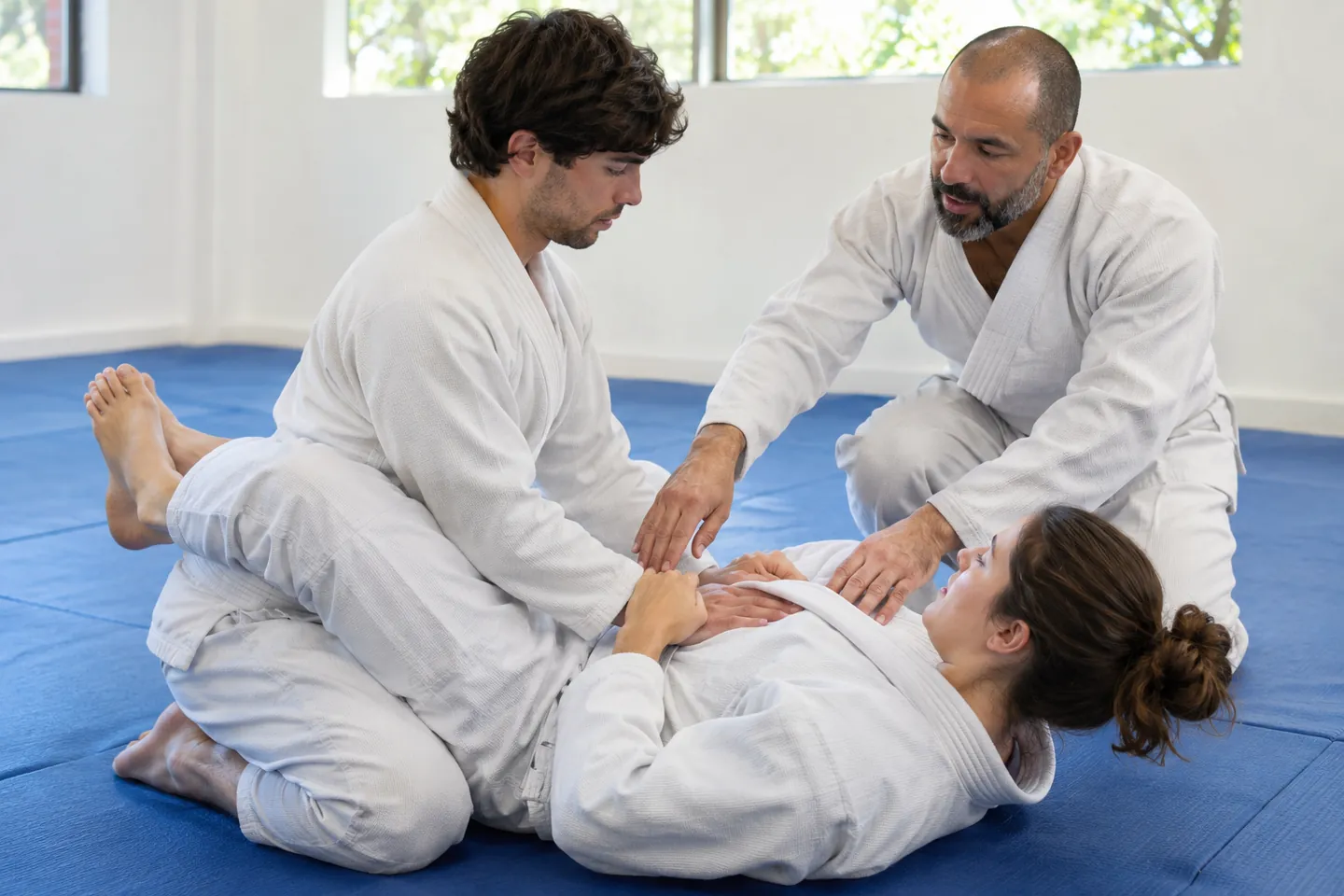
After the warm-up, the instructor will usually demonstrate a technique or a short series of related techniques. It might be an escape from a bottom position, a way to pass someone’s legs, or a basic submission. The demonstration is often shown several times from different angles, with key details explained.
You will then pair up with a partner to practise. One person performs the technique while the other provides light, cooperative resistance or none at all, and you take turns. This is called drilling. The point is to understand the sequence and the details, not to beat your partner.
Do not worry if you cannot remember every step. Most beginners focus on one or two details and let the rest follow. If you get lost, ask your partner or wave the instructor over. Experienced students often help newer ones, and many enjoy explaining things because it reinforces their own understanding.
Learning to tap
Tapping is how you signal that you want your partner to stop. You can tap with your hand on your partner’s body or on the mat, several times firmly so it cannot be missed. If your hands are trapped, you can tap with your foot or simply say “tap” out loud. Your partner should release immediately.
Tapping is not a failure. It is the mechanism that makes jiu-jitsu safe to practise at full effort. Everyone taps, including black belts, and they do so regularly. Tapping early, before anything hurts, is a sign of good judgment. Waiting too long can lead to injuries that take you off the mat for weeks.
The same principle applies when you are the one applying a technique. Apply submissions slowly and with control, and let go the moment your partner taps. In a first class, you may not even be practising submissions with resistance, but learning the habit of slow, controlled application from day one is valuable.
Positional work and live rolling
Some classes finish with positional sparring, where partners start in a specific position and try to achieve a limited goal, such as escaping or passing the guard. Others include free rolling, sometimes called live training, where both partners try to apply what they know within the rules.
For a first class, many instructors will either keep you out of live rolling or pair you with an experienced, calm partner who will move slowly and help you learn. You are always allowed to sit out a round. If you are unsure whether you should participate, ask. A good coach will never pressure you into live training before you feel ready.
If you do roll, keep your goal modest: stay relaxed, breathe, try to recognise positions you saw earlier, and tap when needed. Many beginners use too much strength and get exhausted in a minute. Partners who are calm and patient often tell new students to slow down and breathe, and it is genuinely good advice.
What your body might feel afterwards
Jiu-jitsu uses muscles in ways most people are not used to. Your forearms may feel tired from gripping, your neck may feel stiff from unfamiliar positions, and your core may be sore the next day. This kind of general muscle soreness is common after a new activity and usually eases within a few days.
Pay attention to sharp pain, joint pain that does not settle, or anything that worries you. Those are reasons to speak with a physiotherapist, chiropractor, or doctor rather than pushing through. Gentle movement, adequate sleep, and regular meals usually support recovery from normal soreness better than doing nothing at all.
Mat burn, small scrapes, and skin irritation can also occur. Keep any cuts clean and covered, and do not train with open wounds or anything that might be a skin infection. Most gyms ask students to stay off the mat until such issues are cleared, which protects everyone.
Washing up and gear care
As soon as you get home, wash your gi or training clothes. Do not leave them in a closed bag in the car, especially in warm weather. Shower soon after training as well. These simple habits are among the most important ways grapplers help keep their community healthy.
If you buy your own gi later, follow the care label. Many gis shrink in hot water or high dryer heat. Washing in cold water and hanging to dry is a common approach. Having two gis or two sets of rash guards and shorts makes it easier to always arrive with clean gear if you train several times a week.
The mental side of the first few weeks
New students often feel lost for a while. Jiu-jitsu has many positions, names, and details, and it takes time for things to connect. It is common to feel that you are forgetting more than you learn. That feeling tends to change gradually, often without a clear moment when it happens.
One helpful mindset is to measure progress in small ways. Did you remember which way to shrimp? Did you recognise the guard position when you ended up in it? Did you tap calmly instead of panicking? Those are genuine signs of learning.
It also helps to remember that everyone on the mat was once a beginner. The person who makes it look easy today probably felt just as confused in their first month. The community aspect of jiu-jitsu is one of its quiet strengths: people tend to help each other improve.
Questions worth asking your instructor
After class, consider asking a few questions. Which classes are best for beginners? How often should a new student train in the first month? What gear should I buy, and when? Is there anything specific I should practise or review before next time?
Instructors usually appreciate curious students. Asking questions shows that you are thinking about your training and helps the coach understand your goals, whether you want fitness, self-defence skills, eventual competition, or simply an enjoyable way to stay active.
Taking your first class at Konga Fitness
A first jiu-jitsu class is mostly about getting comfortable: learning a few movements, practising a technique with a cooperative partner, understanding how tapping works, and seeing what the culture of the mat feels like. You do not need to be fit, flexible, or strong to start. Those qualities tend to develop through training.
If you are ready to try grappling in Mississauga, read more about our Brazilian jiu-jitsu program, check the adult schedule for beginner-friendly sessions, and book a free trial so a coach can welcome you onto the mat.
Filed under
Keep exploring
More training insights await.